
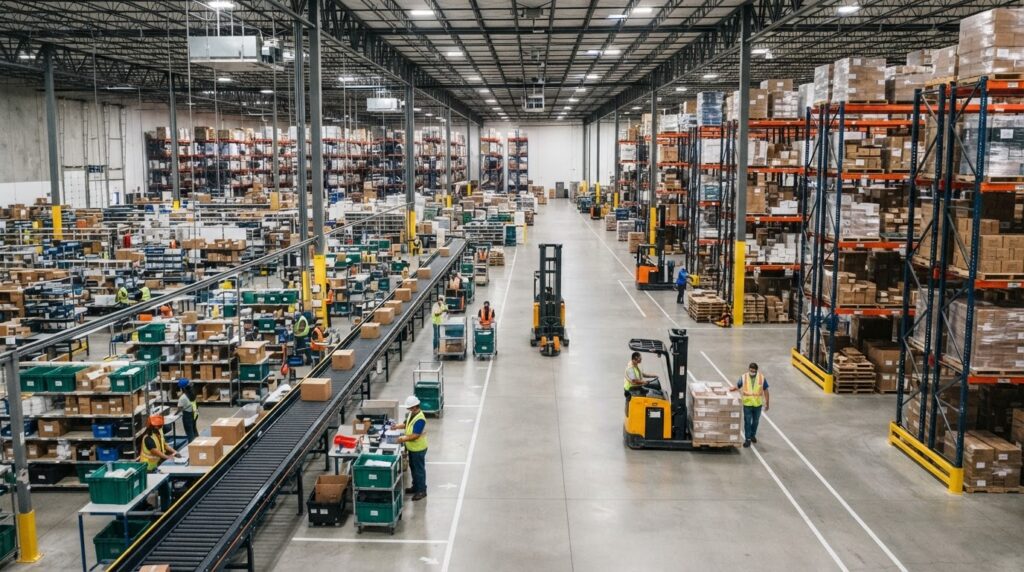
Distribution centers depend on a coordinated sequence of transfers: goods arrive, are received and stored, then picked, packed and shipped. Every unnecessary move, double-handle or waiting period can create costs and make peak-volume days harder to manage.
Selecting distribution center material handling equipment requires an end-to-end view. A faster picking zone will not improve total throughput if replenishment or outbound staging cannot keep up. Follow a representative shipment from dock to dispatch before deciding what to buy.
Receiving Equipment and the First Transfer
Inbound material handling begins at the trailer interface. Dock levelers, restraints, seals and related equipment need to fit the vehicles, handling method and site-specific safety procedures. Once material is unloaded, the receiving team needs a defined method for inspection, identification and prompt movement out of the dock area.
Measure unload time, trailer dwell time, staging delays and the number of times each pallet or package is moved. Explore loading dock equipment that may be suitable for the dock configuration.
Storage Systems for Pallets, Cartons and Eaches
Distribution centers often combine reserve pallet locations with forward-pick shelving or smaller storage zones. The right arrangement depends on unit size, SKU count, inventory turnover, retrieval method and space. Fast-moving inventory may justify closer, more accessible locations even when that reduces theoretical storage density.
Review pallet racking and industrial shelving along with lift-truck requirements. Account for beam and shelf capacity, aisle widths, pallet geometry and inventory rotation before making layout changes.
Picking and Replenishment Equipment
Picking may involve full pallets, cases, individual units or mixed orders. Equipment should match the actual picking unit. Carts and organized shelving can support many hand-picked workflows, while pallet handling and positioning equipment address other load and transfer requirements.
Replenishment needs its own process. An efficient picking station still stalls when stock runs out or replenishment vehicles conflict with picker travel. Document pick frequency, replenishment triggers and safe routes for both activities.
Packing, Consolidation and Outbound Shipping
The packing and dispatch areas often become the final bottleneck. Consider workbench dimensions, ergonomic access to supplies, carton handling, temporary pallet staging and the distance from completed orders to the outbound dock. A tidy packing station helps maintain consistency but cannot compensate for insufficient shipping capacity.
Avoid using active travel aisles as overflow staging. Define lanes and identify whether carts, pallet-moving devices or other equipment can simplify the final transfers. Consider industrial workstations when evaluating packing and inspection areas.
Manual, Powered and Automated Movement
Manual equipment provides flexibility for changing routes and smaller volumes. Powered devices may be preferable for heavier loads, longer routes or repetitive movement. Conveyors and integrated systems can support reliable, fixed transport paths where product dimensions and process requirements are consistent.
Evaluate peak and average volume, SKU variability, route conflicts, maintenance capability and downtime risk. A highly automated system is not necessarily appropriate for a small, variable operation. Fredon’s manual versus automated material handling guide discusses the main tradeoffs.
Layout and Safety Affect Real Throughput
Equipment selection has to account for pedestrian travel, forklift turning clearances, floor conditions, visibility, exits and protected crossings. An apparently faster route may increase risk if it introduces conflicts between workers and industrial vehicles. Plan physically separated routes and appropriate controls where feasible.
Always verify manufacturer ratings and the site’s operating and regulatory requirements. Train authorized operators, inspect equipment and ensure changes to a storage layout do not invalidate safe operating assumptions.
A Practical Distribution Center Selection Process
Begin by mapping the movement of a pallet, carton and individual item. Record each transfer, travel distance, queue and touch. Rank recurring delays by their effect on the whole operation, then identify options for removing them. Compare layouts or equipment using throughput, flexibility, safety and ownership cost rather than a single purchase-price figure.
A useful project brief includes load sizes and weights, peak hourly volume, site drawings, staging requirements, power availability, equipment interfaces and expected growth. Ask how the proposal will perform during peak operating conditions and how a failure can be handled.
When the Equipment Mix Needs Review
Repeated rehandling, long picker travel, pallet queues at the dock, replenishment delays and crowded staging areas are signs that the equipment and layout deserve another look. Changes to slotting and process rules can sometimes solve part of the problem without a major equipment purchase.
Where capital is warranted, focus first on the process step that constrains overall capacity. Equipment for a non-bottleneck operation may improve local metrics without materially improving order fulfillment.
For an overview of storage, transport, lifting and positioning options, read the complete guide to material handling equipment.
Next Steps
Explore Fredon’s material handling equipment and talk to an expert about distribution-center load profiles, layouts and transfer-point requirements.