
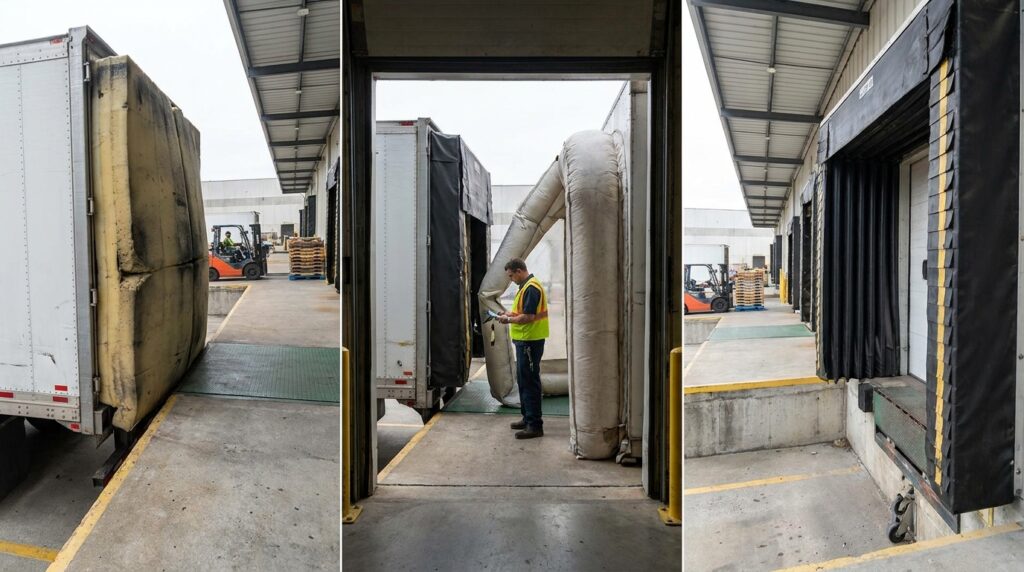
The modern warehouse and distribution center is a complex ecosystem, and the loading dock is its pulsating heart. Efficiently and safely moving goods between the controlled environment of your facility and the unpredictable outdoors hinges on the performance of your loading dock equipment. Among the most crucial components are the loading dock seals, designed to create a tight barrier, protecting your inventory, employees, and energy efficiency. This article will delve into the three primary types of loading dock seals: foam dock seals, inflatable dock seals, and compression dock seals. We will explore their functionalities, advantages, disadvantages, ideal applications, and the critical factors to consider when selecting the right solution for your operations.
Understanding the Role of Loading Dock Seals
Loading dock seals are more than just aesthetic additions; they are vital for operational integrity. Their primary function is to bridge the gap between the building opening and the trailer or container, creating a seal that mitigates several potential problems.
Protecting Your Goods and Facility
- Environmental Control: Dock seals prevent the ingress of outside elements like rain, snow, dust, and debris. This is critical for protecting sensitive goods, such as food, pharmaceuticals, or electronics, from damage and spoilage. For warehouses focused on maintaining specific temperature-controlled environments (e.g., cold storage), effective seals are non-negotiable for preventing costly temperature fluctuations and energy loss.
- Pest Control: A tight seal also acts as a barrier against rodents, insects, and other pests, safeguarding inventory and maintaining hygiene standards.
Enhancing Safety and Security
- Employee Safety: Seals can prevent employees from falling into the dock pit or being injured by falling objects that might otherwise enter through an open gap. They also reduce drafts and improve overall working conditions.
- Security: By sealing the opening, dock seals make it more difficult for unauthorized individuals to enter the facility, contributing to a more secure environment.
Improving Energy Efficiency
- Reduced HVAC Load: Every time a truck backs into an open dock, significant amounts of conditioned air can escape, and unconditioned air can rush in. This forces your HVAC system to work harder, leading to increased energy consumption and higher utility bills. Properly functioning dock seals dramatically reduce this energy exchange. The U.S. Department of Energy estimates that air leakage through dock doors can account for a substantial percentage of a building’s total energy loss.
Equipment Durability and Longevity
- Protection from Elements: Seals protect not only the interior of the warehouse but also the loading dock equipment itself, including the dock leveler and the dock doors, from harsh weather conditions, extending their lifespan.
When considering the various types of loading dock seals, such as foam, inflatable, and compression seals, it’s essential to understand their specific applications and benefits. For a deeper insight into optimizing your loading dock operations and selecting the right equipment, you can refer to this informative article that discusses the importance of consulting with experts in the field. To learn more, visit this link.
Foam Dock Seals: The All-Around Performer
Foam dock seals are arguably the most common type found in industrial settings. They are constructed from high-density polyurethane foam that is encased in durable, abrasion-resistant fabric. When a trailer backs into them, the foam compresses to conform to the shape of the vehicle, creating a consistent seal.
How Foam Dock Seals Work
The key to foam dock seal effectiveness lies in their compressible nature. The foam “gives” as the trailer makes contact, forming a barrier around the sides and top of the trailer’s rear opening. The header curtain, typically a flexible piece of material, hangs down over the top to seal the upper gap.
Advantages of Foam Dock Seals
- Excellent Sealing Performance: When properly sized and installed, foam seals offer a robust seal against environmental elements and air infiltration. They are particularly effective against wind and driving rain.
- Durability and Longevity: The high-density foam and heavy-duty fabric construction make them resistant to wear and tear, even with frequent trailer traffic. They can last for many years with proper care.
- Low Maintenance: Foam seals generally require minimal maintenance. Occasional cleaning of the fabric and visual inspection for tears or damage are usually sufficient.
- Cost-Effective: Compared to some other sealing solutions, foam dock seals often represent a good balance of performance and cost, making them a popular choice for budget-conscious operations.
- Variety of Options: They come in various foam densities, header curtain designs (e.g., straight, beveled, full-height), and fabric types to suit different applications and trailer heights.
Disadvantages of Foam Dock Seals
- Potential for Trailer Damage: In some cases, particularly with trailers that have irregular or sharp-edged rear frames, the constant compression from a foam seal can cause minor damage over time. This is less common with modern trailer designs but remains a consideration.
- Limited Adjustability for Varied Trailer Heights: While they conform well, they are less adaptable to extreme variations in trailer height compared to some other types of seals. If you routinely handle trailers with significantly different heights, you might need to consider custom solutions or other seal types.
- Can Trap Moisture: In very wet environments, it’s possible for moisture to become trapped between the seal and the trailer if there are drainage issues or if the fabric is not sufficiently water-resistant, potentially leading to rust on the trailer.
Ideal Applications for Foam Dock Seals
Foam dock seals are a versatile solution and are well-suited for a wide range of industrial environments, including:
- General Warehousing and Distribution: Where consistent environmental control and energy efficiency are important.
- Food Processing and Storage: Crucial for maintaining temperature integrity and preventing contamination.
- Pharmaceutical Distribution: Similar to food, maintaining precise temperature and hygiene is paramount.
- Facilities with Moderate Trailer Height Variation: They perform best when trailer heights are within a predictable range.
Fredon Handling offers a range of high-quality foam dock seals designed for robust performance and longevity. Explore our options to find the perfect fit for your loading dock.
Inflatable Dock Seals: The Ultimate Seal for Versatility
Inflatable dock seals offer a unique approach to sealing by using air pressure to create a tight barrier. They are essentially air-filled cushions that inflate around the trailer when it backs into position.
How Inflatable Dock Seals Work
When a truck approaches, the dock attendant activates a blower motor. This motor rapidly inflates air-filled tubes within the seal’s structure. These inflated tubes press against the sides and top of the trailer, creating a comprehensive seal. Deflation is equally rapid, allowing the truck to depart easily.
Advantages of Inflatable Dock Seals
- Superior Sealing Capabilities: When fully inflated, inflatable dock seals provide an exceptionally tight seal, minimizing air infiltration and protecting against the harshest weather conditions. This makes them ideal for applications where maximum environmental control is required.
- Excellent Versatility for Varying Trailer Heights: One of the most significant advantages of inflatable seals is their ability to accommodate a wide range of trailer heights. The air pressure adjusts to the trailer’s dimensions, ensuring a good seal regardless of whether it’s a low-profile trailer or a high-cube trailer.
- Reduced Trailer Wear: Because they rely on air pressure rather than constant compression of foam, inflatable seals exert less direct physical pressure on trailers. This can be beneficial for facilities that handle a variety of trailer types, minimizing the risk of cosmetic or structural damage.
- Energy Savings: Their ability to create a virtually airtight seal leads to significant energy savings by preventing conditioned air loss and unconditioned air intrusion.
- Improved Working Conditions: By effectively blocking drafts and airborne contaminants, they contribute to a more comfortable and safer working environment for dock personnel.
Disadvantages of Inflatable Dock Seals
- Higher Initial Cost: Inflatable dock seals generally have a higher upfront purchase price compared to foam dock seals.
- Power Dependency: They require a reliable power source for the blower motor. Power outages could render them ineffective until power is restored.
- Maintenance Requirements: The blower motor, air tubes, and control systems require periodic maintenance and inspection. While generally reliable, they have more components that could potentially fail than a simple foam seal.
- Potential for Air Leaks: Over time, the air tubes or seams can develop small leaks, reducing their sealing efficiency. Regular inspection and potential repairs are necessary.
- Slower Operation (Slightly): The inflation and deflation cycle, while quick, can add a few extra seconds to the loading/unloading process compared to the immediate compression of foam seals.
Ideal Applications for Inflatable Dock Seals
Inflatable dock seals are best suited for applications demanding the highest level of sealing performance and versatility:
- Cold Storage Facilities: Where maintaining consistent, low temperatures is critical and any temperature fluctuation is costly.
- Pharmaceutical and High-Value Goods Warehouses: For facilities that require absolute protection against environmental contamination and temperature excursions.
- Facilities with Highly Variable Trailer Heights: When a diverse fleet of trailers with varying dimensions is a regular occurrence.
- Locations Prone to Extreme Weather: In areas with strong winds, heavy rain, or significant dust, the superior sealing of inflatables is highly beneficial.
Fredon Handling provides advanced inflatable dock seals engineered for maximum energy savings and superior environmental protection. Discover how they can enhance your facility’s performance.
Compression Dock Seals: A Simpler, Robust Solution
Compression dock seals, often referred to as “strip seals” or “brush seals,” offer a more basic but often effective solution for sealing loading dock openings. They utilize overlapping strips of durable material that compress as a trailer backs in.
How Compression Dock Seals Work
Instead of a solid block of foam or an inflatable system, compression seals are made from multiple vertical strips of material (often heavy-duty rubber, vinyl, or nylon fabric). These strips are mounted along the sides and top of the dock opening. When a trailer is docked, the strips overlap and compress, creating a barrier.
Advantages of Compression Dock Seals
- Cost-Effective: Compression dock seals are typically the most budget-friendly option among the three types, making them an attractive choice for operations with limited capital.
- Simple and Robust Design: Their straightforward construction means fewer potential points of failure. They are less prone to mechanical breakdowns compared to inflatable seals.
- Durability: Made from resilient materials, they can withstand significant wear and tear from trailer impacts and abrasion.
- Good for Moderate Sealing Needs: They provide a decent level of protection against light rain, dust, and drafts, which is sufficient for many less sensitive applications.
- Easy to Replace Individual Strips: If a strip becomes damaged, it can often be replaced individually without needing to replace the entire seal, which can reduce maintenance costs.
Disadvantages of Compression Dock Seals
- Limited Sealing Performance: Compression seals generally do not offer the same level of airtightness as foam or inflatable seals. They are more prone to air leakage, especially around the corners and where the trailer’s structural elements meet the seal.
- Less Effective Against Extreme Weather: They are less effective at preventing heavy rain, snow, or strong winds from entering the facility compared to the other two types.
- Can Cause Wear on Trailer Wraps: The constant friction and compression from the individual strips can, over time, lead to wear and tear on the trailer’s exterior wrap or lettering.
- Less Adaptable to Significant Trailer Height Variations: While they can accommodate some variation, extreme differences in trailer heights can create larger gaps and compromise the seal.
- Can Degrade Over Time: The material can become brittle or crack with prolonged exposure to UV rays or extreme temperatures, reducing their effectiveness.
Ideal Applications for Compression Dock Seals
Compression dock seals are best suited for applications where the sealing requirements are less stringent and cost is a primary consideration:
- General Storage Facilities: Where moderate protection from the elements is sufficient.
- Facilities with Low Throughput: For docks that experience infrequent trailer traffic.
- Applications Where Cost is Paramount: When budget constraints are a significant factor and the highest level of environmental control is not a critical requirement.
- As a Basic Barrier: To offer a fundamental level of protection against pests and minor weather ingress.
While not offering the ultimate seal, reliable compression dock seals from Fredon Handling provide a durable and cost-effective solution for many operations.
When considering the various types of loading dock seals such as foam, inflatable, and compression, it’s essential to understand their impact on overall material handling efficiency. For a deeper insight into how these seals contribute to effective logistics and warehouse operations, you can explore a related article that discusses the broader aspects of material handling. This information can be invaluable for optimizing your loading dock setup and ensuring seamless operations. To learn more, visit this informative article.
Key Selection Criteria for Your Loading Dock Seals
Choosing the right loading dock seal is a strategic decision that impacts your facility’s efficiency, safety, and bottom line. Here are the critical factors to consider:
1. Environmental Control Needs
- Level of Sensitivity: How critical is it to maintain a specific internal temperature or to keep out contaminants? For food, pharmaceuticals, or sensitive electronics, a high level of sealing is essential.
- Climate and Weather: Do you operate in an area with harsh weather conditions like heavy rain, snow, high winds, or extreme temperatures? This will influence the required sealing performance.
2. Trailer Fleet and Docking Practices
- Trailer Height Variation: Do you consistently handle trailers of similar heights, or is there a wide range of heights? Inflatable seals excel with varied heights, while foam seals are best with consistent dimensions.
- Trailer Type: Are your trailers typically clean and standard, or do they have irregular or potentially abrasive features that could interact with the seal?
- Docking Frequency: How often do trucks use your docks? High-frequency use demands durable materials and designs that can withstand constant wear.
3. Energy Efficiency Goals
- Energy Costs: What are your current energy expenditures related to heating and cooling? Investing in a superior seal can yield significant long-term savings.
- Sustainability Initiatives: Is your company focused on reducing its environmental footprint? Effective dock seals contribute to energy conservation.
4. Budget and Return on Investment (ROI)
- Upfront Cost vs. Long-Term Savings: While compression seals are cheaper initially, foam and inflatable seals can offer a much higher ROI through energy savings and reduced product damage over their lifespan.
- Maintenance Costs: Consider the ongoing costs associated with maintenance, repairs, and potential replacement for each seal type.
5. Safety and Security Requirements
- Employee Safety: Do your employees work in close proximity to the dock opening? A good seal can prevent drafts and potential hazards.
- Security Concerns: Is preventing unauthorized access a significant concern? Seals contribute to a more secure facility.
6. Durability and Maintenance Capabilities
- Material Strength: What is the expected lifespan of the seal under your operating conditions?
- Maintenance Resources: Do you have the personnel and resources to perform regular maintenance on more complex systems like inflatables?
Fredon Handling understands that no two facilities are alike. Our experts can guide you through the selection process for loading dock equipment, including the perfect dock seals, to meet your specific operational demands.
When considering the various types of loading dock seals, such as foam, inflatable, and compression options, it’s essential to understand how these choices can impact your overall material handling efficiency. A related article that provides valuable insights on selecting the right equipment for your business can be found here. This resource offers guidance on optimizing your operations, ensuring that you make informed decisions that align with your specific needs.
Safety Considerations with Loading Dock Seals
Beyond their primary functions, loading dock seals play a vital role in overall safety. Proper selection and maintenance contribute to a safer working environment.
Preventing Slips, Trips, and Falls
A tight seal prevents water, snow, and ice from being tracked into the warehouse or accumulating around the dock area. This reduces the risk of slips and falls for personnel.
Reducing Drafts and Improving Air Quality
Seals block drafts that can be a nuisance and a hazard, especially in colder months. They also help to keep out airborne dust, pollutants, and allergens, contributing to better indoor air quality.
Enhancing Visibility and Dock Area Lighting
While not directly part of the seal’s function, a well-sealed dock can often be better illuminated by preventing light bleed from outside. This improves visibility for drivers and dock workers.
Employee Training and Awareness
It’s crucial to train employees on the proper use and care of dock seals. This includes understanding how to safely operate doors with seals, recognizing signs of damage, and knowing when to report issues. For inflatable seals, understanding the inflation/deflation process and associated safety checks is important.
OSHA Compliance
While OSHA does not have specific regulations solely for dock seals, the general duty clause requires employers to provide a workplace free from recognized hazards. Effective dock seals contribute to meeting this obligation by mitigating environmental hazards and improving safety.
Maintenance and Longevity of Your Dock Seals
The lifespan and performance of any loading dock seal are heavily dependent on regular maintenance.
Regular Inspections
- Frequency: Conduct visual inspections of your dock seals at least monthly, and more frequently if you experience heavy usage or adverse weather.
- What to Look For:
- Foam Seals: Tears, punctures, excessive compression, wear on the fabric.
- Inflatable Seals: Leaks in air tubes or seams, damage to the blower motor or controls, wear on the fabric.
- Compression Seals: Worn or missing strips, damage to the mounting hardware, deterioration of the material.
Cleaning
- Purpose: Regular cleaning prevents the buildup of dirt, grime, and debris, which can accelerate wear and compromise the seal’s effectiveness.
- Method: Use mild soap and water with a soft brush or cloth. Avoid harsh chemicals or abrasive cleaners that can damage the material. For inflatable seals, ensure the blower intake is kept clear of debris.
Minor Repairs
- Prompt Action: Address any minor tears or damage immediately. Small issues can quickly become larger, more expensive problems if left unattended. Many manufacturers offer repair kits for their seals.
- Professional Assistance: For significant damage or complex issues, especially with inflatable systems, it’s often best to contact a qualified professional or the manufacturer for repairs.
Proper Operation
- Training: Ensure all personnel who operate the dock doors are trained on the correct procedure for engaging and disengaging with the seals.
- Avoid Force: Never force a truck into or out of the dock if the seal is not properly disengaged.
Replacing Worn Seals
- Indicators: Seals that are significantly worn, torn, or no longer provide an effective barrier should be replaced. The cost of replacing a seal is often significantly less than the cost of lost energy, damaged goods, or potential accidents.
Fredon Handling offers expert advice and support on the maintenance of all your loading dock equipment, ensuring optimal performance and longevity.
Frequently Asked Questions About Loading Dock Seals
Q1: How do I determine the correct size for my loading dock seal?
A1: Proper sizing is crucial for effective sealing. You need to measure the width and height of your typical trailers, as well as the dimensions of your dock door opening. For foam and compression seals, consider the standard trailer widths and heights you commonly receive. For inflatable seals, you’ll need to account for the range of trailer heights you expect. Fredon Handling provides detailed sizing guides and can assist you in making the right measurements.
Q2: Can loading dock seals be customized for unique applications?
A2: Yes, customization is often possible. For facilities with highly unusual trailer dimensions, specific environmental requirements, or unique building configurations, custom-designed dock seals can be manufactured. This might involve custom foam densities, unique header curtain designs, or specialized fabric choices.
Q3: What is the typical lifespan of a loading dock seal?
A3: The lifespan of a loading dock seal can vary significantly depending on the type of seal, the quality of the materials, the intensity of its use, and the quality of maintenance it receives. Generally, foam and compression seals can last anywhere from 5 to 10 years or more with proper care. Inflatable seals, with their more complex mechanical components, might have a slightly shorter lifespan for the inflatable components, but the overall system can still perform well for many years. Regular inspections and prompt repairs are key to maximizing longevity.
Q4: Are there any specific OSHA regulations I need to be aware of regarding loading dock seals?
A4: OSHA does not have specific standards exclusively for loading dock seals. However, the general duty clause (Section 5(a)(1) of the OSH Act) mandates that employers provide a workplace free from recognized hazards that are causing or are likely to cause death or serious physical harm. Effective loading dock seals contribute to this by mitigating hazards such as environmental exposure (extreme temperatures, moisture), pest intrusion, and improving overall working conditions, which indirectly supports OSHA compliance. It’s always advisable to consult with a safety professional for specific guidance.
Q5: How can loading dock seals help reduce my facility’s energy costs?
A5: Loading dock seals create a barrier between the controlled interior environment of your warehouse and the outside. When a truck is docked and the loading dock door is open, conditioned air can escape, and unconditioned outside air can enter. This forces your HVAC system to work harder to maintain desired temperatures, leading to increased energy consumption. By creating a tighter seal, dock seals significantly reduce this air exchange, leading to lower heating and cooling costs and a more energy-efficient facility. The energy savings can be substantial, often providing a significant return on investment for the dock seal itself.
Conclusion: Investing in Your Loading Dock’s Efficiency and Safety
The loading dock is a critical interface in any industrial facility. The choice of loading dock seals—whether foam dock seals, inflatable dock seals, or compression dock seals—directly impacts your operation’s energy efficiency, product integrity, employee safety, and overall productivity. By understanding the unique benefits and applications of each type, and by carefully considering your facility’s specific needs, you can make an informed decision that will serve your business well for years to come.
Don’t let inadequate seals compromise your operations. Fredon Handling is your trusted partner for high-quality loading dock equipment, including a comprehensive range of seals designed for durability, performance, and cost-effectiveness.
Ready to enhance your loading dock’s efficiency and safety? Contact Fredon Handling today for a personalized quote and expert consultation on the best loading dock seals for your facility.