
SEO Title: Drum Lifters Explained: Selecting the Perfect Equipment for Your Warehouse & Plant
Meta Description: Discover the different types of drum lifters available, understand their features, and learn how to choose the ideal equipment for your specific industrial needs. Expert advice for warehouse, plant, and safety managers.
Understanding Drum Lifter Types: A Comprehensive Guide
When it comes to efficiently and safely managing drums in an industrial environment, selecting the right drum lifter is paramount. These specialized pieces of equipment are designed to lift, move, and often tilt drums of various materials, sizes, and weights, significantly improving workflow, reducing manual strain, and enhancing workplace safety. Warehouse managers, plant engineers, and safety professionals all play a crucial role in identifying the needs and specifying the appropriate drum handling solutions. This guide delves into the diverse landscape of drum lifter types, outlining their functionalities, benefits, and the critical factors to consider when making your selection. Whether you’re dealing with steel drums, plastic drums, or fiber drums, understanding the nuances of each lifter type will empower you to make an informed decision that optimizes your operations.
The Importance of Proper Drum Handling Equipment
Drums are ubiquitous in many industries, storing everything from raw materials and chemicals to finished products and waste. Manual handling of these heavy and often hazardous containers poses significant risks, including back injuries, crushed limbs, and spills. Investing in appropriate drum lifters is not merely an operational upgrade; it’s a fundamental safety measure and a strategic business decision. Efficient drum handling equipment can:
- Enhance Worker Safety: By eliminating or significantly reducing the need for manual lifting and carrying, drum lifters prevent common workplace injuries.
- Increase Productivity: Automated or semi-automated lifting and moving processes speed up material flow, reducing bottlenecks in warehouses and production lines.
- Reduce Damage to Product and Packaging: Gentle and controlled handling minimizes the risk of dents, punctures, or leaks, preserving the integrity of valuable contents.
- Improve Ergonomics: They create a more comfortable and sustainable working environment for employees, leading to higher morale and reduced absenteeism.
- Optimize Space Utilization: Certain drum lifters allow for vertical stacking or precise placement, maximizing storage capacity.
Exploring the Spectrum of Drum Lifter Technologies
The market offers a variety of drum lifters, each with its own set of capabilities and ideal applications. Understanding these distinct types is the first step towards finding the perfect fit for your specific operational challenges.
Manual Drum Lifters and Handlers
Manual drum lifters are the most basic form of mechanical assistance for drum handling. They rely on operator input and physical effort, albeit significantly reduced compared to direct manual lifting. These are often the most economical option for lower-volume operations or environments where full automation isn’t necessary or feasible.
Drum Dollies and Carts
Drum dollies and carts are simple wheeled platforms designed to support a drum and allow it to be rolled from one location to another. They typically feature a base that cradles the drum and a handle for steering. Some models may include a mechanism to tilt the drum slightly for easier pouring or dispensing.
- Material: Commonly constructed from steel, aluminum, or heavy-duty plastic for durability.
- Size/Weight Capacity: Varies greatly, with standard models often supporting up to 500 lbs (227 kg) and heavier-duty versions exceeding 1000 lbs (454 kg).
- Applications: Ideal for short-distance transport within a warehouse, workshop, or laboratory where minimal vertical lifting is required. They are excellent for moving drums on flat, smooth surfaces.
- Compatibility: Generally compatible with most standard 55-gallon drums and many smaller sizes.
Drum Grabs and Tongs
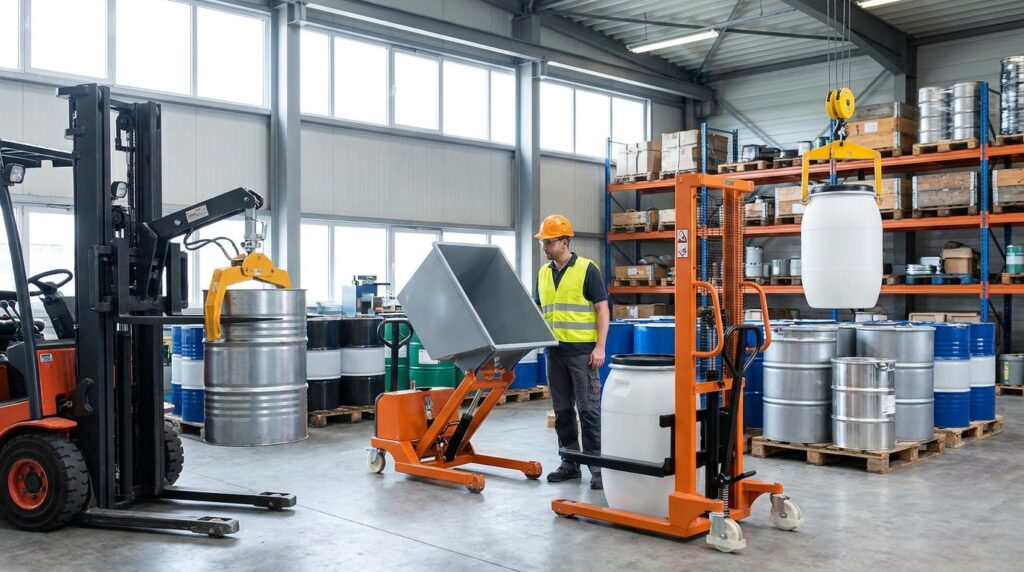
Drum grabs, also known as drum tongs or drum lifters (a broader term), are mechanical devices that grip the rim or body of a drum to lift it. They can be used with overhead hoists, cranes, or forklift attachments.
- Material: Typically made from robust steel, often with rubber or urethane gripping surfaces to prevent damage to the drum.
- Size/Weight Capacity: Standard models can lift drums weighing up to 1000 lbs (454 kg). Specialized designs can handle greater capacities.
- Operation: The gripping mechanism is usually activated by the weight of the drum itself or by a lever operated by the user. Some are designed for single drum lifting, while others can handle multiple drums.
- Applications: Useful for lifting drums off pallets, stacking them, or moving them into position for processing, especially when integrated with existing lifting infrastructure.
- Compatibility: Designed for various drum types, including steel, plastic, and fiber drums, provided they have a sufficiently strong rim or body.
Forklift Drum Attachments
Forklift drum attachments transform a standard forklift into a versatile drum handling machine. These attachments connect to the forklift’s mast or carriage and provide the necessary mechanism to safely grip, lift, and transport drums. They are an excellent solution for facilities that already utilize forklifts for material handling.
Drum Clamps
Drum clamps are a popular forklift attachment that grips the drum from the sides. They typically feature adjustable arms that secure the drum around its circumference.
- Material: Constructed from heavy-duty steel with protective pads to prevent drum damage.
- Size/Weight Capacity: Varies significantly based on the forklift’s capacity and the clamp’s design, often ranging from 500 lbs to 1000 lbs (227 kg to 454 kg) per drum. Some heavy-duty models can handle even more.
- Operation: Hydraulic or mechanical arms engage the drum, providing a secure grip. Some clamps are designed for single-drum handling, while others can manage two drums simultaneously.
- Applications: Highly efficient for moving drums within a warehouse, loading and unloading trucks, and placing drums on racks or production equipment. They are particularly useful for short-to-medium range transport.
- Compatibility: Generally suitable for steel and plastic drums with smooth sides. Rim-gripping variations exist for drums with distinct rims.
Drum Forks
Drum forks are a simpler attachment that resembles a specialized pair of forks designed to slide under a drum. They might feature a mechanism to secure the drum, or they may rely on its inherent stability.
- Material: Made from robust steel.
- Size/Weight Capacity: Dependent on the forklift’s capacity and the fork design.
- Operation: The forks are inserted under the drum, and the forklift lifts and transports it. Some models may have a retention bar or cradle to prevent the drum from tipping.
- Applications: Best suited for transporting drums placed on pallets or for securely moving drums in a stable upright position. Less ideal for loose drums or those needing precise tilting.
- Compatibility: Works well with standard 55-gallon drums, especially when they are on pallets.
Drum Rotators (for Forklifts)
Drum rotators are specialized forklift attachments that allow not only lifting but also controlled rotation and emptying of drums. They are indispensable for processes requiring precise dispensing or mixing of drum contents.
- Material: Heavy-duty steel construction.
- Size/Weight Capacity: Designed to handle standard drum sizes and weights, typically up to 1000 lbs (454 kg).
- Operation: The attachment secures the drum and allows it to be rotated 360 degrees, either manually or hydraulically, from the forklift operator’s seat. This enables controlled pouring of liquids or powders.
- Applications: Widely used in chemical plants, food processing, pharmaceutical manufacturing, and waste management for precise dispensing, mixing, and emptying of drum contents.
- Compatibility: Designed for most standard steel and plastic drums.
Drum Lifters with Integrated Lifting Mechanisms
These drum lifters incorporate their own lifting and often maneuvering capabilities, not relying on external equipment like forklifts or cranes. They are ideal for standalone operations or for facilities without existing heavy lifting machinery.
Drum Lifters/Tippers (Manual and Powered)
These versatile units are designed to lift drums and often tilt them for pouring. They can be manually operated through a crank or lever system, or powered by electricity or hydraulics.
- Material: Typically constructed from robust steel, often powder-coated for corrosion resistance.
- Size/Weight Capacity: Capacities vary, with common models handling drums up to 500-1000 lbs (227-454 kg).
- Operation: A gripping mechanism secures the drum, and a lifting mechanism (manual or powered) raises it. A tilting mechanism, often controlled by a handwheel or lever, allows for controlled pouring.
- Applications: Excellent for dispensing operations, mixing, and transfer of liquids or solids from drums. They are widely used in laboratories, chemical handling, food processing, and general manufacturing.
- Compatibility: Generally compatible with 55-gallon steel and plastic drums. Some models can be adjusted for smaller drum sizes.
Drum Stackers
Drum stackers are designed to lift drums vertically, enabling them to be stacked for storage or transport. This is crucial for maximizing vertical space in warehouses.
- Material: Durable steel construction.
- Size/Weight Capacity: Typically rated for lifting and stacking standard 55-gallon drums, with capacities often around 500 lbs (227 kg) per drum.
- Operation: These are usually manually operated or semi-powered, using a hydraulic pump and a mechanism to engage and lift the drum. They allow for precise placement and lifting to stack drums one or two high.
- Applications: Ideal for warehouse operations where space is at a premium, allowing for safe and efficient stacking of drums.
- Compatibility: Primarily designed for standard 55-gallon drums.
Drum Palletizers
Drum palletizers are automated or semi-automated systems that arrange drums onto pallets for shipping or storage. While more complex than individual lifters, they represent a high-efficiency solution for large-scale operations.
- Material: Typically constructed from steel, with conveyor systems and robotic or mechanical arm components.
- Size/Weight Capacity: Designed to handle the weight and dimensions of standard industrial drums.
- Operation: Drums are fed into the palletizer, which then positions them in a specific pattern on a pallet before wrapping or securing them.
- Applications: Used in high-volume manufacturing and distribution centers where efficient palletizing of drums is essential.
- Compatibility: Designed for standard industrial drum sizes and types.
Key Factors for Selecting the Right Drum Lifter
Choosing the optimal drum lifter involves a thorough assessment of your operational environment, the types of drums you handle, and your safety protocols. Here are the critical factors to consider:
Drum Material and Type
The material of your drums (steel, plastic, fiber) will influence the type of gripping mechanism required. Steel drums often have robust rims that can be easily gripped, while plastic drums may require broader contact surfaces to prevent deformation. Fiber drums have unique structural properties that may necessitate specialized lifting devices.
- Steel Drums: Typically robust, with strong rims suitable for clamp or grab mechanisms.
- Plastic Drums (HDPE): Often require clamping mechanisms that distribute pressure evenly to avoid crushing or deforming the drum. Rim grips might not be suitable if the rim is not sufficiently strong.
- Fiber Drums: Have a less rigid structure and may require specialized cradles or full drum support lifters to prevent damage.
Drum Size and Weight Capacity
Drums come in various standard sizes, most commonly 55-gallon (205-liter), but also 30-gallon, 16-gallon, and smaller. Crucially, the weight of the drum, including its contents, dictates the required lifting capacity of the equipment. Always verify the maximum weight capacity of the lifter and ensure it comfortably exceeds your heaviest drum.
- Standard 55-Gallon Drums: Typically weigh between 400-600 lbs (181-272 kg) when full, but can exceed this.
- Smaller Drums: Have proportionally lower maximum weights.
- Overload Prevention: Ensure the chosen equipment has built-in safety features or that operators are trained to avoid overloading.
Lifting Height and Reach Requirements
Consider the maximum height you need to lift drums, whether it’s for stacking on pallets, placing on elevated equipment, or loading into high shelving. The reach of the lifter is also important, especially for forklift attachments or boom-style lifters, to ensure drums can be placed accurately.
- Stacking: Will you stack drums one high, two high, or more? This determines the required lifting height.
- Equipment Integration: Do drums need to be lifted to the level of a filling machine or mixing tank?
- Loading/Unloading: Consider the height of truck beds or trailers.
Operational Environment and Floor Conditions
The environment where the drum lifter will operate is a significant consideration.
- Surface: Smooth, level concrete floors are ideal for wheeled drum dollies and lifters. Rough, uneven, or sloped surfaces may require more robust equipment with better maneuverability or powered lift mechanisms.
- Space Constraints: Narrow aisles or confined spaces necessitate compact and highly maneuverable equipment. Forklift attachments are ideal for open spaces, while manual drum lifters or compact powered units might be better for tight areas.
- Hazardous Areas: For areas with flammable materials or explosive atmospheres, explosion-proof drum lifters are essential.
Frequency of Use and Throughput
The volume of drums you need to handle will determine the level of automation or efficiency required.
- Low Volume: Manual drum lifters or dollies might suffice.
- Medium Volume: Powered drum lifters or forklift attachments offer a good balance of efficiency and cost.
- High Volume: Fully automated drum stackers or palletizers may be necessary to maintain throughput.
Ergonomics and Worker Safety
Prioritize equipment that minimizes manual exertion and repetitive strain. Powered lifting and tilting functions are key to improving ergonomics. Look for features like easy-to-operate controls, secure gripping mechanisms, and stability during operation. Always ensure equipment meets relevant safety standards.
- Reducing Strain: Powered lift and tilt functions are invaluable.
- Operator Training: Comprehensive training on safe operation is crucial for all types of drum lifters.
- Fall Protection: If lifting to significant heights, ensure the equipment is stable and designed for such applications.
Compatibility with Existing Infrastructure
If you plan to use drum lifters in conjunction with forklifts, overhead cranes, or conveyor systems, ensure the chosen equipment is compatible. For example, forklift attachments must be designed to fit your specific forklift model.
Applications Across Industries
Drum lifters are indispensable across a wide array of industries:
- Chemical Manufacturing: Safely handling and dispensing hazardous chemicals from drums. Drum rotators are particularly valuable for controlled pouring of reactive or viscous substances.
- Petroleum and Lubricants: Transferring oils, greases, and other petroleum-based products.
- Food and Beverage: Moving and dispensing ingredients, flavorings, and finished products. Sterilization-friendly options may be required.
- Pharmaceuticals: Handling sensitive raw materials and intermediates with precision and cleanliness.
- Paint and Coatings: Dispensing pigments, resins, and solvents.
- Waste Management: Safely collecting, transporting, and processing hazardous or non-hazardous waste in drums.
- General Manufacturing and Warehousing: For efficient movement and storage of countless types of materials.
When selecting the right drum lifter for your operations, it’s essential to consider various factors that can impact efficiency and safety. For a deeper understanding of how different material handling systems can enhance your workflow, you might find it helpful to read this informative article on streamlining your workflow. This resource provides valuable insights into optimizing your equipment choices, ensuring you make the best decision for your specific needs.
Safety Considerations When Using Drum Lifters
Safety must be the absolute top priority when operating any drum handling equipment.
- Operator Training: Ensure all operators are thoroughly trained on the specific equipment they will use, including pre-operation checks, safe lifting and maneuvering techniques, and emergency procedures.
- Regular Inspections: Conduct daily visual inspections of the equipment for any signs of wear, damage, or malfunction. Perform periodic more in-depth maintenance checks.
- Load Limits: Never exceed the rated load capacity of the drum lifter.
- Secure Grip: Ensure the drum is securely gripped or cradled before lifting. A loose drum can lead to spills and accidents.
- Clear Work Area: Maintain a clear path for movement, free from obstructions, pedestrians, and other mobile equipment.
- Stable Operation: Operate the equipment on stable, level surfaces whenever possible. Avoid sudden starts, stops, or turns.
- Environmental Awareness: Be aware of your surroundings, including overhead obstructions, uneven ground, and other personnel.
- Personal Protective Equipment (PPE): Operators should always wear appropriate PPE, including safety glasses, gloves, and safety shoes.
- Maintenance: Follow the manufacturer’s recommended maintenance schedule diligently. Worn or damaged components can lead to catastrophic failure.
Maintaining Your Drum Handling Equipment for Longevity
Proper maintenance is key to ensuring the safe and reliable operation of your drum lifters.
- Daily Checks: Inspect for loose bolts, damaged hydraulic hoses, worn gripping pads, and proper functioning of all controls and mechanisms.
- Lubrication: Regularly lubricate all moving parts according to the manufacturer’s guidelines to prevent wear and ensure smooth operation.
- Cleaning: Keep the equipment clean to prevent the buildup of dirt, dust, or corrosive materials that could impede function or cause damage.
- Hydraulic Systems: For hydraulic lifters, regularly check fluid levels and inspect for leaks. Contaminated hydraulic fluid can damage seals and pumps.
- Battery Maintenance: For electric-powered units, follow battery charging and maintenance procedures to maximize battery life.
- Record Keeping: Maintain a log of all maintenance performed, including inspections, repairs, and part replacements.
Choosing Fredon Handling for Your Drum Lifter Needs
At Fredon Handling, we understand the critical importance of having the right equipment for your material handling challenges. We offer a comprehensive range of high-quality drum lifters and accessories designed for durability, safety, and efficiency. Our expertise ensures you receive solutions tailored to your specific operational requirements.
Whether you’re looking for versatile forklift drum attachments, robust manual drum handlers, or powered drum lifters and tippers for precise dispensing, Fredon Handling has the solution. We are committed to providing industrial-grade equipment that enhances productivity, improves safety, and offers long-term value.
Explore Our Drum Handling Equipment Solutions
We invite you to explore our dedicated section on Drum Handling Equipment to discover the full breadth of our offerings. Our team is ready to assist you in navigating the options and selecting the perfect drum lifter for your warehouse, plant, or laboratory.
When considering the various types of drum lifters available, it’s essential to understand the specific needs of your operation to choose the right equipment effectively. A related article that provides valuable insights on this topic is available at the Fredon Handling Education Center, which offers a comprehensive overview of different lifting solutions and their applications. You can read more about it here: Fredon Handling Education Center. This resource can help you make informed decisions when selecting drum lifters for your workplace.
Frequently Asked Questions About Drum Lifters
Q1: What is the most common type of drum handled by industrial lifters?
A1: The most common type is the standard 55-gallon (205-liter) drum, typically made of steel or high-density polyethylene (HDPE) plastic. However, many lifters are adaptable or designed for a range of drum sizes and materials.
Q2: Do I need special training to operate a drum lifter?
A2: Yes, comprehensive training is essential for operating any drum lifter safely and effectively. Training should cover pre-operation checks, safe lifting and maneuvering techniques, load capacity limitations, and emergency procedures. Always refer to the manufacturer’s operating manual.
Q3: Can drum lifters handle drums with hazardous materials?
A3: Yes, many drum lifters are designed for hazardous material handling. However, it is crucial to select equipment specifically rated for the type of hazard (e.g., chemical resistance, explosion-proof features) and to follow strict safety protocols. Always consult the material safety data sheet (MSDS) for the contents.
Q4: How do I determine the correct weight capacity for a drum lifter?
A4: You must know the maximum weight of the drums you intend to lift, including their contents. It’s best to choose a lifter with a capacity that comfortably exceeds your heaviest drum to ensure safe operation and longevity of the equipment. Always check the manufacturer’s specifications.
Q5: What is the difference between a drum grab and a drum clamp?
A5: A drum grab (or tong) typically grips the rim of the drum, lifting it from the top. A drum clamp, often used as a forklift attachment, grips the sides of the drum, usually with adjustable arms that apply pressure around the circumference. The best choice depends on the drum material, rim design, and the specific application.
Ready to Optimize Your Drum Handling?
Selecting the right drum lifter is a critical decision that impacts safety, efficiency, and operational costs. At Fredon Handling, we are dedicated to providing expert guidance and top-quality equipment to meet your unique needs. Whether you manage a busy warehouse, a complex manufacturing plant, or a specialized laboratory, our team has the knowledge and the products to help you achieve your material handling goals.
Contact us today for a personalized consultation to discuss your specific drum handling requirements and discover how Fredon Handling can provide the ideal solution for your business.