
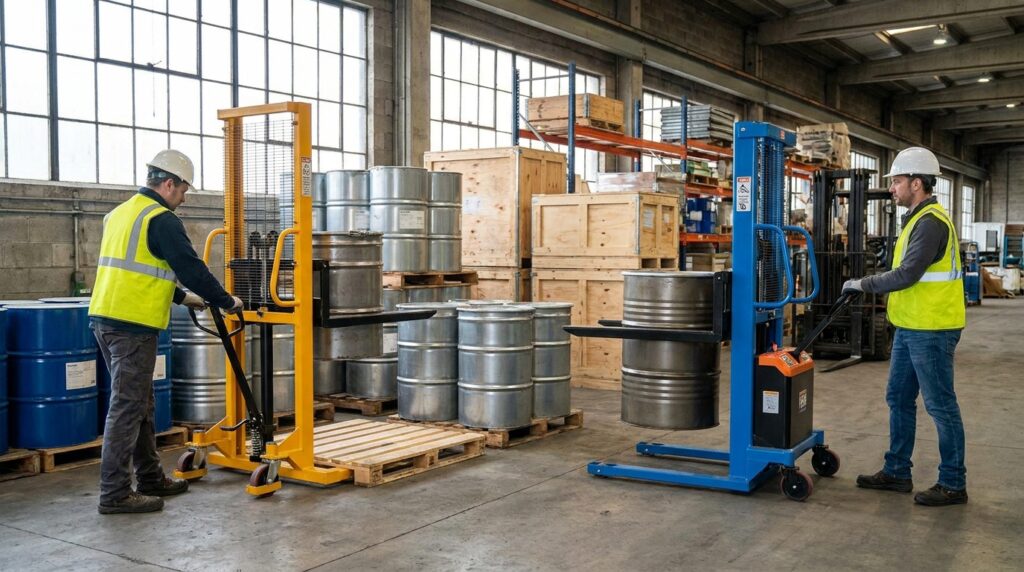
SEO Title: Hydraulic vs. Manual Drum Lifters: Expert Guide for Warehouse & Plant Managers
Meta Description: Discover the key differences between hydraulic and manual drum lifters. This expert guide for industrial buyers helps you choose the right solution for your warehouse or plant, focusing on safety, efficiency, and cost.
Understanding the Core Differences: Hydraulic vs. Manual Drum Lifters
In any industrial setting that handles drums – be it a chemical plant, a food processing facility, a pharmaceutical manufacturer, or a general warehouse operation – the safe and efficient movement of these often heavy and unwieldy containers is paramount. Drums, typically ranging from 30 to 55 gallons and constructed from materials like steel, plastic, or fiber, can weigh hundreds of pounds when full. Manual handling is not only inefficient but also poses significant ergonomic risks, leading to potential injuries and costly downtime. This is where drum lifters come into play. The two primary categories of drum lifters, distinguished by their power source, are manual and hydraulic. Understanding their fundamental differences is the first crucial step in selecting the right equipment for your specific operational needs.
The Mechanics of Manual Drum Lifters
Manual drum lifters rely entirely on human power for their operation. They typically employ leverage, mechanical advantage, and sometimes basic pulley systems to facilitate the lifting and moving of drums. These units are generally simpler in design and construction, often featuring robust frames, secure drum gripping mechanisms, and wheels for mobility. The lifting action in a manual drum lifter is usually achieved through a lever that the operator pushes or pulls, directly engaging mechanical components to raise the drum.
- Design and Operation: Manual lifters are designed for straightforward use. The operator positions the lifter around the drum, engages a clamping or gripping mechanism, and then operates a lever or hand crank to elevate the drum off the ground. Once lifted, the drum can be tilted, rotated, or transported by pushing or pulling the unit. The height of the lift is typically limited by the leverage provided by the manual mechanism.
- Key Components: Common components include a sturdy base frame, wheels (often solid rubber or polyurethane for durability), a drum clamping mechanism (e.g., a spring-loaded clamp, a locking saddle, or an expander ring), and a manual lifting lever or crank.
- Advantages: The primary advantages of manual drum lifters are their simplicity, lower initial cost, and lack of reliance on external power sources like electricity or compressed air. They are often a good choice for less frequent use, lighter drums, or in environments where power is not readily available.
- Limitations: The main drawback is the physical effort required. Lifting and maneuvering heavier drums can be strenuous, increasing the risk of operator fatigue and injury. The lifting capacity is also inherently limited by the operator’s strength and the mechanical advantage of the device.
The Power of Hydraulic Drum Lifters
Hydraulic drum lifters, in contrast, harness the power of hydraulics to achieve lifting and maneuvering. This system utilizes incompressible fluid (typically hydraulic oil) under pressure, generated by a pump, to move mechanical components like a piston. This allows for significantly more power and control compared to manual systems.
- Design and Operation: A hydraulic drum lifter typically features a hydraulic cylinder, a pump (either manual or electric), and a reservoir for the hydraulic fluid. The operator activates the pump, which pressurizes the fluid and pushes the piston within the cylinder. This action raises a lifting arm or mechanism that securely grips and lifts the drum. Many hydraulic models also offer features like powered tilting or rotation.
- Key Components: Essential components include the hydraulic power unit (pump, reservoir, cylinder), a robust frame, a drum gripping mechanism (often a saddle or tongs), and mobility features like wheels. Electric or manual pumps are used to generate the hydraulic pressure.
- Advantages: The most significant advantage of hydraulic drum lifters is their ability to lift heavier loads with minimal operator effort. The hydraulic system provides smooth, controlled lifting and lowering, reducing the risk of sudden movements or drops. They are ideal for frequent use, heavy drums, and situations where operator fatigue is a concern. Many models offer higher lifting capacities and heights.
- Limitations: Hydraulic systems are more complex than manual ones, leading to a higher initial purchase price. They also require periodic maintenance of the hydraulic system, such as checking fluid levels and seals. Electric models require access to a power source.
When considering the advantages and disadvantages of hydraulic versus manual drum lifters, it’s essential to explore various factors that influence their performance and suitability for different tasks. For a deeper understanding of this topic, you may find the article on drum handling equipment particularly insightful. It provides a comprehensive overview of the features, benefits, and applications of various lifting solutions. To read more, visit this article.
Key Selection Factors: Hydraulic vs. Manual
Choosing between a hydraulic and a manual drum lifter is not a one-size-fits-all decision. Several critical factors must be evaluated to ensure the selected equipment aligns with your operational demands, safety protocols, and budget. These factors include the weight and size of the drums you handle, the frequency of drum movement, the required lifting height, your available budget, and your commitment to maintenance.
Drum Specifications: Size, Weight, and Material
The physical characteristics of the drums themselves are paramount.
- Weight Capacity: This is arguably the most critical factor. Drums can contain liquids, powders, or solids, and their full weight can vary significantly. Manual lifters typically have lower weight capacities, often in the range of 500-800 lbs. Hydraulic drum lifters can handle substantially more, with capacities often ranging from 500 lbs up to 1,000 lbs or more, depending on the model. Always consult the equipment’s specifications and never exceed its stated safe working load.
- Drum Diameter and Height: While most drum lifters are designed for standard 55-gallon drums (approximately 22.5 inches in diameter), variations exist. Some lifters are adjustable or have specific designs to accommodate smaller (e.g., 30-gallon) or slightly larger drums. The height of the drum also influences how it needs to be gripped and lifted.
- Drum Material: The material of the drum (steel, plastic, fiber) can affect how securely it can be gripped. Steel drums are generally easier to grip securely due to their rigidity. Plastic drums, especially those with smooth surfaces or tapered walls, might require specialized gripping mechanisms to prevent slippage. Fiber drums, while less common for hazardous materials, also have unique surface textures that can influence grip security. Most robust drum lifters are designed with universal clamping mechanisms that can adapt to different drum types.
Operational Volume and Frequency
The sheer volume of drum handling and how often these tasks occur will heavily influence the cost-benefit analysis of hydraulic versus manual systems.
- High Volume/Frequent Use: If your operation involves moving dozens or hundreds of drums daily, the physical strain on operators using manual lifters will quickly become unsustainable. Hydraulic drum lifters, especially electric-powered models, offer significant efficiency gains by reducing operator fatigue and increasing throughput. The investment in a hydraulic system is often recouped through increased productivity and reduced injury-related costs.
- Low Volume/Occasional Use: For operations that only need to move a few drums per week or month, a manual drum lifter might be a more cost-effective solution. The initial investment is lower, and the lack of power requirements means no ongoing energy costs or complex maintenance. However, even for occasional use, safety should remain the top priority, and ensuring the operator has the strength and proper training to safely operate the manual lifter is essential.
Lifting Height and Reach Requirements
The intended use of the lifted drum will dictate the necessary lifting height and reach.
- Stacking and Palletizing: If drums need to be lifted onto shelves, into racks, or stacked on pallets, a higher lifting capacity and range are required. Hydraulic drum lifters generally offer greater vertical reach than their manual counterparts. Some models are specifically designed as drum stackers, capable of lifting drums to significant heights.
- Transfer and Dispensing: For transferring contents from a drum to a smaller vessel or for dispensing operations, the ability to precisely control the drum’s position, including tilting and rotation, becomes important. Many hydraulic drum lifters are equipped with features for controlled tilting and pouring, which are often difficult or impossible to achieve with basic manual lifters.
Budgetary Considerations: Initial vs. Total Cost of Ownership
When evaluating equipment, it’s crucial to look beyond the initial purchase price and consider the total cost of ownership over the lifespan of the equipment.
- Initial Purchase Price: Manual drum lifters generally have a lower initial purchase price. They are simpler to manufacture and require fewer complex components. Hydraulic drum lifters, especially those with electric pumps or advanced features, will have a higher upfront cost.
- Operating Costs: Manual lifters have no ongoing energy costs. Hydraulic lifters with electric pumps will incur electricity costs. Both types require maintenance, but the nature of that maintenance differs.
- Maintenance Costs: Manual lifters typically require less maintenance, primarily focused on lubrication of moving parts and occasional inspection of the clamping mechanism. Hydraulic systems require checks of fluid levels, seals, hoses, and pumps. While hydraulic maintenance can be more specialized, it is often straightforward with proper training.
- Safety and Productivity Impact: The hidden costs of inadequate equipment can be substantial. Frequent injuries from manual handling lead to lost workdays, increased insurance premiums, and potential legal liabilities. Investing in a hydraulic lifter, despite a higher initial cost, can lead to significant savings in the long run through improved safety, reduced downtime, and increased operator efficiency.
Equipment Comparisons and Specific Applications
Both hydraulic and manual drum lifters serve the fundamental purpose of safely moving drums, but their specific designs and capabilities lend themselves to different applications within the industrial landscape. Understanding these nuances can help you pinpoint the most suitable equipment for your unique workflows.
Manual Drum Lifters: Simplicity for Lighter Loads
Manual drum lifters are best suited for operations where the demands on lifting capacity and frequency are modest. Their strength lies in their simplicity and portability.
- Typical Applications:
- Light Manufacturing: Moving drums of raw materials or finished products within a small production area.
- Laboratory Settings: Transferring drums of reagents or waste materials.
- Retail Stockrooms: Moving drums of cleaning supplies or other inventory.
- Where Power is Limited: Environments without readily available electricity or compressed air.
- Example Scenario: A small craft brewery might use a manual drum lifter to move 30-gallon drums of specialty malt extract from a delivery area to the brewing station. The frequency is low, and the weight is manageable for a single operator.
Hydraulic Drum Lifters: Power for Demanding Environments
Hydraulic drum lifters are the workhorses of drum handling, designed to tackle heavier loads, higher frequencies, and more demanding operational requirements.
- Typical Applications:
- Chemical Plants: Safely moving drums of hazardous chemicals, often requiring precise control for dispensing.
- Oil Refineries and Petrochemical Facilities: Handling drums of lubricants, additives, or waste products.
- Pharmaceutical Manufacturing: Ensuring sterile and controlled environments for moving sensitive materials.
- Food and Beverage Processing: Moving drums of ingredients, syrups, or finished beverages, often requiring sanitary designs.
- High-Volume Warehousing: Efficiently moving and stacking drums for storage and distribution.
- Example Scenario: A large chemical distribution center handles hundreds of 55-gallon drums daily. A hydraulic drum lifter with an electric pump and powered tilting function is used to efficiently move drums from incoming docks, onto racking systems, and to the dispensing area, minimizing manual effort and maximizing safety.
Comparing Specific Features: Drum Clamping Mechanisms
The way a drum lifter grips a drum is critical for safety and stability. Both manual and hydraulic lifters employ various mechanisms.
- Adjustable Saddle/Clamps: Many lifters, both manual and hydraulic, utilize a saddle or a set of adjustable clamps that conform to the drum’s circumference. This is a common and versatile mechanism suitable for most standard drums.
- Tongs/Grippers: Some hydraulic lifters use a tong-like mechanism that extends and grips the rim of the drum. This can be very secure for steel drums but might require specific designs for plastic or fiber drums.
- Expander Ring Systems: For plastic drums, especially those with tapered sides, an expander ring mechanism might be employed. This system expands inside the drum’s chime (the rolled edge) to create a secure grip.
Comparing Specific Features: Lifting and Tilting Functions
The ability to lift and manipulate drums in various orientations is key to efficient operation.
- Manual Tilting: Many manual drum lifters allow for manual tilting and pouring by the operator using leverage. This can be effective for smaller volumes but can become strenuous for full drums.
- Powered Tilting: Hydraulic drum lifters often offer powered tilting, allowing for smooth, controlled pouring. This is a significant safety and efficiency advantage when dispensing large volumes.
- Manual vs. Electric Pumping: Within hydraulic systems, the pump can be manual (requiring operator effort to pressurize) or electric (powered by a battery or mains supply). Electric pumps significantly reduce operator effort and are ideal for frequent use.
Safety First: Mitigating Risks with Drum Lifters
The primary justification for investing in any type of drum lifter is to enhance workplace safety. Improper drum handling is a leading cause of musculoskeletal injuries, slips, trips, and falls, and even severe accidents involving drum contents. Selecting the right equipment and implementing robust safety protocols are essential to protect your workforce.
Ergonomics and Injury Prevention
Manual handling of drums, especially over extended periods or with heavy loads, places immense strain on the human body.
- Reducing Musculoskeletal Disorders (MSDs): Lifting, twisting, and carrying heavy drums are prime contributors to back injuries, shoulder strains, and other MSDs. Drum lifters eliminate or significantly reduce the need for these hazardous movements.
- Minimizing Slips, Trips, and Falls: When drums are handled manually, there’s a higher risk of dropping them, leading to spills and creating slip hazards. Securely gripped and transported drums are less likely to fall.
- Operator Fatigue: Even with lighter loads, repetitive manual lifting can lead to operator fatigue, impairing judgment and increasing the likelihood of errors and accidents. Hydraulic systems, by reducing physical exertion, help maintain operator alertness.
Equipment Safety Features
Modern drum lifters, both manual and hydraulic, come equipped with features designed to enhance safety.
- Secure Drum Gripping: A reliable clamping mechanism is paramount. It must hold the drum firmly during transport and tilting, preventing slippage. Always inspect the grip mechanism before each use.
- Stable Base and Wheels: A wide, stable base provides a solid foundation during lifting and transport. Durable, non-marking wheels ensure smooth movement and prevent damage to floor surfaces.
- Locking Mechanisms: Many drum lifters feature locking mechanisms that secure the drum in a particular position (e.g., upright or tilted) to prevent accidental movement during handling.
- Overload Protection: While not standard on all manual units, some higher-capacity hydraulic lifters may incorporate overload protection systems to prevent operation beyond their safe working load.
Best Practices for Safe Operation
Beyond the equipment itself, operator training and adherence to safety protocols are non-negotiable.
- Thorough Training: All operators must receive comprehensive training on the specific drum lifter model they will be using. This training should cover:
- Pre-operation checks (e.g., checking for leaks, inspecting the grip mechanism, ensuring wheels are secure).
- Proper loading and unloading procedures.
- Safe transport techniques.
- Correct operation of lifting, tilting, and lowering mechanisms.
- Emergency procedures.
- Pre-Use Inspections: A quick but thorough visual inspection before each use can identify potential issues before they lead to an accident. Check for any visible damage, loose parts, or signs of wear.
- Clear Work Areas: Ensure the path of travel is clear of obstructions, spills, and other hazards. Warn nearby personnel when moving drums.
- Appropriate PPE: Operators should always wear appropriate Personal Protective Equipment (PPE), including safety shoes, gloves, and potentially eye protection, depending on the material being handled.
- Never Exceed Capacity: Strictly adhere to the manufacturer’s stated weight and drum size limitations.
- Controlled Movements: Operate all controls smoothly and deliberately. Avoid sudden starts, stops, or turns, especially when the drum is lifted or tilted.
When considering the advantages of hydraulic versus manual drum lifters, it’s essential to explore various factors that can influence your decision. For a deeper understanding of how these lifting solutions can impact your operations, you might find it helpful to read a related article that discusses expert insights and recommendations. By visiting this link, you can connect with professionals who can provide tailored advice based on your specific needs and circumstances.
Maintenance and Longevity: Keeping Your Equipment Operational
To ensure the continued safe and efficient operation of your drum lifters, a proactive maintenance schedule is essential. The type and frequency of maintenance will differ significantly between manual and hydraulic equipment.
Manual Drum Lifter Maintenance
Manual drum lifters are generally simpler, making their maintenance straightforward.
- Regular Cleaning: Keep the equipment clean, free from dust, debris, and chemical residues. This prevents accumulation that could impede moving parts.
- Lubrication: Periodically lubricate all moving joints, pivot points, and wheel bearings according to the manufacturer’s recommendations. This reduces friction, wear, and ensures smooth operation.
- Inspection of Clamping Mechanism: Regularly check the drum gripping mechanism for wear, damage, or any signs of reduced effectiveness. Ensure springs are functioning correctly and locking pins are secure.
- Wheel and Frame Integrity: Inspect wheels for wear or damage. Ensure the frame is free from cracks or bends.
- Fastener Checks: Periodically check that all bolts, nuts, and other fasteners are tight and secure.
Hydraulic Drum Lifter Maintenance
Hydraulic systems, while more complex, benefit from well-defined maintenance routines that can significantly extend their service life.
- Hydraulic Fluid Levels and Quality: The hydraulic fluid is the lifeblood of the system. Regularly check the fluid level in the reservoir and top up with the correct type of fluid as specified by the manufacturer. Monitor the fluid for contamination (e.g., water, dirt, or debris), which can damage seals and pumps. Consider periodic fluid changes.
- Seal and Hose Inspection: Inspect all hydraulic seals and hoses for leaks, cracks, swelling, or wear. Damaged seals can lead to pressure loss and system malfunction, while worn hoses can rupture. Replace any compromised components immediately.
- Pump Operation: Listen for unusual noises from the hydraulic pump during operation. Ensure it builds and maintains pressure effectively. If the pump seems sluggish or noisy, it may require servicing.
- Cylinder and Piston Rod: Inspect the piston rod for scratches or corrosion. Ensure the cylinder operates smoothly without binding.
- General Cleaning: As with manual lifters, keep the hydraulic unit clean to prevent contamination.
- Battery Maintenance (for Electric Models): If your hydraulic lifter is battery-powered, follow the manufacturer’s guidelines for battery charging, watering (if applicable), and maintenance to ensure optimal performance and lifespan.
Making the Right Choice: Your Fredon Handling Consultation
Deciding between a hydraulic and a manual drum lifter is a significant operational decision that impacts safety, efficiency, and your bottom line. At Fredon Handling, we understand the complexities involved and are dedicated to helping you find the optimal solution for your specific needs. Our expertise in industrial material handling equipment, combined with a commitment to providing accurate, reliable information, empowers you to make an informed choice.
When considering drum handling equipment, remember to thoroughly assess your drum specifications (weight, size, material), your operational volume and frequency, your required lifting heights, and your budget. Prioritize safety by understanding the ergonomic benefits and essential safety features of each type of lifter. A well-maintained drum lifter, whether manual or hydraulic, is a long-term investment in your workforce’s well-being and your company’s productivity.
Fredon Handling offers a comprehensive range of drum handling solutions, including high-quality manual and hydraulic drum lifters designed for durability and performance. We invite you to explore our selection of drum handling equipment at https://fredonhandling.com/drum-handling-equipment/ and experience the difference that well-engineered equipment can make.
Ready to optimize your drum handling operations and enhance workplace safety? Contact Fredon Handling today for a personalized consultation. Our team of experts will assess your requirements and guide you to the perfect drum lifter solution.
Frequently Asked Questions About Drum Lifters
Here are answers to some common questions warehouse managers, plant engineers, and industrial equipment buyers have about hydraulic vs. manual drum lifters:
Q1: How do I determine the correct weight capacity for my drum lifter?
A1: You must know the maximum weight of the drums you intend to lift, including the drum itself and its contents. Always select a drum lifter with a stated capacity that comfortably exceeds this maximum weight to ensure a safe margin. Refer to your Safety Data Sheets (SDS) for accurate weight information.
Q2: Are there specific drum lifters for plastic drums versus steel drums?
A2: While many universal drum lifters can handle both, plastic drums can be more challenging to grip due to their smoother surfaces and potential for deformation. Look for drum lifters with adaptable clamping mechanisms or those specifically designed for plastic drums, which might use expander ring technology or specialized grippers to ensure a secure hold.
Q3: What kind of maintenance is typically required for a hydraulic drum lifter?
A3: Hydraulic drum lifter maintenance primarily involves checking and maintaining the hydraulic fluid (level, quality, and for leaks), inspecting seals and hoses for wear or damage, ensuring the pump is functioning correctly, and keeping the unit clean. Regular lubrication of moving parts and checks of structural integrity are also important.
Q4: Can a manual drum lifter handle a full 55-gallon steel drum easily?
A4: The ease of handling a full 55-gallon steel drum with a manual lifter depends heavily on the drum’s exact weight and the mechanical advantage provided by the lifter. While many manual lifters are designed for this purpose, it will still require significant operator effort, especially for heavier contents. For frequent or easier handling, a hydraulic option is generally recommended.
Q5: What is the benefit of electric-powered hydraulic drum lifters over manual hydraulic ones?
A5: Electric-powered hydraulic drum lifters significantly reduce operator effort. Instead of manually pumping to build hydraulic pressure, an electric motor does the work, allowing for faster lifting, smoother operation, and the ability to handle heavier loads with minimal physical exertion. This is crucial for high-volume operations or when employee fatigue is a concern.