
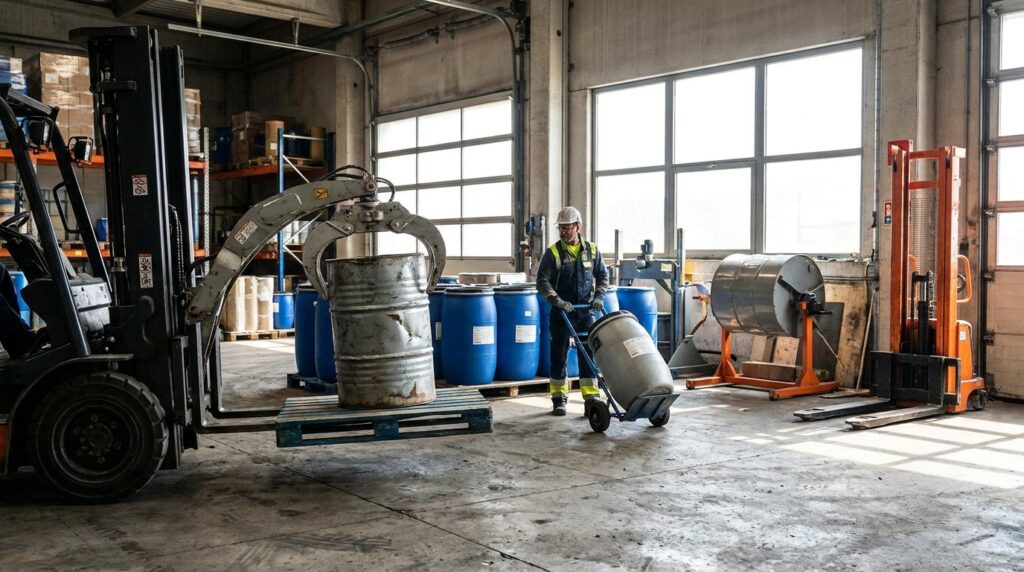
SEO Title: Steel vs. Plastic Drum Handling: Your Ultimate Equipment Compatibility Guide | Fredon Handling
Meta Description: Choosing the right drum handling equipment for steel and plastic drums is crucial for safety and efficiency. This comprehensive guide from Fredon Handling explores material differences, equipment compatibility, selection factors, and more.
Understanding the Crucial Differences: Steel vs. Plastic Drum Handling
Navigating the world of industrial drums often presents a fundamental choice: steel or plastic. Both materials have their advantages and are prevalent across numerous industries, from chemical manufacturing and oil & gas to food & beverage and pharmaceuticals. However, the inherent differences in their physical properties – weight, rigidity, wall thickness, potential for static electricity, and even susceptibility to damage – directly impact the type of drum handling equipment that is suitable and safe for use. As warehouse managers, plant engineers, safety managers, and industrial equipment buyers, understanding these distinctions is paramount for ensuring operational efficiency, preventing accidents, and protecting valuable inventory. This guide will delve deep into the characteristics of steel and plastic drums and how these characteristics dictate the compatibility and efficacy of various drum handling solutions. At Fredon Handling, we are committed to providing the expertise and equipment necessary to manage your drum operations safely and effectively.
For those looking to deepen their understanding of material handling solutions, the article on choosing the right material handling equipment for your business is an excellent resource. It provides insights that complement the discussion on Steel vs. Plastic Drum Handling by outlining key considerations in selecting equipment that ensures compatibility and efficiency. You can read more about it in this informative piece: How to Choose the Right Material Handling Equipment for Your Business.
Material Properties and Their Impact on Drum Handling
The material composition of a drum is the primary determinant of its handling requirements. Steel drums, known for their robust construction and durability, present one set of challenges, while plastic drums, offering chemical resistance and lighter weight, introduce another.
Steel Drums: Strength, Rigidity, and Potential Hazards
Steel drums are the traditional workhorses of the industrial drum world. Typically constructed from cold-rolled steel, often with reinforcing ribs or chimes, they are designed for strength and longevity.
- Weight: Steel drums are significantly heavier than their plastic counterparts, even when empty. A standard 55-gallon steel drum can weigh around 45-50 lbs (20-23 kg) empty, compared to a plastic drum of the same volume which might weigh 15-25 lbs (7-11 kg). This increased weight directly influences the lifting capacity and maneuverability required from handling equipment.
- Rigidity and Durability: Their rigid construction makes them resistant to deformation under load and less prone to punctures or tears. However, this rigidity can also mean they are more likely to dent or deform if dropped or impacted, potentially creating sharp edges that pose a safety hazard.
- Corrosion: While steel offers strength, it is also susceptible to corrosion, particularly in environments with high humidity or exposure to corrosive chemicals. This can lead to rust and, over time, compromise the drum’s integrity.
- Static Electricity: Steel is conductive, which is generally a safety advantage in environments where static electricity could ignite flammable vapors. However, improper grounding of handling equipment can still create static discharge risks.
- Handling Considerations: The sheer weight and robust nature of steel drums often necessitate powered drum lifting equipment or robust manual solutions. Clamping mechanisms need to be strong enough to grip the drum securely without causing damage, and the overall structure of the equipment must be capable of supporting substantial loads.
Plastic Drums: Chemical Resistance, Weight, and Static Risks
Plastic drums, commonly made from High-Density Polyethylene (HDPE), offer a distinct set of advantages and challenges for drum handling equipment.
- Weight: As mentioned, plastic drums are considerably lighter than steel drums. This makes them easier to maneuver manually or with lighter-duty equipment.
- Chemical Resistance: HDPE is highly resistant to a wide range of chemicals, making plastic drums ideal for storing and transporting corrosive liquids and solids without degrading the drum material. This also means the handling equipment won’t typically face issues with chemical etching of the drum.
- Flexibility and Brittleness: Plastic drums are more flexible than steel and can deform under pressure. While this can absorb some impact, they are also more susceptible to punctures, cracking, or becoming brittle in extremely cold temperatures.
- Static Electricity: Most plastic drums are non-conductive. This is a critical consideration in hazardous environments where flammable liquids or vapors are present. Static electricity can build up on the drum and handling equipment, leading to a dangerous discharge and potential ignition. Static-dissipative or groundable handling equipment is often required for plastic drums in such applications.
- Handling Considerations: While lighter, the flexible nature of plastic drums means handling equipment must be designed to grip them without crushing or deforming them. Clamps need to apply even pressure, and grippers might need a softer, more conforming surface. The non-conductive nature necessitates specific safety protocols and potentially specialized equipment to mitigate static hazards.
Essential Drum Handling Equipment Options for Steel and Plastic Drums
The selection of drum handling equipment is not a one-size-fits-all scenario. The material of the drum dictates the type of mechanism, capacity, and safety features required. Fredon Handling offers a comprehensive range of solutions designed to address these specific needs.
Manual Drum Lifters and Manipulators
For lighter loads or when powered assistance isn’t feasible, manual equipment plays a vital role.
- Drum Dollies: These are simple wheeled platforms that allow drums to be tipped and rolled. They are generally suitable for both steel and plastic drums, but care must be taken with plastic drums to avoid excessive tipping force that could deform the drum. They are best for transporting drums over relatively short, flat distances.
- Drum Trucks (Hand Trucks): These are upright devices with a platform at the bottom to support the drum and a handle for leverage. Many drum trucks feature a noseplate that slides under the drum chime. They are effective for moving both steel and plastic drums, but again, the tipping angle and force must be managed, especially with plastic. Some models have a securing strap or clamp to hold the drum in place.
- Drum Grabs/Clamps (Manual): These devices attach to the top rim or chime of the drum. For steel drums, robust metal jaws are common. For plastic drums, the jaws might be lined with rubber or a softer material to prevent crushing. Manual grabs require the operator to position and secure them, which can be less ergonomic for frequent use.
- Drum Rotators/Tippers (Manual): These units allow for controlled tipping and pouring of drum contents. They are particularly useful for dispensing liquids. Manual versions require significant operator effort but can be cost-effective for occasional use. They typically use a clamp or cradle to secure the drum, which must be compatible with both steel and plastic drum shapes.
Compatibility Notes: While many manual devices can handle both, always check the manufacturer’s specifications for weight limits and drum diameter/material compatibility. For plastic drums, ensure the gripping mechanism won’t puncture or deform the drum.
Powered Drum Handlers
For heavier drums, higher throughput, or improved ergonomics, powered solutions are essential.
- Powered Drum Lifters/Stackers: These machines use hydraulic or electric power to lift and often move drums. They typically employ a clamping mechanism or a drum gripper.
- For Steel Drums: Clamp-style lifters are common, gripping the drum’s circumference. Fully enclosed drum lifters are also used for maximum security. The capacity of these units must be sufficient for the weight of steel drums and their contents.
- For Plastic Drums: Drum lifters designed for plastic drums often feature a cradle or a more conforming clamp to avoid damaging the drum walls. Some may incorporate a mechanism to prevent the drum from sliding within the gripper.
- Drum Palletizers/De-palletizers: Automated or semi-automated systems that lift drums from pallets or stack them onto pallets. These are often designed with specific gripper heads that are either versatile enough for both materials or can be swapped out.
- Drum Rotators/Tippers (Powered): These units offer powered rotation for precise and safe dispensing of drum contents.
- For Steel Drums: Robust clamps or cradles are used to secure the heavy steel drums during rotation.
- For Plastic Drums: Similar to manual versions, powered rotators for plastic drums often use a more accommodating clamp or cradle to prevent damage. Again, static dissipation might be a consideration depending on the drum’s contents and environment.
- Drum Trucks with Integrated Lifters: Some powered drum trucks combine lifting and tilting capabilities, allowing for both vertical movement and controlled pouring. These are highly versatile but must be specified for the correct drum material and weight.
Compatibility Notes: Powered equipment often has interchangeable attachments or adjustable grippers to accommodate different drum types. Always verify the specific gripper head’s compatibility with both steel and plastic drums. Pay close attention to the maximum lift capacity and the drum diameter range.
Specialized Drum Handling Equipment
Beyond the general categories, specialized equipment addresses unique requirements.
- Drum Lifters with Weighing Scales: Integrated scales can improve inventory accuracy and dispensing processes. Compatibility with drum material remains a key factor for the lifting mechanism.
- Explosion-Proof (ATEX/XP) Drum Handlers: Crucial for hazardous environments where flammable materials are handled. These units are constructed to prevent ignition sources and are often designed with features to manage static electricity. They are typically available for both steel and plastic drums, with specific considerations for static dissipation in plastic drum handling.
- Overhead Drum Lifters (Crane Attachments): Used with overhead cranes or hoists, these attachments utilize various gripping mechanisms.
- For Steel Drums: Robust clamps, drum forks, or cradle-style attachments.
- For Plastic Drums: Grippers with protective liners or specialized cradle designs to avoid deforming or puncturing the drum.
Compatibility Notes: For hazardous environments, the drum handling equipment itself needs to be certified for the area classification. Static grounding and material compatibility are paramount.
Key Selection Factors for Drum Handling Equipment
Choosing the right drum handling equipment involves a systematic evaluation of several critical factors. Overlooking any of these can lead to inefficiency, damage to drums, or severe safety incidents.
Drum Dimensions, Weight, and Capacity
This is the most fundamental starting point.
- Drum Material: As extensively discussed, steel and plastic have different weight, rigidity, and static properties that dictate the handling mechanism.
- Drum Size: Drums come in various standard sizes, most commonly 30-gallon (114 L) and 55-gallon (208 L), but also smaller and larger. The equipment must be designed to accommodate the specific diameter and height of the drums being handled. For example, a clamp designed for a 55-gallon steel drum might not fit a 30-gallon plastic drum.
- Drum Weight: This refers to the maximum weight the equipment will need to lift. This includes the weight of the empty drum plus the weight of its contents. Always refer to the drum manufacturer’s specifications for maximum fill weight.
- Example: A standard 55-gallon steel drum might weigh 50 lbs empty. If filled with a substance weighing 500 lbs, the total load is 550 lbs. The handling equipment must have a capacity well exceeding this, typically with a safety margin of 1.5x to 2x the expected maximum load.
- Maximum Fill Capacity: Understanding the volume and density of the materials you store is crucial for calculating total weight. For example, a 55-gallon drum filled with water (approx. 8.34 lbs/gallon) will weigh significantly more than the same volume filled with a light oil or powder.
Operational Environment and Application
The context in which the drums are handled is as important as the drums themselves.
- Frequency of Use: Will drums be moved daily, hourly, or only occasionally? High-frequency operations may justify investment in more automated or ergonomic powered solutions, even if manual options are technically compatible.
- Type of Operation: Are you simply moving drums from point A to point B, stacking them, or dispensing their contents? Dispensing requires equipment with tilting and pouring capabilities, often with fine control.
- Floor Conditions: Are floors smooth, concrete, sloped, or uneven? This impacts the type of wheels or mobility features needed on the handling equipment.
- Storage Configuration: Are drums stored on the floor, on racks, or stacked multiple high? This will influence the required lifting height and reach of the equipment.
- Hazardous Areas: As discussed, environments with flammable vapors or explosive atmospheres require specialized explosion-proof (ATEX/XP) equipment designed to prevent ignition. This is particularly critical for plastic drums due to static electricity concerns.
Ergonomics and Safety Considerations
The well-being of your workforce and the prevention of accidents are paramount.
- Operator Effort: Manual handling can lead to musculoskeletal injuries. Powered equipment reduces operator strain.
- Grip Security: The handling mechanism must securely grip the drum without slipping or damaging it. For plastic drums, this means avoiding crushing. For steel drums, it means a firm, non-damaging grip.
- Stability: The equipment must be stable during lifting, transport, and tilting. Outriggers or wide bases can improve stability.
- Visibility: Operators need clear visibility of the drum and their surroundings.
- Static Dissipation: For plastic drums in hazardous areas, the equipment must be designed to prevent static build-up and discharge. This might involve conductive materials, grounding straps, or anti-static wheels.
- Emergency Stop Features: Powered equipment should have readily accessible emergency stop buttons.
Compatibility with Existing Infrastructure
Ensure new equipment integrates smoothly into your current setup.
- Aisle Widths and Doorways: Can the equipment navigate your facility’s corridors and pass through doors?
- Pallet Rack Systems: If stacking drums, does the equipment have the necessary reach and lifting height for your racking?
- Forklift Integration: If using forklift attachments, ensure the forklift’s capacity and attachment interface are compatible.
Maintenance and Serviceability
Consider the long-term ownership costs.
- Ease of Maintenance: Are spare parts readily available? Is the equipment designed for straightforward servicing?
- Manufacturer Support: Does the manufacturer offer good technical support and training?
For those interested in the nuances of industrial container management, a related article on the importance of proper drum handling techniques can be found in the education center. This resource offers valuable insights into the best practices for ensuring safety and efficiency when working with various types of drums. You can explore more about this topic by visiting the education center, where you’ll find a wealth of information to enhance your understanding of equipment compatibility and handling procedures.
Applications: Where Steel and Plastic Drum Handling Equipment Shines
The choice of drum handling equipment is dictated by the specific industry and the types of drums used. Fredon Handling’s solutions cater to a wide array of applications.
Chemical Industry
- Steel Drums: Often used for hazardous chemicals, solvents, and corrosive substances where strength is paramount. Powered drum lifters with robust clamps are essential for moving these heavy, often dangerous, containers. Explosion-proof drum handlers are frequently required.
- Plastic Drums: Ideal for a broader range of chemicals due to their resistance and lighter weight. Drum handlers with static-dissipative features are critical when dealing with flammable liquids. Controlled pouring from powered drum rotators is common for accurate dispensing.
Oil and Gas Sector
- Steel Drums: Ubiquitous for lubricants, fuels, and drilling fluids. Heavy-duty drum clamps and lifters capable of withstanding harsh environments are a must.
- Plastic Drums: Increasingly used for various oils and greases, offering chemical inertness. Drum trucks and drum lifters suitable for outdoor or potentially rough terrain are often needed. Static electricity management is also a consideration, especially in fuel handling.
Food and Beverage Industry
- Plastic Drums: Widely used for ingredients, flavorings, and finished products, particularly for their hygiene and chemical inertness. Drum handlers with food-grade materials and easy-to-clean surfaces are important. Drum tippers for controlled batching are common.
- Steel Drums: Less common for direct food contact but may be used for bulk ingredients or shipping. Standard drum lifters and dollies are generally sufficient.
Pharmaceutical Industry
- Plastic Drums: Primarily used for active pharmaceutical ingredients (APIs), excipients, and sterile solutions. Strict hygiene requirements necessitate drum handling equipment that is easily sanitized and made from non-reactive materials. Powered drum lifters with precise control and minimal contamination potential are preferred.
- Steel Drums: May be used for solvents or larger bulk chemicals used in manufacturing.
Manufacturing and General Industrial Use
- Both Steel and Plastic Drums: Used for a vast array of raw materials, finished goods, waste products, and process chemicals. The choice of equipment depends heavily on the specific application, volume, and hazard level. Versatile drum handlers that can accommodate both types, or easily interchangeable attachments, are highly valuable.
For those interested in the nuances of industrial storage solutions, a related article on the importance of choosing the right drum handling equipment can provide valuable insights. It discusses various factors that influence equipment compatibility and efficiency in operations. You can read more about it in this informative piece on drum handling equipment. This guide complements the discussion on Steel vs. Plastic Drum Handling by offering a broader perspective on how to optimize your handling processes.
Safety Considerations in Steel vs. Plastic Drum Handling
Safety is non-negotiable in any industrial setting, and drum handling equipment plays a critical role. The material of the drum introduces specific safety challenges.
Preventing Drum Damage and Spills
- For Steel Drums: The primary risk is damage to the drum’s chime or body, leading to leaks. Overly aggressive clamping or dropping can cause dents that compromise structural integrity. Ensure clamps are designed to grip the drum’s circumference evenly.
- For Plastic Drums: The risk is crushing, puncturing, or deforming the drum walls, which can lead to leaks or compromised containment. Drum handling equipment must have adjustable pressure settings or cushioning on gripping surfaces. Avoid sharp edges or excessive force. Always ensure the equipment is rated for the drum’s diameter to prevent slippage.
Managing Static Electricity with Plastic Drums
This is a critical safety differentiator.
- The Risk: Plastic is an insulator, allowing static charges to accumulate from friction during movement or dispensing. If the drum contains flammable liquids or vapors, a static discharge can cause a fire or explosion.
- Mitigation Strategies:
- Grounding: Using conductive or static-dissipative drum handling equipment that is properly grounded to the facility’s earth ground.
- Anti-static Wheels: Employing casters or wheels made from static-dissipative materials.
- Controlled Movement: Moving drums slowly and deliberately to minimize friction.
- Ionizing Equipment: In some high-risk areas, ionizers might be used to neutralize static charges.
- Environment Control: Maintaining appropriate humidity levels can help dissipate static.
- Fredon Handling Solutions: Many of our drum handling solutions for plastic drums in hazardous areas are designed with static control in mind, featuring conductive components and offering options for grounding.
Ergonomic Safety and Operator Health
- Reducing Strain: Powered drum handling equipment significantly reduces the physical strain on operators, minimizing the risk of back injuries, strains, and other musculoskeletal disorders.
- Controlled Operations: Powered equipment offers more precise control over lifting, tilting, and placement, reducing the chance of sudden movements or drops that could cause injury or spills.
Training and Procedures
- Proper Operation: All personnel operating drum handling equipment must receive comprehensive training on its safe and correct use. This includes understanding load capacities, operating procedures, and emergency protocols.
- Pre-use Inspections: Regular visual inspections of all drum handling equipment are crucial to identify any wear, damage, or malfunctions before use.
Maintenance and Longevity of Your Drum Handling Equipment
Investing in high-quality drum handling equipment is only the first step; ensuring its longevity and optimal performance requires a proactive maintenance strategy. This applies equally to equipment used for steel and plastic drums, though specific components might require different attention.
Routine Inspections
- Daily Checks: Before each shift, operators should perform a visual inspection. Look for loose bolts, worn parts, damaged welding, hydraulic leaks (for powered units), and ensure all controls are functioning. Check that gripping mechanisms engage securely.
- Weekly Checks: A more thorough inspection might include checking fluid levels in hydraulic systems, examining hydraulic hoses for wear or leaks, and testing safety features like emergency stops.
- Monthly Checks: Inspect wear plates, bushings, and bearings. Lubricate moving parts as per the manufacturer’s recommendations. For powered equipment, check battery health and charging systems.
Lubrication
- Moving Parts: Regularly lubricate all pivot points, bearings, and load-bearing components to prevent wear and ensure smooth operation. Use manufacturer-recommended lubricants.
- Hydraulic Systems: Ensure hydraulic fluid is clean and at the correct level. Contaminated fluid can damage pumps and seals.
Component Wear and Replacement
- Gripping Mechanisms: The jaws, clamps, or cradles that hold the drums are subject to significant wear, especially if they come into contact with drum chimes or rough surfaces. Inspect for damage, cracks, or excessive wear that could compromise grip security. Replace worn gripping pads or linings to maintain a secure hold, particularly important for plastic drums to prevent damage.
- Wheels and Casters: Inspect wheels for damage, flat spots, or debris accumulation. Worn wheels can make maneuvering difficult and increase operator effort. Replace as needed. For static-dissipative equipment, ensure the conductive paths are intact.
- Hydraulic Hoses and Seals: Regularly inspect hydraulic hoses for cracks, abrasions, or signs of leakage. Replace any suspect hoses immediately. Seals can degrade over time; monitor for leaks from cylinders or pumps.
- Electrical Components: For powered equipment, periodically check wiring, connectors, and motor brushes (if applicable) for signs of wear or damage.
Cleaning
- Regular Cleaning: Keep the equipment clean, free of dirt, debris, and chemical residues. This not only prolongs its life but also prevents contamination and ensures safe operation.
- Specific to Material: For equipment used in food or pharmaceutical applications, follow specific cleaning and sanitization protocols to prevent cross-contamination.
Manufacturer Recommendations
- Follow the Manual: Always adhere to the manufacturer’s specific maintenance schedule and guidelines. They provide the most accurate information for optimal performance and safety.
- Authorized Service: For complex repairs or major servicing, consider using an authorized service technician.
By implementing a diligent maintenance program, you can significantly extend the operational life of your drum handling equipment, reduce the risk of unexpected downtime, and, most importantly, ensure the safety of your personnel and operations, whether handling steel or plastic drums.
Buying Advice: Making the Right Choice for Your Drum Handling Needs
Selecting the optimal drum handling equipment is a strategic decision that impacts safety, efficiency, and cost. Here’s a practical guide to navigating the purchasing process.
Define Your Needs Precisely
Before looking at equipment, clearly articulate your requirements:
- Drum Types: What materials (steel, plastic), sizes (e.g., 55-gallon), and types (open-head, tight-head) of drums will you handle?
- Weight Capacity: Calculate the maximum weight (empty drum + contents) you need to lift. Always err on the side of caution with capacity.
- Application: Will you be transporting, stacking, rotating, dispensing, or a combination?
- Environment: What are the floor conditions, aisle widths, and are there any hazardous area classifications (e.g., ATEX/XP zones)?
- Frequency: How often will the equipment be used?
- Budget: Establish a realistic budget, considering both upfront cost and long-term operating expenses (maintenance, energy).
Research and Compare Options
- Fredon Handling Resources: Explore our extensive range of drum handling equipment at https://fredonhandling.com/drum-handling-equipment/. Our product descriptions and specifications provide detailed information on capabilities and compatibility.
- Equipment Types: Consider manual vs. powered, different gripping mechanisms (clamping, cradles, forks), and specific features like rotating or weighing.
- Material Compatibility: Pay close attention to how the equipment is designed to interact with steel versus plastic drums. Does it have protective liners? Is the clamping pressure adjustable?
Prioritize Safety Features
- Load Ratings: Ensure the equipment’s load rating significantly exceeds your maximum anticipated load.
- Stability: Look for stable designs, wide bases, or outriggers where appropriate.
- Grip Security: The mechanism must prevent drum slippage or damage.
- Ergonomics: For manual or semi-powered equipment, assess the level of operator effort required.
- Hazardous Area Compliance: If applicable, ensure ATEX/XP certification and static dissipation features are present.
Consider Total Cost of Ownership
- Upfront Cost: The initial purchase price.
- Operating Costs: Energy consumption (for powered units), consumables (lubricants, batteries).
- Maintenance Costs: Spare parts availability and ease of servicing.
- Downtime Costs: The cost of lost productivity due to equipment failure.
Seek Expert Advice
- Consult Fredon Handling: Our team of experts has in-depth knowledge of drum handling solutions and can help you identify the most suitable equipment for your specific needs. We can guide you through compatibility issues between steel and plastic drums and various equipment types.
Ask Key Questions
- What is the specific drum diameter and height range for this equipment?
- What is the maximum safe working load (SWL)?
- Is this equipment suitable for both steel and plastic drums? If so, are there specific adjustments or accessories required?
- What are the maintenance requirements?
- What is the warranty period?
- Are spare parts readily available?
- For hazardous applications, what specific safety certifications does it hold (e.g., ATEX/XP)?
By following these steps and partnering with experienced suppliers like Fredon Handling, you can make an informed decision that ensures safe, efficient, and cost-effective drum handling for both steel and plastic drums.
Frequently Asked Questions About Steel vs. Plastic Drum Handling
Q1: Can one piece of drum handling equipment safely handle both steel and plastic drums?
A1: While some versatile equipment, like certain drum clamps with adjustable pressure or rubberized linings, can be used for both, it’s crucial to verify. The key is that the gripping mechanism must not damage the drum. For plastic drums, this means avoiding crushing or puncturing. For steel drums, it means a secure, non-damaging grip. Fredon Handling offers solutions designed for versatility, but always check the specific product’s compatibility.
Q2: What are the primary safety concerns when handling plastic drums compared to steel drums?
A2: The most significant difference is the risk of static electricity buildup with plastic drums, which are non-conductive. This can lead to ignition in hazardous environments. Steel drums are conductive, which is generally safer for static dissipation, but their weight poses a greater mechanical handling challenge. Both require secure gripping to prevent spills.
Q3: How does the weight difference between steel and plastic drums affect equipment choice?
A3: Steel drums are considerably heavier. This necessitates drum handling equipment with higher lifting capacities and more robust construction. For plastic drums, the lighter weight allows for potentially lighter-duty equipment, but the handling mechanism must still be designed to avoid deforming the drum.
Q4: When is specialized equipment like explosion-proof (ATEX/XP) drum handlers necessary?
A4: Explosion-proof or ATEX/XP rated equipment is essential in any environment where flammable liquids, gases, or dusts are present, creating a risk of explosion. This is particularly critical for plastic drums in such environments due to static electricity risks. If there’s any doubt about the flammability of the contents or the environment, ATEX/XP rated handling equipment is mandatory.
Q5: Are there any specific maintenance differences between equipment used for steel drums versus plastic drums?
A5: Generally, the core maintenance principles (lubrication, inspection of moving parts, hydraulic systems) are the same. However, for equipment frequently handling plastic drums, regular inspection of any rubberized or soft linings on gripping surfaces is vital to ensure they are intact and providing adequate protection. For steel drums, checking the integrity of robust clamps for signs of fatigue or damage is paramount.
Partner with Fredon Handling for Your Drum Handling Needs
Choosing the right drum handling equipment is critical for safe, efficient, and compliant operations. Whether you primarily work with robust steel drums or chemically resistant plastic drums, Fredon Handling has the expertise and the product range to meet your specific requirements. We understand the subtle yet significant differences in material properties and their impact on handling.
Don’t let uncertainty about steel vs. plastic drum handling slow you down or compromise safety. Our team is ready to provide expert advice, recommend the most suitable equipment, and help you implement effective solutions for your facility.
Contact Fredon Handling today for a consultation and discover how we can optimize your drum handling operations.