
SEO Title: Expert Guide: How to Choose the Right Drum Dolly for Industrial Applications | Fredon Handling
Meta Description: Discover how to select the ideal drum dolly for your warehouse or plant. This comprehensive guide covers types, materials, features, safety, maintenance, and compatibility for industrial drum handling.
Understanding Your Drum Handling Needs: A Foundational Step
Navigating the world of industrial drum handling equipment can seem complex, but the first and most crucial step to selecting the right drum dolly lies in a thorough understanding of your specific operational needs. This isn’t just about acquiring a piece of equipment; it’s about finding a solution that enhances efficiency, prioritizes safety, and aligns with your existing workflows. Warehouse managers, plant engineers, safety managers, and industrial equipment buyers all play a vital role in this assessment, bringing their unique perspectives to the table.
Assessing Drum Characteristics: The Core of Your Decision
Before even looking at drum dollies, you need to know precisely what you’ll be handling. This involves a detailed examination of the drums themselves, as their physical properties will dictate the compatibility and effectiveness of any drum dolly.
Drum Material: Metal, Plastic, or Fiber?
The material of your drums is a primary consideration.
- Steel Drums: These are common for hazardous materials, solvents, and high-volume industrial chemicals. They are robust and durable but can be heavy. A drum dolly designed for steel drums needs to offer strong support and a secure grip to prevent slippage.
- Plastic (Poly) Drums: Widely used for a variety of chemicals, food products, and wastewater. Plastic drums are lighter than steel but can be more susceptible to impact damage or deformation. Drum dollies for plastic drums should have smooth surfaces and often feature cradles or clamping mechanisms that distribute pressure evenly to avoid crushing or puncturing the drum.
- Fiber Drums: Often used for dry goods, powders, and some less hazardous liquids. Fiber drums are generally lighter but less structurally rigid than steel or plastic. Drum dollies for fiber drums need to provide ample support without exerting excessive force that could damage the drum’s integrity.
Drum Size and Capacity: Standard vs. Non-Standard
Industrial drums come in various standard sizes, with the most common being 55-gallon (208-liter) drums. However, you may also encounter smaller 30-gallon drums or larger custom containers.
- 55-Gallon Drums: The workhorse of the industry. Most drum dollies are designed to accommodate this standard size, offering a reliable fit.
- Smaller Drums: For drums significantly smaller than 55 gallons, you might need a dolly with adjustable features or a specific design tailored to smaller diameters. In some cases, using a dolly designed for 55-gallon drums with a smaller drum might require additional bracing or padding to ensure stability.
- Larger or Non-Standard Drums: If you handle drums outside the typical range, you’ll need to look for specialized equipment or consider custom solutions. It’s essential to verify the maximum diameter and height the dolly can accommodate.
Drum Weight: From Empty to Full
The weight of your drums, especially when fully loaded, is a critical safety and operational factor.
- Empty Drums: While lighter, they still require careful handling to prevent damage and ensure ergonomic movement.
- Full Drums: A 55-gallon steel drum filled with liquid can weigh upwards of 500-600 pounds (227-272 kg). The drum dolly’s weight capacity must significantly exceed the maximum anticipated drum weight to ensure a safety margin. Exceeding a dolly’s stated capacity can lead to equipment failure, product spills, and severe injuries. Always check the manufacturer’s specifications for the maximum load limit.
Evaluating Your Handling Environment: Where Will It Be Used?
The physical space and conditions where drums are moved are just as important as the drums themselves. This assessment helps determine the type of dolly that will navigate your facility most effectively.
Floor Surfaces: Concrete, Asphalt, or Uneven Terrain?
The type of flooring in your warehouse or plant directly impacts the performance and longevity of a drum dolly.
- Smooth, Sealed Concrete: Ideal for most drum dollies. Standard wheels will glide easily, maximizing efficiency.
- Rough Concrete or Asphalt: Requires dollies with larger, more durable wheels, often made of polyurethane or solid rubber. These materials offer better shock absorption and can handle minor imperfections without getting stuck.
- Uneven or Grated Surfaces: May necessitate dollies with specialized suspension systems or larger casters that can bridge gaps. In some extreme cases, a different type of drum handling equipment might be more suitable.
Space Constraints and Maneuverability: Aisles and Obstacles
The dimensions of your aisles, doorways, and general workspace will influence the size and maneuverability of the drum dolly you choose.
- Tight Aisles: A more compact drum dolly with excellent turning radius is essential. Some dollies are designed with a lower profile or a specific wheel configuration to facilitate navigation in confined spaces.
- Frequent Turns: Dollies with swivel casters offer superior maneuverability, allowing for easy directional changes.
- Obstacles and Docking: Consider how easily the dolly can approach and maneuver around pallets, racks, and loading docks.
Frequency of Use and Throughput: Daily vs. Occasional Handling
The volume of drum handling dictates the durability and type of features you should prioritize.
- High-Frequency Operations: Require robust, heavy-duty dollies built with durable materials and high-quality casters designed for continuous use. Ergonomic features become increasingly important to prevent operator fatigue.
- Occasional Use: A simpler, more cost-effective model might suffice, provided it still meets safety and load-bearing requirements.
When selecting the right drum dolly for industrial applications, it’s essential to consider various factors such as weight capacity, material, and maneuverability. For further insights into the importance of choosing the right handling equipment, you may find the article on Fredon Handling’s website informative. It provides a comprehensive overview of different handling solutions and their applications, which can complement your understanding of drum dollies. You can read more about it here: Fredon Handling.
Exploring the Variety of Drum Dollies Available
Once you have a clear picture of your needs, you can begin to explore the different types of drum dollies available on the market. Each type is designed with specific applications and advantages in mind, catering to a range of industrial requirements. Fredon Handling offers a comprehensive selection of drum handling equipment, including various drum dollies designed for efficiency and safety.
Standard Drum Dollies: The Versatile Workhorses
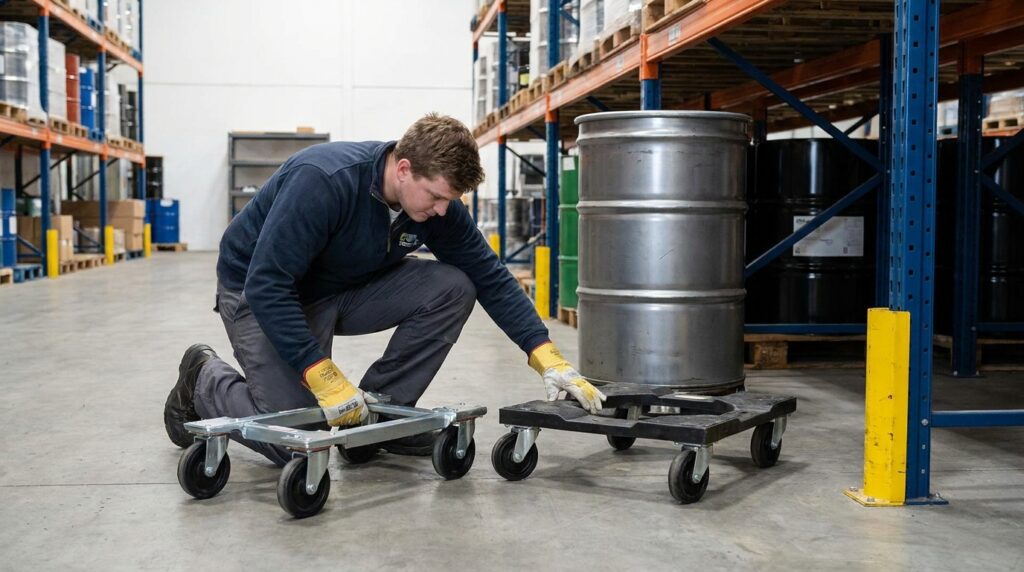
These are the most common and straightforward drum moving devices. They typically consist of a circular or triangular base with casters, designed to cradle the bottom of a drum and allow it to be rolled.
Basic Circular Drum Dollies
- Design: A circular metal frame with a central depression where the drum base sits. Typically equipped with four casters.
- Materials: Often constructed from steel for durability. Casters can be steel, rubber, or polyurethane.
- Capacity: Varies, but commonly rated for standard 55-gallon drums, with capacities ranging from 500 lbs to over 1000 lbs.
- Pros: Simple, cost-effective, easy to use for basic rolling. Good for short-distance, flat surface transport.
- Cons: Limited maneuverability in tight spaces, can be difficult to control with heavy loads, requires manual tilting to position or move.
- Applications: Warehouses, general storage, moving drums between workstations on smooth floors.
Triangular Drum Dollies
- Design: A triangular frame with three casters, designed to grip the drum’s rim or base. Some models have a lip to secure the drum’s bottom.
- Materials: Typically steel construction with robust casters.
- Capacity: Similar to circular dollies, designed for standard drum weights.
- Pros: Can offer slightly better stability and easier pivoting in some situations due to the three-point contact.
- Cons: Can still be challenging to control with heavy loads, may require specific drum types for optimal fit.
- Applications: Similar to circular dollies, often preferred where slightly more stability is desired on flat surfaces.
Drum Dollies with Enhanced Features: Optimizing Control and Safety
Beyond the basic rolling function, several drum dolly designs incorporate features that significantly improve control, safety, and ease of use, particularly for heavier loads or more demanding environments.
Drum Dolly Carts with Handles
- Design: These combine a drum dolly base with an attached push handle. The handle provides leverage for steering and control, making it much easier to guide the drum accurately.
- Materials: Steel construction, often with ergonomic rubber grips on the handle. Casters are typically heavy-duty polyurethane or solid rubber.
- Capacity: Often designed for higher weight capacities, suitable for full 55-gallon drums.
- Pros: Significantly improved maneuverability and control, reduced physical strain on operators, easier to navigate corners and obstacles.
- Cons: Can be slightly larger and require more storage space than basic dollies.
- Applications: Frequently used in industrial settings where drums are moved regularly over moderate distances, such as production floors, shipping departments, and large warehouses. They are a great choice for improving workflow efficiency and reducing the risk of accidents.
Drum Dollies with Braking Systems
- Design: Incorporates a braking mechanism, often a foot-operated lever, that locks the casters to prevent the dolly from rolling.
- Materials: Robust steel construction, with high-quality casters and a reliable braking system.
- Capacity: Varies widely depending on the model, but often built for heavy-duty industrial use.
- Pros: Enhances safety by securing the drum in place during loading/unloading, or when parked on slight inclines. Provides peace of mind when working around valuable or hazardous materials.
- Cons: The braking mechanism adds complexity and cost. May require a slight learning curve to operate effectively.
- Applications: Ideal for environments where drums need to be held securely, such as when being accessed for sampling, dispensing, or during transfer operations. Essential for any facility prioritizing accident prevention.
Drum Dollies with Built-in Lifting or Tilting Mechanisms
- Design: Some advanced dollies feature integrated mechanisms to slightly lift or tilt the drum, making it easier to maneuver it onto or off of the dolly, or to access the drum’s contents without full removal.
- Materials: Heavy-duty steel, often with hydraulic or mechanical lifting components.
- Capacity: Typically designed for robust use, supporting the full weight of loaded drums.
- Pros: Reduces the need for manual lifting and tilting, which are major sources of ergonomic injury. Improves efficiency for tasks like dispensing.
- Cons: More complex and expensive than basic dollies. Requires regular maintenance of the lifting/tilting mechanism.
- Applications: Excellent for operations involving frequent dispensing or sampling of drum contents, where minimizing manual effort and maximizing safety are paramount.
Key Selection Factors for Your Industrial Drum Dolly
Choosing the right drum dolly involves a systematic evaluation of several critical factors to ensure it meets your specific operational requirements, safety standards, and budget. This detailed approach helps prevent costly mistakes and ensures optimal performance.
Load Capacity and Safety Margins
This is arguably the most critical factor.
- Determine Maximum Drum Weight: Calculate the heaviest drum you will ever need to move, including the drum itself and its contents. It’s wise to overestimate slightly.
- Consult Dolly Specifications: Always check the manufacturer’s stated load capacity.
- Incorporate Safety Factor: It is best practice to select a drum dolly with a load capacity that is at least 1.5 to 2 times the maximum anticipated drum weight. This buffer accounts for dynamic loads (e.g., jolts, bumps), wear and tear, and ensures the equipment operates well within its safe limits. Fredon Handling provides detailed specifications for all our drum handling equipment, allowing you to make informed decisions.
Drum Compatibility: Material, Size, and Shape
Ensuring the dolly is designed to securely and safely handle your specific drums is paramount.
- Material Fit: As discussed, the dolly’s design should accommodate the material of your drums (steel, plastic, fiber) without causing damage. For plastic drums, look for smooth surfaces and even pressure distribution. For steel, a robust grip is key.
- Size and Diameter: Verify that the dolly’s dimensions are suitable for the diameter of your drums. For 55-gallon drums, most standard dollies will fit. If you use smaller or non-standard drums, you’ll need to look for adjustable options or specialized models.
- Drum Lip/Rim: Some dollies rely on the drum’s rim for support or restraint. Ensure your drums have a suitable rim if the dolly design requires it.
Casters and Mobility: Navigating Your Facility
The type and configuration of casters significantly influence the dolly’s performance and ease of use in your specific environment.
- Caster Material:
- Rubber: Good all-around option, provides decent grip and shock absorption, suitable for most indoor surfaces.
- Polyurethane: Excellent durability, abrasion resistance, and load-bearing capacity. They roll smoothly and leave fewer marks on floors compared to some other materials. Often the best choice for industrial applications.
- Steel: Very durable and suitable for very heavy loads on smooth, hard surfaces but can be noisy and may damage softer floors.
- Nylon: Good for heavy loads and resistant to chemicals and moisture, but can be harder and noisier.
- Caster Size: Larger casters generally roll over obstacles and debris more easily and provide a smoother ride on uneven surfaces. Smaller casters offer a more compact footprint and better maneuverability in very tight spaces.
- Swivel vs. Rigid:
- Swivel Casters: Allow for 360-degree movement and are essential for high maneuverability in congested areas. Most drum dollies have a combination of swivel and rigid casters, or all swivel casters for maximum agility.
- Rigid Casters: Provide directional stability but limit maneuverability.
- Bearing Type: Ball bearings offer smoother rolling and higher load capacities compared to plain bearings.
Ergonomics and Ease of Use
Reducing operator strain and fatigue is crucial for productivity and preventing injuries.
- Handle Design: If considering a drum dolly cart, evaluate the handle height and grip for comfortable operation.
- Weight and Balance: A well-balanced dolly that is easy to push or pull, even with a full drum, will significantly improve user experience.
- Effort Required: Consider how much force is needed to start movement, steer, and stop the dolly. Dollies with smooth-rolling casters and good leverage (like those with handles) require less effort.
Durability and Construction Material
The longevity of your investment depends on the quality of materials and construction.
- Steel: Most industrial drum dollies are made from robust steel, often powder-coated for corrosion resistance. Look for welded seams and sturdy construction.
- Reinforcement: Check for any reinforced areas, especially around caster mounts, as these are high-stress points.
- Overall Build Quality: A well-built dolly will withstand the rigors of daily industrial use without bending, breaking, or becoming wobbly.
Cost and Budget Considerations
While essential, cost should not be the sole determining factor.
- Initial Purchase Price: Compare prices across different models and manufacturers.
- Total Cost of Ownership: Consider the long-term costs, including maintenance, potential repairs, and the cost of downtime due to equipment failure. A slightly more expensive, higher-quality dolly may offer better long-term value.
- ROI: Evaluate how the drum dolly will contribute to efficiency gains, reduced labor costs, and fewer safety incidents, which can justify the investment.
Applications and Use Cases for Drum Dollies
Drum dollies are versatile tools employed across a wide spectrum of industrial applications. Their primary function is to simplify the movement of drums, thereby enhancing operational efficiency and workplace safety. Understanding these common use cases can help you identify the most suitable type of drum dolly for your specific needs.
Manufacturing and Production Lines
In manufacturing settings, drums are often used to store raw materials, intermediate products, or finished goods. Drum dollies are indispensable for moving these drums to and from processing stations, filling machines, or packaging areas.
- Material Transfer: Moving drums of chemicals, solvents, paints, or adhesives from storage to the production floor.
- Workstation Access: Positioning drums next to machinery for easy access by operators during batch processing or continuous production.
- Product Filling and Packaging: Rolling drums to filling stations, weighing scales, or packaging lines.
Warehousing and Logistics
Warehouses and distribution centers handle a vast number of drums, requiring efficient methods for storage, retrieval, and staging for shipment.
- Storage and Retrieval: Moving drums into and out of racking systems or designated storage areas.
- Order Picking: Transporting selected drums to the dispatch area.
- Loading and Unloading: Facilitating the movement of drums onto and off of trucks or other transport vehicles (often in conjunction with ramps or lifts).
Chemical and Hazardous Material Handling
The safe handling of chemicals, including hazardous materials, demands reliable and secure equipment. Drum dollies play a crucial role in minimizing risks associated with moving these sensitive materials.
- Containment and Spill Prevention: A well-designed drum dolly helps maintain drum integrity and can help contain minor leaks, reducing the risk of spills.
- Controlled Movement: Dollies with braking systems or robust handles allow for more controlled movement, crucial when dealing with potentially volatile substances.
- Reduced Manual Contact: Minimizing direct manual contact with drums of hazardous materials reduces exposure risks for personnel.
Food and Beverage Industry
In food and beverage processing, drums are used for ingredients, flavorings, and sometimes finished products. Maintaining hygiene and preventing contamination are key concerns.
- Ingredient Transfer: Moving drums of syrups, oils, flavors, or other bulk ingredients to mixing tanks or processing equipment.
- Hygiene: Dollies made with easy-to-clean materials and smooth surfaces can contribute to maintaining sanitary conditions.
Maintenance and Repair Workshops
Workshops often utilize drums for lubricants, cleaning agents, waste materials, or specialized fluids.
- Fluid Dispensing: Positioning drums for easy dispensing of oils, coolants, or cleaning solutions.
- Waste Management: Moving drums of waste oil or solvents to designated disposal points.
Petrochemical and Oil & Gas Operations
These industries rely heavily on drums for various oils, lubricants, and process chemicals. The demanding environments often require robust and reliable equipment.
- Bulk Material Handling: Moving drums of lubricants, fuels, or other petrochemical products.
- On-site Operations: Facilitating the movement of drums around drilling sites, refineries, or storage facilities.
When selecting a drum dolly for any of these applications, refer back to the selection factors discussed earlier. For instance, a chemical handling application might prioritize a dolly with a robust braking system and material compatibility, while a high-traffic warehouse would benefit from a highly maneuverable dolly cart with durable polyurethane casters.
When selecting a drum dolly for industrial applications, it’s essential to consider various factors such as load capacity, material, and maneuverability. For those looking to optimize their warehouse operations, exploring the top material handling equipment can provide valuable insights. You can find more information in this article about efficient warehouse operations, which highlights the importance of choosing the right tools for the job. This knowledge can help ensure that your drum dolly meets the specific needs of your workspace.
Safety Considerations and Best Practices for Drum Dolly Operation
Safety is paramount when handling industrial equipment, and drum dollies are no exception. Implementing strict safety protocols and ensuring operators are well-trained can prevent accidents, injuries, and equipment damage.
Operator Training and Competency
- Proper Use: Ensure all operators are thoroughly trained on the specific drum dolly model they will be using. This includes understanding its load capacity, braking mechanisms, and proper maneuvering techniques.
- Awareness of Surroundings: Operators must always be aware of their surroundings, including personnel, other equipment, and potential obstacles.
- Personal Protective Equipment (PPE): Depending on the materials being handled and the environment, appropriate PPE such as safety shoes, gloves, and eye protection should be worn.
Pre-Operation Inspections
Before each use, a quick visual inspection can identify potential issues.
- Caster Check: Ensure all casters are present, securely attached, and free of debris or damage. Spin each caster to check for smooth rotation.
- Frame Integrity: Inspect the dolly frame for any signs of damage, cracks, or bending.
- Brake Functionality: If the dolly has a brake, test its operation to ensure it engages and disengages correctly.
- Load Capacity Verification: Double-check that the weight of the drum does not exceed the dolly’s rated capacity.
Safe Loading and Unloading Procedures
- Stable Platform: Ensure the drum is placed on a level, stable surface before attempting to load it onto the dolly.
- Secure Placement: Position the drum squarely on the dolly’s base. For models with retaining lips or cradles, ensure the drum is properly seated.
- Controlled Movement: When moving a loaded drum, do so at a slow, controlled pace. Avoid sudden starts, stops, or sharp turns, especially with heavy loads.
- Clear Path: Ensure the intended path is clear of obstructions.
Handling of Different Drum Types
- Plastic Drums: Be mindful that plastic drums can deform or crack under excessive pressure or sharp impacts. Avoid dragging them or forcing them into place.
- Steel Drums: While robust, steel drums can be very heavy. Always ensure the dolly’s capacity is sufficient and use leverage wisely.
- Fiber Drums: These are less structurally rigid and can be damaged by uneven surfaces or excessive force.
Storing and Securing Drums
- Parking: When not in use, ensure the drum and dolly are parked in a designated, stable area, away from high-traffic zones.
- Braking: If the dolly has a brake, engage it when parking, especially on any incline.
- Securing Loads: Never leave a loaded drum unattended on a dolly, especially on ramps or inclines, without adequate bracing or securing.
Addressing Spills and Emergencies
- Spill Kits: Have appropriate spill containment and cleanup kits readily available in areas where drums are handled.
- Emergency Procedures: Ensure all personnel are familiar with emergency procedures in case of a spill or accident.
By adhering to these safety considerations, you can significantly reduce the risks associated with drum handling and create a safer working environment for everyone. Fredon Handling is committed to providing equipment that prioritizes safety and encourages best practices.
Maintenance and Longevity: Keeping Your Drum Dolly in Top Condition
Regular maintenance is key to ensuring the longevity, reliability, and continued safe operation of your drum dolly. Neglecting maintenance can lead to premature wear, unexpected failures, and potential safety hazards.
Routine Inspections
Beyond the pre-operation checks, periodic, more thorough inspections are crucial.
- Weekly/Monthly Checks: Schedule regular inspections to examine casters for wear, damage, or embedded debris. Check for any loose bolts, cracks in the frame, or signs of corrosion.
- Lubrication: For dollies with high-quality casters, check the manufacturer’s recommendations for lubrication intervals. Properly lubricated bearings reduce friction, improve rolling, and extend caster life.
Cleaning and Housekeeping
Keeping the drum dolly clean is essential for several reasons.
- Material Compatibility: Residual chemicals or materials can corrode or degrade the dolly’s components. Regular cleaning prevents this.
- Debris Removal: Accumulated dirt, dust, or debris can impede caster movement, leading to increased effort and potential damage.
- Hygiene: In food, beverage, or pharmaceutical applications, maintaining cleanliness is critical for preventing contamination.
- Best Practice: After each use, or at the end of the day, wipe down the dolly, paying attention to the casters and the drum contact surfaces.
Caster Care
Casters are the most critical wear components of a drum dolly.
- Wheel Replacement: When caster wheels become significantly worn, chipped, or flat-spotted, they should be replaced. This not only ensures smooth rolling but also prevents damage to your floors.
- Bearing Maintenance: If your casters have sealed bearings, they typically require little to no maintenance. However, if they are accessible, follow manufacturer guidelines for lubrication.
- Debris Removal: Regularly remove any tangled threads, wires, or other debris from caster wheels and bearings.
Structural Integrity
- Tighten Fasteners: Periodically check and tighten any bolts or fasteners. Vibration from movement can cause them to loosen over time.
- Weld Inspection: Visually inspect weld points for any signs of cracking or separation. If any are found, the dolly should be removed from service and inspected by a qualified technician.
Repair and Replacement
- Minor Repairs: Small dents or scratches can often be addressed with touch-up paint to prevent rust.
- Major Damage: If the dolly sustains significant structural damage, or if a critical component like a caster is severely damaged, it’s often more cost-effective and safer to replace the entire unit.
- Component Availability: For specialized dollies, inquire about the availability of replacement parts like casters or braking mechanisms from the manufacturer.
By integrating these maintenance practices into your routine operations, you can maximize the lifespan of your drum dolly, minimize downtime, and ensure it continues to perform safely and efficiently. Fredon Handling supports the long-term value of your equipment with durable designs and, where applicable, readily available replacement components.
Frequently Asked Questions About Drum Dollies
We understand you might have specific questions about choosing and using drum dollies. Here are some common inquiries:
Q1: What is the difference between a drum dolly and a drum truck?
A1: A drum dolly is typically a low-profile, wheeled base that supports the bottom of a drum, allowing it to be rolled. A drum truck (also known as a drum carrier or lifter) is usually a more upright device with a handle and often a mechanism to tilt or lift the drum, making it easier to move and maneuver without fully tilting it. Dollies are generally for rolling, while trucks offer more controlled lifting and tilting.
Q2: Can I use a standard 55-gallon drum dolly for plastic drums?
A2: Yes, often you can, but with caution. Ensure the dolly’s surface is smooth and non-damaging to plastic. Some plastic drums are less rigid than steel, so a dolly that distributes weight evenly and doesn’t exert excessive pressure on a single point is preferable. Always check the dolly’s specifications to ensure it’s compatible with the drum’s dimensions and weight.
Q3: How do I determine the correct weight capacity for a drum dolly?
A3: First, determine the maximum weight of the drum you will be handling when full. Then, add a safety factor of at least 1.5 to 2 times that weight. This ensures the dolly can handle the load safely, accounting for dynamic forces during movement. Always refer to the manufacturer’s stated load capacity.
Q4: Are drum dollies suitable for outdoor use?
A4: While some dollies can be used outdoors, their longevity may be affected by weather exposure, rust, and uneven surfaces. Dollies with robust construction, corrosion-resistant coatings (like powder coating), and durable casters (e.g., solid rubber or polyurethane) are best suited for such environments. Always store them indoors or under cover when not in use to prolong their life.
Q5: How much maintenance does a drum dolly typically require?
A5: Basic drum dollies require minimal maintenance, primarily ensuring casters are clean and free of debris. Dollies with braking systems or lifting mechanisms may require more attention, including lubrication and functional checks of those specific components. Regular visual inspections for damage or wear are always recommended for any type of drum dolly.
Partner with Fredon Handling for Your Drum Handling Solutions
Choosing the right drum dolly is a critical decision that impacts the efficiency, safety, and productivity of your operations. At Fredon Handling, we understand the complexities of industrial material handling and are dedicated to providing robust, reliable, and safe equipment solutions.
We offer a comprehensive range of drum dollies and other drum handling equipment designed to meet the diverse needs of warehouses, manufacturing plants, and various industrial facilities. Our commitment to quality ensures that you receive equipment built to withstand demanding environments and deliver consistent performance.
Don’t leave your drum handling needs to chance. Contact Fredon Handling today for a consultation. Our experts are ready to discuss your specific requirements, assess your operational challenges, and help you select the optimal drum dolly or other material handling solution for your business. Visit our dedicated Drum Handling Equipment page at https://fredonhandling.com/drum-handling-equipment/ to explore our product lines and learn more.