
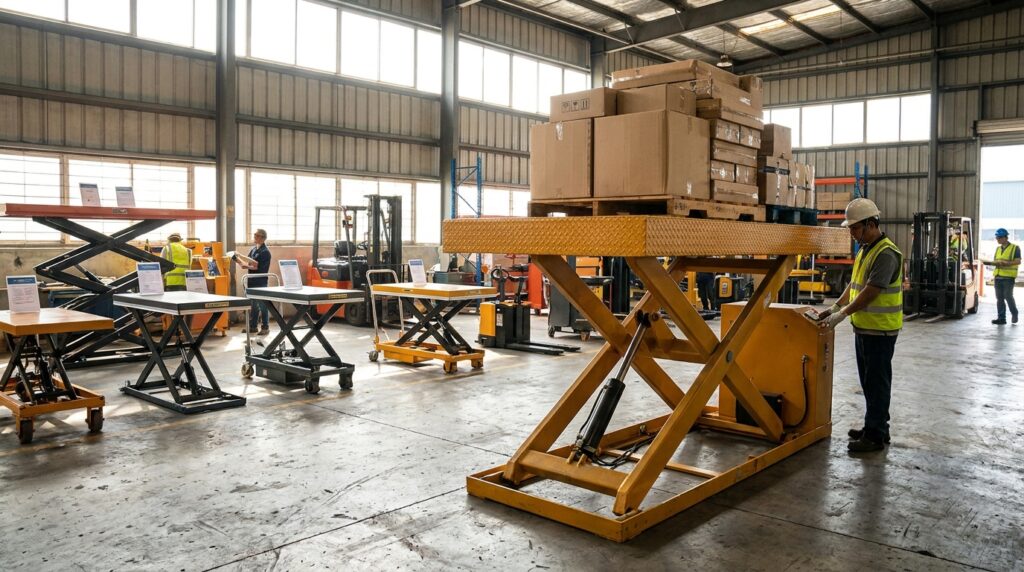
The Indispensable Role of Scissor Lift Tables in Modern Industrial Operations
In the dynamic landscape of industrial operations, efficiency, safety, and ergonomic optimization are paramount. Achieving these goals often hinges on the strategic deployment of material handling equipment. Among the most versatile and impactful solutions is the scissor lift table. These robust machines, characterized by their X-shaped folding support, provide vertical lift capabilities that can transform workflows, reduce physical strain on personnel, and enhance overall productivity. Whether you’re a seasoned facility manager, a meticulous engineer, or a purchasing professional seeking to optimize your operations, understanding the nuances of scissor lift tables is crucial. This comprehensive guide, brought to you by Fredon Handling, aims to equip you with the knowledge necessary to make informed decisions, from understanding their fundamental principles to selecting the perfect unit for your specific needs.
Scissor lift tables are far more than just simple lifting devices; they are sophisticated tools designed to bridge vertical gaps, facilitate assembly processes, improve loading/unloading operations, and create ergonomic workstations. Their ability to precisely control vertical movement at various heights makes them invaluable across a wide spectrum of industries, including manufacturing, automotive, logistics, aerospace, pharmaceuticals, and more. By eliminating the need for manual lifting and reducing repetitive bending and reaching, they directly contribute to a safer and more sustainable work environment, while simultaneously boosting output.
If you’re considering investing in scissor lift tables, you might find it helpful to explore additional resources that can guide your decision-making process. One such resource is the article on “Choosing the Right Material Handling Equipment,” which provides insights into various types of equipment, including scissor lifts, and how to select the best option for your needs. For more information, you can visit the article at Choosing the Right Material Handling Equipment.
Understanding the Mechanics and Benefits of Scissor Lift Tables
At their core, scissor lift tables operate on a mechanical principle that leverages leverage to achieve significant vertical displacement with relatively modest input force. A series of connected metal bars, arranged in a criss-cross pattern, extend and retract to raise and lower the platform. This mechanism is typically powered by an electric motor driving a hydraulic system or, in some lighter-duty applications, a direct mechanical drive.
The Power of Hydraulics: How Scissor Lifts Work
The most common type of scissor lift table utilizes a hydraulic system. This involves a reservoir of hydraulic fluid, a pump driven by an electric motor, and a cylinder containing a piston. When activated, the pump forces hydraulic fluid into the cylinder, pushing the piston outwards. This outward movement extends the scissor mechanism, lifting the platform. As fluid is released from the cylinder, the piston retracts, and the scissor mechanism folds, lowering the platform.
- Advantages of Hydraulic Systems:
- High Lifting Capacity: Hydraulics excel at generating substantial force, allowing scissor lifts to handle heavy loads.
- Smooth and Controlled Movement: Hydraulic systems offer precise control over lifting and lowering speeds, ensuring safe and stable operation.
- Durability: Hydraulic components are generally robust and designed for continuous use in demanding industrial environments.
- Reliability: The technology is well-established and proven, offering dependable performance over the long term.
While hydraulic systems are prevalent, some lighter-duty or specialized scissor lifts might employ electric screw drives or pneumatic systems. Electric screw drives offer excellent positional accuracy and are often quieter, while pneumatic systems can be faster but typically have lower lifting capacities. For most industrial applications demanding robust performance and significant lifting power, hydraulics remain the preferred choice.
Unpacking the Advantages: Why Scissor Lift Tables Are a Smart Investment
The benefits of integrating scissor lift tables into your operations are multifaceted and directly impact your bottom line and workforce well-being.
- Ergonomic Improvements and Injury Prevention: This is arguably the most significant advantage. Manual lifting is a leading cause of workplace injuries, particularly back strain and musculoskeletal disorders. Scissor lift tables eliminate the need for personnel to bend, twist, or overreach to move heavy items. By bringing the workpiece to an optimal working height, they create ergonomic workstations, reducing fatigue and the risk of injuries. This translates to fewer lost workdays, reduced workers’ compensation claims, and a healthier, more engaged workforce.
- Increased Productivity and Efficiency: Imagine the time saved by not having to manually reposition heavy materials or awkward loads. Scissor lift tables allow for rapid and precise vertical adjustments, streamlining assembly lines, improving material flow, and accelerating loading and unloading processes. Workers can access components or finished products at the ideal height, minimizing wasted motion and maximizing their productive time.
- Enhanced Safety: Beyond ergonomics, scissor lift tables contribute to overall site safety. They provide a stable and controlled platform for lifting, reducing the risk of dropped loads or tipping incidents often associated with manual handling. Many models are equipped with safety features like robust guardrails, emergency stops, and pressure-relief valves, further mitigating risks.
- Space Optimization: Many scissor lift tables are designed to be compact when lowered, allowing them to be integrated into existing layouts without significant disruption. When raised, they provide vertical access without requiring extensive floor space for ramps or other lifting mechanisms.
- Versatility Across Applications: The adaptability of scissor lift tables is a key differentiator. They can be used for a multitude of tasks, from simple material transfer to complex assembly operations, as detailed in the “Applications” section.
- Cost-Effectiveness: While an initial investment, the long-term savings in terms of reduced injuries, increased productivity, and improved efficiency make scissor lift tables a highly cost-effective solution. Their durability and low maintenance requirements further contribute to their favorable return on investment.
Key Features and Specifications to Consider When Buying
Selecting the right scissor lift table requires a thorough understanding of your operational needs and the technical specifications of available models. Ignoring these crucial details can lead to an underperforming or unsuitable unit, ultimately costing you time and money.
Lifting Capacity: The Foundation of Your Choice
This is the most critical specification. The lifting capacity refers to the maximum weight the scissor lift table can safely elevate. It’s essential to consider not only the weight of the heaviest individual item you’ll be lifting but also any potential for cumulative weight if multiple items are placed on the platform simultaneously.
- Understanding Load Distribution: Ensure the stated lifting capacity accounts for the load being distributed evenly across the platform. If you anticipate off-center loading, consult with the manufacturer about the table’s stability and reduced capacity in such scenarios.
- Safety Margins: Always choose a scissor lift table with a lifting capacity that significantly exceeds your typical maximum load. This provides a crucial safety margin and prevents overloading, which can lead to equipment failure and dangerous situations. At Fredon Handling, we recommend a minimum 25% safety margin.
Platform Size and Configuration: Tailoring to Your Workflow
The dimensions of the scissor lift table’s platform are as important as its lifting capacity. The platform must be large enough to accommodate the items you’ll be handling comfortably and safely.
- Standard vs. Custom Platforms: While standard sizes are readily available, many manufacturers, including Fredon Handling, offer custom platform dimensions. This is particularly beneficial for handling oversized or unusually shaped items.
- Platform Features: Consider if you require any special platform features, such as:
- Tilting Platforms: For easier loading and unloading of long materials or to create angled work surfaces.
- Rotating Platforms: To allow for easy access to all sides of a workpiece without repositioning the entire lift.
- Conveyor Tops: Integrated conveyors for seamless material transfer.
- Bellows or Skirts: To protect the scissor mechanism from debris and dust, or to prevent pinch points.
- Ramps: For easier access for pallet jacks or carts, especially for low-profile lifts.
Lift Height and Travel Range: Bridging the Vertical Gap
The maximum vertical travel of the scissor lift table determines the range of heights it can achieve. This is crucial for aligning with existing machinery, workstations, or loading docks.
- Minimum and Maximum Heights: Ensure the lift’s lowest and highest positions meet your operational requirements. Consider the height of your existing equipment and the desired ergonomic working heights for your personnel.
- Travel Speed: While not always a primary consideration, the speed at which the table lifts and lowers can impact workflow efficiency. Faster speeds can be beneficial in high-throughput environments.
Power Source and Control Options: Efficiency and Ease of Use
The power source and control system of a scissor lift table significantly influence its operation and integration into your facility.
- Power Options:
- Electric: The most common, offering reliable power and ease of use. Available in single-phase and three-phase options, depending on your facility’s electrical infrastructure.
- Air/Pneumatic: Suitable for environments where electricity is a concern or where rapid actuation is needed (though typically with lower capacities).
- Manual: For very light-duty applications or in areas without power.
- Control Systems:
- Hand-Held Pendant Controls: The most common, offering flexibility for the operator to control the lift from a convenient location.
- Foot Pedal Controls: Useful for hands-free operation.
- Fully Automated Controls: For integration into automated systems, often with programmable sequences.
- Remote Controls: For operating the lift from a distance.
Material and Construction: Durability in Demanding Environments
The materials used in the construction of a scissor lift table directly impact its durability, load-bearing capacity, and resistance to corrosion and wear.
- Steel Construction: Most industrial scissor lift tables are constructed from heavy-duty steel. The quality of the steel and the welding processes are crucial for longevity.
- Surface Treatments: Consider if your environment requires special coatings or treatments, such as powder coating for corrosion resistance or galvanized finishes for wet or corrosive conditions.
- Component Quality: Pay attention to the quality of hydraulic components, cylinders, seals, and electrical parts. Reputable manufacturers like Fredon Handling use high-quality, branded components for maximum reliability.
Practical Applications of Scissor Lift Tables Across Industries
The versatility of scissor lift tables makes them indispensable across a vast array of industrial sectors. Their ability to solve specific material handling challenges makes them a go-to solution for engineers and facility managers.
Manufacturing and Assembly Lines: Streamlining Production
In manufacturing environments, scissor lift tables are vital for creating efficient and ergonomic assembly stations.
- Component Presentation: They can bring heavy components to operators at the ideal working height, eliminating the need for manual lifting and reducing strain during repetitive tasks.
- Assembly and Fabrication: For complex assemblies, tilting or rotating platforms can provide easier access to all sides of a workpiece.
- Machine Tending: Scissor lifts can be used to load and unload parts from CNC machines or other automated equipment, reducing manual intervention.
- Quality Control Stations: They provide a stable and adjustable platform for inspection and testing of finished products.
Example: An automotive assembly plant uses numerous scissor lift tables to present car doors to workers at an ergonomic height, significantly reducing back injuries and increasing the speed of door installation.
Warehousing and Logistics: Enhancing Loading and Unloading
The logistics sector relies heavily on efficient material movement. Scissor lift tables play a crucial role in streamlining these operations.
- Dock Leveling: Many models can be integrated into loading docks to bridge the gap between the truck bed and the dock floor, allowing for easy and safe forklift or pallet jack access.
- Pallet Handling: They can lift and lower pallets to specific heights, facilitating pallet wrapping, order picking, or staging.
- Order Fulfillment: For e-commerce fulfillment centers, scissor lifts can bring shelves or picking bins to an ergonomic height for order pickers.
Example: A distribution center uses a series of heavy-duty scissor lift tables at their shipping dock to efficiently load trucks with palletized goods, reducing turnaround time and improving worker safety.
Automotive Industry: From Production to Maintenance
The automotive sector leverages scissor lift tables for a multitude of applications, both in manufacturing and in maintenance facilities.
- Vehicle Assembly: As mentioned, they are crucial for presenting vehicle sub-assemblies to line workers.
- Engine and Transmission Installation/Removal: They can provide stable support and precise positioning for heavy automotive components.
- Vehicle Maintenance and Repair: Auto repair shops and dealerships use scissor lifts for lifting vehicles for undercarriage work, tire changes, and general maintenance.
Example: A car dealership uses floor-mounted scissor lifts in their service bays to quickly and safely lift vehicles for routine maintenance, allowing technicians to work more efficiently and comfortably.
Pharmaceuticals and Cleanroom Environments: Precision and Hygiene
In industries where hygiene and precision are paramount, specialized scissor lift tables are often employed.
- Material Transfer: They can safely and hygienically transfer sensitive materials between different processing stages.
- Ergonomic Workstations: In cleanroom environments, they can create adjustable workstations for delicate assembly or inspection tasks.
- Sterile Environments: Materials used in construction and finishes are selected to meet stringent cleanroom standards.
Example: A pharmaceutical manufacturer uses stainless steel scissor lift tables in their cleanroom to precisely position vials and trays during filling and packaging operations, ensuring product integrity and worker ergonomics.
Other Notable Applications:
- Aerospace: For positioning aircraft components during assembly or maintenance.
- Printing and Packaging: For lifting heavy rolls of paper or finished product stacks.
- Food Processing: For elevating ingredients or finished products in hygienic environments.
- Laboratory Settings: For moving heavy equipment or creating adjustable experiment setups.
When considering the purchase of scissor lift tables, it’s essential to explore various resources that provide comprehensive insights into material handling equipment. A related article that can enhance your understanding is available at this link. This guide not only covers the key features and benefits of scissor lift tables but also delves into other critical aspects of material handling, helping you make an informed decision for your operational needs.
Choosing the Right Scissor Lift Table: A Strategic Approach
The selection process for a scissor lift table should be systematic and informed. By following a structured approach, you can ensure you invest in a solution that meets your current needs and offers long-term value.
Step 1: Define Your Operational Requirements
Before even looking at models, conduct a thorough assessment of your specific needs.
- What is the maximum weight you will be lifting? (Include safety margin)
- What are the dimensions of the typical loads?
- What is the required lift height range? (From lowest to highest point)
- What is the frequency of use? (Light, medium, heavy-duty)
- What is the operating environment like? (Indoor, outdoor, dusty, corrosive, cleanroom)
- What are the existing power sources available?
- Are there any specific safety regulations or standards that need to be met?
- What is your budget?
Step 2: Evaluate Key Specifications Against Your Needs
Once you have your requirements clearly defined, compare them against the specifications of different scissor lift tables.
- Lifting Capacity: Does it meet or exceed your calculated requirement with a safety margin?
- Platform Size: Is it adequate for your typical loads? Do you need a custom size?
- Lift Height: Does the travel range fit your workflow?
- Power Source: Is it compatible with your facility’s infrastructure?
- Durability and Construction: Does the material and build quality suit your operating environment?
Step 3: Consider Additional Features and Customization
Beyond the core specifications, think about features that can enhance efficiency and safety.
- Tilting/Rotating Platforms: Essential for certain applications.
- Ramps: For easy access with wheeled equipment.
- Bellows/Guards: For protection and safety.
- Control Options: Do you prefer pendant, foot pedal, or automated controls?
Fredon Handling’s expert team can guide you through this process, offering tailored recommendations based on your unique operational challenges. We understand that a “one-size-fits-all” approach rarely works in industrial settings.
Comparing Scissor Lift Table Types
While the basic principle is the same, different configurations cater to different needs.
| Feature | Standard Scissor Lift Table | Low Profile Scissor Lift Table | Portable Scissor Lift Table | Heavy-Duty Scissor Lift Table |
| :- | :– | :- | :– | :- |
| Primary Benefit | Versatility, moderate to high lifting capacities | Reduced ramp needs, ergonomic access from ground level | Mobility, ease of relocation | Extreme weight handling, robust construction |
| Typical Lift Height | Moderate to significant | Low to moderate | Low to moderate | High capacity, often with significant travel |
| Platform Height (Lowered) | Varies, typically higher than low profile | Very low, often close to ground level | Varies, designed for portability | Varies, can be low profile or standard |
| Typical Applications| Assembly, general material handling, machine tending | Pallet handling, order picking, low-level assembly | Small workshops, temporary workstations, maintenance | Heavy manufacturing, die handling, large component lifting |
| Mobility | Generally stationary, some mobile options | Generally stationary, some with wheels for positioning | Designed for easy manual or powered movement | Typically stationary, built for maximum stability |
Safety First: Operating and Maintaining Your Scissor Lift Table
The safe operation and regular maintenance of your scissor lift table are critical to prevent accidents and ensure its longevity. Adhering to best practices will protect your personnel and your investment.
Safe Operation Practices
- Read the Manual: Always thoroughly read and understand the manufacturer’s operating manual before using the equipment.
- Pre-Operation Checks: Before each use, perform a visual inspection of the lift, checking for any obvious damage, leaks, or loose components. Test the controls to ensure they are functioning correctly.
- Clear the Area: Ensure the area around the scissor lift table is clear of obstructions, personnel, and any potential trip hazards.
- Proper Load Placement: Always center the load on the platform. Never exceed the rated lifting capacity. Avoid dynamic loading (dropping or throwing items onto the platform).
- Controlled Descent: Lower the platform slowly and smoothly. Do not allow the platform to freefall.
- Lockout/Tagout: If performing maintenance or repairs, always ensure the lift is properly de-energized and locked out to prevent accidental activation.
- Never Ride the Lift: Scissor lift tables are designed for materials, not for transporting people.
- Awareness of Pinch Points: Be mindful of the scissor mechanism and surrounding areas where pinch points can occur.
Essential Maintenance Guidelines
Regular maintenance is key to preventing breakdowns and ensuring safe operation.
- Daily Checks:
- Visual inspection for leaks, damage, or wear.
- Check hydraulic fluid level (if applicable).
- Test all controls.
- Ensure safety guards are in place.
- Weekly Checks:
- Clean the platform and scissor mechanism of debris.
- Check for any loose bolts or fasteners.
- Lubricate pivot points as per the manufacturer’s recommendations.
- Monthly Checks (or as per manual):
- Inspect hydraulic hoses for wear or damage.
- Check hydraulic fluid for contamination.
- Inspect electrical connections.
- Test all safety features (e.g., emergency stop buttons).
- Annual Inspections:
- It is highly recommended to have a qualified technician perform an annual inspection of your scissor lift table. This comprehensive check can identify potential issues before they become serious problems.
Fredon Handling offers comprehensive maintenance plans and readily available spare parts to ensure your equipment remains in optimal condition.
Frequently Asked Questions About Scissor Lift Tables
Q1: What is the difference between a hydraulic and an electric scissor lift table?
A1: Hydraulic scissor lift tables use hydraulic fluid and a pump to generate lifting power, offering high capacities and smooth operation. Electric scissor lift tables, often using screw drives, are typically quieter and offer precise positioning, but generally have lower lifting capacities. Most industrial applications benefit from the power and reliability of hydraulic systems.
Q2: Can I use a scissor lift table outdoors?
A2: Some scissor lift tables are designed for outdoor use with appropriate weatherproofing and corrosion-resistant materials. However, many standard models are intended for indoor use only. Always check the manufacturer’s specifications and recommendations for outdoor operation.
Q3: How do I determine the correct lifting capacity for my needs?
A3: Calculate the weight of your heaviest expected load and add a safety margin of at least 25%. Consider if loads will be distributed evenly. It’s always better to have a higher capacity than you need to ensure safety and longevity.
Q4: Are custom scissor lift tables available?
A4: Yes, many manufacturers, including Fredon Handling, offer custom-designed scissor lift tables. This is ideal for applications with unique platform size requirements, specific lift heights, or specialized features.
Q5: What are the most common safety features on scissor lift tables?
A5: Common safety features include emergency stop buttons, overload protection valves, safety locking mechanisms, pressure relief valves to prevent over-pressurization, and sometimes bellows or skirts to prevent pinch points and protect the mechanism.
Q6: How often should I have my scissor lift table inspected by a professional?
A6: It is generally recommended to have a professional inspection at least annually. However, this can vary depending on the frequency of use, the operating environment, and local safety regulations. Always refer to the manufacturer’s guidelines.
Invest in Efficiency and Safety with Fredon Handling
Scissor lift tables are powerful tools that can significantly enhance operational efficiency, improve worker ergonomics, and bolster safety within your facility. By understanding their capabilities, carefully considering their specifications, and prioritizing safe operation and maintenance, you can make an informed investment that yields substantial returns.
At Fredon Handling, we are dedicated to providing high-quality industrial equipment solutions that meet the diverse needs of our clients. Our range of scissor lift tables is designed for durability, reliability, and optimal performance in demanding environments. Whether you require a standard model or a custom-engineered solution, our team of experts is ready to assist you in finding the perfect fit for your operation.
Ready to optimize your material handling processes and create a safer, more productive workplace?
Contact Fredon Handling today for a personalized consultation and a quote on the ideal scissor lift table for your business.
Visit fredonhandling.com or call us at [Insert Phone Number Here] to learn more.