
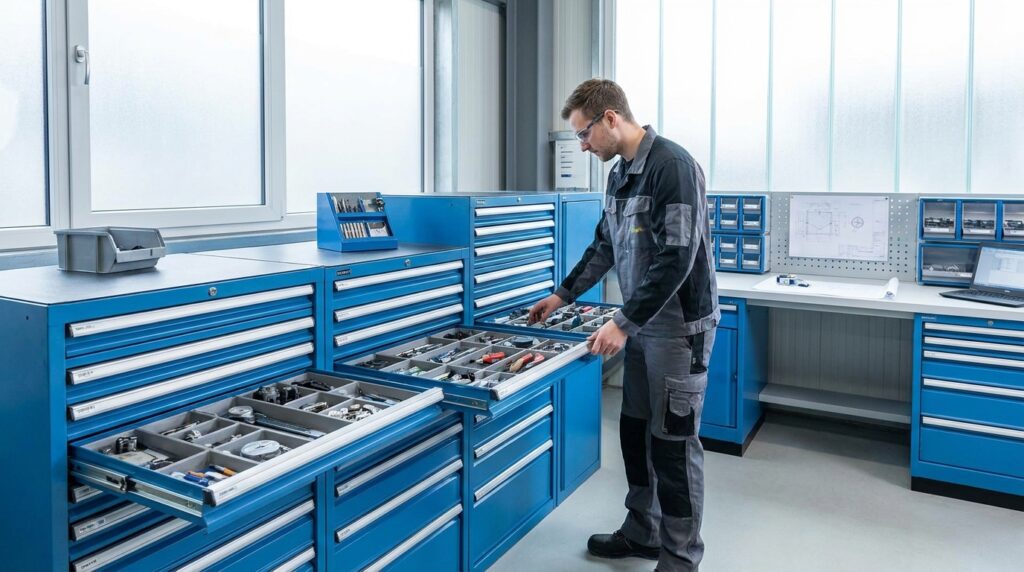
As a warehouse manager, manufacturer, maintenance professional, or purchasing specialist tasked with optimizing your facility’s efficiency and safety, you’re constantly seeking innovative modular drawer cabinets to streamline operations. At Fredon Handling (fredonhandling.com), we understand the critical role of effective industrial material handling and storage solutions in driving productivity, minimizing errors, and maximizing valuable floor space. This comprehensive guide delves into the world of modular drawer cabinets, exploring their multifaceted benefits, diverse applications across industries, and essential selection criteria to ensure you choose the perfect system for your unique needs.
Understanding the Core Advantages of Modular Drawer Cabinets
Modular drawer cabinets offer a sophisticated and highly customizable approach to industrial storage, moving beyond the limitations of traditional shelving and open racks. Their primary advantage lies in their ability to compartmentalize and organize a vast array of items, from small fasteners and delicate components to larger tools and work-in-progress materials. This controlled access and visibility significantly reduce search times, prevent misplacement, and contribute to a more orderly and efficient workspace. Furthermore, the robust construction of these cabinets ensures the protection of stored goods from dust, damage, and unauthorized access, a crucial factor in maintaining product integrity and operational security. The modular design is a key differentiator, allowing for easy expansion, reconfiguration, and integration into existing workflows, providing unparalleled scalability and adaptability as your business evolves.
Modular drawer cabinets offer a versatile solution for organizing tools and materials in various settings, making them an essential component of efficient manufacturing processes. For further insights into how modular drawer cabinets fit into the broader landscape of material handling equipment, you can explore the related article on essential material handling equipment for efficient manufacturing processes. This article provides valuable information on optimizing workflows and improving productivity in industrial environments. You can read it here: Essential Material Handling Equipment for Efficient Manufacturing Processes.
Diverse Applications Across Industrial Sectors
The versatility of modular drawer cabinets makes them indispensable across a wide spectrum of industrial environments. Their ability to adapt to specific storage requirements means they are not confined to a single niche but rather serve as foundational elements in numerous operational setups.
Manufacturing and Production Lines
In manufacturing, precision and accessibility are paramount. Modular drawer cabinets excel at storing:
- Tooling and Fixtures: Keeping drills, bits, specialized jigs, and collets organized and readily accessible at each workstation prevents downtime. This ensures that operators have the right tools at their fingertips, minimizing delays and improving workflow continuity.
- Small Parts and Components: From screws and washers to intricate electronic components and seals, dedicated drawers with internal dividers provide secure and organized storage. This prevents shortages, errors in assembly, and the loss of critical small items.
- Work-in-Progress (WIP): Storing partially assembled components or kits in designated drawers ensures that each stage of the production process has the necessary materials, streamlining the flow and reducing clutter on the production floor.
- Maintenance and Repair Parts: Essential spare parts for machinery, diagnostic tools, and specialized repair kits can be systematically stored, enabling quicker response times to equipment failures and reducing overall maintenance costs.
Warehousing and Distribution Centers
For efficient warehousing and distribution, rapid picking and accurate inventory management are key. Modular drawer cabinets support these functions by:
- High-Value Item Storage: Secure, lockable drawers protect expensive or sensitive inventory from theft and damage, offering peace of mind and reducing shrinkage.
- Order Picking and Kitting: Pre-assembled kits or frequently picked items can be stored in easily accessible drawers, significantly speeding up the order fulfillment process. This also reduces the risk of picking errors.
- Inventory Control: The structured nature of drawers facilitates more accurate inventory counts and cycle counting. Each drawer can represent a specific SKU or batch, simplifying tracking and reconciliation.
- Receiving and Put-Away: Items received can be temporarily staged or immediately put away into designated drawers, streamlining the receiving process and ensuring that goods are stored in their correct locations efficiently.
Maintenance, Repair, and Operations (MRO) Facilities
MRO operations rely heavily on quick access to a wide range of parts and tools. Modular drawer cabinets are ideal for:
- Tool Crib Management: Centralizing and organizing all hand tools, power tools, measurement devices, and specialized equipment ensures that maintenance teams can efficiently locate and check out necessary items. This also helps in tracking tool usage and identifying missing items.
- Spare Parts Inventory: Storing a comprehensive inventory of spare parts for various equipment, from hydraulic fittings to electrical components, ensures that repairs can be performed promptly, minimizing equipment downtime.
- Consumables and Supplies: Organizing items like lubricants, sealants, cleaning supplies, and personal protective equipment (PPE) ensures they are readily available when needed.
- Diagnostic Equipment and Test Gear: Sensitive diagnostic tools and testing equipment can be stored in dedicated, often padded, drawers to protect them from damage and ensure their calibration is maintained.
Aerospace and Automotive Industries
These industries demand extreme precision, traceability, and adherence to strict quality standards. Modular drawer cabinets contribute by:
- Tool and Die Storage: Precision tools, dies, and molds can be stored in climate-controlled or specially designed drawers to prevent corrosion and maintain their exact specifications.
- Component Traceability: Storing critical components in drawers with clear labeling and FIFO (First-In, First-Out) management ensures full traceability, a requirement for quality assurance and regulatory compliance.
- Calibration and Measurement Tools: Sensitive measuring instruments like micrometers, calipers, and gauges can be stored in dedicated drawers to protect them from vibration, dust, and impact, preserving their accuracy.
- Kitting for Assembly: Preparing kits of components for specific assembly operations in drawers streamlines the process, reduces errors, and ensures that all necessary parts are present and correctly identified.
Electronics and Technology Sectors
The delicate nature of electronic components necessitates secure and organized storage. Modular drawer cabinets are used for:
- Electronic Component Storage: Small, sensitive components like resistors, capacitors, integrated circuits (ICs), and connectors can be stored in anti-static drawers to prevent electrostatic discharge (ESD) damage.
- PCB and Sub-assembly Storage: Storing printed circuit boards (PCBs) and sub-assemblies in dedicated drawers protects them from physical damage and contamination during the manufacturing or repair process.
- Test Equipment and Probes: Precision electronic test equipment, probes, and accessories can be kept organized and protected, ensuring their readiness for use and maintaining calibration.
- Kits for Assembly and Repair: Pre-configured kits of components for specific electronic devices or repair tasks can be assembled and stored in drawers, facilitating efficient workflows.
Key Features to Consider for Optimal Selection
Choosing the right modular drawer cabinet system involves a careful evaluation of several key features that directly impact functionality, durability, and cost-effectiveness. Fredon Handling offers a range of options designed to meet diverse operational demands.
Drawer Capacity and Load Bearing
The load capacity of each drawer is a critical consideration, especially when storing heavy tools, components, or machinery parts.
- Light Duty: Suitable for storing small, lightweight items like fasteners, office supplies, or delicate electronic components.
- Medium Duty: Designed for a broader range of items, including hand tools, smaller spare parts, and general workshop supplies.
- Heavy Duty: Engineered to support significant weight, ideal for storing large tools, power tools, machine parts, and molds.
Fredon Handling’s solutions offer varying load capacities, often with specialized heavy-duty options featuring reinforced slides and construction. Understanding the weight of your stored items is paramount to preventing drawer failure and ensuring safe operation.
Drawer Organization and Internal Configurations
Effective organization within the drawers is as important as the cabinet itself.
- Dividers and Partitions: Adjustable and fixed dividers allow for the creation of custom compartments for small parts, preventing them from mixing and facilitating easy identification.
- Bins and Trays: Small, removable bins or trays can be placed within drawers for further compartmentalization, particularly useful for kitting or separating different types of components.
- Foam Inserts: Custom-cut foam inserts provide a secure and protective environment for delicate instruments, tools, or sensitive electronic components, preventing movement and shock damage.
- Labeling Systems: Clear and durable labeling on drawers and compartments is essential for quick identification of contents and efficient inventory management.
Fredon Handling provides a variety of internal organization accessories to tailor each drawer to specific storage needs, enhancing efficiency and reducing search times.
Security and Access Control
For valuable items or sensitive materials, security features are non-negotiable.
- Individual Drawer Locking: Many cabinets offer the option for individual drawers to be locked, allowing for controlled access to specific contents.
- Master Locking Systems: A central locking mechanism can secure all drawers simultaneously, providing a comprehensive security solution.
- Keyed Locks vs. Combination Locks: The choice depends on your security protocols and ease of access requirements.
- Electronic Access Control: For high-security applications, some systems can integrate with electronic keypads or card readers for sophisticated access management.
Material and Construction Durability
The materials used in the construction of modular drawer cabinets directly influence their lifespan and suitability for industrial environments.
- Steel Construction: Heavy-gauge steel is the standard for industrial cabinets, offering robustness, durability, and resistance to wear and tear.
- Powder-Coated Finish: A durable powder coating provides a resistant surface against scratches, corrosion, and chemicals, ensuring a long-lasting aesthetic and protective layer.
- Drawer Slide Mechanisms: High-quality, sealed ball-bearing slides ensure smooth, effortless operation even under heavy loads and withstand frequent use. Telescopic slides offer full drawer extension for complete access.
Fredon Handling prioritizes quality construction with robust steel frames and durable finishes to ensure their modular drawer cabinets withstand the rigors of demanding industrial settings.
Maximizing Space and Enhancing Efficiency
The inherent modularity and design of drawer cabinets offer significant advantages in optimizing warehouse layout and operational flow.
Vertical Space Utilization
Traditional shelving can be inefficient in its use of vertical space, often requiring items to be stacked high, making them difficult to access and increasing the risk of falls. Modular drawer cabinets, by contrast, bring the stored items to the user at an ergonomic height.
- Reduced Aisle Widths: Because drawers extend fully, less clear space is required around the cabinet compared to open shelving where items might protrude. This allows for narrower aisles, reclaiming valuable floor space.
- Dense Storage: The compartmentalized nature of drawers allows for a higher density of storage within a given footprint, especially for small and medium-sized items.
- Ergonomic Access: Drawers designed to open to waist or chest height reduce bending and reaching, improving ergonomics for staff and minimizing the risk of injuries.
Workflow Integration and Productivity Gains
The ability to customize drawer configurations and place cabinets strategically near workstations or assembly lines dramatically improves workflow.
- Point-of-Use Storage: Storing frequently used tools, parts, or materials directly at the point of use (e.g., at a specific machine or assembly station) eliminates the need for staff to walk to a central storage area. This “lean” principle significantly reduces travel time and boosts productivity.
- Kitting and Assembly Stations: Pre-kitted components stored in designated drawers at assembly stations ensure that all necessary parts are readily available, preventing delays and assembly errors.
- Reduced Search Times: Clear labeling and organized drawers mean that items can be located in seconds, not minutes or hours. This reduction in “search time” translates directly into increased operational output.
Preventing Damage and Improving Inventory Accuracy
The protection offered by enclosed drawers and organized compartments leads to fewer damaged goods and more reliable inventory data.
- Protection from Contamination: Drawers shield contents from dust, dirt, and environmental factors, preserving the condition of components and finished goods.
- Damage Prevention: By preventing items from being stacked precariously or falling, drawers significantly reduce accidental damage, leading to lower spoilage and replacement costs.
- Accurate Inventory Counts: With each item or batch having its designated place, performing cycle counts and full inventory audits becomes far more efficient and accurate. This data is crucial for effective replenishment and demand planning.
Modular drawer cabinets offer a versatile solution for organizing tools and equipment in various settings, and to explore this topic further, you can check out a related article that delves into the importance of efficient storage systems in enhancing workplace productivity. This insightful piece can be found at Fredon Handling’s Education Center, where you will discover additional tips and strategies for selecting the right storage solutions for your needs.
Practical Tips for Implementing Modular Drawer Cabinets
Successfully integrating modular drawer cabinets into your operations requires careful planning and execution. Here are some practical tips to ensure you get the most out of your investment.
Planning and Assessment
Before purchasing, conduct a thorough assessment of your storage needs.
- Inventory Analysis: Categorize your inventory by size, weight, frequency of use, and value.
- Space Evaluation: Measure available floor space and consider vertical clearance.
- Workflow Mapping: Understand how materials and tools move through your facility.
Organization Strategies
Invest time in effective organization.
- Standardize Labeling: Use a consistent and clear labeling system for all drawers and compartments.
- Implement FIFO: For perishable items or components with shelf lives, ensure a First-In, First-Out system is in place.
- Regular Audits: Periodically audit drawer contents to ensure they are still relevant and organized correctly.
Training and Best Practices
Educate your staff on proper usage.
- Demonstrate Loading: Show staff how to load drawers correctly to avoid overloading.
- Emphasize Return Procedures: Ensure items are returned to their designated drawers immediately after use.
- Safety Protocols: Train staff on safe drawer operation, especially with heavy loads.
Frequently Asked Questions About Modular Drawer Cabinets
Q1: How do modular drawer cabinets compare to traditional shelving for small parts?
A1: Modular drawer cabinets offer superior organization, protection, and density for small parts. Unlike shelving where parts can get lost or mixed, drawers provide individual compartments, reducing search times and preventing errors. They also prevent dust accumulation and damage from falling items.
Q2: Can modular drawer cabinets be customized to fit specific spaces?
A2: Yes, the “modular” aspect means they can be configured in various widths, heights, and depths. Many systems can also be combined or stacked to create bespoke storage solutions that precisely fit your available space. Fredon Handling can assist in designing custom configurations.
Q3: What is the typical lifespan of a high-quality modular drawer cabinet?
A3: A well-constructed, heavy-gauge steel modular drawer cabinet with quality drawer slides can last for decades, often 15-25 years or more, with proper maintenance. This longevity makes them a cost-effective long-term investment.
Q4: Are anti-static options available for storing sensitive electronic components?
A4: Absolutely. Many manufacturers, including those whose products Fredon Handling offers, provide specialized modular drawer cabinets with anti-static properties to protect sensitive electronic components from electrostatic discharge (ESD) damage.
Q5: How can I ensure I select the right drawer load capacity?
A5: Carefully weigh your heaviest stored items and add a buffer. If you store tools that weigh 50 lbs each and frequently fill a drawer with 10 such tools, you’ll need a drawer rated for at least 500 lbs, plus a safety margin. Consult Fredon Handling’s experts for guidance based on your specific inventory.
Elevate Your Storage Strategy with Fredon Handling
In the competitive landscape of industrial operations, efficient material handling and storage are not just desirable; they are essential for success. Modular drawer cabinets represent a significant advancement in how businesses manage their valuable assets, tools, and components. By providing unparalleled organization, security, and accessibility, they directly contribute to increased productivity, reduced operational costs, and enhanced safety. At Fredon Handling, we are committed to providing state-of-the-art industrial material handling and storage solutions, and our range of modular drawer cabinets is designed to meet the most demanding requirements of warehouse managers, manufacturers, maintenance teams, and purchasing professionals alike.
From optimizing small parts storage with precision-engineered dividers to ensuring the secure housing of high-value tooling, our modular drawer systems offer a flexible, scalable, and highly effective solution. We understand that each operation has unique challenges, and our team is dedicated to helping you find the perfect fit. Don’t let inefficient storage hinder your progress.
Ready to transform your workspace? Contact Fredon Handling today to request a personalized consultation or a detailed quote. Let us help you unlock the full potential of your industrial storage.