
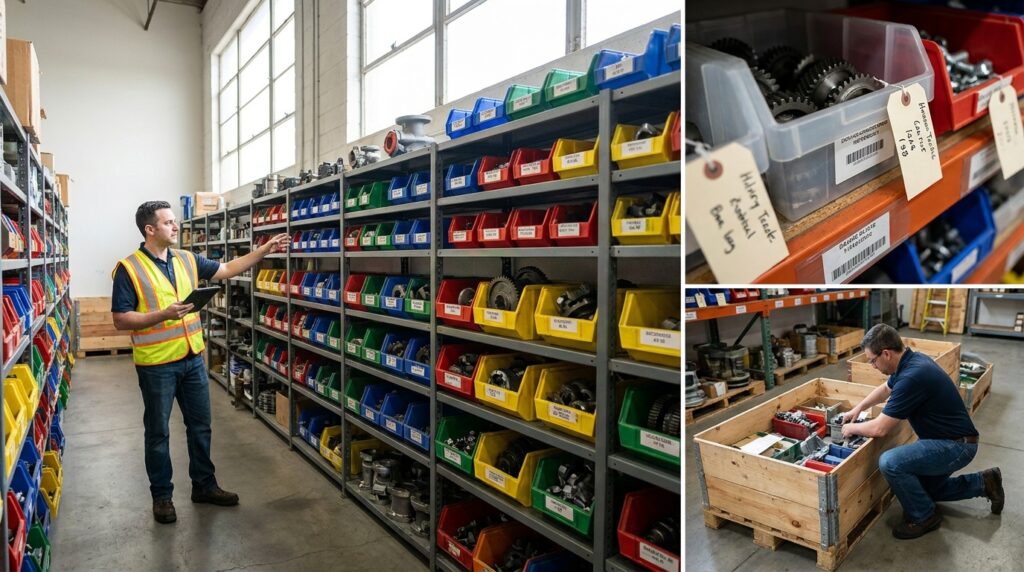
Optimizing Your Operations: The Power of Industrial Parts Inventory Management
In the fast-paced world of manufacturing and warehousing, efficient industrial parts inventory management is not just a best practice; it’s a critical driver of operational success. For warehouse managers, manufacturers, maintenance teams, and purchasing professionals, a well-organized inventory directly impacts productivity, reduces downtime, minimizes waste, and ultimately, boosts profitability. Fredon Handling understands the complexities of managing vast quantities of industrial components. Our expertise lies in providing tailored material handling and storage solutions designed to streamline your entire inventory process, from receiving to dispatch. This article will delve into the essential elements of effective industrial parts inventory management, covering everything from equipment selection to space optimization, to help you achieve unparalleled efficiency.
For those looking to enhance their understanding of inventory management in industrial settings, a related article that delves into the broader context of material handling is available. This resource discusses the importance of efficient material handling methods and their impact on overall operations. You can read more about it in the article titled “What is Material Handling: Understanding Its Importance and Methods” at this link.
Understanding the Foundations of Effective Industrial Parts Inventory
At its core, effective industrial parts inventory management is about knowing what you have, where it is, and how to access it quickly and safely. This requires a robust system that encompasses clear labeling, logical organization, and appropriate storage infrastructure. Without these fundamentals, even the most sophisticated inventory software will struggle to deliver optimal results. Warehouse managers often grapple with limited space, the constant influx of new parts, and the need to track both raw materials and finished components. Manufacturers rely on timely access to parts for production lines, while maintenance teams need immediate access to spare parts to minimize equipment downtime. Purchasing professionals benefit from accurate inventory data to make informed procurement decisions, preventing stockouts and overstocking. Fredon Handling offers a comprehensive range of solutions to support these varied needs, from high-density shelving systems to specialized material handling equipment.
The Importance of a Systematic Approach
A haphazard approach to inventory can lead to significant financial losses. Lost or misplaced parts mean delayed production, emergency expedited shipping costs, and potential customer dissatisfaction. Furthermore, disorganized storage increases the risk of damage to components, leading to premature obsolescence or the need for costly replacements. Implementing a systematic approach, starting with clear identification and categorization, is the first step towards mitigating these risks and maximizing the value of your industrial parts inventory.
Key Objectives of Inventory Management
The primary objectives of effective industrial parts inventory management are multifaceted:
- Minimize Downtime: Ensuring that critical spare parts are readily available to keep production lines and equipment running smoothly.
- Reduce Costs: Avoiding excessive holding costs, obsolescence, and the expense of emergency orders.
- Improve Productivity: Enabling quick and easy retrieval of parts, reducing time spent searching.
- Enhance Accuracy: Maintaining precise records of inventory levels and locations to support planning and decision-making.
- Maximize Space Utilization: Employing smart storage solutions to make the most of available warehouse or factory floor space.
Essential Industrial Parts Inventory Storage Solutions and Equipment
The right storage equipment is the backbone of any efficient industrial parts inventory system. Fredon Handling provides a wide array of solutions designed to suit different types of parts, storage densities, and operational workflows. Choosing the appropriate equipment directly impacts accessibility, organization, and space utilization.
Shelving and Racking Systems: The Building Blocks
Shelving and racking are fundamental to storing a vast range of industrial parts. The selection depends on the size, weight, and frequency of access required for each item.
- Static Shelving: Ideal for smaller parts, bins, and individual components. This can range from light-duty boltless shelving for low-volume items to heavy-duty industrial shelving capable of supporting significant weight.
- Example: Storing nuts, bolts, washers, and electronic components in clearly labeled bins on static shelves.
- Pallet Racking: Essential for storing larger items, bulk materials, and finished goods on pallets.
- Selective Pallet Racking: Offers direct access to every pallet, suitable for operations with a wide variety of SKUs and good stock rotation.
- Drive-In/Drive-Thru Racking: Maximizes storage density by allowing forklifts to drive into the rack structure. Ideal for First-In, Last-Out (FILO) or First-In, First-Out (FIFO) inventory with fewer product variations.
- Push-Back Racking: Stores multiple pallets deep on each level, utilizing gravity to move pallets. Offers better selectivity than drive-in systems while maintaining high density.
- Pallet Flow (Gravity Flow) Racking: Uses lanes with rollers or wheels to move pallets from the loading to the unloading side, ensuring strict FIFO. Excellent for high-volume, fast-moving goods.
- Fredon Handling Expertise: We offer a comprehensive range of pallet racking solutions to optimize your warehouse footprint.
Binning and Small Parts Storage
For smaller, individual components, effective binning and specialized storage are crucial to prevent mix-ups and ensure easy retrieval.
- Component Bins: Durable plastic or metal bins of various sizes, often stackable or designed to fit within shelving units.
- Types: Open-front bins, stackable bins, hopper-front bins for easy access.
- Labeling: Crucial for quick identification. Consider color-coding for different part categories.
- Automated Storage and Retrieval Systems (AS/RS) for Small Parts: For high-volume, high-speed operations, AS/RS can significantly improve efficiency and accuracy. These systems automatically store and retrieve bins or totes.
- Example: Storing thousands of electronic components, fasteners, or specialized tooling in a compact AS/RS unit.
- Fredon Handling Solutions: Explore our automated storage solutions for advanced inventory management.
Specialized Storage Solutions
Certain industrial parts require unique storage conditions or handling methods.
- Workbenches and Mobile Workstations: For assembly, kitting, or repair operations, providing organized workspaces with integrated storage is essential.
- Tool Cribs and Cabinets: Secure storage for valuable tools, gauges, and sensitive equipment, often with specialized inserts or foam cutouts.
- Cantilever Racking: Designed for storing long, bulky items like pipes, lumber, metal bars, or extrusions.
- Drum and Barrel Storage: Safe and secure racking solutions for drums and barrels, often with spill containment features.
- High-Density Storage: Utilizing systems like mobile aisle shelving to dramatically increase storage capacity within a given footprint.
Implementing Best Practices for Labeling Your Industrial Parts Inventory
Effective labeling is the cornerstone of an organized and efficient industrial parts inventory. Without clear, consistent, and durable labels, the best storage systems can become chaotic.
The Anatomy of a Good Industrial Part Label
A well-designed industrial part label should be:
- Clear and Legible: Using easily readable fonts and sufficient contrast.
- Concise: Containing only essential information.
- Durable: Able to withstand the warehouse environment (dust, moisture, abrasion).
- Unique: Containing a unique identifier for each part or batch.
Essential Information for Industrial Part Labels
Consider including the following information:
- Part Number: The primary identifier.
- Part Description: A brief, descriptive name of the item.
- Manufacturer (if applicable): Useful for sourcing and warranty.
- Unit of Measure: (e.g., Each, Box, Kg).
- Batch/Lot Number: Crucial for traceability, especially in regulated industries.
- Location Code: A visual or coded indicator of the part’s storage location.
- Barcode: For seamless integration with inventory management software.
Labeling Methods and Technologies
The method of labeling should align with your operational scale and technology adoption.
- Printed Labels:
- Thermal Transfer Printers: Produce durable, smudge-proof labels suitable for harsh environments.
- Inkjet/Laser Printers: Less durable but suitable for less demanding applications.
- Barcode Labeling: Essential for automated data capture.
- Types: UPC, EAN, Code 39, Code 128, QR codes.
- Scanners: Handheld scanners, ring scanners, or integrated scanner systems for fast and accurate data entry.
- RFID Tags: Radio-Frequency Identification tags offer advanced capabilities, allowing for hands-free scanning of multiple items simultaneously and providing real-time location data. This can dramatically speed up inventory counts and tracking.
Labeling Strategies for Different Scenarios
- New Inventory: Label items as they are received.
- Repackaging: Ensure labels are updated or replaced when parts are moved or repackaged.
- Bins and Shelves: Label bins and shelf locations clearly to guide put-away and retrieval.
- Work-in-Progress (WIP): Label components at various stages of production.
In the pursuit of optimizing industrial parts inventory management, understanding the significance of effective labeling and organization is crucial. A related article that delves deeper into this topic can be found at this link, where you can explore various strategies that enhance efficiency and reduce errors in inventory handling. By implementing these best practices, businesses can streamline their operations and ensure that their inventory systems are both functional and user-friendly.
Organizing Your Industrial Parts Inventory for Maximum Efficiency
Once parts are labeled, the next critical step is to organize them logically within your storage system. This involves strategic placement and arrangement to optimize accessibility and minimize travel time for personnel.
Strategic Slotting and Location Assignment
Slotting is the process of assigning specific storage locations to parts based on factors like demand, size, weight, and frequency of access.
- ABC Analysis: Categorize parts based on their usage frequency:
- A Items: High-volume, fast-moving parts. Store these in easily accessible locations near pick-up points or production lines.
- B Items: Medium-volume parts. Store in moderately accessible locations.
- C Items: Low-volume, slow-moving parts. Can be stored in less accessible or higher locations.
- Product Affinity: Store parts that are frequently used together in close proximity. This reduces travel time for kitting or assembly operations.
- Size and Weight: Store heavy or bulky items on lower shelves or at accessible heights to prevent injury and damage.
- Environmental Considerations: Segregate parts requiring specific temperature, humidity, or hazardous material storage.
Inventory Control Systems and Software
While physical organization is key, robust inventory control software is indispensable for managing and tracking your industrial parts inventory.
- Warehouse Management Systems (WMS): WMS software automates and optimizes warehouse operations, including receiving, put-away, picking, packing, and shipping. They provide real-time visibility into inventory levels and locations.
- Enterprise Resource Planning (ERP) Systems: ERP systems integrate various business functions, including inventory management, procurement, and production planning.
- Key Software Features:
- Real-time Inventory Tracking: Accurate stock counts at all times.
- Demand Forecasting: Predict future demand to optimize stock levels.
- Order Management: Streamline the picking and packing process.
- Reporting and Analytics: Provide insights into inventory performance, turnover rates, and potential issues.
- Cycle Counting and Physical Inventory Tools: Facilitate regular inventory audits to maintain accuracy.
Optimizing Workflow for Put-Away and Picking
The efficiency of your put-away and picking processes directly impacts overall productivity.
- Optimized Pick Paths: Software can generate the most efficient routes for pickers to gather items for an order, minimizing travel time.
- Batch Picking: Picking multiple orders at once to reduce travel.
- Zone Picking: Assigning pickers to specific zones within the warehouse.
- Kitting: Pre-assembling kits of parts for specific production jobs or customer orders to streamline the final assembly process.
Enhancing Industrial Parts Inventory Management with Material Handling Equipment
Material handling equipment plays a vital role in efficiently moving