
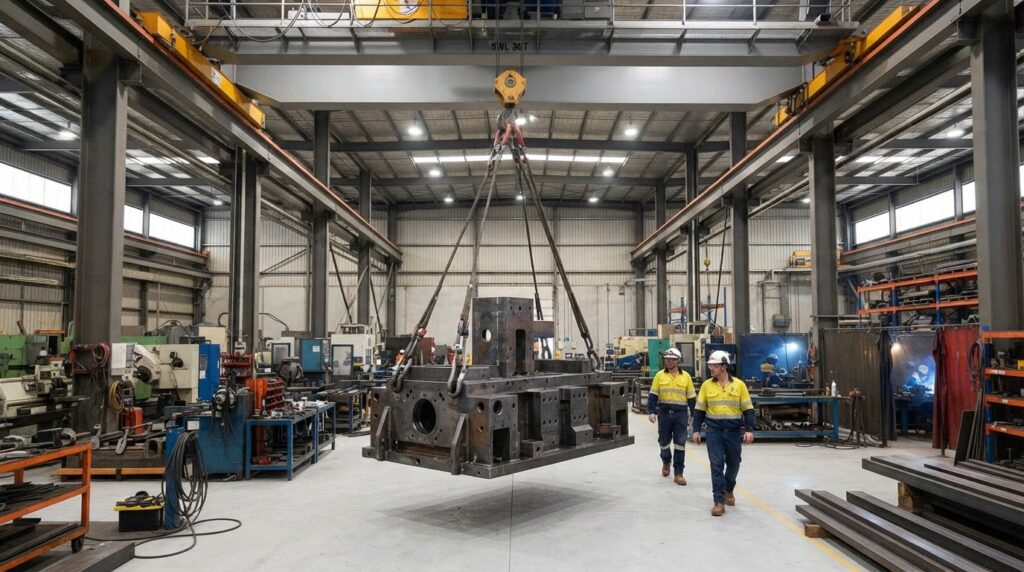
Heavy-load material handling requires more than selecting the highest capacity listed in a catalog. The load’s geometry, center of gravity, movement path, surface conditions, frequency of use and the building itself may determine what equipment is suitable.
Manufacturers and warehouses may need to lift machinery components, position heavy pallets, move fabricated assemblies or transfer bulky industrial items. This guide outlines how to evaluate the application before comparing cranes, hoists, lift tables, transport devices and storage systems.
Define the Heavy Load Accurately
Record the maximum gross weight, including packaging, rigging, attachments or fixtures that travel with the load. Measure length, width, height, potential overhang and load stability. Document where the center of gravity lies and whether it shifts during lifting, tilting or transport.
A total weight alone is insufficient for many systems. Two objects with equal weight may impose very different demands on a platform, lifting device, rack or transport system due to their load distribution and geometry.
Cranes and Hoists for Appropriate Overhead Lifting
Overhead cranes, jib cranes, gantry arrangements and hoists can support controlled lifting and transfer of suitable loads. Selection depends on required capacity, lift height, reach, duty, travel path and the supporting structure. Hook approach and positioning constraints may also affect whether a system fits the work area.
Never assume a ceiling or column can support an overhead system without appropriate evaluation. Rigging, attachment points, operating procedures, inspection and personnel exclusion zones are part of the application. Learn more from Fredon’s cranes and hoists category.
Hydraulic Lift Tables and Material Positioning
Lift tables may be suitable for lifting or positioning loads on a platform rather than transporting them overhead. Consider rated capacity, platform dimensions, travel range, lowered height, off-center loading, duty cycle, controls and guarding. The platform should match the load footprint and intended method of loading.
For repetitive machine feeding or assembly, a properly specified lift can reduce unnecessary transfers and help present materials at the needed working level. Compare hydraulic lift tables and material positioning solutions.
Floor-Based Transport of Heavy Items
Heavy industrial loads may also need movement between stations or buildings. The right transport method depends on floor bearing conditions, route width, grades, turning radius, available traction, load restraint and clearances. An apparently simple route can become unsuitable where there are thresholds, uneven slabs or tight turns.
Check transport equipment manufacturer documentation and do not extrapolate from advertised capacity when attachments, ramps or off-center loads are involved. Train authorized operators and manage pedestrian interaction along the route.
Heavy-Duty Storage and Racking
When heavy items are stored rather than actively moved, design the storage around load distribution, unit-load stability, handling equipment and floor conditions. Pallet racks and industrial shelving each have their own rated loading configurations. Individual components and assemblies may need specialized supports or controlled placement.
Verify beam, frame, shelf and system capacities for the actual arrangement, including loading and unloading methods. See Fredon’s pallet racking and shelving solutions for storage-related options.
Facility Constraints and Engineering
Document clear travel height, overhead obstructions, existing equipment, electrical access, aisle width, structural support and available floor area. Heavy lifting and storage installations may require engineering review, design documentation, permits or other approvals based on the project and jurisdiction.
Consider the full route from pickup to final placement. A device may have enough rated capacity yet be impossible to install, maneuver or use safely in the actual operating environment. Decide who will validate those constraints before an order is placed.
Safe Operation, Training and Inspection
Manufacturer limits, properly selected attachments and suitable procedures matter throughout the equipment lifecycle. Establish the required inspections, maintenance and training before placing equipment into service. Prevent people from entering hazardous load paths and use qualified personnel for rigging or specialized lifting tasks.
For unusual loads or high-consequence operations, bring qualified engineering and safety specialists into planning. Do not use a generic guide as a load-handling plan for a particular lift.
A Heavy-Load Project Brief
Include gross and maximum weight, dimensions, center of gravity, pickup points, transfer destination, required lift height, travel path, movement frequency, environment, drawings and photographs. Identify whether the task is lifting, transporting, tilting, positioning or storage because different solutions address different functions.
Compare options on load compatibility, real operating fit, safety, commissioning, maintenance and lifecycle cost. The intended workflow should shape the equipment selection, not the other way around.
For an overview of storage, transport, lifting and positioning options, read the complete guide to material handling equipment.
Next Steps
Fredon Handling can help evaluate industrial lifting, positioning and storage options. Talk to an expert with load details and facility drawings to identify appropriate next steps.