
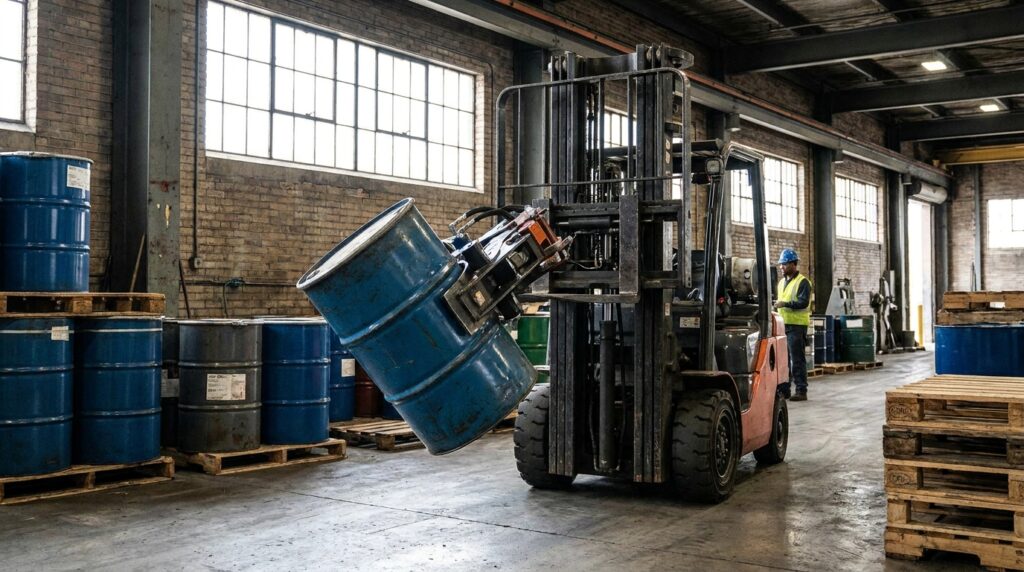
Industrial Drum Rotators: Types, Benefits and Applications
When it comes to managing drums in an industrial setting, efficiency, safety, and precision are paramount. Whether you’re dealing with chemicals, food ingredients, waste materials, or lubricants, the process of moving, emptying, or mixing the contents often presents significant challenges. Manual handling of drums is not only labor-intensive and time-consuming but also carries a high risk of injury. This is where industrial drum rotators come into play, offering a robust and specialized solution for a wide range of material handling needs. At Fredon Handling, we understand the critical role that reliable and effective drum handling equipment plays in your operations. This comprehensive guide will delve into the world of industrial drum rotators, exploring their types, the substantial benefits they offer, and their diverse applications, empowering you to make informed decisions for your facility.
Understanding the Core Functionality of Drum Rotators
At its heart, an industrial drum rotator is a piece of equipment designed to lift, manipulate, and rotate drums. This rotation capability is the defining feature and unlocks a host of operational advantages. Unlike basic drum lifters or palletizers, rotators allow for controlled tilting and inversion of drums, enabling tasks such as complete emptying of viscous liquids, precise dispensing of ingredients, or thorough mixing of contents. They are engineered to handle various drum materials, sizes, and weights, making them a versatile addition to any warehouse, manufacturing plant, or processing facility. The primary goal of a drum rotator is to eliminate the manual strain and potential hazards associated with these operations, thereby improving productivity and workplace safety.
How Drum Rotators Improve Operational Efficiency
The impact of a drum rotator on operational efficiency is multifaceted. Firstly, it significantly speeds up processes that would otherwise be manual and time-consuming. Imagine a scenario where a drum needs to be emptied into a vessel. Manually tipping a heavy drum, especially if it contains viscous material, can take considerable time and effort. A drum rotator can achieve this in seconds with precise control. Secondly, by automating these tasks, it frees up valuable labor for more complex or skilled work, optimizing your workforce allocation. This leads to higher throughput, reduced cycle times for drum processing, and ultimately, a more streamlined workflow. For businesses dealing with high volumes of drummed materials, the return on investment in terms of increased output and reduced labor costs can be substantial.
The Critical Importance of Safety in Drum Handling
Safety is non-negotiable in any industrial environment, and drum handling is no exception. Traditional methods of moving and emptying drums often involve manual lifting, straining, and awkward postures, which are leading causes of musculoskeletal injuries, back strains, and other physical harm to workers. Spills and leaks can also occur during manual tipping, creating slip hazards and exposing personnel to potentially hazardous substances. Industrial drum rotators are designed with safety as a top priority. They provide a secure grip on the drum, minimizing the risk of drops or spills. The controlled rotation mechanism ensures that contents are emptied or mixed smoothly, preventing sudden jolts or splashes. By implementing drum rotators, you create a safer working environment, reduce the incidence of workplace accidents, and comply with increasingly stringent safety regulations. This not only protects your employees but also helps avoid costly downtime due to injuries and potential regulatory fines.
For those interested in exploring more about the various equipment used in industrial settings, a related article on the topic can be found at Fredon Handling. This article delves into the different types of industrial drum rotators, their benefits, and a wide range of applications, providing valuable insights for businesses looking to enhance their operational efficiency and safety.
Exploring the Diverse Types of Industrial Drum Rotators
The market offers a variety of industrial drum rotators, each designed to cater to specific operational needs and drum handling scenarios. Understanding these different types is crucial for selecting the most suitable equipment for your facility. Fredon Handling provides a range of solutions, from basic manual models to fully powered and automated systems.
Manual Drum Rotators: Simplicity and Affordability
Manual drum rotators are the most basic and often the most economical option. They typically rely on manual effort to lift and rotate the drum. These units might feature a hand crank or a lever system to initiate the drum’s rotation. While they require physical exertion from the operator, they offer a significant improvement over completely manual drum handling. They are ideal for environments where the volume of drum handling is moderate, and budget is a primary consideration. These units are robust and designed for long-term use in demanding industrial settings.
Key Features and Operation of Manual Rotators
Manual drum rotators usually consist of a sturdy frame that securely holds the drum. The drum is often clamped or strapped into place. The rotation mechanism is powered by the operator, typically through a gear system that amplifies force, making it easier to turn even a partially filled drum. Some models allow for variable tilting angles, while others may have fixed positions for emptying. Their straightforward design means less maintenance and fewer potential points of failure, making them a reliable choice for many applications.
Powered Drum Rotators: Enhanced Efficiency and Ease of Use
Powered drum rotators utilize electric or pneumatic power to lift and rotate drums. This significantly reduces the physical effort required by the operator, making them suitable for higher volume operations or situations where prolonged use is expected. Powered units offer smoother operation, greater precision in control, and faster cycle times compared to their manual counterparts. They are a popular choice for manufacturing plants and warehouses where efficiency and worker ergonomics are key concerns.
Electric-Powered Drum Rotators: Versatility and Control
Electric-powered drum rotators are the most common type of powered unit. They draw power from a standard electrical outlet and typically feature controls for both lifting and rotating the drum. These controls can range from simple push buttons to more sophisticated joysticks for precise manipulation. Electric rotators offer consistent power and performance, making them ideal for repetitive tasks. Many electric models can also be equipped with features like variable speed control, allowing operators to adjust the rotation speed for optimal pouring or mixing.
Pneumatic Drum Rotators: Hazardous Area Suitability
Pneumatic drum rotators operate using compressed air. This makes them an excellent choice for environments where flammable materials are present or where an explosion-proof rating is required. Because they don’t rely on electrical components, they pose no ignition risk. Pneumatic rotators are known for their powerful performance and robust construction. They are often used in chemical processing, pharmaceutical manufacturing, and other industries with strict safety protocols.
Forklift-Mounted Drum Rotators: Mobility and Integration
For facilities that already utilize forklifts, forklift-mounted drum rotators offer a highly efficient and mobile solution. These attachments are designed to be easily mounted onto a forklift’s forks, transforming the forklift into a powerful drum handling machine. They provide the lifting and rotating capabilities of a dedicated rotator but with the added benefit of mobility across a large warehouse or plant floor. This eliminates the need for dedicated personnel for drum handling and integrates drum rotation seamlessly into existing forklift operations.
Advantages of Forklift Integration
The primary advantage of forklift-mounted drum rotators is the leverage of existing equipment. This can be a more cost-effective solution than purchasing a standalone rotator if you already have a robust forklift fleet. It also allows for quick and easy deployment of drum rotation capabilities wherever a forklift can go, enhancing operational flexibility. These units are typically designed for robust performance and secure drum handling, ensuring safety even when moving the drum during rotation.
Drum Lifters with Rotation Functionality: Hybrid Solutions
Some drum handling equipment, while primarily designed for lifting, also incorporate a rotation function. These can be a good option if your primary need is lifting, but you occasionally require the ability to tilt or empty drums. While they might not offer the same level of precise rotation control as dedicated drum rotators, they provide a cost-effective way to add some degree of manipulation to your drum handling process.
Key Benefits of Implementing Industrial Drum Rotators
The adoption of industrial drum rotators offers a compelling array of benefits that directly impact a company’s bottom line and operational health. These benefits extend beyond mere convenience, contributing to significant improvements in safety, productivity, and cost-effectiveness.
Enhanced Worker Safety and Ergonomics
As previously mentioned, safety is paramount. Drum rotators dramatically reduce the risk of injuries associated with manual drum handling. By eliminating the need for employees to manually lift, tilt, and pour heavy drums, they prevent strains, sprains, and other musculoskeletal disorders. This leads to fewer lost workdays, reduced workers’ compensation claims, and a more positive and secure work environment. The ergonomic benefits are substantial, as operators can perform tasks without awkward bending, twisting, or overexertion.
Increased Productivity and Throughput
The speed and precision offered by drum rotators translate directly into increased productivity. Tasks that previously took minutes of manual effort can be completed in seconds. This allows for faster processing of materials, quicker turnaround times for drum emptying and filling, and ultimately, higher throughput. In busy manufacturing or distribution environments, this can mean the difference between meeting deadlines and falling behind.
Improved Material Handling Precision and Reduced Waste
Drum rotators allow for controlled pouring and dispensing, which is crucial when dealing with valuable or hazardous materials. Operators can achieve precise fill levels in receiving vessels or dispense exact quantities for batch processing. This precision minimizes spills and drips, reducing material waste and associated cleanup costs. For industries where product integrity is critical, such as food and beverage or pharmaceuticals, this accuracy is invaluable.
Versatility in Handling Various Materials
Industrial drum rotators are designed to handle a wide range of materials. From viscous liquids and powders to sludges and granular solids, the right rotator can effectively manage them. The ability to thoroughly mix contents within the drum before dispensing is another significant advantage, ensuring product homogeneity and quality.
Practical Applications of Industrial Drum Rotators Across Industries
The utility of industrial drum rotators extends across a vast spectrum of industries, each leveraging their capabilities to solve specific material handling challenges.
Chemical Manufacturing and Processing
In the chemical industry, drums are often used to store and transport raw materials, intermediates, and finished products, many of which can be hazardous or corrosive. Drum rotators are essential for safely transferring these chemicals from drums into reaction vessels, mixing tanks, or packaging lines. Their ability to provide contained pouring and precise dispensing minimizes exposure risks and prevents costly spills. Pneumatic rotators are particularly favored in explosion-risk areas within chemical plants.
Examples in Chemical Processing:
- Batch mixing: Ensuring uniform blending of chemical compounds within a drum before it’s added to a larger batch.
- Controlled dispensing: Accurately transferring precise volumes of chemicals into smaller containers or process equipment.
- Waste drum emptying: Safely emptying drums containing chemical waste for proper disposal or recycling.
Food and Beverage Production
The food and beverage sector relies on drums for ingredients, flavorings, oils, and other consumables. Maintaining product purity and ensuring precise ingredient addition are critical. Drum rotators facilitate the clean and efficient transfer of these materials, preventing contamination and ensuring accurate recipe adherence. Their ease of cleaning and hygienic design are also important considerations.
Examples in Food and Beverage:
- Ingredient transfer: Pouring syrups, oils, or flavor concentrates from drums into mixing vats or processing machinery.
- Draining: Emptying drums of liquid ingredients or finished products to minimize waste.
- Sanitation: Thoroughly cleaning drums between uses, often with rotation to ensure all surfaces are reached.
Pharmaceutical and Biotechnology
In these highly regulated industries, containment, precision, and preventing cross-contamination are paramount. Drum rotators are used to carefully transfer sensitive pharmaceutical ingredients, excipients, and bulk drug substances. The ability to perform these operations in a controlled manner, often within cleanroom environments, is vital.
Examples in Pharma/Biotech:
- API transfer: Safely moving Active Pharmaceutical Ingredients from drums into manufacturing equipment.
- Sterile dispensing: Accurately dispensing sterile materials into production vessels.
- Quality control sampling: Enabling easy and safe sampling of drummed materials for quality analysis.
Automotive and Aerospace
These industries often deal with oils, lubricants, solvents, and waste materials stored in drums. Drum rotators are employed for efficient dispensing of these fluids for maintenance, production processes, or waste management.
Examples in Automotive/Aerospace:
- Lubricant dispensing: Accurately pouring oils and greases from drums into machinery.
- Solvent transfer: Safely transferring cleaning solvents for parts degreasing.
- Waste fluid management: Emptying drums of used oils or solvents for recycling.
General Manufacturing and Warehousing
Beyond specialized industries, drum rotators are a common sight in general manufacturing facilities and large warehouses for a variety of material handling tasks, including the transfer of raw materials, finished goods, and the management of waste.
Examples in General Manufacturing:
- Raw material dispensing: Pouring powders, granules, or liquids from drums into production lines.
- Packaging operations: Filling drums with finished products or transferring them for storage.
- Material replenishment: Moving and emptying drums of supplies for various workstations.
Industrial drum rotators are essential tools for efficiently handling and transporting large drums in various industries. They come in different types, each designed to meet specific operational needs, and offer numerous benefits such as improved safety and reduced labor costs. For those looking to explore practical applications and case studies related to industrial drum rotators, you can find valuable insights in a related article that discusses real-world projects and implementations. To learn more about these applications, visit this page.
Factors to Consider When Selecting an Industrial Drum Rotator
Choosing the right industrial drum rotator is a critical decision that requires careful consideration of several factors to ensure optimal performance, safety, and longevity. At Fredon Handling, we guide our customers through this selection process to ensure they find the perfect fit for their unique operational needs.
Drum Material, Size, and Weight Capacity
The first and most fundamental consideration is the type of drums you handle.
- Drum Material: Drums can be made of steel, plastic (HDPE), or fiber. The rotator’s gripping mechanism must be compatible with the drum material to ensure a secure hold without causing damage. Steel drums are robust, while plastic drums can be more susceptible to deformation.
- Drum Size: Standard drum sizes (e.g., 55-gallon or 200-liter) are common, but variations exist. Ensure the rotator is designed to accommodate the diameter and height of your drums. Adjustable clamps or adaptable containment systems are beneficial for handling multiple drum sizes.
- Weight Capacity: This is a crucial safety specification. You must know the maximum weight of the drums you intend to handle. The rotator’s specified weight capacity must comfortably exceed this maximum to prevent overload and ensure safe operation. Always account for the weight of the drum and its contents.
Drum Volume and Capacity Requirements
While weight capacity is critical, the volume of the drum also influences the selection. A rotator needs to effectively contain and rotate the entire drum, regardless of how full it is. Some applications might involve rotating only partially filled drums, while others require complete inversion of full drums. The rotator’s design, particularly its clamping and containment, should be suitable for the range of fill levels you anticipate.
Equipment Compatibility and Facility Infrastructure
Consider how the drum rotator will integrate with your existing material handling systems and facility layout.
- Forklift Integration: If you have a forklift fleet, a forklift-mounted rotator can be a highly efficient choice.
- Space Constraints: The footprint of a stationary rotator and the maneuvering space required for operation are important in busy warehouses or tight production areas.
- Power Availability: For powered units, ensure you have the necessary electrical outlets or compressed air supply. For pneumatic units, a reliable compressed air system is essential.
- Floor Load Capacity: For larger, stationary rotators, consider the load-bearing capacity of your floor.
Lifting Height and Rotation Angle Needs
- Lifting Height: Determine the required height to lift the drum to its intended destination, whether it’s a filling port on a machine, a blending tank, or a pallet for storage.
- Rotation Angle: For simple pouring, a 180-degree rotation might suffice. However, for complete emptying or thorough mixing, a 360-degree rotation capability might be necessary. Some applications benefit from variable angle control for precise pouring.
Environmental Considerations and Hazardous Area Requirements
- Corrosive or Hazardous Materials: If you handle corrosive substances, ensure the rotator is constructed from compatible materials (e.g., stainless steel, specific coatings) to prevent degradation and ensure longevity.
- Explosion-Proof (ATEX/EX) Requirements: In environments with flammable vapors or dusts, explosion-proof certified equipment is mandatory. Pneumatic rotators are often the best choice here, but electrically powered units with appropriate certifications are also available.
Industrial drum rotators are essential tools in various industries, providing efficient handling and mixing of materials stored in drums. For those looking to explore more about the advantages and different types of drum handling equipment, a related article can be found at Fredon Handling’s Education Center, which offers valuable insights into the applications and benefits of these devices. Understanding the functionality of drum rotators can significantly enhance operational efficiency and safety in the workplace.
Maintenance and Safety Best Practices for Drum Rotators
To ensure the longevity, reliability, and safe operation of your industrial drum rotator, a proactive approach to maintenance and adherence to safety protocols are essential.
Routine Maintenance Schedule
A consistent maintenance schedule is key to preventing unexpected breakdowns and ensuring optimal performance. This typically includes:
- Daily Checks: Inspect the rotator for any visible damage, loose parts, or leaks. Ensure all safety guards are in place.
- Weekly Inspections: Check hydraulic or pneumatic lines for leaks. Lubricate any moving parts as per the manufacturer’s recommendations. Test the control systems.
- Monthly Thorough Inspections: Inspect wear parts, such as clamps, belts, or gears. Check the structural integrity of the frame. Verify the functionality of emergency stops.
- Annual Servicing: A more in-depth inspection and service by qualified personnel might be required, including checking hydraulic fluid levels, replacing filters, and performing any necessary adjustments or repairs.
Operator Training and Safe Operating Procedures
- Comprehensive Training: All operators must receive thorough training on the specific drum rotator model they will be using. This training should cover safe loading and unloading procedures, control operation, emergency stops, and hazard recognition.
- Pre-Operation Checks: Operators should be trained to perform a pre-operation safety check before each use.
- Load Limits: Emphasize the importance of never exceeding the rated load capacity of the equipment.
- Awareness of Surroundings: Operators must maintain constant awareness of their surroundings to avoid collisions with other equipment, personnel, or structures.
- Personal Protective Equipment (PPE): Ensure operators wear appropriate PPE, including safety glasses, gloves, and sturdy footwear, as dictated by the material being handled.
Emergency Procedures and Troubleshooting
- Emergency Stop Functionality: Regularly test the emergency stop buttons to ensure they are functioning correctly. Operators must know the location and operation of these controls.
- Spill Containment: Have spill containment kits readily available in areas where drum rotators are used.
- Manufacturer’s Manual: Always refer to the manufacturer’s operating manual for specific troubleshooting guides and recommended corrective actions.
Choosing the Right Drum Rotator Partner: Why Fredon Handling?
Selecting the right equipment is only half the battle; partnering with a knowledgeable and reliable supplier is equally crucial. At Fredon Handling, we pride ourselves on our deep industrial expertise, our commitment to quality, and our dedication to customer support. We understand that investing in industrial equipment is a significant decision, and we are here to provide the guidance and solutions you need to optimize your operations.
Our Commitment to E-E-A-T
Fredon Handling embodies Expertise, Experience, Authoritativeness, and Trustworthiness (E-E-A-T). Our team comprises seasoned professionals with extensive experience in material handling solutions. We are not just equipment suppliers; we are problem solvers. We bring proven solutions to the table, backed by years of practical application and a thorough understanding of the challenges faced by warehouse managers, plant engineers, and safety officers. Our website and product offerings reflect our authority in the field, providing clear, accurate, and actionable information.
Comprehensive Range of Drum Handling Equipment
We offer a wide selection of drum handling equipment, including specialized drum rotators that meet diverse industrial needs. Whether you require manual, electric, pneumatic, or forklift-mounted solutions, Fredon Handling has a product to fit your requirements. Our focus is on providing durable, efficient, and safe equipment designed for the rigors of industrial environments. You can explore our extensive drum handling equipment offerings at https://fredonhandling.com/drum-handling-equipment/.
Personalized Consultation and Support
We believe in a consultative approach. We don’t just sell equipment; we partner with you to understand your specific operational challenges, your facility’s infrastructure, and your safety objectives. Our team is available to provide personalized recommendations, assist with equipment selection, and offer ongoing support to ensure your investment delivers maximum value.
Frequently Asked Questions About Industrial Drum Rotators
What is the primary benefit of using an industrial drum rotator?
The primary benefit is the significant improvement in safety and efficiency when handling drums. They eliminate manual lifting and tipping, reducing the risk of injuries and speeding up processes like emptying, mixing, or dispensing drum contents.
Can drum rotators handle different types of drums?
Yes, most industrial drum rotators are designed to handle various drum materials (steel, plastic, fiber) and sizes. However, it’s crucial to verify the specific model’s compatibility and its gripping mechanism’s suitability for your drum types.
What is the difference between manual and powered drum rotators?
Manual rotators require physical effort from the operator to lift and rotate the drum, often using a hand crank or lever. Powered rotators use electric or pneumatic energy to perform these functions, offering greater ease of use, faster operation, and reduced physical strain.
Are drum rotators suitable for hazardous environments?
Yes, specialized drum rotators, particularly pneumatic models, are designed for hazardous environments, including those with flammable vapors or explosive potential. These units often have explosion-proof ratings (e.g., ATEX/EX certified).
How do I determine the correct weight capacity for a drum rotator?
You must know the maximum weight of the drums you intend to handle (drum weight + content weight). The drum rotator’s rated weight capacity should always exceed this maximum by a safe margin to prevent overload and ensure operational safety.
Ready to Optimize Your Drum Handling Operations?
Investing in the right industrial drum rotator can revolutionize your operations, enhancing safety, boosting productivity, and reducing costs. Don’t let manual drum handling be a bottleneck or a safety hazard in your facility.
Contact Fredon Handling today for a personalized consultation. Our experts are ready to discuss your specific needs and recommend the ideal drum rotator solution for your business.