
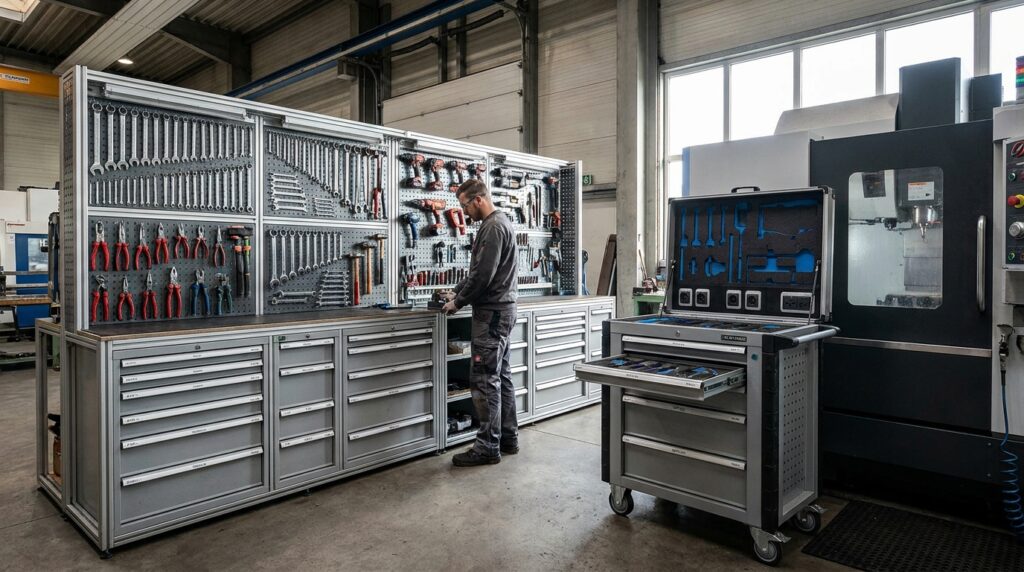
Getting your tools organized in an industrial setting isn’t just about making things look neat. It’s about making your work smoother, faster, and safer. When you can grab the right tool in seconds, you save time. When tools are stored properly, they last longer. And when everything has a place, you reduce the chances of accidents. Designing an efficient system means thinking about how people actually work and what they need to do their jobs effectively. It’s not a one-size-fits-all deal; it’s about understanding your specific operations.
Understanding Your Needs Before You Buy Anything
Before you even start looking at shelves or cabinets, you need to take a good, honest look at what you’re dealing with. What kind of tools do you have? How many? How often are they used? Who uses them? Answering these questions will guide every decision you make, preventing you from buying storage solutions that just won’t work for your team or your equipment.
Cataloging Your Tool Inventory
This is the foundational step. You can’t organize what you don’t know you have. Go through every department, every workstation, and every toolbox. Make a list of every single tool. Don’t just list “wrenches”; be specific. “12-inch adjustable wrench,” “1/2-inch drive socket set,” “torque wrench, 20-200 ft-lbs.” Note down the brand, model number if possible, and any unique characteristics. This detailed inventory helps in several ways. First, it highlights duplicates that might be consolidated or redistributed. Second, it tells you the sheer volume and variety of items you need to accommodate. Third, it helps you identify tools that might be obsolete or rarely used, giving you an opportunity to declutter. For specialized equipment, like calibration tools or precision instruments, note their specific handling requirements, such as protection from dust, vibration, or temperature extremes.
Assessing Usage Patterns and Frequency
Knowing which tools are used daily, weekly, or only occasionally is crucial for placement. High-frequency tools should be the most accessible. Think about a craftsman who uses a specific hammer every hour versus a specialized tool that’s only brought out for a particular maintenance task once a quarter. This analysis should consider not just individual tool usage but also tool sets. For example, if a particular set of precision screwdrivers is always used together for electronics repair, they should be stored as a unit. Observe your team at work, if possible, or ask them directly about their workflows. Where do they often find themselves needing a tool? What tools do they have to walk the furthest to retrieve? This practical insight is invaluable.
Identifying Tool Characteristics and Requirements
Different tools have different needs. A heavy-duty grinder is not the same as a set of delicate calibration probes. Consider the size, weight, material, and any special handling requirements. Some tools are sensitive to dust or moisture, requiring enclosed storage. Others are sharp or have moving parts that need protection to prevent damage and ensure safety. Power tools might need charging stations integrated into their storage. Consider ergonomics too – heavy items should be stored at waist height to avoid back strain. For delicate or expensive equipment, think about padded compartments or vibration-dampening materials. Understanding these individual tool needs will dictate the type of storage units you choose.
Considering User Roles and Accessibility
Who uses which tools? In some operations, all employees might use a shared pool of tools. In others, specific trades or departments have their own dedicated sets. The system should be designed to reflect this. If a particular team relies heavily on a certain set of tools, those tools should be located close to their primary work area. If tools are shared, a clear labeling system and potentially a check-out/check-in process might be necessary to track usage and ensure tools are returned. Think about the physical capabilities of your users. Are there tools that require significant physical strength to move or operate? Their storage location and method should accommodate this.
In addition to exploring the intricacies of designing an efficient industrial tool storage system, you may find it beneficial to read a related article that delves into best practices for optimizing workspace organization. This resource offers valuable insights that can complement your understanding of tool storage solutions. For more information, you can check out the article here: Best Practices for Workspace Organization.
Designing for Space Optimization and Ergonomics
Once you understand what you have and how it’s used, you can start thinking about the physical layout and the types of storage units. The goal is to make the most of your available space while ensuring that tools are easy to reach and handle without causing injury. This means thinking beyond just putting things on a shelf; it involves strategic placement and smart use of storage features.
Maximizing Vertical Space with Shelving and Racks
Walls are prime real estate in any workshop. High-quality shelving and racking systems can dramatically increase your storage capacity without taking up more floor space. Adjustable shelves are incredibly versatile, allowing you to customize heights for different tool sizes. Heavy-duty racks are essential for storing large, bulky items like engine blocks, metal stock, or large machinery parts. Consider tiered shelving or mezzanine levels for very tall spaces. When selecting shelving, look for sturdy construction materials that can handle the weight of your tools. Ensure shelves are deep enough to fully support the items stored on them to prevent them from falling off. Proper installation is also key; ensure shelves are securely anchored to the wall or floor.
Implementing Drawer Systems for Small Parts and Tools
Drawers are fantastic for organizing smaller items and tools that can easily get lost. High-quality drawer slides ensure smooth operation, even under heavy loads. Dividers within drawers are essential for separating different types of fasteners, small hand tools, or specialized components. You can use pre-made drawer organizer kits or custom-cut foam inserts for a more tailored solution. For frequently accessed small items, consider clear drawers or labels that make it easy to identify contents at a glance. Think about the weight capacity of the drawers; some specialized tools or collections can be surprisingly heavy. Ensure the drawer system you choose can support this weight without warping or failing.
Utilizing Wall-Mounted Pegboards and Tool Boards
Pegboards are a classic for a reason. They offer flexible, visual storage for a wide range of hand tools. Using hooks, holders, and shelves designed for pegboards allows you to arrange tools in a way that makes them easy to see and grab. Tool outlines can be drawn or marked on the board to indicate where each tool belongs, creating a visual cue for returning items to their proper place. This is particularly effective for frequently used tools like wrenches, pliers, screwdrivers, and hammers. For heavier items or tools with awkward shapes, specialized mounting brackets or tool holders can be used. Consider the material of the pegboard; metal pegboards are generally more durable than composite ones for demanding industrial environments.
Incorporating Cabinets for Security and Protection
Lockable cabinets are essential for storing valuable, sensitive, or hazardous tools and materials. They provide a secure environment, protecting tools from theft, damage, dust, and unauthorized access. Many industrial cabinets come with features like reinforced doors, high-security locks, and adjustable shelves. For specific needs, consider specialized cabinets, such as flammability cabinets for storing solvents or lubricants, or ESD (electrostatic discharge) cabinets for sensitive electronic components. When choosing cabinets, think about the door style – swing doors are common, but roller doors or sliding doors can be advantageous in tighter spaces where swing clearance is an issue.
Developing a Logical and Intuitive Layout
A well-organized tool storage system isn’t just about having the right containers; it’s about how everything is arranged. The layout should make sense to the people using it, reducing confusion and minimizing wasted movement. This involves grouping similar items, placing frequently used tools in accessible spots, and creating clear pathways.
Grouping Similar Tools and Equipment
Store like items together. All your wrenches should be in one general area, all your sockets in another, all your measuring tools in a designated spot. This makes it much faster to find what you need. For example, if you have a set of specialized welding tools, keep them all together. If you have a collection of electrical testing equipment, ensure they are stored as a group. This principle extends to consumables too; store all your fasteners in a dedicated area, perhaps with different bins for different sizes and types. When tools are grouped, it’s easier to see at a glance what you have and what you might be missing. This also helps in inventory management.
Strategically Placing High-Frequency Tools
Tools that are used every day or multiple times a day should be the most accessible. This means they should be at prime real estate – eye level, close to the workstations where they are most needed, and easy to reach without bending or stretching excessively. Imagine a mechanic’s common tools – their go-to wrenches, screwdrivers, and pliers. These should be in a readily available drawer or on a tool board right at their bench. Conversely, tools that are used rarely can be stored higher up, further away, or in less convenient locations, freeing up the prime space for items that contribute to daily productivity.
Creating Clear Zones and Workflows
Think about the flow of work in your facility. Tools should be stored in areas that align with these workflows. For instance, if a particular assembly process requires a specific set of tools, store those tools near that assembly station. This reduces the need for personnel to walk long distances to retrieve equipment. Designate clear zones for different types of tools or different work processes. This visual separation helps prevent cross-contamination of tools between different tasks and makes it easier for everyone to understand where to find what they need. Consider the movement of large items or materials as well; ensure pathways to and from storage areas are clear and unobstructed.
Implementing a Clear and Consistent Labeling System
Every shelf, drawer, cabinet, and bin should be clearly labeled. This is non-negotiable for an efficient system. Labels should be legible, durable, and consistent in their format. Use a system that identifies not just the contents but also any specific part numbers, sizes, or quantities if relevant. For tool boards, consider outlining the shape of the tool next to its hook. If you have a tool crib or a shared tool system, consider using color-coding for different departments or tool types. A good labeling system not only helps users find tools but also helps identify when something is missing or misplaced, aiding in inventory control and accountability.
Integrating Technology and Modern Solutions
While traditional storage methods are effective, modern technology can significantly enhance efficiency, security, and inventory management. Embracing these advancements can lead to a more robust and streamlined tool management system.
Exploring Tool Management Software and Digital Tracking
Digital tools can revolutionize how you manage your inventory. Software solutions allow you to catalog every tool, track its location, monitor usage history, schedule maintenance, and even manage a check-out/check-in system. This provides real-time data on your tool assets, helping to prevent loss, reduce downtime, and optimize purchasing decisions. Some systems integrate with RFID tags or barcode scanners, allowing for quick and accurate tracking. This can be especially beneficial for large inventories or operations with many shared tools. Consider the benefits of automated reordering based on usage patterns.
Utilizing RFID and Barcode Systems
For enhanced tracking, consider implementing RFID (Radio-Frequency Identification) tags or barcode systems. Each tool can be tagged, and readers placed strategically throughout the facility can automatically log when a tool is moved or used. This provides an incredibly accurate and almost instantaneous inventory count and can help locate missing items quickly. Barcodes are a more traditional but still very effective method for scanning tools in and out of storage. The key is consistent application and reliable scanning equipment. This technology minimizes manual data entry, reducing errors and saving valuable time.
Considering Smart Cabinets and Automated Dispensers
“Smart” tool cabinets offer advanced features like integrated tracking, automated locking mechanisms, and sometimes even weight sensors to monitor inventory levels. Some systems can alert you when a tool is not returned or when stock levels are low. Automated tool dispensers can be used for frequently accessed consumables or small, high-value tools, ensuring accountability and controlled access. These systems can be particularly useful in high-security areas or where there’s a high turnover of tools. The initial investment may be higher, but the long-term benefits in terms of reduced loss, improved efficiency, and better inventory control can be substantial.
Implementing a Tool Calibration and Maintenance Schedule
Efficient storage isn’t just about placement; it’s also about ensuring tools are in good working order. Integrate a system for tracking calibration and maintenance schedules for specialized or precision tools. Digital software can help manage these schedules, sending reminders when calibration or service is due. Storing tools properly also extends their lifespan and prevents damage that could lead to inaccurate readings or failures. Ensure that tools requiring regular maintenance are easily identifiable and accessible for service. This proactive approach reduces unexpected downtime and ensures the accuracy and reliability of your equipment.
When considering the best practices for organizing your workspace, it’s essential to explore various aspects of material handling. A related article that delves into the types of equipment that can enhance efficiency in industrial settings can be found here: types of material handling equipment. This resource provides valuable insights into essential tools that can complement your efforts in designing an efficient industrial tool storage system, ultimately leading to improved productivity and organization.
Maintaining and Evolving Your Storage System
A tool storage system is not a “set it and forget it” solution. It requires ongoing attention to remain efficient. Regular maintenance, audits, and a willingness to adapt to changing needs are crucial for long-term success.
Conducting Regular Inventory Audits
Periodically, you need to verify that your physical inventory matches your digital records (if you have them) or your manual lists. These audits help identify missing tools, items that are no longer in use, or tools that are damaged and need repair or replacement. Schedule these audits regularly – monthly, quarterly, or annually, depending on the size and complexity of your operation. Make the process as streamlined as possible, perhaps by having designated personnel responsible for specific areas. This proactive approach is vital for preventing unnecessary expenses and ensuring you have the right tools available when needed.
Establishing a Process for Tool Repair and Replacement
When tools become damaged or worn out, they need to be removed from circulation and either repaired or replaced. Establish a clear process for reporting damaged tools, assessing them for repair, and ordering replacements. Damaged tools can pose safety hazards and lead to inaccurate work. Ensure there’s a designated place for damaged tools to be stored temporarily while their fate is decided. This prevents them from being accidentally used. Track replacement costs to inform future purchasing decisions and identify tools that might have a higher-than-average failure rate, indicating a need for better quality or different types of tools.
Encouraging Team Involvement and Feedback
The people who use the tools every day are your best source of information on what’s working and what’s not. Encourage your team to provide feedback on the storage system. Are there tools that are difficult to access? Are there improvements they can suggest? Make it easy for them to report issues or suggest changes. Hold regular, brief meetings to discuss tool organization and solicit ideas. When employees feel heard and involved in the process, they are more likely to take ownership of the system and adhere to its principles. This collaborative approach fosters a culture of continuous improvement.
Adapting to Changes in Operations and Technology
As your business evolves, so too will your tool needs. New equipment might be introduced, processes might change, or new technologies might emerge. Your tool storage system needs to be flexible enough to adapt to these changes. Regularly review your inventory and usage patterns to identify new requirements. Be prepared to reconfigure shelving, add new types of storage units, or update your digital tracking systems as needed. A storage system that can evolve with your operations will remain efficient and supportive of your business goals over the long term, rather than becoming a hindrance.