
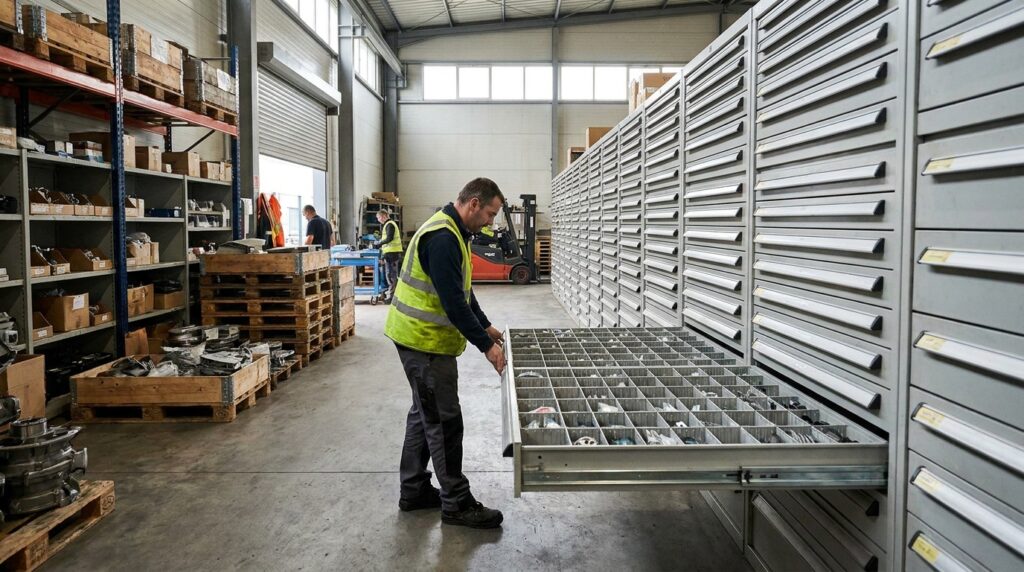
When you’re dealing with a lot of stuff, like tools, parts, or inventory, figuring out where to put it all can get tricky. The more you have, the more space it takes up. We often think about expanding our storage area, like building a bigger warehouse or renting more space. But what if the solution isn’t about getting more space, but about using the space you already have much, much better? That’s where the idea of high-density parts storage comes in, and a really effective way to achieve it is by using modular drawers.
Imagine walking into a room. You see rows and rows of shelves, each holding items. Now, imagine that same room, but instead of open shelves, you have tall cabinets filled with drawers. Each drawer pulls out, giving you direct access to what’s inside. This is the core concept of high-density storage with modular drawers. It’s about organizing your items vertically and horizontally in a way that maximizes every cubic inch.
The Problem with Traditional Storage
Let’s be honest, many businesses and even hobbyists struggle with how they store things. Open shelving, while seemingly simple, often leads to wasted space and a disorganized mess. Think about it: if you have a shelf that’s four feet wide and you only need to store items that take up one foot, you’ve got three feet of empty space above those items. This might seem small, but when you multiply it across an entire warehouse or workshop, those little bits of wasted space add up significantly.
Sprawling Shelving and Wasted Verticality
The most obvious issue with traditional shelving is the inefficiency of vertical space. Shelves are typically spaced a set distance apart. If your items are short, there’s a lot of air above them on each shelf. This “air space” is dead space – it’s not holding anything and contributes nothing to your storage capacity. You end up needing more shelving units, which take up more floor space, just to hold the same amount of items you could potentially store more compactly. It’s like trying to pack a suitcase by just tossing clothes in loosely; you’ll always have room for more if you fold and organize them efficiently.
Accessibility Nightmares and Time Drains
Beyond just wasted space, traditional shelving can be a pain to work with. To find something on a high shelf, you need a ladder or a step stool. To get to something at the back of a deep shelf, you have to move items from the front. This is not only inconvenient but also time-consuming. Think about the cumulative hours spent searching for misplaced items or retrieving things from awkward positions. This lost productivity is a hidden cost that directly impacts efficiency and profitability. It’s frustrating, and it interrupts workflows.
Dust, Damage, and Disarray
Open shelving also leaves your valuable parts and inventory exposed. This makes them susceptible to dust accumulation, which can be a problem for delicate components or items that need to remain clean. It also increases the risk of damage from accidental bumps or knocks. When everything is out in the open, it’s easy for things to get misplaced or lost. A disorganized storage area can quickly devolve into chaos, making it difficult to track inventory, perform audits, and maintain a professional workspace.
In the realm of efficient storage solutions, the article “High-Density Parts Storage: How Modular Drawers Save Floor Space” highlights the advantages of utilizing modular drawer systems to maximize storage capacity while minimizing the footprint. For those interested in exploring further innovations in storage solutions, you can read more about expert insights and tailored solutions by visiting this link.
How Modular Drawers Revolutionize Space Utilization
This is where modular drawers step in as a game-changer. Instead of wide, open shelves, imagine compact, self-contained units that pull out like a filing cabinet. Each drawer is designed to hold specific items, and these units can be stacked or arranged to fill your available space efficiently. The real magic lies in how they tackle the problems created by traditional storage.
Maximizing Every Cubic Inch: The Vertical Advantage
The primary benefit of modular drawers is their ability to utilize vertical space much more effectively. Drawer units can be quite tall, and each drawer is typically deep enough to hold a good quantity of items. Unlike shelves where you have significant air gaps between levels, drawers are designed to be filled from top to bottom. You can store a wide variety of items, from small screws to larger tools, in a compact footprint. This means you can store more in less floor area. It’s about thinking in three dimensions and making every bit of height count.
Customized Compartmentalization for Order and Accessibility
Modular drawers aren’t just big boxes. They are designed to be highly customizable. You can get drawers with dividers, trays, or bins that perfectly organize your specific items. This means that a drawer for screws can have small compartments for each size, a drawer for electronic components can have antistatic bins, and a drawer for tools can have custom-fit foam inserts. This level of organization ensures that everything has its place, making it incredibly easy to find what you need. No more digging through piles of items. You pull out the right drawer, and everything is neatly presented.
Effortless Access and Reduced Search Time
The beauty of a drawer is that it brings your items to you. Instead of reaching up, climbing ladders, or rummaging around, you simply pull out the drawer. This is a massive improvement in accessibility. You have a clear view of everything inside the drawer, and it’s all within easy reach. This significantly reduces the time spent searching for parts. For businesses, this translates directly into increased productivity, faster order fulfillment, and less frustration for employees. It streamlines workflows and makes daily operations much smoother.
Designing Your High-Density Storage System
Implementing a high-density storage solution with modular drawers isn’t just about buying a few cabinets. It’s about thoughtful planning and design to ensure you get the most out of your investment. The goal is to create a system that fits your specific needs and maximizes the space you have.
Assessing Your Inventory and Workflow
Before you even look at drawer systems, take a good, hard look at what you need to store. What types of items are you dealing with? How many of each? Are they small, medium, or large? Are some items sensitive to dust or static? Also, consider how you use these items. What’s your workflow like? Do you access certain items more frequently than others? Answering these questions will help you determine the types and sizes of drawers you’ll need, as well as how to arrange them for optimal access. For example, frequently used items should be in drawers at waist height for easy access.
Choosing the Right Drawer Systems and Configurations
Modular drawer systems come in various forms. You’ll find cabinets with a fixed number of drawers, units that can be configured with different drawer heights, and even mobile drawer units. Consider the weight capacity of the drawers, especially if you’re storing heavy items. Think about the different types of dividers and inserts available to best suit your inventory. Some systems offer specialized drawers for things like small parts, tools, or even larger equipment. It’s about finding a system that can be tailored to your unique storage challenges.
Strategic Placement for Maximum Efficiency
Once you have your drawer system, placement is key. Consider the layout of your space. Where do you do your work? Where are your most frequently accessed items? Can you arrange the drawer units to create efficient workstations? Think about creating dedicated zones for different types of inventory. For instance, all your electrical components could be in one area, and your fasteners in another. This not only makes finding things easier but also helps with inventory management and restocking.
Benefits Beyond Just Saving Space
While saving floor space is the primary driver for adopting high-density modular drawer storage, the advantages don’t stop there. The improved organization and accessibility lead to a cascade of other positive impacts that can significantly benefit any operation.
Enhanced Inventory Management and Accuracy
With each item having a designated spot within a drawer, it becomes much easier to track what you have. Inventory counts become more accurate, and it’s harder for items to get lost or misplaced. This level of order can simplify inventory audits, reduce stockouts, and prevent overstocking. Knowing exactly what you have on hand at all times is crucial for efficient operations and can save a lot of money in the long run. This organized approach also makes it easier to implement just-in-time inventory systems.
Improved Safety and Reduced Workplace Hazards
Clutter is a safety hazard. Open shelving can lead to items falling, tripping hazards from misplaced items or tools, and difficulty navigating crowded spaces. Modular drawers, by containing items within enclosed units and bringing them to the user, significantly reduce these risks. You’re less likely to trip over something, and items are less likely to fall unexpectedly. This creates a safer working environment for everyone. Furthermore, if you store hazardous materials, contained drawers offer a safer and more secure storage solution.
Boosting Productivity and Reducing Operational Costs
The time saved searching for parts, the reduction in errors, and the improved safety all contribute to increased productivity. Employees can spend more time on value-added tasks and less time looking for what they need. This improved efficiency can lead to faster turnaround times, higher output, and ultimately, reduced operational costs. The initial investment in a good modular drawer system often pays for itself through these productivity gains and cost savings.
In exploring efficient storage solutions, the article on High-Density Parts Storage: How Modular Drawers Save Floor Space highlights innovative ways to optimize warehouse layouts. For further insights into practical applications and case studies, you can check out a related article on various projects that showcase effective storage systems. This resource provides valuable examples of how businesses have successfully implemented high-density storage solutions to enhance their operations. To learn more, visit this link.
Making the Transition: Tips for Success
Switching from a traditional storage system to a high-density modular drawer setup is a significant change. To make the transition as smooth and successful as possible, a little planning and a systematic approach are essential. It’s not just about replacing old shelves with new cabinets; it’s about adopting a new way of thinking about your storage.
Decluttering Before You Organize
Before you even start installing new drawer systems, it’s a perfect opportunity to declutter. Go through your existing inventory and get rid of anything that’s broken, obsolete, or no longer needed. This is a chance to purge unnecessary items and ensure you’re only storing what’s truly valuable and functional. Donating or selling unwanted items can even offset some of the costs of the new system. Starting with a clean slate makes the organizing process much more efficient and prevents you from filling your new, efficient system with junk.
Phased Implementation for Minimal Disruption
For larger operations, trying to overhaul your entire storage system overnight can be overwhelming and disruptive. Consider a phased approach. Start with one area or one type of inventory. Implement the modular drawers in that section, get the kinks worked out, and then gradually expand. This allows your team to adapt to the new system gradually and learn from the initial implementation. It also means you don’t have to stop operations completely to make the change.
Training and Continuous Improvement
Once your new system is in place, it’s crucial to train your staff on how to use it effectively. Show them how to organize items within the drawers, how to maintain the system, and the benefits of the new approach. Encourage feedback from your team. They are the ones using the system daily, and their insights can be invaluable for making further improvements. High-density storage is an ongoing process, not a one-time fix. Regularly reviewing your inventory and drawer layout can help you continue to optimize your space and efficiency.