
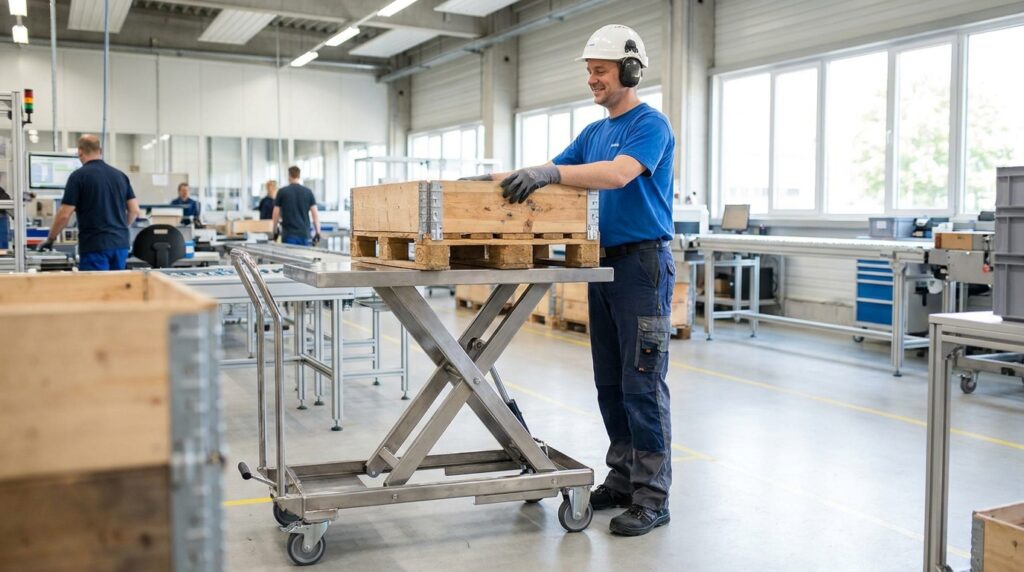
Enhancing Workplace Ergonomics with Advanced Lift Tables
In the demanding environment of industrial operations, the pursuit of efficiency is inextricably linked with the well-being of the workforce. Repetitive lifting, awkward postures, and strenuous movements are not only primary contributors to workplace injuries but also significant drains on productivity. This is where the strategic implementation of industrial lift tables by Fredon Handling emerges as a transformative solution, fundamentally improving workplace ergonomics. By reducing manual strain and promoting safer, more natural working positions, lift tables empower businesses to foster a healthier, more productive, and ultimately more profitable operation. This comprehensive guide delves into how Fredon Handling’s range of lift tables can revolutionize your facility’s ergonomic landscape, offering practical insights for industrial equipment buyers, engineers, and facility managers.
In exploring the benefits of lift tables for enhancing workplace ergonomics, it is also valuable to consider how various material handling equipment can contribute to overall efficiency in warehouse operations. A related article that delves into this topic is available at Top Material Handling Equipment for Efficient Warehouse Operations. This resource highlights the importance of selecting the right tools to not only improve productivity but also to promote a safer and more ergonomic work environment.
The Ergonomic Imperative in Industrial Settings
Workplace ergonomics is the science of designing the workplace, equipment, and tasks to fit the worker, rather than forcing the worker to fit the job. In industrial settings, this translates to minimizing physical stress, reducing the risk of musculoskeletal disorders (MSDs), and enhancing overall comfort and efficiency. The consequences of neglecting ergonomics are severe and far-reaching. MSDs, such as carpal tunnel syndrome, back injuries, and tendonitis, are among the most common and costly workplace injuries. They lead to increased workers’ compensation claims, lost workdays, reduced productivity, and decreased employee morale.
The financial impact alone is substantial. Beyond direct medical costs and compensation, businesses face indirect costs including lost productivity, overtime to cover for absent employees, increased training expenses for temporary staff, and potential legal liabilities. Furthermore, a reputation for an unsafe or physically demanding workplace can hinder recruitment and retention efforts. Therefore, investing in ergonomic solutions is not merely a compliance measure; it is a strategic business decision that yields tangible returns by protecting your most valuable asset: your people. Fredon Handling recognizes this critical imperative and offers a suite of solutions designed to address these challenges head-on. Explore our Material Handling Equipment for a broader overview of our offerings.
Understanding Musculoskeletal Disorders (MSDs)
MSDs are injuries or disorders of the muscles, nerves, joints, cartilage, and tendons. They are often caused or aggravated by repetitive motions, forceful exertions, awkward postures, and prolonged static postures. In an industrial environment, tasks that frequently involve:
- Heavy lifting and carrying: Moving components, finished goods, or raw materials.
- Repetitive bending and twisting: Reaching for items, assembly line work.
- Overhead reaching: Accessing items on high shelves or equipment.
- Forceful gripping and pushing/pulling: Operating tools, maneuvering loads.
- Sustained awkward postures: Working in confined spaces or at non-ideal heights.
These activities place significant stress on the human body. Over time, this cumulative stress can lead to inflammation, pain, and long-term disability. Lift tables, by precisely controlling the height at which materials are handled, directly mitigate many of these risk factors.
The Role of Automation and Mechanization
While complete automation isn’t always feasible or cost-effective, mechanization plays a crucial role in improving ergonomics. Lift tables represent a form of mechanical assistance that significantly reduces the physical burden on workers. They automate the laborious process of lifting and lowering, allowing operators to position materials at optimal working heights, thereby minimizing bending, stretching, and straining. This not only protects the worker but also allows them to focus on the task at hand with greater precision and less fatigue.
How Lift Tables Elevate Ergonomic Standards
Industrial lift tables are versatile pieces of equipment designed to raise and lower loads to ergonomically appropriate heights. Their core function is to eliminate the need for manual lifting and the associated risks. By bringing the work to the worker, they transform potentially hazardous tasks into manageable, safe, and efficient operations. Fredon Handling offers a diverse range of lift tables, each engineered to meet specific industrial needs and ergonomic requirements.
Reducing Strain and Injury Risk
The most direct impact of lift tables on ergonomics is the significant reduction in physical strain. Consider a scenario where workers manually load and unload heavy components onto a conveyor belt or into a machine. Without a lift table, they might have to bend their backs repeatedly to pick up items from floor level or stoop to place them onto a conveyor that is too high. This repetitive bending and lifting are primary causes of lower back injuries.
With a lift table, the components can be loaded onto the table at a comfortable height. The lift table then raises the load to the required height for transfer, eliminating the need for manual lifting and bending. This simple adjustment drastically reduces the load on the spine, shoulders, and knees, thereby minimizing the risk of acute injuries and the development of chronic MSDs.
Promoting Optimal Working Postures
Ergonomically sound working postures involve keeping the spine neutral, shoulders relaxed, and arms close to the body. Manual handling often forces workers into awkward postures:
- Stooping: When working with loads on the floor.
- Overhead reaching: When accessing items at height.
- Twisting: When moving loads to a new position.
Lift tables allow for the precise adjustment of the working surface to an optimal height, typically between the elbow and shoulder. This ensures that operators can perform tasks without bending excessively or reaching uncomfortably, maintaining neutral postures and reducing strain on joints and muscles.
Increasing Efficiency and Productivity
Beyond safety, improved ergonomics directly translates to enhanced productivity. When workers are not fatigued from strenuous manual labor, they can perform their tasks more efficiently and with greater concentration. Reduced physical discomfort also leads to:
- Fewer errors: Fatigue can lead to mistakes.
- Faster task completion: Less physical exertion means more focus on the task.
- Increased output: A more comfortable worker is often a more productive worker.
- Improved quality: Reduced fatigue can lead to more consistent quality of work.
By providing a tool that facilitates easier and safer material handling, lift tables empower your workforce to operate at peak performance levels, contributing to the overall success of your operations. You can explore specific solutions in our Lift Tables category.
Types of Lift Tables and Their Ergonomic Applications
Fredon Handling offers a comprehensive portfolio of lift tables, each designed with specific ergonomic benefits in mind. The choice of lift table depends on the nature of the task, the weight and dimensions of the materials, and the specific ergonomic challenges present in your facility.
Manual Hydraulic Lift Tables
These are the most common and versatile type of lift table, operated manually using a hydraulic foot pump or hand lever. They are ideal for general-purpose lifting and lowering of loads up to several thousand pounds.
- Ergonomic Benefits:
- Eliminates the need for manual lifting from floor level to heights suitable for placement onto conveyors, workbenches, or into machines.
- Allows workers to position materials at their waist or elbow height for assembly, inspection, or packaging.
- Reduces bending and stooping for tasks involving floor-level loading/unloading.
- Applications:
- Assembly lines: Bringing parts to operators at an ergonomic height for assembly.
- Workstations: Providing an adjustable surface for various tasks.
- Loading/unloading: Transferring materials to and from pallets, trucks, or conveyor systems.
- Order picking: Bringing picked items up to a comfortable height for sorting or packing.
Electric Hydraulic Lift Tables
These tables offer the convenience of electric-powered lifting and lowering, controlled by push-button controls. This further reduces the physical effort required from the operator.
- Ergonomic Benefits:
- Minimizes operator exertion, especially for frequent or heavy lifting operations.
- Provides precise control over lifting speed and height, allowing for smooth and safe transfers.
- Ideal for applications where operator fatigue is a significant concern or where tasks are repetitive.
- Applications:
- High-volume production environments: Where speed and reduced operator strain are critical.
- Automated systems integration: Can be integrated with other automated processes for seamless material flow.
- Facilities with a diverse workforce: Accommodates varying physical capabilities of operators.
Scissors Lift Tables
Characterized by their “X” shaped scissor mechanism, these tables offer a wide range of vertical travel and are capable of lifting very heavy loads.
- Ergonomic Benefits:
- Can achieve significant lift heights, ideal for applications requiring large vertical adjustments.
- Provide a stable platform, even at maximum lift height, ensuring safe material handling.
- Excellent for bridging height differences between different levels or machinery.
- Applications:
- Dock levelers: Bridging the gap between a loading dock and a truck bed.
- Mezzanine access: Lifting materials to elevated platforms.
- Machine feeding and unloading: Raising or lowering materials to and from machinery located at different heights.
Low Profile Lift Tables
Designed to have a very low collapsed height, these tables often eliminate the need for pits or ramps, making loading and unloading directly from the floor very easy.
- Ergonomic Benefits:
- Minimizes or eliminates the need for bending or stooping when loading from floor level.
- Reduces the risk of trips and falls by offering a low profile that doesn’t obstruct walkways.
- Ideal for situations where modifying the floor level is not an option.
- Applications:
- Pallet handling: Loading and unloading pallets directly from the floor.
- Workstations: Providing an ergonomic working surface that can be lowered close to the ground.
- Material transfer: Moving items from floor to a higher workstation or vice versa with minimal effort.
Custom Lift Tables
Fredon Handling specializes in providing custom-engineered lift table solutions to address unique ergonomic challenges. If standard models don’t precisely fit your needs, we can design a lift table tailored to your specific application.
- Ergonomic Benefits:
- Precisely engineered to meet the exact height, capacity, and footprint requirements of your operation, maximizing ergonomic benefits.
- Can incorporate specialized features for unique material handling needs, further reducing strain.
- Applications:
- Highly specialized manufacturing processes.
- Unique facility layouts.
- Handling of oversized or unusually shaped materials.
Understanding your specific operational requirements is key. Review our Custom Solutions page for more information.
In exploring the benefits of lift tables for enhancing workplace ergonomics, it’s also valuable to consider the broader context of material handling solutions. For instance, an insightful article on the fundamentals of material handling can provide a deeper understanding of how various equipment, including lift tables, contribute to a safer and more efficient work environment. You can read more about this topic in the article What is Material Handling, which discusses essential practices and equipment that support ergonomic standards in the workplace.
Implementing Lift Tables for Maximum Ergonomic Impact
The successful integration of lift tables into your facility requires careful planning and consideration. It’s not just about acquiring the equipment; it’s about deploying it strategically to achieve the desired ergonomic improvements.
Site Assessment and Task Analysis
Before selecting and implementing lift tables, conduct a thorough assessment of your workplace. Identify high-risk tasks involving manual lifting, bending, and awkward postures. Observe how workers perform these tasks and document the types of injuries or complaints that are prevalent.
- Key questions to ask:
- What are the typical weights and dimensions of the items being lifted?
- What is the frequency of these lifting operations?
- What are the starting and ending heights of the lifts?
- Are there any space constraints or environmental factors (e.g., wet floors, confined spaces)?
- What are the current injury rates and types related to manual handling?
This analysis will help you pinpoint the areas where lift tables will provide the most significant ergonomic benefits and guide your selection process.
Selecting the Right Lift Table
Choosing the appropriate lift table is crucial for maximizing ergonomic benefits and ensuring operational efficiency. Consider the following factors:
- Capacity: Ensure the lift table’s lifting capacity exceeds the maximum weight of the materials to be handled, with a safety margin.
- Lift Height: Determine the required range of vertical travel to accommodate all necessary operations, from floor loading to machine feeding.
- Platform Size and Configuration: The platform should be large enough to accommodate the typical load size and shape without overhang. Consider optional features like turntables for easier material rotation.
- Power Source: Manual, electric, or pneumatic power sources each have their advantages based on frequency of use, available utilities, and budget.
- Mobility: Decide whether a stationary or mobile lift table is more suitable for your workflow. Mobile units offer flexibility but may require more space for maneuvering.
- Safety Features: Look for features like safety skirts, overload protection, and emergency stop buttons.
Fredon Handling’s expert team can assist you in navigating these choices. Our Contact Us page is the first step towards personalized guidance.
Training and Proper Usage
Once lift tables are implemented, comprehensive training for all operators is essential. This training should cover:
- Safe operation procedures: How to load, lift, lower, and unload materials correctly.
- Weight limits: Understanding the capacity of the lift table and not exceeding it.
- Pre-operation checks: Inspecting the lift table for any visible damage or issues before use.
- Emergency procedures: What to do in case of a malfunction or accident.
- Ergonomic best practices: Reinforcing how to use the lift table to maintain good posture and avoid strain.
Proper training ensures that the lift tables are used as intended, maximizing their ergonomic benefits and minimizing the risk of misuse or accidents.
Integrating with Existing Workflows
Lift tables should be integrated seamlessly into existing workflows. Consider their placement within the production or assembly line to ensure smooth material flow and minimal disruption. For example, placing a lift table at a key transfer point between different stages of a process can significantly improve efficiency and ergonomics.
Practical Example:
Imagine a warehouse operation where workers manually unload heavy boxes from pallets to a conveyor belt.
- Without a lift table: Workers repeatedly bend to pick up boxes, twist to place them on the belt, and may experience back strain.
- With a low-profile lift table: A worker places the pallet near the lift table. Boxes are loaded directly onto the low-profile lift table from the pallet, minimizing bending. The lift table then raises the boxes to the conveyor height, and the worker easily slides them onto the belt, eliminating significant bending and twisting.
In exploring the benefits of lift tables for enhancing workplace ergonomics, it’s also valuable to consider other essential material handling equipment that contributes to efficiency and safety in manufacturing environments. For instance, you can learn more about various tools and their impact on operational effectiveness in this insightful article on essential material handling equipment. By integrating the right tools, businesses can significantly reduce the risk of injury and improve overall productivity.
Safety Considerations and Maintenance Best Practices
While lift tables are designed to enhance safety, they are still pieces of industrial equipment that require adherence to safety protocols and regular maintenance.
Essential Safety Features and Checks
When specifying or using lift tables, always prioritize safety. Look for and regularly check the following features:
- Safety Skirts/Guards: These prevent objects or body parts from getting caught under the platform during operation, especially crucial for scissors lift tables.
- Overload Protection: Prevents the lift table from being operated beyond its rated capacity, which can cause damage and create hazardous conditions.
- Emergency Stop Buttons: Easily accessible buttons that immediately halt all lift table operations in an emergency.
- Stability: Ensure the lift table is placed on a firm, level surface. For mobile units, ensure they are properly chocked or locked in place before operation.
- Regular Inspections: Daily visual checks for any signs of damage, leaks (for hydraulic units), or worn components.
- Load Stability: Ensure loads are centered on the platform and secured if necessary to prevent shifting during lifting.
Proactive Maintenance for Longevity and Safety
A well-maintained lift table is a safe and reliable lift table. Implement a proactive maintenance schedule to prevent breakdowns and ensure continued ergonomic performance.
- Hydraulic System (for hydraulic tables):
- Fluid Levels: Regularly check and maintain hydraulic fluid levels.
- Leaks: Inspect for any oil leaks around cylinders, hoses, or fittings. Address leaks promptly.
- Filter Replacement: Change hydraulic filters according to the manufacturer’s recommendations.
- Mechanical Components:
- Lubrication: Lubricate pivot points, rollers, and other moving parts as per the manual.
- Fasteners: Periodically check and tighten all bolts and nuts.
- Scissor Mechanism: Inspect for wear or damage on the scissor arms and their connections.
- Electrical Components (for electric tables):
- Wiring: Inspect wiring for any signs of damage or fraying.
- Controls: Ensure push buttons and limit switches are functioning correctly.
- Platform and Structure:
- Surface Integrity: Check the platform for dents, cracks, or wear that could affect load stability.
- Structural Integrity: Inspect the overall frame and structure for any signs of bending or deformation.
Following the manufacturer’s recommended maintenance schedule, often found in the operation manual provided with your Fredon Handling lift table, is critical. Consider exploring our Services for professional support.
Case Studies and Application Scenarios
To further illustrate the transformative power of lift tables on workplace ergonomics, consider these illustrative scenarios:
Scenario 1: Automotive Assembly Plant
Challenge: Workers on an assembly line were experiencing significant shoulder and back pain from repeatedly reaching for heavy engine components placed on a nearby trolley at floor level.
Solution: Fredon Handling provided custom-designed electric hydraulic lift tables integrated into the assembly line. These tables were positioned to receive engine components from the trolley. The tables could then be raised to precisely the ergonomic working height of the assembler, eliminating the need for bending and reaching.
Ergonomic Impact: Reduced strain on shoulders and backs, leading to fewer MSDs and increased worker comfort and focus on assembly tasks. Productivity saw an increase due to less fatigue and fewer errors.
Scenario 2: E-commerce Fulfillment Center
Challenge: Order pickers were experiencing fatigue and a higher incidence of knee and hip strain from constantly bending down to retrieve items from lower shelves of picking bins.
Solution: Low-profile manual hydraulic lift tables were introduced at key picking stations. Pickers could bring their picking carts to the lift table and load items onto it from the lower bins. The lift table could then be raised to a comfortable waist height for sorting and packing, or to a convenient height for transferring to a conveyor.
Ergonomic Impact: Minimized bending and stooping, significantly reducing stress on the lower body. This led to improved picker endurance, fewer complaints of discomfort, and a more consistent picking speed throughout the shift.
Scenario 3: Metal Fabrication Shop
Challenge: Machinists were struggling to manually load heavy sheet metal onto a cutting machine, which was positioned at a standard workbench height. This involved awkward lifting and potential strains.
Solution: A heavy-duty scissors lift table with a large platform was installed next to the cutting machine. Sheet metal could be placed onto the lift table from a nearby storage area. The lift table could then raise the sheet metal to the exact height of the cutting machine’s bed, allowing for safe and easy loading.
Ergonomic Impact: Eliminated the need for manual lifting of heavy metal sheets, reducing the risk of back and shoulder injuries. The stable platform ensured secure loading, preventing accidents.
The Fredon Handling Advantage
At Fredon Handling, we are committed to providing industrial equipment that not only enhances productivity but also prioritizes the health and safety of your workforce. Our extensive range of lift tables, coupled with our expertise in material handling solutions, makes us an ideal partner for businesses looking to improve workplace ergonomics. We understand the unique challenges faced by industrial facilities and are dedicated to offering solutions that deliver tangible benefits.
We offer:
- A comprehensive range of standard lift tables: Catering to diverse lifting capacities and applications.
- Custom engineering capabilities: To design bespoke solutions for your specific needs.
- Expert consultation and support: To help you select and implement the most effective ergonomic solutions.
- Commitment to quality and durability: Ensuring our equipment provides reliable performance and long-term value.
Frequently Asked Questions (FAQs)
Q1: How do lift tables specifically help prevent back injuries?
Lift tables significantly reduce the risk of back injuries by eliminating or minimizing the need for manual lifting, bending, and twisting. By bringing the load to an ergonomic working height, they allow operators to maintain a neutral spine and avoid the strenuous postures that often lead to back strain and injury.
Q2: What is the difference between manual and electric hydraulic lift tables in terms of ergonomics?
Manual hydraulic lift tables require operator effort to pump the lever or foot pedal for lifting, which can still contribute to some physical exertion. Electric hydraulic lift tables automate the lifting process with push-button controls, requiring minimal physical effort from the operator. This makes electric models ideal for operations with frequent lifting or where operator fatigue is a primary concern.
Q3: Can lift tables be used for tasks other than just lifting?
Yes, lift tables are versatile. They can be used as adjustable workstations, for sorting and inspection, as temporary staging areas, or to bridge height differences between different levels or machinery. Their ability to position materials at an optimal height enhances ergonomics across a variety of tasks.
Q4: How do I determine the correct capacity and lift height for a lift table?
You need to assess the heaviest items you will be lifting and the range of heights required for your operations. Measure the lowest point from which you need to lift and the highest point to which you need to raise the load. For capacity, always choose a lift table with a rated capacity that exceeds your maximum load weight to ensure safe operation and longevity.
Q5: Are lift tables difficult to maintain?
Routine maintenance for lift tables is generally straightforward and involves lubrication, checking for leaks (hydraulic models), and ensuring components are secure. Adhering to the manufacturer’s recommended maintenance schedule, often provided in the operation manual, is key to ensuring safety and longevity. Fredon Handling also offers maintenance services for your convenience.
Q6: What safety features should I look for when purchasing a lift table?
Essential safety features include safety skirts to prevent entrapment, overload protection to avoid exceeding capacity, emergency stop buttons for quick shutdown, and stable construction. For mobile units, ensure they have reliable locking mechanisms. Always ensure loads are centered and stable on the platform during operation.
Conclusion: Investing in Ergonomics is Investing in Your Business
The integration of industrial lift tables by Fredon Handling is a strategic investment that yields substantial returns. By addressing the core issues of physical strain and awkward postures, lift tables directly improve workplace ergonomics, leading to:
- Reduced workplace injuries and associated costs.
- Increased worker productivity and efficiency.
- Enhanced employee morale and job satisfaction.
- Improved operational flow and reduced downtime.
For industrial equipment buyers, engineers, and facility managers seeking to optimize their operations and create a safer, more productive work environment, the solution is clear. Explore the comprehensive range of lift tables available at Fredon Handling and discover how our solutions can transform your facility.
Don’t let manual handling strain your workforce and compromise your operations. Contact Fredon Handling today to discuss your ergonomic challenges and find the perfect lift table solution for your business. Visit fredonhandling.com or call us at [Your Phone Number] to speak with an expert.