
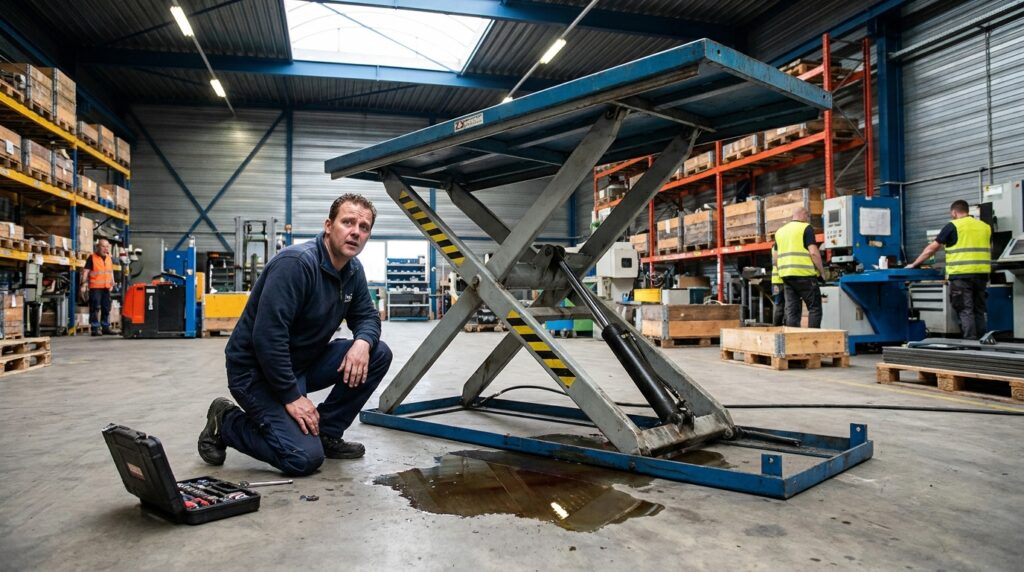
Understanding and Troubleshooting Common Hydraulic Lift Table Problems
Hydraulic lift tables are indispensable workhorses in modern industrial settings, providing crucial ergonomic support and improving material handling efficiency. From manufacturing floors and warehouses to assembly lines and laboratories, these versatile machines empower operators to lift, position, and manipulate heavy loads with ease. However, like any complex mechanical system, hydraulic lift tables can occasionally encounter issues. Proactive understanding and prompt troubleshooting of common problems can significantly minimize downtime, prevent costly repairs, and ensure the continued safety and productivity of your operations.
At Fredon Handling, we understand the critical role hydraulic lift tables play in your business. Our commitment extends beyond supplying high-quality equipment; we are dedicated to providing comprehensive support and knowledge to help you maintain your assets. This in-depth guide will delve into the most prevalent hydraulic lift table problems, offering practical solutions, application insights, and maintenance best practices. By equipping yourself with this information, you can become a more informed buyer, a more effective engineer, and a more confident facility manager, ultimately optimizing your investment in material handling solutions.
If you’re experiencing issues with your hydraulic lift table, you may find it helpful to read a related article that discusses common problems and their solutions. For more insights on handling equipment and maintenance tips, check out this informative resource: Fredon Handling. This article provides valuable information that can help you troubleshoot and maintain your hydraulic lift table effectively.
## Navigating the Nuances: Common Hydraulic Lift Table Malfunctions
The reliable operation of a hydraulic lift table hinges on the intricate interplay of its hydraulic system, mechanical components, and electrical controls. When one of these elements falters, it can manifest in a variety of operational hiccups. Understanding the root cause of these issues is the first step towards a swift and effective resolution.
## Slow or Incomplete Lifting
One of the most frequently encountered issues with hydraulic lift tables is sluggish or incomplete lifting. This can range from a noticeable decrease in lifting speed to the table failing to reach its full elevated height. Several factors can contribute to this symptom, often related to the hydraulic fluid or the pump system.
#### Low Hydraulic Fluid Levels
The most common culprit for slow lifting is insufficient hydraulic fluid. Over time, minor leaks can occur, or fluid can be lost through evaporation. When the fluid level drops too low, the pump struggles to draw enough fluid to generate the required pressure, resulting in reduced lifting capacity and speed.
- Troubleshooting: Visually inspect the hydraulic fluid reservoir. Most lift tables have a sight glass or a dipstick to indicate the fluid level. If it’s below the recommended mark, add the appropriate type of hydraulic fluid, as specified by the manufacturer. Avoid overfilling, as this can also cause issues.
- Fredon Handling Insight: Always use the manufacturer-recommended hydraulic fluid. Different fluid types have varying viscosity and additive properties that are crucial for optimal pump performance and seal longevity. Refer to your lift table’s manual or consult our technical support team at Fredon Handling for the correct fluid specification.
#### Air in the Hydraulic System
Air trapped within the hydraulic lines can cause a spongy or erratic lifting action, and it can also contribute to slow lifting. Air compresses more readily than hydraulic fluid, leading to a loss of hydraulic force and efficiency.
- Troubleshooting: Air is often introduced into the system during fluid changes or if there are leaks in the system that draw in air when the pressure drops. The process of removing air is called “bleeding” the system. Typically, this involves cycling the lift table up and down several times with no load, or with a light load, to allow trapped air to escape through the designated bleed points.
- Fredon Handling Insight: Proper maintenance procedures, including careful fluid replenishment and regular inspection for leaks, are the best preventative measures against air entrainment.
#### Worn or Damaged Hydraulic Pump
The hydraulic pump is the heart of the lift table’s lifting mechanism. If the pump’s internal components are worn or damaged, it may not be able to generate sufficient pressure to lift the load effectively or quickly.
- Troubleshooting: A failing pump might exhibit a whining or grinding noise during operation. If other troubleshooting steps have been exhausted and the lifting performance remains poor, a worn pump is a likely cause.
- Fredon Handling Insight: Replacing a hydraulic pump is a specialized task. For reliable and safe replacement, consult with Fredon Handling’s service department or a certified hydraulic technician. We offer a range of high-quality replacement pumps and can advise on the best option for your specific model.
#### Clogged Hydraulic Filter
The hydraulic filter is designed to remove contaminants from the fluid. A clogged filter restricts fluid flow, reducing the pressure and volume of fluid reaching the cylinder, which in turn slows down the lifting process.
- Troubleshooting: Filters should be replaced as part of routine maintenance. If the lifting speed has degraded, checking and replacing the hydraulic filter is a straightforward and often effective solution.
- Fredon Handling Insight: Regularly scheduled filter replacement is a key aspect of preventive maintenance. Explore our selection of hydraulic filters at Fredon Handling to ensure you always have the right replacement parts on hand.
## Inconsistent or Jerky Movement
Beyond just slow lifting, some lift tables might exhibit inconsistent or jerky movements. This can be unsettling and potentially hazardous, as it can lead to unexpected shifts in the load.
#### Contaminated Hydraulic Fluid
Contaminants such as dirt, metal shavings, or water can enter the hydraulic system and cause erratic behavior. These particles can damage seals, clog small passages, and interfere with the smooth operation of valves and cylinders.
- Troubleshooting: Performing a full hydraulic fluid flush and replacement, along with replacing the hydraulic filter, is the recommended course of action. Analyze the drained fluid for signs of contamination.
- Fredon Handling Insight: Implementing rigorous cleaning protocols in your workspace and ensuring proper sealing of the reservoir can prevent contamination. Consider investing in a magnetic drain plug to capture metallic debris.
#### Faulty Hydraulic Valve
Hydraulic valves control the flow of fluid to and from the cylinder. If a valve is sticky, damaged, or not operating correctly, it can lead to uneven lifting or dropping, resulting in jerky movements.
- Troubleshooting: Inspect the control valve for any visible damage or obstructions. Sometimes, debris can lodge in the valve, requiring careful cleaning. If the issue persists, the valve may need to be replaced.
- Fredon Handling Insight: Fredon Handling offers a comprehensive range of hydraulic valves and control components. Our experts can help you identify the correct replacement part for your specific lift table model.
#### Worn Cylinder Seals
The hydraulic cylinder relies on seals to maintain pressure and prevent fluid leakage. If these seals begin to wear out, they can allow fluid to bypass, leading to inconsistent pressure and jerky movements.
- Troubleshooting: A visual inspection of the cylinder rod for leaks or scoring can indicate worn seals. If you notice oil seepage around the cylinder, the seals likely need replacement.
- Fredon Handling Insight: Replacing cylinder seals is a technical repair that requires specialized tools and knowledge. Contact Fredon Handling’s service team for professional repair and resealing services.
## Hydraulic Lift Table Not Lowering
The inability to lower a hydraulic lift table is a critical safety concern. This issue typically points to a problem with the lowering valve or the system’s ability to release hydraulic pressure.
#### Stuck or Malfunctioning Lowering Valve
The lowering valve is responsible for releasing hydraulic pressure and allowing the table to descend. If this valve is stuck open, closed, or malfunctioning, it will prevent the table from lowering properly.
- Troubleshooting: Inspect the lowering valve mechanism for any obvious obstructions or damage. Many manual lowering valves have a lever or a screw that can be manually operated to release pressure. Check for proper operation of the solenoid if it’s an electrically actuated valve.
- Fredon Handling Insight: Ensure that the control panel and its associated components are clean and free from debris. For electrically controlled systems, verify the electrical connections to the lowering valve solenoid.
#### Air Trapped in the Lowering Circuit
Similar to lifting, air trapped in the lines can impede the smooth release of fluid, causing the table to hesitate or refuse to lower.
- Troubleshooting: Bleeding the system, as described for lifting issues, can help alleviate this problem. Ensure the reservoir is adequately filled and that no air is being drawn into the system during the lowering cycle.
#### Blocked Return Line
The hydraulic fluid must flow freely back to the reservoir when the table is lowered. A blocked return line will prevent this, causing the table to remain elevated or lower very slowly.
- Troubleshooting: Inspect the hydraulic lines leading back to the reservoir for any kinks, collapses, or blockages. The hydraulic filter is also part of the return circuit, so a clogged filter can contribute to this issue.
## Leaking Hydraulic Fluid
Hydraulic fluid leaks are not only messy and environmentally concerning but can also lead to decreased system performance and potential safety hazards. Identifying the source of the leak is paramount.
#### Worn or Damaged Seals and O-rings
This is the most common cause of hydraulic fluid leaks. Seals in cylinders, hoses, and valve fittings can degrade over time due to age, heat, pressure, or exposure to incompatible fluids.
- Troubleshooting: Carefully inspect all visible hydraulic connections, cylinder rods, and hose assemblies for signs of fluid seepage. The location of the drip or wet spot is a good indicator of the faulty seal.
- Fredon Handling Insight: Fredon Handling offers a wide selection of high-quality hydraulic seals and O-rings. We can help you select the correct replacement parts based on your lift table’s specifications.
#### Damaged Hydraulic Hoses or Fittings
Hydraulic hoses can develop cracks, abrasions, or bursts, while fittings can become loose or corroded, leading to leaks.
- Troubleshooting: Visually inspect all hoses for any signs of wear, damage, or bulging. Check that all hose fittings are securely tightened.
- Fredon Handling Insight: Always use hydraulic hoses rated for the pressure and application. We stock a variety of robust hydraulic hoses and fittings designed for industrial environments.
#### Cracked or Damaged Hydraulic Cylinder
While less common, a crack or perforation in the hydraulic cylinder itself can cause significant leaks.
- Troubleshooting: This is typically a more severe issue and may require the cylinder to be replaced or professionally repaired.
- Fredon Handling Insight: If you suspect a damaged cylinder, please contact our service department at Fredon Handling for an assessment and quote for replacement.
#### Loose Reservoir Cap or Drain Plug
Simple as it may seem, a loose reservoir cap or drain plug can also be a source of hydraulic fluid leaks.
- Troubleshooting: Ensure the reservoir cap is properly sealed and that the drain plug is tightened.
## Optimizing Your Hydraulic Lift Table: Applications, Benefits, and Selection
Understanding common problems is crucial for maintenance, but a proactive approach to selecting and utilizing the right hydraulic lift table can prevent many issues from arising in the first place.
## Key Applications for Hydraulic Lift Tables
Hydraulic lift tables are incredibly versatile, finding application across numerous industries for diverse material handling tasks.
- Manufacturing & Assembly: Lifting and positioning heavy components, supporting workpieces at ergonomic heights, and facilitating assembly line operations.
- Example: An automotive assembly line using a heavy-duty lift table to precisely position a car chassis for access by workers.
- Warehousing & Logistics: Loading and unloading trucks, moving pallets, and bridging gaps between different levels.
- Example: A shipping dock utilizing a scissor lift table to raise pallets from ground level to the height of a trailer bed, enabling efficient loading.
- Aerospace & Automotive Repair: Supporting engines, transmissions, and other heavy parts during maintenance and repair.
- Example: A mechanic using a low-profile lift table to support a vehicle engine while it is removed for servicing.
- Pharmaceutical & Food Processing: Providing hygienic lifting solutions for sensitive materials and product handling.
- Example: A food processing plant using a stainless steel lift table to elevate large vats of ingredients to mixer heights, minimizing manual lifting.
- Laboratories & Research: Positioning sensitive equipment or specimens at optimal working heights.
- Example: A research lab using a small, precise lift table to position microscopes or delicate instruments at an ergonomically suitable height for extended observation.
## The Tangible Benefits of Employing Hydraulic Lift Tables
Investing in hydraulic lift tables offers a multitude of advantages that directly impact operational efficiency, worker well-being, and overall cost-effectiveness.
- Enhanced Ergonomics & Reduced Strain: By bringing loads to a comfortable working height, lift tables significantly reduce the risk of musculoskeletal injuries (MSIs) associated with bending, lifting, and reaching. This leads to a healthier workforce and lower workers’ compensation claims.
- Increased Productivity: Faster and easier material handling translates to improved throughput and reduced cycle times. Workers can accomplish tasks more efficiently without the physical exertion of manual lifting.
- Improved Safety: Minimizing manual handling of heavy or awkward loads inherently reduces the risk of accidents, dropped items, and crush injuries.
- Space Optimization: Many lift table designs are compact and can be integrated into existing workflows without requiring extensive facility modifications. Vertical lifting utilizes vertical space effectively.
- Versatility & Adaptability: With various configurations, capacities, and accessories, hydraulic lift tables can be tailored to a wide array of specific applications, making them a flexible material handling solution.
- Cost Savings: While there is an initial investment, the long-term savings from reduced injuries, increased productivity, and decreased damage to goods often outweigh the cost of the equipment.
## Selecting the Right Hydraulic Lift Table: A Comprehensive Checklist
Choosing the appropriate hydraulic lift table is critical for optimal performance and longevity. Consider these factors:
- Load Capacity: Determine the maximum weight you need to lift. Always select a table with a capacity that exceeds your heaviest anticipated load by a safe margin.
- Example: If your heaviest product is 800 lbs, consider a table with at least a 1000 lb capacity.
- Lifting Height: Measure the required range from the lowest to the highest position needed for your application.
- Platform Size and Configuration: Consider the dimensions and shape of the items you will be lifting. Some applications may benefit from specialized platforms (e.g., U-shaped, T-shaped).
- Power Source: Most lift tables are electric (110V, 230V, 460V) or air-powered. Ensure compatibility with your facility’s power infrastructure.
- Duty Cycle: How frequently will the lift table be used? Heavy-duty applications require more robust components.
- Environment: Consider the operating environment. Stainless steel models are ideal for corrosive or hygienic applications (e.g., food processing, chemical plants).
- Mobility: Do you need a stationary table, or will it need to be moved? Some tables have integrated wheels or can be fitted with casters.
- Safety Features: Look for features like safety skirts, emergency stop buttons, overload protection, and maintenance locks.
- Budget: Balance the features and specifications against your allocated budget. Remember to factor in long-term benefits and potential cost savings.
Table 1: Hydraulic Lift Table Specification Comparison
| Feature | Light-Duty (e.g., 500-1000 lbs) | Medium-Duty (e.g., 1000-4000 lbs) | Heavy-Duty (e.g., 4000+ lbs) |
| :– | : | :– | : |
| Typical Applications | Small parts assembly, lab work | Warehouse operations, moderate manufacturing | Large component handling, industrial production |
| Platform Size | Smaller | Medium | Larger, robust |
| Lifting Speed | Moderate | Good | High |
| Frame Strength | Standard | Reinforced | Heavy-duty steel |
| Durability | Good | Very Good | Excellent |
| Cost | Lower | Mid-range | Higher |
## Ensuring Longevity: Safety and Maintenance Best Practices
Proactive maintenance and adherence to safety protocols are the cornerstones of a long and reliable service life for your hydraulic lift table.
## Essential Safety Precautions
Operating a hydraulic lift table involves inherent risks if proper safety measures are not in place. Prioritize these points:
- Read the Manual: Thoroughly familiarize yourself with the operator’s manual before using the equipment.
- Operator Training: Ensure all operators are properly trained on the safe operation of the specific lift table model.
- Weight Limits: Never exceed the rated load capacity of the lift table.
- Stable Surface: Operate the lift table on a firm, level, and stable surface.
- Clearance: Ensure adequate clearance around the lift table, especially during operation, to prevent collisions with other equipment or personnel.
- Lockout/Tagout: Implement lockout/tagout procedures for maintenance and repair work to prevent accidental activation.
- Safety Skirts: Ensure safety skirts are in place and functioning correctly to prevent entrapment.
- Regular Inspections: Conduct pre-operation inspections daily, looking for any visible signs of damage, leaks, or wear.
- Emergency Stops: Know the location of and how to operate the emergency stop button.
- Avoid Riding: Never allow personnel to ride on the lift table platform.
- Load Stability: Ensure the load is centered and stable on the platform before lifting.
## A Robust Maintenance Schedule
A well-defined maintenance schedule is the most effective way to prevent common hydraulic lift table problems and extend the life of your equipment.
#### Daily Checks (Pre-Operation)
- Visual Inspection: Check for any leaks, loose parts, damaged hoses, or worn components.
- Functionality Test: Briefly operate the lift table to ensure it lifts and lowers smoothly without unusual noises.
- Safety Features: Verify that safety skirts and emergency stop buttons are functioning correctly.
#### Weekly Checks
- Hydraulic Fluid Level: Check the fluid level in the reservoir and top up if necessary with the correct fluid type.
- Cleanliness: Clean the lift table and surrounding area, paying attention to the hydraulic components.
#### Monthly Checks
- Hydraulic Fluid Condition: Inspect the hydraulic fluid for discoloration, contamination, or degradation.
- Filter Status: Check the hydraulic filter for clogging. Replace if necessary.
- Electrical Connections: Inspect electrical connections for corrosion or looseness.
- Lubrication: Lubricate pivot points and moving parts as per the manufacturer’s recommendations.
#### Annual Maintenance (or as recommended by manufacturer)
- Full Hydraulic Fluid Change: Drain and replace the hydraulic fluid.
- Filter Replacement: Replace the hydraulic filter and any other filters in the system.
- Seal Inspection: Inspect cylinder seals and other critical seals for wear and tear. Replace as needed.
- Hose Inspection: Thoroughly inspect all hydraulic hoses for signs of wear, abrasion, or cracking.
- Valve Inspection: Inspect and clean hydraulic valves.
- Structural Integrity: Check for any signs of frame damage or structural weakness.
Table 2: Hydraulic Lift Table Maintenance Checklist
| Task | Frequency | Notes |
| : | : | : |
| Visual Inspection | Daily | Leaks, loose parts, damage |
| Functionality Test | Daily | Smooth operation |
| Safety Features Check | Daily | Skirts, E-stop |
| Hydraulic Fluid Level Check | Weekly | Top up with correct fluid |
| Cleanliness | Weekly | Remove debris |
| Hydraulic Fluid Condition | Monthly | Color, contamination |
| Hydraulic Filter Check | Monthly | Replace if clogged |
| Electrical Connections Check | Monthly | Corrosion, tightness |
| Lubrication | Monthly | Pivot points, moving parts |
| Hydraulic Fluid Change | Annually | Drain, fill with new fluid |
| Hydraulic Filter Replacement | Annually | Replace with new filter |
| Seal Inspection | Annually | Cylinders, fittings |
| Hose Inspection | Annually | Wear, cracks |
| Valve Inspection | Annually | Clean, check for debris |
| Structural Integrity Check | Annually | Frame, welds |
When dealing with common hydraulic lift table problems, it’s essential to understand the various factors that can affect their performance and safety. For a deeper insight into troubleshooting and maintenance tips, you can refer to a related article that provides valuable information on this topic. By exploring the nuances of hydraulic systems, you can enhance the longevity and efficiency of your equipment. To learn more, check out this informative piece here.
## Fredon Handling: Your Partner in Material Handling Solutions
At Fredon Handling, we are committed to providing industrial equipment buyers, engineers, and facility managers with the tools, knowledge, and support they need to optimize their operations. Our extensive range of hydraulic lift tables, coupled with our deep understanding of common issues and best practices, makes us your ideal partner.
Whether you are selecting a new lift table, troubleshooting an existing one, or implementing a preventive maintenance program, Fredon Handling is here to assist. Our team of experts can provide personalized recommendations, technical support, and access to high-quality replacement parts.
If you’re experiencing issues with your hydraulic lift table, you might find it helpful to read about common troubleshooting techniques in our related article. Understanding these problems can help you maintain your equipment effectively and ensure safe operation. For more information, feel free to reach out through our contact page here.
## Frequently Asked Questions About Hydraulic Lift Table Problems
Q1: How often should I change the hydraulic fluid in my lift table?
A1: The frequency of hydraulic fluid changes depends on the operating environment and the manufacturer’s recommendations. A general guideline is annually, but if the fluid appears discolored, contaminated, or has been exposed to extreme temperatures, it should be changed sooner. Refer to your lift table’s manual for specific intervals.
Q2: What is the most common cause of a hydraulic lift table not lifting?
A2: The most frequent reason is low hydraulic fluid levels. Air trapped in the system or a worn hydraulic pump are also common culprits.
Q3: Can I use any hydraulic fluid in my lift table?
A3: No, it is crucial to use the specific type of hydraulic fluid recommended by the lift table manufacturer. Using the wrong fluid can lead to seal degradation, pump damage, and performance issues.
Q4: How do I know if my hydraulic pump is failing?
A4: Signs of a failing hydraulic pump include a significant loss of lifting power, unusual noises (whining, grinding), and slower than normal operation.
Q5: What safety features should I look for when purchasing a hydraulic lift table?
A5: Essential safety features include safety skirts, overload protection, emergency stop buttons, maintenance locks, and sturdy construction. Always ensure the table is operated on a level surface and within its weight capacity.
Q6: My lift table is making strange noises. What could be the problem?
A6: Strange noises can indicate several issues: air in the system might cause a “bubbly” or “sputtering” sound, a worn pump might make a whining or grinding noise, and a restricted fluid flow could cause a humming sound. It’s important to investigate the source of the noise to diagnose the underlying problem.
## Empower Your Operations with Fredon Handling
Don’t let common hydraulic lift table problems disrupt your workflow. By understanding potential issues, implementing robust maintenance practices, and selecting the right equipment, you can ensure your material handling operations remain efficient, safe, and cost-effective.
Explore our comprehensive range of high-quality hydraulic lift tables at Fredon Handling today. For expert advice, technical support, or to inquire about our maintenance and repair services, contact our dedicated team. Let us help you lift your productivity to new heights.