
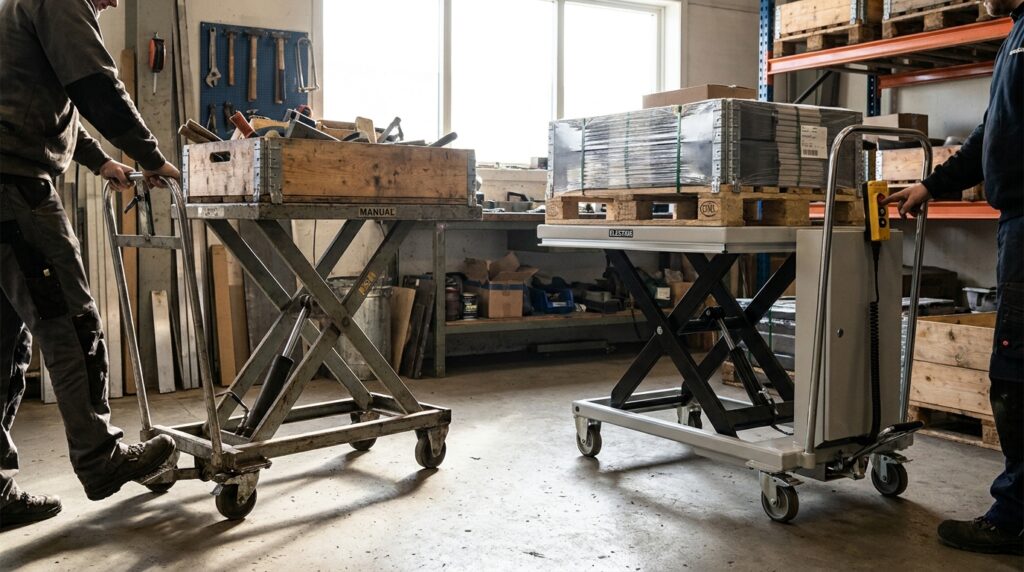
Navigating the Lift: Electric vs. Manual Lift Tables for Optimized Industrial Operations
In the dynamic landscape of industrial operations, efficiency, safety, and ergonomic design are paramount. The ability to precisely position heavy loads at optimal working heights is a cornerstone of productive manufacturing, warehousing, and assembly processes. Among the array of material handling equipment designed to achieve this, lift tables stand out for their versatility. However, a critical decision point for industrial buyers, engineers, and facility managers often lies in choosing between electric and manual lift tables. This comprehensive guide, brought to you by Fredon Handling, delves deep into the nuances of each type, providing the insights needed to make an informed investment that aligns with your operational demands, budget, and long-term strategic goals.
Understanding the fundamental differences, advantages, and considerations for both electric and manual lift tables is crucial. This isn’t merely a choice between power sources; it’s a decision that impacts workflow, employee well-being, operational costs, and ultimately, your bottom line. Fredon Handling, as a trusted partner in industrial solutions, is committed to empowering you with the knowledge to select the right equipment for your specific application.
For those interested in understanding the differences between electric and manual lift tables, a related article can be found at Fredon Handling Projects. This resource provides insights into various lifting solutions and their applications, helping readers make informed decisions based on their specific needs and operational requirements.
Understanding the Core Technologies: How They Work
At their heart, both electric and manual lift tables serve the same fundamental purpose: to raise and lower a platform carrying a load. However, the mechanisms by which they achieve this are distinct, leading to significant differences in performance, user experience, and application suitability.
The Mechanics of Manual Lift Tables
Manual lift tables rely on human power and mechanical leverage to operate. The most common mechanisms include:
Scissor-Action Lifting
This is the quintessential design for most lift tables, whether manual or electric. A series of linked, X-shaped scissor mechanisms are arranged beneath the platform. When the legs of the “X” are spread apart, the platform rises; when they are brought together, the platform descends.
Hydraulic or Mechanical Actuation
Manual tables typically employ one of two methods for actuating the scissor mechanism:
- Foot Pump Hydraulics: This is a prevalent and cost-effective method. A foot-operated hydraulic pump is used to build pressure, extending the hydraulic cylinder and pushing the scissor arms upwards. Releasing a valve allows the platform to descend. The process requires continuous pumping for lifting and careful control for lowering.
- Hand Crank Mechanisms: Some manual tables utilize a hand crank connected to a gear and cable system. Turning the crank winds or unwinds the cable, which in turn manipulates the scissor arms to lift or lower the platform. This method can offer finer control over descent but is generally slower than hydraulic systems.
The operation of a manual lift table is inherently tied to the physical effort of the operator. While they are robust and reliable, their lifting speed and capacity are limited by the user’s strength and endurance.
The Sophistication of Electric Lift Tables
Electric lift tables harness the power of electricity to automate the lifting and lowering process, significantly enhancing convenience, speed, and capacity.
Electric-Powered Actuation
The primary differentiator is the use of electric power to drive the lifting mechanism. Common electric actuation methods include:
- Hydraulic Systems with Electric Pump: Similar to manual hydraulic tables, these use a hydraulic cylinder, but the pressure is generated by an electric motor driving a hydraulic pump. A simple push of a button initiates the lifting process. Descent is typically controlled by a valve, also electrically actuated or manually controlled depending on the model.
- Electric Linear Actuators: These compact, self-contained units use an electric motor to drive a threaded rod or ball screw, directly extending or retracting a shaft that pushes against the scissor mechanism. They offer precise control, quiet operation, and can be integrated into sophisticated control systems.
- Ball Screw or Lead Screw Actuators: These systems use an electric motor to rotate a long threaded screw. A nut that rides on the screw is attached to the lifting mechanism, causing it to move up or down as the screw rotates. They are known for their accuracy and ability to hold position.
The electric nature of these tables allows for powered lifting and controlled lowering, often with adjustable speed settings and the ability to integrate with automation systems.
Key Advantages: Why Choose Electric or Manual?
The choice between electric and manual lift tables hinges on a careful evaluation of their respective strengths and how they align with your specific operational needs.
The Benefits of Manual Lift Tables
Manual lift tables offer a compelling value proposition, particularly for certain industrial environments and tasks.
Cost-Effectiveness
- Lower Initial Purchase Price: Manual lift tables generally have a significantly lower upfront cost compared to their electric counterparts. This makes them an attractive option for businesses with tighter capital expenditure budgets or for applications where the need for powered lifting is infrequent or non-critical.
- Reduced Operational Expenses: Without the need for electricity, manual tables eliminate ongoing power consumption costs. This can contribute to lower utility bills, especially in facilities with numerous lifting points.
- Simpler Maintenance: The mechanical nature of manual lift tables often translates to simpler maintenance requirements. There are fewer electrical components to fail, and routine checks typically involve lubrication and visual inspection of mechanical parts.
Reliability and Durability
- Robust Construction: Designed to withstand the rigors of industrial use, manual tables are built with heavy-duty steel frames and robust scissor mechanisms.
- Independence from Power Sources: In environments where consistent power supply is a concern, manual tables offer unparalleled reliability. They can be operated regardless of power outages, ensuring continued functionality.
- Ease of Repair: Due to their simpler design, repairs on manual lift tables can often be performed in-house or with readily available parts, minimizing downtime.
Simplicity and Ease of Use
- Intuitive Operation: The foot pump or hand crank operation is straightforward and requires minimal training. Operators quickly grasp how to lift and lower the platform.
- No Electrical Requirements: Eliminates the need for electrical outlets or wiring at the point of use, offering greater flexibility in placement.
The Advantages of Electric Lift Tables
Electric lift tables excel in applications demanding higher productivity, greater ergonomic support, and integration into automated workflows.
Enhanced Productivity and Speed
- Faster Lifting and Lowering Cycles: Electric motors can lift and lower platforms much faster than manual operation, significantly reducing cycle times for repetitive tasks. This directly translates to increased throughput.
- Effortless Operation: Eliminates the physical strain associated with manual pumping or cranking, allowing operators to work more efficiently for extended periods.
- Adjustable Speed Control: Many electric models offer variable speed settings, allowing for precise control during delicate operations or rapid ascent/descent when speed is a priority.
Superior Ergonomics and Reduced Strain
- Minimized Physical Exertion: For tasks requiring frequent lifting or frequent repositioning, electric tables dramatically reduce the risk of musculoskeletal injuries. This is a crucial consideration for facility managers focused on employee well-being and reducing workers’ compensation claims.
- Consistent Positioning: The ability to precisely set and maintain specific working heights reduces the need for operators to bend, stoop, or reach, promoting better posture and reducing fatigue.
- “Push-Button” Simplicity: The ease of operation with simple button controls makes them accessible to a wider range of operators, regardless of physical strength.
Increased Capacity and Versatility
- Higher Lifting Capacities: Electric systems can typically achieve higher lifting capacities than manual tables, making them suitable for heavier loads and more demanding industrial applications.
- Advanced Features and Customization: Electric tables can be equipped with a wide array of features, including remote controls, integrated scales, tilt capabilities, rotating platforms, and safety sensors, enabling them to be tailored to highly specific tasks.
- Integration with Automation: Electric lift tables are ideal for integration into automated assembly lines, robotic cells, and conveyor systems. Their powered operation allows them to be seamlessly controlled as part of a larger automated process.
Application Spotlights: Where Each Excels
The ideal choice between an electric and manual lift table often depends on the specific tasks and environments within your facility. Here are some practical examples:
Manual Lift Table Applications
- Low-Frequency Lifting in Assembly: In assembly lines where lifting or repositioning is only required occasionally, a manual table can be a cost-effective solution. For example, a worker assembling large components might use a manual table to bring a part to a comfortable height for initial placement, but then rely on other methods for subsequent adjustments.
- Tooling and Die Handling (Infrequent): In a manufacturing setting where heavy tooling or dies need to be moved from storage to a machine, but this is not a daily occurrence, a manual lift table can be a practical and budget-friendly option.
- Shipping and Receiving (Light to Moderate Loads): For smaller warehouses or receiving areas dealing with less frequent shipments of moderate weight, manual tables can suffice for bringing items from floor to truck bed height or for initial sorting.
- Maintenance and Repair Workstations: In repair shops or maintenance bays, where equipment is brought to a specific height for servicing, a manual lift table can be a dependable choice for occasional use.
- Temporary Workstations: When a temporary elevated workstation is needed for a specific project, a manual lift table offers a mobile and cost-effective solution without the need for electrical infrastructure.
Electric Lift Table Applications
- High-Volume Assembly Lines: In automotive manufacturing, electronics assembly, or any industry with rapid, repetitive assembly tasks, electric lift tables are essential for maintaining high throughput and minimizing operator fatigue. They can bring components to the precise ergonomic height for each stage of the assembly process.
- Heavy Load Material Transfer: For moving heavy pallets, large machinery components, or bulk materials in warehouses and distribution centers, electric lift tables with higher capacities are crucial. They enable forklifts or other machinery to offload directly onto the table, which then precisely positions the load for subsequent handling.
- Automated Warehousing and Logistics: Electric lift tables are often integrated into automated storage and retrieval systems (AS/RS), where they receive goods from conveyors and position them for robotic palletizing or further sorting.
- Ergonomic Workstations in Manufacturing: To improve operator comfort and reduce the risk of repetitive strain injuries, electric lift tables are used to create adjustable workstations in factories. These tables can be set to the ideal height for each individual worker and task.
- Machining and CNC Operations: In machining environments, electric lift tables can be used to precisely position heavy workpieces onto CNC machines or to transfer finished parts for inspection or deburring.
- Pharmaceutical and Food Processing: These industries often require precise height adjustments for sterile environments and ergonomic workstations. Electric lift tables with stainless steel construction and washdown capabilities are common.
When considering the advantages of electric versus manual lift tables, it’s essential to understand the broader context of material handling and its impact on efficiency and safety in the workplace. For a deeper insight into the principles of material handling, you can explore this informative article on what material handling entails. This resource provides valuable information that can help you make informed decisions about the best equipment for your specific needs.
Making the Right Choice: Selection Criteria
Selecting the optimal lift table involves a thorough assessment of your operational requirements, budget constraints, and future growth plans. Fredon Handling offers a comprehensive range of both electric and manual lift tables, and our experts are available to guide you through this crucial decision.
Factors to Consider for Manual Lift Tables
- Frequency of Use: If lifting is infrequent and brief, a manual table may be sufficient.
- Load Weight and Size: Manual tables have defined weight limits. Ensure the table’s capacity comfortably exceeds your heaviest anticipated load.
- Operator Strength and Endurance: Consider the physical capabilities of your workforce.
- Budgetary Constraints: Manual tables are generally the most budget-friendly option.
- Need for Mobility: Many manual tables are equipped with casters, offering portability.
- Environmental Factors: Are there any power restrictions or the need for operation during power outages?
Factors to Consider for Electric Lift Tables
- Frequency and Duration of Use: For frequent, continuous, or prolonged lifting, electric is a clear winner.
- Ergonomic Demands: If reducing operator strain and preventing injuries is a priority, invest in electric.
- Required Lifting Speed and Precision: Electric tables offer faster cycles and finer height adjustments.
- Load Weight and Height Requirements: Electric tables often offer higher capacities and greater vertical travel.
- Integration with Automation: If you plan to integrate with other automated systems, electric is essential.
- Available Power Infrastructure: Ensure suitable electrical outlets are available at the point of use.
- Budget and ROI: While the initial cost is higher, consider the return on investment through increased productivity and reduced injury costs.
Key Specifications to Evaluate
When comparing models, pay close attention to:
- Capacity (lbs/kg): The maximum weight the table can safely lift.
- Lift Height (in/mm): The maximum vertical travel of the platform.
- Lowered Height (in/mm): The minimum height of the platform when fully lowered.
- Platform Size (L x W): Ensure it’s adequate for your typical loads.
- Power Requirements (for electric models): Voltage, phase, and amperage.
- Actuation Type (for electric models): Hydraulic, linear actuator, ball screw.
- Safety Features: Guards, emergency stops, pressure relief valves.
- Mobility: Casters (fixed, swivel, locking), or stationary base.
- Construction Material: Steel, stainless steel (for corrosive or sanitary environments).
Table 1: Electric vs. Manual Lift Table Comparison
| Feature | Manual Lift Tables | Electric Lift Tables |
| : | :– | : |
| Initial Cost | Lower | Higher |
| Operating Cost | Lower (no electricity) | Higher (electricity consumption) |
| Lifting Speed | Slower (operator dependent) | Faster, often adjustable |
| Ease of Operation | Simple, but requires physical effort | Effortless, push-button control |
| Ergonomics | Moderate; requires some exertion | Excellent; minimizes strain and risk of injury |
| Capacity | Generally lower to moderate | Higher capacities often available |
| Precision Control | Limited by manual dexterity | High, especially with linear actuators/ball screws |
| Maintenance | Simpler, mechanical | More complex, includes electrical components |
| Power Dependency | None | Requires electricity |
| Automation Potential | Limited | High; easily integrated into automated systems |
| Typical Applications | Infrequent lifting, budget-conscious operations | High-volume, repetitive tasks, ergonomic workstations |
When considering the advantages of electric versus manual lift tables, it’s essential to explore various factors that can influence your decision. For a deeper understanding of the different applications and benefits of these lift tables, you might find this related article on the Fredon Handling website particularly insightful. It discusses the operational efficiency and ergonomic benefits of using electric lift tables compared to manual options. You can read more about it here.
Safety First: Essential Considerations for Both Types
Regardless of whether you choose an electric or manual lift table, safety must be the absolute top priority. Implementing robust safety protocols and ensuring proper operator training are non-negotiable.
General Safety Guidelines
- Operator Training: Ensure all operators are thoroughly trained on the specific model’s operation, load capacity, and safety features.
- Regular Inspections: Conduct daily pre-operational checks for any visible damage, leaks, or loose components.
- Load Capacity Adherence: Never exceed the rated capacity of the lift table. Overloading is a primary cause of equipment failure and accidents.
- Clearance Zone: Ensure the area around the lift table is clear of personnel and obstructions during operation.
- Locking Mechanisms: When stationary, ensure the table is securely positioned and any locking mechanisms are engaged.
- Emergency Stops: Familiarize yourself with the location and operation of emergency stop buttons (on electric models).
- Maintenance Records: Keep detailed records of all maintenance and repairs.
Specific Safety Features to Look For
For Manual Lift Tables:
- Pressure Relief Valve: Essential for hydraulic systems to prevent over-pressurization.
- Durable Foot Pump/Hand Crank: Ensure these are robust and provide good grip.
- Stable Base: A wide, stable base minimizes the risk of tipping.
- Platform Guard Rails: Consider adding optional guard rails to prevent loads from sliding off.
For Electric Lift Tables:
- Emergency Stop Buttons: Clearly visible and easily accessible.
- Safety Scissor Guards: Prevent fingers and clothing from getting caught in the scissor mechanism.
- Limit Switches: Automatically stop the platform at its highest or lowest positions, preventing over-travel.
- Pressure Sensors/Load Cells: Can detect overload conditions and prevent operation.
- Auto-Return Function: Some models can automatically return to a set home position.
- Indicator Lights/Alarms: Alert operators to operational status or potential issues.
- Locking Casters (if mobile): Ensure wheels are locked before operation.
Maintenance for Longevity and Performance
Proper and consistent maintenance is key to maximizing the lifespan, reliability, and safe operation of your lift tables, whether they are manual or electric.
Routine Maintenance for Manual Lift Tables
- Lubrication: Regularly lubricate all pivot points, scissor mechanisms, and hydraulic cylinders as per the manufacturer’s recommendations. Use the appropriate grade of lubricant.
- Hydraulic Fluid Check (if applicable): Check the hydraulic fluid level and condition. Top up or replace as needed, ensuring you use the correct type of hydraulic fluid.
- Visual Inspection: Inspect for any signs of wear, damage, corrosion, or leaks. Pay attention to hydraulic hoses and fittings.
- Tighten Fasteners: Periodically check and tighten all bolts and fasteners.
- Cleanliness: Keep the lift table clean, free from debris and spills, which can accelerate wear and corrosion.
Routine Maintenance for Electric Lift Tables
In addition to the general maintenance points listed above for manual tables (where applicable), electric models require specific attention to electrical components:
- Electrical Connections: Inspect all electrical connections for tightness and corrosion. Ensure wiring is not frayed or damaged.
- Motor and Pump: Listen for any unusual noises from the electric motor or hydraulic pump.
- Control Panel: Ensure buttons and controls are functioning correctly and are free from damage.
- Limit Switches and Sensors: Test the functionality of limit switches and any other safety sensors.
- Actuator Inspection: For linear actuators or ball screw systems, inspect for wear or damage.
- Hydraulic System (if applicable): Maintain hydraulic fluid levels and condition as with manual hydraulic tables.
Proactive Maintenance Program: Implementing a preventative maintenance schedule, documented by Fredon Handling’s service team, can significantly reduce unexpected downtime and costly repairs. This typically involves scheduled inspections, lubrication, fluid changes, and component checks.
Frequently Asked Questions About Lift Tables
Here are answers to some common questions industrial buyers, engineers, and facility managers have regarding lift tables:
Q1: How do I determine the correct lifting capacity for my needs?
A1: Calculate the maximum weight of the objects you anticipate lifting. Always add a safety margin (e.g., 25%) to this weight to account for dynamic loads, unexpected items, or future operational changes. It’s always better to slightly over-spec your capacity than to risk overloading.
Q2: What is the difference between a hydraulic and a linear actuator electric lift table?
A2: Hydraulic electric tables use an electric motor to power a hydraulic pump, which then actuates a cylinder to lift the platform. Linear actuator electric tables use an electric motor to directly drive a mechanism (like a ball screw) that extends or retracts a shaft, providing the lifting motion. Linear actuators often offer more precise control, quieter operation, and are generally more energy-efficient.
Q3: Can lift tables be used outdoors?
A3: While some lift tables are designed for outdoor use (often with specific coatings or materials), most standard industrial lift tables are intended for indoor environments. Outdoor exposure to weather elements can lead to corrosion, damage to electrical components, and reduced lifespan. If outdoor use is required, consult Fredon Handling for specialized outdoor-rated models.
Q4: What is the typical lifespan of a lift table?
A4: With proper maintenance and operation, both manual and electric lift tables can have a long lifespan, often exceeding 10-15 years. However, this is highly dependent on usage frequency, load conditions, and adherence to maintenance schedules. Electric lift tables may require eventual replacement of electrical components like motors or pumps.
Q5: Are there any special considerations for lift tables in food or pharmaceutical applications?
A5: Yes. These industries often require specific materials like stainless steel construction, food-grade lubricants, and washdown capabilities to maintain hygiene and prevent contamination. Fredon Handling offers specialized lift tables designed to meet these stringent requirements.
Q6: How can I ensure the safety of my employees when using lift tables?
A6: Comprehensive operator training, adherence to load capacities, regular safety inspections, clear operating procedures, and utilizing safety features like emergency stops and guard rails are paramount. Regular safety audits and refresher training are also recommended.
The Fredon Handling Advantage: Partnering for Success
Choosing the right lift table is a strategic decision that impacts your operational efficiency, employee well-being, and long-term profitability. At Fredon Handling, we understand these stakes. We offer a comprehensive selection of high-quality manual and electric lift tables, sourced from reputable manufacturers and designed to meet the demanding needs of industrial environments.
Our commitment extends beyond simply providing equipment. We offer:
- Expert Consultation: Our experienced team can assess your specific application and recommend the most suitable lift table solutions, whether electric or manual, and guide you through critical specifications.
- Customization Options: For unique challenges, we can explore customization options to tailor a lift table to your exact requirements.
- After-Sales Support: We provide ongoing support, including maintenance guidance, spare parts availability, and technical assistance to ensure your equipment performs optimally throughout its lifecycle.
- Commitment to Quality and Safety: We stand behind the quality and safety of all the material handling equipment we supply.
Don’t let inefficient lifting processes hinder your operations. Invest in the right solution that optimizes your workflow, protects your workforce, and enhances your productivity.
Explore the full range of our Electric Lift Tables and Manual Lift Tables on our website today. For personalized advice and to discuss your specific application needs, contact the Fredon Handling team for a no-obligation consultation. Let us help you elevate your operations.