
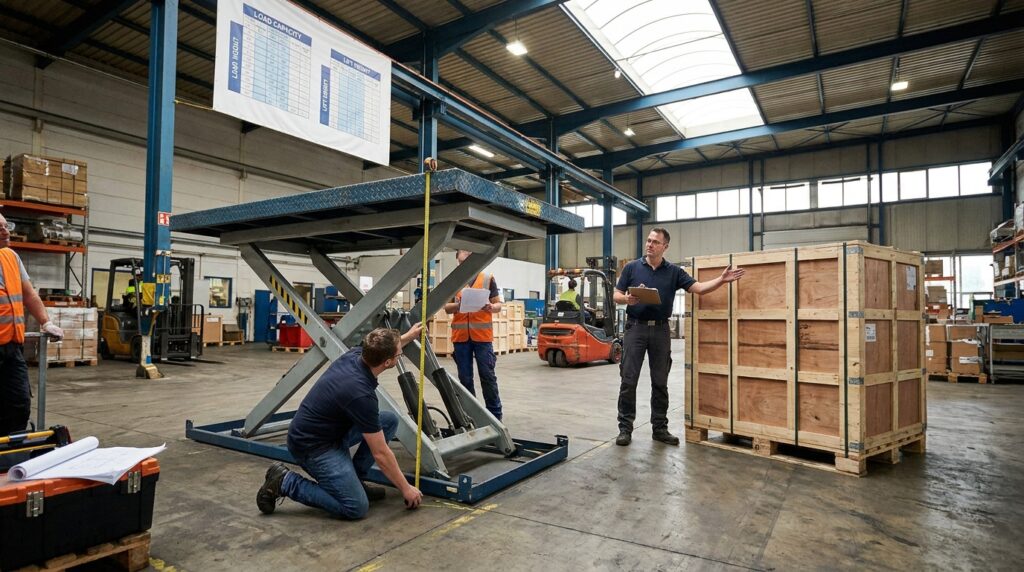
Understanding Scissor Lift Table Sizing: A Comprehensive Guide for Industrial Buyers
In the dynamic world of industrial operations, efficient material handling is paramount to productivity, safety, and cost-effectiveness. Among the most versatile and indispensable pieces of equipment in this domain are scissor lift tables. These robust machines are designed to elevate and position heavy loads with precision, bridging gaps, streamlining assembly lines, and improving ergonomics for workers. However, selecting the right scissor lift table is not a one-size-fits-all proposition. Incorrect sizing can lead to operational inefficiencies, premature equipment failure, and even safety hazards. This in-depth guide, tailored for industrial equipment buyers, engineers, and facility managers, will demystify the process of sizing a scissor lift table, ensuring you make an informed decision that aligns with your specific needs and optimizes your workflow.
At Fredon Handling, we understand the critical importance of specifying the correct equipment. Our range of high-quality scissor lift tables is engineered for durability and performance, but their true value is unlocked when they are precisely matched to the application. This article will serve as your definitive resource, covering everything from fundamental capacity calculations to nuanced considerations that impact long-term operational success.
For those looking to understand more about the practical applications and benefits of scissor lift tables, you may find the article on “Choosing the Right Material Handling Equipment” particularly insightful. This resource delves into various types of equipment, including scissor lifts, and offers guidance on selecting the best options for your specific needs. To learn more, visit the article [here](https://fredonhandling.com/contact/).
Key Factors in Scissor Lift Table Sizing
Determining the appropriate size for a scissor lift table involves a multi-faceted approach, considering both the static and dynamic requirements of your material handling tasks. Overlooking any single factor can lead to a suboptimal choice.
Understanding Load Capacity: The Foundation of Sizing
The most critical parameter when sizing a scissor lift table is its load capacity. This refers to the maximum weight the lift can safely handle. It’s crucial to distinguish between the nominal capacity (as advertised by the manufacturer) and the actual working load.
Calculating Maximum Load Weight
To accurately determine the required load capacity, you must meticulously assess the heaviest item or combination of items that will be placed on the lift table at any given time. This includes not only the primary product or material but also any accompanying containers, pallets, dunnage, or tools.
- Static Load: This is the weight of the items at rest on the lift table.
- Dynamic Load: This is the weight when the items are being moved, vibrated, or subjected to shock loads. While scissor lift tables are primarily for static lifting and positioning, consider any potential for impact during loading or unloading.
Practical Example: If you are lifting a pallet of finished goods weighing 1,500 lbs, and the pallet itself weighs 50 lbs, the total static load is 1,550 lbs. However, if workers are also placing tools or additional materials on the table during the process, or if the pallet might be jostled during loading, you need to account for a safety margin.
Incorporating a Safety Margin
It is industry best practice to incorporate a safety margin of at least 10-25% above your calculated maximum load weight. This accounts for:
- Unforeseen Loads: Unexpected heavier items or additional materials being placed on the table.
- Wear and Tear: As equipment ages, its optimal performance can slightly decrease. A safety margin ensures continued safe operation.
- Dynamic Forces: Even minor jolts or vibrations can increase the effective load.
- Regulatory Compliance: Many industries have regulations that mandate a certain safety factor.
Calculation: If your maximum calculated load is 1,550 lbs, and you apply a 20% safety margin:
1,550 lbs \* 1.20 = 1,860 lbs.
In this scenario, you would look for a scissor lift table with a minimum rated capacity of 1,860 lbs, ideally rounding up to the next standard capacity increment offered by manufacturers (e.g., 2,000 lbs).
Determining Required Lift Height and Travel Distance
Beyond just weight, the vertical distance the table needs to travel is a fundamental sizing parameter. This dictates the stroke length of the scissor mechanism.
Assessing Minimum and Maximum Lift Heights
Identify the lowest point the table needs to reach (e.g., ground level for loading) and the highest point required for your process. This could be the bed height of a machine, a conveyor belt, a workbench, or the top of a stacked storage area.
- Lowest Position: This is usually influenced by the clearance required for loading and unloading. If the table needs to be flush with the floor, you’ll need a pit-mounted lift or a low-profile model.
- Highest Position: This is determined by the elevation needed to integrate with other equipment or to provide ergonomic working conditions.
Practical Example: A scissor lift table used to load heavy parts onto a CNC machine that has a bed height of 36 inches. If the parts are loaded from ground level, the table needs a minimum lift height of 36 inches. However, if there’s a hopper that needs to be filled at a height of 60 inches, the required lift height is 60 inches.
Understanding Stroke Length
The stroke length is the total vertical distance the scissor lift table can move from its lowest to its highest position. This is a key specification provided by manufacturers. Ensure the available stroke length adequately covers your required lift range.
- Underestimating Stroke Length: If the required lift height exceeds the table’s stroke, you won’t be able to reach the necessary elevation, rendering the equipment ineffective.
- Overestimating Stroke Length: While not as critical as underestimation, an excessively long stroke might mean paying for more lift capacity than you need, potentially increasing upfront cost and footprint.
Table Platform Dimensions: Width, Length, and Shape
The physical size and shape of the platform are crucial for accommodating the items being handled and ensuring stability during operation.
Matching Platform Size to Load Footprint
The platform must be large enough to securely hold the entire load without overhang. Overhang can lead to instability, tipping, and damage to the load or surrounding equipment.
- Length and Width: Measure the typical dimensions of your largest loads, including any packaging or pallets. Add a few inches of clearance on each side for ease of placement and to prevent accidental contact with the scissor mechanism.
- Irregular Shapes: If you handle irregularly shaped items, consider how they will be supported. You might need custom platform modifications or specialized fixtures.
Practical Example: If you typically handle standard 40″ x 48″ pallets, a platform of at least 48″ x 60″ would provide ample space and overhang for secure placement. If you handle long, narrow components, a longer and narrower platform might be more appropriate than a square one.
Platform Features and Configurations
Beyond basic dimensions, consider platform features that enhance functionality:
- Toe Guards: Essential for preventing personnel from getting caught between the platform and the base when descending.
- Ramps: If the table cannot be pit-mounted and needs to be loaded from floor level, a ramp is often necessary. Ensure the ramp’s length and slope are suitable for your equipment (e.g., forklifts, pallet jacks).
- Turntables: For applications requiring rotation of the load, a turntable integrated into the platform can be a significant benefit.
- Conveyor Integration: Some scissor lifts are designed to be integrated with conveyor systems, allowing for seamless product flow.
Environmental and Operational Considerations
The environment in which the scissor lift table operates, as well as the specific operational demands, play a significant role in the overall sizing and selection process.
Duty Cycle and Frequency of Use
The intended frequency and duration of use will impact the choice of lift mechanism and the overall robustness of the table.
- Heavy Duty Cycles: Applications requiring frequent lifting and lowering throughout a shift will necessitate a more robust, industrial-grade lift with a powerful motor and durable components. Continuous or near-continuous use may warrant consideration of more specialized heavy-duty lifts or even different material handling solutions.
- Intermittent Use: Less frequent use might allow for slightly less robust models, though durability should never be compromised.
Power Source and Electrical Requirements
Scissor lift tables are typically powered by electricity. Understanding your facility’s power availability is crucial for selecting the right model.
- Single-Phase vs. Three-Phase Power: Most industrial facilities have three-phase power, which is generally preferred for heavier-duty lifts due to its efficiency and consistent torque. Single-phase power is more common in smaller workshops or offices. Ensure the chosen lift’s voltage and phase requirements match your available power supply.
- Air-Powered or Manual Lifts: For specific applications where electrical power is unavailable or impractical, air-powered or manual hydraulic lifts are alternatives, though their capacity and travel might be more limited.
Operating Environment: Indoors vs. Outdoors, Temperature, and Corrosivity
The environment in which the lift will operate dictates material choices, sealing requirements, and potential need for specialized coatings.
- Outdoor Use: Scissor lifts intended for outdoor use require enhanced weatherproofing, corrosion-resistant materials (e.g., galvanized steel, stainless steel), and robust components that can withstand temperature fluctuations and moisture.
- Hazardous Environments: In areas with flammable vapors or dust, explosion-proof motors and intrinsically safe controls are mandatory.
- Cleanroom or Food Grade Applications: These environments require specific materials, finishes, and designs to prevent contamination and meet stringent hygiene standards.
Practical Example: A scissor lift table used in a food processing plant might require stainless steel construction and seals to prevent ingress of water and food particles, along with a design that facilitates easy cleaning. A lift used in an outdoor loading dock will need robust weatherproofing and potentially a corrosion-resistant finish.
Types of Scissor Lift Tables and Their Sizing Implications
Fredon Handling offers a diverse range of scissor lift tables, each suited for different applications and sizing considerations. Understanding these variations is key to making the optimal choice.
Standard vs. Heavy-Duty Scissor Lift Tables
The primary distinction lies in their construction, capacity, and intended use.
- Standard Scissor Lifts: Ideal for lighter loads and less frequent use. They offer a cost-effective solution for basic lifting and positioning tasks. Sizing focuses on meeting the immediate load and height requirements without excessive over-specification.
- Heavy-Duty Scissor Lifts: Built with stronger steel, more powerful hydraulic systems, and robust components to handle significantly higher capacities and endure demanding duty cycles. When sizing heavy-duty lifts, the safety margin becomes even more critical, and consideration for continuous operation is paramount.
Low-Profile vs. Pit-Mounted Scissor Lift Tables
The installation method significantly influences the “effective” lift height and loading ergonomics.
- Low-Profile Scissor Lifts: These models have a very low collapsed height, often allowing them to be loaded with standard pallet jacks or even wheeled carts without the need for a pit. Sizing here involves ensuring the collapsed height is compatible with your loading equipment and that the raised height meets your process needs.
- Pit-Mounted Scissor Lifts: These are installed within a floor recess (pit). When lowered, the platform can be flush with the surrounding floor, providing seamless integration with floor-level operations. Sizing involves not only the lift’s capacity and travel but also the dimensions of the pit, including depth, width, and length, which must accommodate the fully collapsed scissor mechanism and provide adequate clearance for maintenance.
Comparison Table: Installation Types
| Feature | Low-Profile Scissor Lift | Pit-Mounted Scissor Lift |
| :– | :– | :– |
| Installation| Surface-mounted, minimal foundation | Recessed into a floor pit, requiring excavation and construction |
| Collapsed Ht.| Very low, often allowing floor-level loading | Can be fully flush with floor when lowered |
| Ramp Needs | May still require a ramp depending on load entry | Often eliminates the need for ramps for floor-level loading |
| Ergonomics | Good for moderate lifting, ramp aids entry | Excellent for seamless integration and reduced manual lifting |
| Footprint | Standard footprint | Footprint includes the pit dimensions, can affect floor space |
| Cost | Generally lower initial cost (no excavation) | Higher initial cost (excavation, construction) |
| Ideal For | Retrofitting existing facilities, limited space, pallet jacks| New builds, high-volume operations, seamless workflow integration |
Custom Scissor Lift Tables
For unique or highly specialized applications, custom-engineered solutions are often the most effective.
- Sizing Custom Lifts: The process involves a collaborative effort between the buyer and the manufacturer. Every aspect, from extreme load capacities and exceptional lift heights to bespoke platform shapes and integrated features, is tailored to the precise requirements. This often involves detailed CAD drawings, simulation, and rigorous testing. Fredon Handling excels in providing custom scissor lift solutions; consult our specialists early in your project.
Equipment Applications and Their Sizing Implications
The specific industry and application of a scissor lift table will influence its sizing.
Manufacturing and Assembly Lines
In manufacturing, scissor lifts are essential for ergonomic workstations, inventory staging, and feeding components to automated machinery.
- Application: Lifting and positioning parts for assembly at an optimal working height.
- Sizing Considerations: Platform size must accommodate components and tools. Lift height is critical for ergonomic reach. Capacity needs to handle the heaviest sub-assemblies. Duty cycle can be high, requiring robust models.
- Fredon Handling Example: Our heavy-duty industrial scissor lifts are frequently used in automotive assembly for positioning car bodies or large components, requiring high capacity and precise height control.
Warehouse and Logistics Operations
Scissor lifts facilitate efficient order picking, pallet loading/unloading, and bridging elevation differences between docks and warehouse floors.
- Application: Lifting pallets from floor level to truck bed height for loading and unloading.
- Sizing Considerations: Capacity must account for full pallets plus the pallet itself. Lift height needs to match standard dock heights. Platform size is typically dictated by pallet dimensions. Durability for frequent operation is key.
- Fredon Handling Example: Our dock lift scissor tables are designed specifically for this purpose, offering reliable performance for high-volume shipping and receiving.
Automotive Workshops and Service Centers
Mechanics use scissor lifts for vehicle maintenance and repair, providing access to the underside of vehicles.
- Application: Lifting vehicles for service.
- Sizing Considerations: This application typically uses specialized vehicle lifts rather than standard scissor lift tables. However, for lifting heavy components like engines or transmissions, standard scissor lifts with appropriate capacity and platform size are used.
- Fredon Handling Example: While we don’t offer vehicle lifts, our robust scissor lift tables can be used for lifting heavy automotive components, ensuring safe and ergonomic positioning.
Material Handling and Distribution Centers
Scissor lifts are used for various tasks, including consolidating shipments, feeding automated equipment, and providing vertical access in multi-level facilities.
- Application: Moving and staging materials for shipment.
- Sizing Considerations: Load capacity is crucial for full totes, bins, or partial pallets. Lift height needs to accommodate various staging heights. Platform size should be versatile for different load configurations.
- Fredon Handling Example: Our mobile scissor lift tables offer flexibility for staging and consolidation tasks across a large distribution center.
When considering the best practices for selecting the right scissor lift table for your needs, it can be helpful to explore additional resources that provide insights into the various types of lifting equipment available. For instance, you might find it beneficial to read about the different features and specifications that can influence your decision in the article found here. Understanding these aspects can ensure you make an informed choice that enhances both safety and efficiency in your operations.
Safety Considerations When Sizing and Operating
Safety is paramount in any industrial setting. Proper sizing and adherence to safety protocols are non-negotiable.
Understanding Load Charts and Ratings
Every scissor lift table comes with a load chart and rating plate. These are your primary references for safe operation.
- Load Chart: Details the maximum load capacity at various stroke heights. Due to the geometry of scissor mechanisms, the capacity can decrease as the lift extends to its maximum height. Always consult the load chart to ensure you are operating within safe parameters for your specific lift height.
- Rating Plate: Displays the maximum safe working load (SWL) for the entire machine. Never exceed this rating.
Importance of Guards and Safety Features
Modern scissor lift tables are equipped with numerous safety features. Ensure these are present and functional.
- Toe Guards: As mentioned, these prevent entrapment between the platform and the base.
- Emergency Stop Buttons: Clearly visible and accessible for immediate shutdown.
- Overload Protection: Prevents the lift from operating if the load exceeds its rated capacity.
- Safety Prop/Lock: A mechanical support that locks the platform in place for maintenance or inspection, preventing accidental descent.
- Pressure Relief Valves: Protect the hydraulic system from over-pressurization.
Safe Operation Practices
Beyond sizing, safe operation is crucial.
- Proper Loading: Ensure loads are centered on the platform and secured. Avoid overloading.
- Clearance: Maintain a clear area around the lift during operation, free from personnel and obstructions.
- Never Ride the Lift: Scissor lift tables are designed for materials, not people.
- Regular Inspections: Conduct pre-operation checks and follow a scheduled maintenance program.
Maintenance and Longevity: Ensuring Your Scissor Lift Performs
Proper maintenance is key to maximizing the lifespan and ensuring the continued safe operation of your scissor lift table.
Routine Inspections and Lubrication
A proactive maintenance schedule will prevent costly breakdowns.
- Daily Checks: Visually inspect for leaks, damaged components, and proper operation of safety features.
- Weekly/Monthly Checks: Lubricate pivot points, check hydraulic fluid levels, and inspect hydraulic hoses.
- Annual Inspections: A more thorough inspection by qualified personnel, including a load test, is recommended.
Hydraulic System Maintenance
The hydraulic system is the heart of the scissor lift.
- Fluid Quality: Use the manufacturer-recommended hydraulic fluid and ensure it is clean. Contaminated fluid can damage pumps, valves, and cylinders.
- Filter Replacement: Regularly replace hydraulic filters to remove contaminants.
- Leak Detection: Address any hydraulic leaks promptly, as they can lead to system failure and safety hazards.
Mechanical Component Checks
The scissor mechanism, bearings, and fasteners require attention.
- Pivot Points: Ensure all pivot points are clean and adequately lubricated to prevent wear and binding.
- Fasteners: Periodically check that all bolts and nuts are tightened to the manufacturer’s specifications. Vibration can loosen fasteners over time.
- Scissor Arms: Inspect for any signs of bending, cracking, or excessive wear.
Maintenance Checklist Example
| Task | Frequency | Notes |
| :– | :– | :– |
| Visual Inspection | Daily | Leaks, damage, guards, controls |
| Hydraulic Fluid Level | Weekly | Top up if necessary with approved fluid |
| Lubrication | Weekly/Monthly | Pivot points, slide surfaces |
| Hydraulic Hose Check | Monthly | Cracks, abrasion, leaks |
| Electrical Connections | Monthly | Tightness, corrosion |
| Safety Prop/Lock Check | Monthly | Functionality |
| Load Chart Verification | Annually | Confirm operation within rated capacities at various heights |
| Filter Replacement | As per schedule | Based on operating hours and environment |
| Professional Inspection | Annually | Comprehensive check and functional testing by qualified technician |
By understanding these critical sizing factors, application-specific needs, safety protocols, and maintenance requirements, you can confidently select a scissor lift table from Fredon Handling that will enhance your operations for years to come.
Frequently Asked Questions About Sizing Scissor Lift Tables
Q1: How do I account for the weight of a pallet when calculating load capacity?
A1: Always add the weight of the pallet to the weight of the goods it is carrying. Standard wooden pallets can weigh between 30-70 lbs, while heavier plastic or metal pallets can weigh significantly more. Consult your pallet supplier for precise weights.
Q2: Can I use a scissor lift table for personnel lifting?
A2: Standard scissor lift tables are designed and rated for material handling only. Never use them to lift personnel. Specialized personnel lifts (like aerial work platforms or boom lifts) are designed for this purpose and must be used.
Q3: What is the difference between a scissor lift table’s capacity at its lowest and highest position?
A3: The capacity of a scissor lift table generally decreases as it is raised to its maximum height. This is due to the geometry of the scissor mechanism. Always refer to the manufacturer’s load chart, which specifies the maximum safe working load at different lift heights.
Q4: My operation involves frequent stopping and starting of the lift. Does this affect sizing?
A4: Yes, frequent starts and stops increase the duty cycle. This means you should consider a more robust, heavy-duty model designed for continuous operation to ensure longevity and prevent premature wear on the motor and hydraulic system.
Q5: What are the implications of using a scissor lift table outdoors?
A5: Outdoor use requires scissor lifts with enhanced weatherproofing and corrosion resistance. Materials like galvanized or stainless steel are often necessary. Ensure electrical components are adequately sealed and protected from the elements. Fredon Handling offers specific models suitable for outdoor environments.
Q6: Is it possible to customize a scissor lift table’s platform size or shape?
A6: Absolutely. Fredon Handling specializes in custom scissor lift solutions. We can design and manufacture platforms to specific dimensions, shapes, and with integrated features like turntables or conveyor interfaces to perfectly match your unique application needs.
Empower Your Operations with the Right Scissor Lift Table from Fredon Handling
Selecting the correct scissor lift table is a strategic decision that impacts efficiency, safety, and your bottom line. By thoroughly assessing your load requirements, lift height needs, platform dimensions, and operational environment, you can make an informed choice. Fredon Handling is your trusted partner, offering a comprehensive range of high-quality scissor lift tables and the expertise to help you find the perfect fit.
Don’t let guesswork or insufficient analysis lead to costly mistakes. Invest in the right equipment from the start.
Contact Fredon Handling today to discuss your specific scissor lift table requirements. Our expert team is ready to provide personalized recommendations and explore custom solutions to optimize your material handling processes. Visit fredonhandling.com or call us at [Your Phone Number] to get started.