
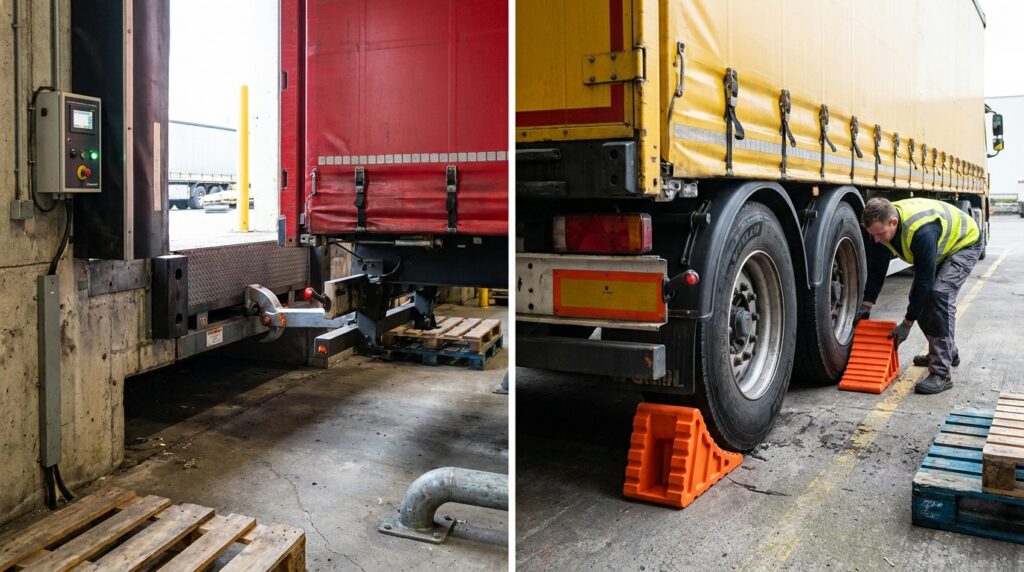
The Critical Role of Vehicle Restraint Systems in Warehouse Safety
In the bustling environment of a modern warehouse or distribution center, the safe and efficient flow of goods is paramount. A critical, yet often overlooked, aspect of this operation is securing trailers or semi-trailers to the loading dock. This is where vehicle restraint systems come into play, acting as the frontline defense against dangerous and costly trailer separation incidents. These incidents, often referred to as “trailer creep,” “trailer sway,” or “premature departure,” can lead to severe injuries, equipment damage, and significant operational downtime. Understanding the distinct roles and capabilities of different vehicle restraint systems is essential for warehouse managers, facility managers, safety professionals, and purchasing departments aiming to optimize their operations and create a secure working environment. Fredon Handling, a leading supplier of industrial material handling equipment, offers a comprehensive range of solutions designed to enhance safety and efficiency, including robust vehicle restraint systems. This article delves into the specifics of two prominent types of restraint systems: dock locks and wheel chocks, exploring their mechanisms, applications, advantages, and limitations, helping you make informed decisions for your facility.
In addition to exploring the differences between dock locks and wheel chocks, you may find it beneficial to read about the various types of material handling equipment that can enhance operational efficiency. This related article provides insights into essential tools that complement safety measures in loading and unloading processes. For more information, you can visit the article here: Types of Material Handling Equipment: Essential Tools for Efficiency.
Understanding Wheel Chocks: The Foundation of Trailer Securing
Wheel chocks are one of the simplest and most fundamental forms of vehicle restraint. They are physical blocks placed against a vehicle’s wheels to prevent rolling. While basic in concept, their effective implementation is crucial for preventing a range of accidents at the loading dock.
How Wheel Chocks Work
Wheel chocks function by creating a physical barrier that opposes the force of gravity and any potential movement of the vehicle. When a trailer is positioned at the dock, chocks are placed securely against the rear tires, typically on both sides to prevent any lateral movement or turning of the wheels. For maximum effectiveness, the chocks should be applied to the drive wheels of a tractor if it remains attached to the trailer, or the rear wheels of the trailer itself.
Types of Wheel Chocks and Their Applications
Wheel chocks come in various materials and designs, each suited for different environments and weight capacities:
- Rubber Wheel Chocks: These are a popular choice due to their durability, high traction, and ability to conform to uneven surfaces. They are resistant to oil, chemicals, and extreme weather conditions, making them suitable for most industrial applications. Their flexibility also helps absorb some of the impact if a vehicle shifts.
- Urethane Wheel Chocks: Similar to rubber, urethane chocks offer excellent durability and resistance to chemicals and abrasions. They are often lightweight and come in bright colors for high visibility.
- Metal Wheel Chocks: Typically made from steel or aluminum, these are the most robust and durable option. They are ideal for very heavy-duty applications and environments where extreme weather or harsh chemicals might degrade other materials. However, they can be heavier and may cause damage to tires if not used correctly.
- Folding Wheel Chocks: These are designed for easy storage and portability, often used by truck drivers as a standard safety measure. While convenient, their effectiveness depends on proper placement and secure fit.
In terms of application, wheel chocks are the primary restraint method for situations where the tractor may remain connected to the trailer during loading or unloading. They are also a crucial secondary safety measure, even when more advanced restraint systems are in place, providing an extra layer of protection against unforeseen events.
Advantages of Wheel Chocks
The simplicity and cost-effectiveness of wheel chocks are their most significant advantages. They require minimal training to use and are relatively inexpensive to acquire, making them an accessible safety solution for many operations. Their portability also means they can be used in various locations within a facility or by drivers on the road.
Limitations of Wheel Chocks
Despite their utility, wheel chocks have inherent limitations. Their effectiveness is highly dependent on proper placement and the condition of the chocks themselves. Worn or improperly sized chocks can fail to prevent trailer movement. Furthermore, human error is a significant factor; if chocks are not placed, or are removed prematurely, the system fails. Over time, trailers can experience “trailer creep” – a phenomenon where the coupling between the tractor and trailer can loosen, allowing the trailer to move slightly forward and backward even with chocks in place, especially on inclined surfaces. This creep can also be exacerbated by the vibration from forklifts operating inside the trailer. For these reasons, wheel chocks are often insufficient as the sole vehicle restraint system in high-traffic loading dock environments.
Exploring Dock Locks: Advanced Vehicle Restraint Technology
Dock locks, also known as vehicle restraints or trailer restraints, represent a more advanced and secure method of preventing trailer separation at the loading dock. These systems are designed to physically engage with the trailer to prevent it from moving away from the dock during loading and unloading operations.
How Dock Locks Work: The Mechanics of Safety
Dock locks operate on different principles, but their core function is to create a secure connection between the dock and the trailer. The most common types include:
- Wheel Restraint Dock Locks: These systems are designed to physically lock the trailer’s wheels, preventing any forward or backward movement. They typically consist of a barrier that extends from the dock and engages with the rear wheels of the trailer. Some advanced wheel restraints can automatically adjust to different trailer heights and tire sizes. They are highly effective at preventing trailer creep and unauthorized departure.
- Coupling Restraint Dock Locks: These restraints focus on securing the trailer’s landing gear and kingpin area. They prevent the trailer from being pulled away from the dock by engaging with the trailer’s rear structure or its kingpin assembly.
The operation of most modern dock locks is often integrated with the dock leveler and the building’s control system, allowing for a streamlined and safe sequence of operations. For instance, a dock lock might prevent the dock leveler from being operated until it has securely engaged with the trailer, and it will prevent the trailer from being released until the loading/unloading process is complete.
Types of Dock Locks and Their Applications
Fredon Handling offers a variety of dock locks to suit diverse operational needs and security requirements:
- Manual Wheel Restraint Dock Locks: These systems require manual engagement. While simpler in design and often more affordable than their automatic counterparts, they rely on the operator to correctly position and secure the restraint. They are suitable for facilities with lower traffic volumes or where budget is a primary concern, but still require a higher level of security than basic chocks.
- Automatic Wheel Restraint Dock Locks: These are the most common and sophisticated type of dock lock. They automatically detect the presence of a trailer and engage with its rear wheels. Sensors ensure proper engagement, and they can be interlocked with the dock leveler and overhead door for a complete safety system. These are ideal for high-volume docks where speed and consistent safety are paramount.
- Above-Ground Automatic Wheel Restraints: These systems are mounted on the dock surface and extend to engage the trailer wheels. They are generally easier to install and maintain than in-ground systems and are a popular choice for many modern facilities.
- In-Ground Automatic Wheel Restraints: These are recessed into the dock floor, providing a cleaner appearance and eliminating tripping hazards. They offer a high level of security and are often chosen for facilities where aesthetics and unobstructed dock areas are important.
The application of dock locks is widespread across industries, including food and beverage, retail distribution, manufacturing, and logistics. They are particularly crucial in environments where trailers might be loaded or unloaded by internal personnel or where unauthorized trailer movement poses a significant risk.
Advantages of Dock Locks
The primary advantage of dock locks is their superior safety and security compared to wheel chocks. They provide a much stronger and more reliable restraint against trailer separation. Automatic dock locks minimize the risk of human error by ensuring engagement and disengagement are part of a controlled sequence. This significantly reduces the likelihood of trailer creep and premature departure. Furthermore, they can often be integrated with other dock equipment, creating a comprehensive safety system that improves workflow efficiency. The psychological benefit to employees working around a securely restrained trailer is also considerable.
Limitations of Dock Locks
Dock locks, especially automatic systems, represent a higher initial investment compared to wheel chocks. Installation can also be more complex, particularly for in-ground systems. While highly effective, they still require regular maintenance to ensure their continued functionality. It’s also important to note that dock locks are designed for specific trailer types and configurations. While many are adjustable, compatibility with unusual trailer designs or extremely low-clearance vehicles might need to be considered.
Dock Locks vs. Wheel Chocks: A Comparative Analysis
When deciding on the most appropriate vehicle restraint system for your facility, a direct comparison between dock locks and wheel chocks is essential. This involves evaluating their performance, cost, application suitability, and safety implications.
Performance and Security
In terms of raw stopping power and reliability, dock locks unequivocally outperform wheel chocks.
- Wheel Chocks: Their effectiveness is directly tied to proper placement, the condition of the chock, and the absence of trailer creep. On inclined surfaces or with constant vibration, chocks can shift or become ineffective over time. They offer a passive form of restraint, relying entirely on friction and the integrity of the placed block.
- Dock Locks: These offer an active and robust form of restraint. Automatic wheel restraint dock locks, for instance, physically engage with the trailer’s wheels, providing a powerful barrier against movement. Their design accounts for varying trailer heights and tire pressures, offering a more consistent level of security. Integrated systems can also prevent the dock leveler from being used if the dock lock is not properly engaged, creating a fail-safe mechanism.
Cost Considerations
- Wheel Chocks: The initial purchase price of wheel chocks is significantly lower than that of dock locks. A set of durable rubber or urethane chocks can cost anywhere from $50 to $200. This makes them an attractive option for businesses with very tight budgets or for supplemental safety measures.
- Dock Locks: The investment in dock locks is considerably higher. Manual wheel restraint dock locks might range from $1,000 to $3,000. Automatic wheel restraint dock locks, especially advanced models with integrated controls, can cost anywhere from $5,000 to $15,000 or more per bay, depending on features and installation complexity. However, it’s crucial to consider the total cost of ownership, which includes potential savings from accident prevention, reduced insurance premiums, and increased operational efficiency.
Application Suitability
The choice between dock locks and wheel chocks often depends on the specific operational context of your facility.
- Wheel Chocks: Are best suited for:
- Low-traffic loading docks.
- Situations where the tractor remains attached to the trailer during loading/unloading.
- As a secondary safety measure to supplement other restraint systems.
- Facilities with significant budget constraints where any safety measure is better than none.
- Temporary or mobile operations where fixed infrastructure is not feasible.
- Dock Locks: Are essential for:
- High-traffic loading docks with frequent trailer movements.
- Facilities where trailer creep or unauthorized departure poses a significant risk of injury or damage.
- Operations requiring a high degree of safety compliance and risk mitigation.
- When integrating with automated dock systems for maximum efficiency and safety.
- Environments where forklifts operate inside trailers, increasing the risk of movement.
Safety and Regulatory Compliance
Safety is non-negotiable in industrial environments, and both wheel chocks and dock locks play a role in achieving a safe loading dock.
- Wheel Chocks: While a basic safety measure, relying solely on wheel chocks may not meet the stringent safety standards required by some industries or regulatory bodies, especially for high-risk operations. OSHA (Occupational Safety and Health Administration) mandates that employers provide a safe working environment, and while specific regulations for vehicle restraints are not always explicit, the general duty clause requires employers to protect workers from recognized hazards. In many cases, wheel chocks alone may not be considered sufficient to mitigate the recognized hazard of trailer separation.
- Dock Locks: Advanced dock lock systems, particularly automatic wheel restraints, are widely recognized as the industry standard for comprehensive trailer restraint. They directly address the hazards of trailer creep and premature departure. Their integration into a complete loading dock safety system, often including interlocks with dock levelers and overhead doors, demonstrates a commitment to robust safety protocols. Facilities utilizing dock locks are generally seen as proactively addressing these critical safety concerns, which can be crucial during safety audits and inspections.
In exploring the nuances of safety equipment for loading docks, you might find it beneficial to read about the various solutions available for securing trailers. A related article on the importance of proper loading dock safety measures can provide further insights into how dock locks and wheel chocks play distinct roles in preventing accidents. For more information, check out this resource that delves deeper into the topic and highlights best practices for ensuring a secure loading environment.
Choosing the Right System for Your Facility: Key Selection Criteria
Selecting the optimal vehicle restraint system involves a thorough assessment of your operational needs, safety goals, and budgetary considerations. Fredon Handling recommends considering the following factors:
Volume of Dock Operations
The sheer number of trailers that pass through your loading docks daily is a primary determinant. High-volume facilities experience a greater frequency of potential hazards, making robust systems like automatic dock locks a necessity. For lower-volume operations, a combination of quality wheel chocks and diligent procedures might suffice, but the inherent risks should still be carefully evaluated.
Type of Goods Handled and Associated Risks
Certain goods, such as hazardous materials, temperature-sensitive products, or high-value items, may warrant a higher level of security. Furthermore, if the loading/unloading process involves activities that might destabilize the trailer or its connection to the dock (e.g., extensive forklift traffic within the trailer), a more secure restraint is advisable.
Facility Layout and Dock Configuration
The physical layout of your loading docks, including the presence of inclines, the condition of the dock surface, and the available space for equipment, will influence the type of restraint that can be effectively implemented. For instance, in-ground dock locks require specific trenching and installation, while above-ground options offer greater flexibility. The proximity of dock doors and the potential for vehicle overlap also need consideration.
Integration with Existing Equipment
Modern facilities often utilize integrated systems for efficiency and safety. Consider how a new vehicle restraint system will interface with your existing dock levelers, overhead doors, and warehouse management systems. Automatic dock locks are typically designed for seamless integration, enhancing the overall safety and operational workflow. Fredon Handling’s experts can advise on compatibility and integration solutions.
Budgetary Constraints vs. Total Cost of Ownership
While initial cost is always a factor, it’s crucial to look beyond the purchase price and consider the total cost of ownership. This includes installation, maintenance, potential downtime, and, most importantly, the cost of accidents. Investing in a more robust system like an automatic dock lock might have a higher upfront cost but can lead to significant long-term savings by preventing costly injuries, equipment damage, and operational disruptions.
Maintenance and Servicing Requirements
All industrial equipment requires maintenance. Understand the recommended maintenance schedules and the availability of spare parts and service technicians for both wheel chocks and dock locks. While wheel chocks require minimal maintenance (inspection and replacement of worn units), dock locks, especially automatic systems, will require periodic inspections, lubrication, and potential component replacement. Fredon Handling offers maintenance services to ensure the longevity and optimal performance of your equipment.
Safety Best Practices for Vehicle Restraint Systems
Regardless of the system you choose, implementing strict safety protocols is paramount.
For Wheel Chocks:
- Proper Placement: Always place chocks securely against the drive tires (if the tractor is attached) or the rear tires of the trailer. For trailers on an incline, use two chocks per wheel, one on each side.
- Regular Inspection: Inspect wheel chocks regularly for signs of wear, cracking, or damage. Discard and replace any compromised chocks immediately.
- Consistent Use: Ensure that all personnel involved in trailer docking are trained on the correct use of wheel chocks and adhere to established procedures. Never rely on chocks alone for high-risk operations.
- Training: Provide comprehensive training to all relevant personnel on the proper procedures for applying and removing wheel chocks. This training should emphasize the risks associated with improper use.
For Dock Locks:
- Regular Maintenance: Adhere to the manufacturer’s recommended maintenance schedule. This typically involves regular inspections of moving parts, lubrication, and functional testing.
- Visual Checks: Before and after each use, visually inspect the dock lock for any obvious damage or obstructions.
- Interlock Verification: For integrated systems, ensure that all interlocks with dock levelers and overhead doors are functioning correctly.
- Operator Training: Ensure that all operators are thoroughly trained on the correct operation of the dock lock system, including the sequence of engagement and disengagement.
- Record Keeping: Maintain detailed records of all maintenance and repair activities for the dock lock system.
General Safety Considerations for All Systems
- Clear Communication: Establish clear communication protocols between dock workers and truck drivers.
- Signage: Utilize clear and visible signage to indicate when a trailer is secured by a restraint system.
- Pre-Operational Checks: Implement pre-docking checklists to ensure all safety equipment is in place and functional.
- Emergency Procedures: Develop and communicate clear emergency procedures in the event of a restraint system failure or accident.
- Regular Audits: Conduct regular safety audits of your loading dock operations to identify any potential hazards or deviations from established procedures.
Conclusion: Enhancing Safety and Efficiency with Fredon Handling
The safety of your personnel and the security of your facility are paramount. Vehicle restraint systems, whether simple wheel chocks or sophisticated automatic dock locks, play a vital role in preventing potentially catastrophic accidents at the loading dock. While wheel chocks offer a basic and cost-effective solution, automatic dock locks provide a superior level of security and reliability, significantly reducing the risks associated with trailer creep and premature departure.
Fredon Handling is committed to providing warehouse and facility managers, safety professionals, and purchasing professionals with the most effective and reliable material handling equipment solutions. Understanding the distinct advantages and limitations of each type of vehicle restraint system is the first step toward making an informed decision. For facilities prioritizing robust safety, operational efficiency, and compliance, investing in advanced dock locks is often the most prudent choice.
Are you looking to upgrade your loading dock safety and efficiency? Fredon Handling offers a comprehensive range of vehicle restraint systems, including high-quality wheel chocks and advanced automatic dock locks. Our experts can help you assess your specific needs and recommend the ideal solution for your facility. Contact Fredon Handling today for a personalized quote and to learn how we can help you secure your loading dock operations. Explore our comprehensive Loading Dock Equipment category for more solutions designed to optimize your warehouse operations.
Frequently Asked Questions (FAQs)
Q1: How often should I inspect my wheel chocks?
A1: Wheel chocks should be inspected visually before each use and more thoroughly on a regular schedule, such as weekly or monthly, depending on the intensity of their use. Look for cracks, excessive wear, deformation, or any damage that could compromise their effectiveness.
Q2: Can I rely solely on wheel chocks for trailer restraint?
A2: For many high-traffic or high-risk loading dock operations, relying solely on wheel chocks is generally not considered sufficient. While they provide a basic level of restraint, they are prone to human error, wear, and can be overcome by trailer creep, especially on inclines or with prolonged vibration. Automatic dock locks offer a significantly higher and more reliable level of security.
Q3: What is trailer creep, and how do dock locks prevent it?
A3: Trailer creep is the slight forward or backward movement of a trailer at the loading dock, even when thought to be secured. It can occur due to vibrations from forklifts, vehicle movement, or uneven surfaces. Dock locks, particularly automatic wheel restraint systems, physically engage with the trailer’s wheels, creating a powerful barrier that prevents this movement and effectively eliminates trailer creep.
Q4: Are dock locks compatible with all types of trailers?
A4: Most modern dock locks are designed with adjustability to accommodate a wide range of trailer heights and tire sizes. However, it’s essential to confirm compatibility with your specific trailer fleet. Factors like axle spacing, tire diameter, and trailer height can influence the choice and effectiveness of a particular dock lock model. Fredon Handling can assist in verifying compatibility.
Q5: What are the maintenance requirements for automatic dock locks?
A5: Automatic dock locks require regular preventive maintenance to ensure their optimal performance and longevity. This typically includes periodic visual inspections, lubrication of moving parts, functional testing of sensors and locking mechanisms, and checking for any wear or damage. Following the manufacturer’s recommended maintenance schedule is crucial. Fredon Handling offers maintenance services to support your equipment.