
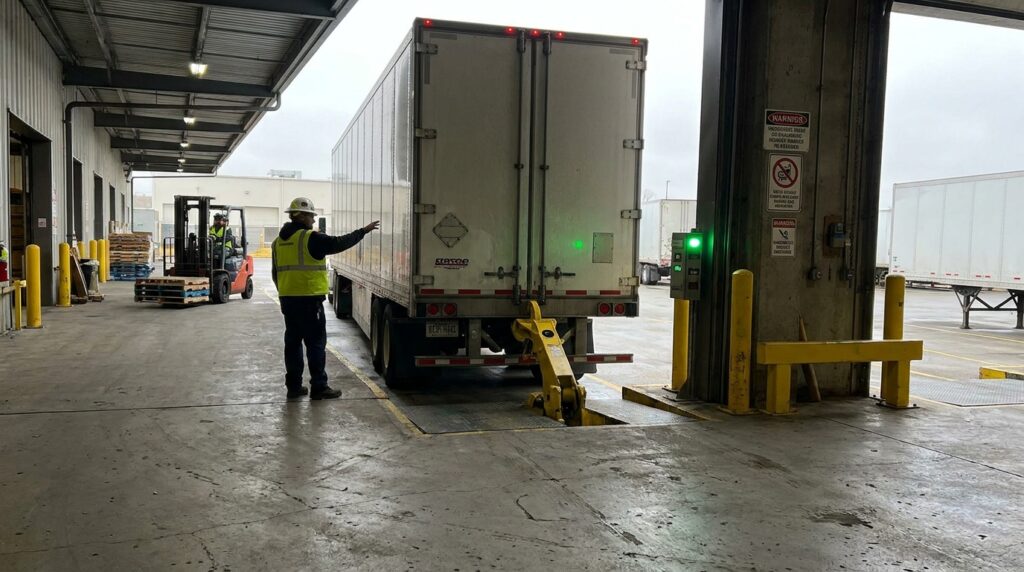
Ensuring Workplace Safety and Efficiency at the Loading Dock
The loading dock is a critical nexus of activity in any industrial facility, a high-traffic area where the smooth flow of goods hinges on precise coordination and robust safety protocols. For warehouse managers, facility managers, safety managers, and purchasing professionals, optimizing this space is paramount. It’s not just about moving products; it’s about safeguarding personnel, preventing costly equipment damage, and maintaining operational continuity. At Fredon Handling (fredonhandling.com), we understand the multifaceted challenges of industrial material handling, and a key area where safety and efficiency converge is the loading dock. This article will delve into the essential realm of loading dock vehicle restraints, exploring their various types, significant safety benefits, and crucial selection criteria to help you make informed decisions that protect your workforce and your bottom line.
Loading dock vehicle restraints play a crucial role in enhancing safety and efficiency during the loading and unloading process. For those looking to deepen their understanding of material handling and its various components, a related article can be found at What is Material Handling?. This resource provides valuable insights into the broader context of material handling systems, including the importance of safety measures like vehicle restraints in preventing accidents and ensuring smooth operations at loading docks.
Understanding the Risks: The Importance of Securing Trailers
The seemingly simple act of loading or unloading a trailer at a dock presents a surprising number of potential hazards. Without proper securing mechanisms, trailers can experience several dangerous scenarios, often referred to as “dock shock” or “trailer creep.”
Trailer Creep: The Silent Threat
Trailer creep is a phenomenon where a trailer, despite being parked at a dock, subtly moves away from the loading dock doors. This can occur due to several factors:
- Worker Activity: The vibrations caused by forklifts, pallet jacks, and personnel moving within the trailer can create subtle shifts.
- Brake Release: Inadvertently or due to malfunction, trailer brakes can release, allowing for movement.
- Environmental Factors: Wind can exert pressure on the trailer, especially if dock doors are open.
- Uneven Surfaces: Slight inclines or uneven ground at the dock can contribute to creeping.
The consequence of trailer creep is a widening gap between the trailer and the dock. This gap can lead to severe injuries if a worker falls from the dock into the void, or if a forklift operator misjudges the distance and the vehicle, or its load, falls to the ground.
Dock Shock: The Violent Disruption
Dock shock, also known as trailer separation or premature departure, is a more dramatic and dangerous event. It occurs when a trailer is detached from the dock before loading or unloading operations are fully completed. This can happen when:
- Truck Drivers Depart Prematurely: A driver, unaware that operations are still ongoing, may drive away.
- Communication Breakdowns: A lack of clear communication between dock personnel and the truck driver is a primary culprit.
- Vehicle Acceleration: The initial acceleration of a truck can exert significant force, pulling it away from the dock.
The results of dock shock are catastrophic. It can cause:
- Falls: Workers inside or on the dock can be thrown to the ground.
- Equipment Damage: Forklifts and their loads can fall with the trailer, leading to extensive damage and potential fires.
- Property Damage: Damage to the loading dock structure, building, and other equipment is common.
- Severe Injuries and Fatalities: The physical forces involved can result in life-altering injuries or fatalities.
Regulatory and Financial Ramifications
Beyond the immediate human cost, these incidents carry significant financial and legal consequences. OSHA (Occupational Safety and Health Administration) mandates that employers provide a safe working environment. Failure to implement adequate safety measures can result in substantial fines. Moreover, the costs associated with equipment repair or replacement, lost productivity due to downtime, and workers’ compensation claims can severely impact a company’s profitability. Investing in effective vehicle restraints is not merely a safety precaution; it’s a sound business decision that mitigates risk and protects your assets.
Types of Loading Dock Vehicle Restraints
To combat these risks, a variety of vehicle restraints have been developed. These devices work by physically preventing a trailer from moving away from the dock. They fall into two primary categories: wheel chocks and dock-mounted restraints.
Wheel Chocks: The Basic Barrier
Wheel chocks are portable devices placed behind the wheels of a trailer to prevent it from rolling. While they represent the most basic level of restraint, their effectiveness is highly dependent on proper usage and maintenance.
Manual Wheel Chocks
- Description: These are typically made of rubber or polyurethane and are shaped to conform to the curve of a tire. They are manually placed by dock personnel.
- Pros: Inexpensive, easy to use, portable.
- Cons:
- Reliance on Human Error: Their effectiveness hinges entirely on personnel remembering to place them correctly and consistently.
- Improper Placement: If not firmly seated or if placed on the wrong side of the wheel, they can dislodge.
- Lack of Positive Engagement: They don’t provide a definitive lock on the trailer.
- Limited Visibility: Can be easily overlooked or removed inadvertently.
- Not Always Sufficient: May not be sufficient to prevent movement in all situations, especially with powerful trucks or significant inclines.
- Best Use Cases: Often used as a supplementary safety measure or in very low-traffic, low-risk environments where other restraints are not feasible. It’s important to note that relying solely on wheel chocks is generally not considered best practice for high-volume or high-risk loading docks.
Automatic Wheel Chocks
- Description: These systems are designed to automatically deploy and retract. Some are trailer-activated (e.g., sensing the presence of a trailer), while others are manually activated from a control panel.
- Pros: Reduce reliance on manual placement, can provide a more consistent level of security, some offer sensors to confirm proper placement.
- Cons: Can be more complex to maintain than manual chocks, still rely on the trailer being positioned correctly to engage, may not offer the same level of security as dock-mounted restraints.
- Best Use Cases: A step up from manual chocks, offering improved consistency for facilities that cannot accommodate dock-mounted systems.
Dock-Mounted Restraints: The Secure Solution
Dock-mounted restraints are permanently installed at the loading dock and provide a more secure and reliable method of preventing trailer movement. They are generally considered the gold standard for safety.
Wheel-Based Restraints (Dock Locks)
- Description: These are sophisticated systems that engage with the trailer’s wheels. They typically consist of a carriage with a hook or arm that extends to secure the rear tires. When a trailer is backed into the dock, a sensor detects its presence, and the restraint is activated.
- Types:
- Hook-Style Restraints: A powerful hook or arm extends and latches onto the trailer’s rear wheels, preventing backward movement.
- Pinch-Bar Style Restraints: These systems use a bar that “pinches” the tire against the dock or a sturdy surface.
- Key Features:
- Positive Engagement: They physically lock onto the trailer’s wheels, providing a strong hold.
- Automatic Operation: Often integrated with dock door controls and vehicle detection systems for seamless operation.
- Communication Systems: Many include warning lights (inside and outside the facility) to signal the status of the restraint (engaged, disengaged, not safe to depart).
- Manual Override: Most systems include a manual override for emergency situations.
- Pros:
- High Security: Offer superior protection against trailer creep and premature departure.
- Reduced Reliance on Personnel: Automation minimizes the risk of human error.
- Integrated Safety Features: Warning lights and interlocks enhance communication and prevent unsafe operations.
- Compliance: Help facilities meet stringent OSHA safety standards.
- Cons:
- Higher Initial Cost: More expensive than wheel chocks.
- Installation Requirements: Require professional installation and can be more complex to maintain.
- Trailer Variability: Performance can be affected by extreme tire sizes or unusual trailer designs, though most are designed to accommodate a wide range.
- Selection Criteria for Wheel-Based Restraints:
- Trailer Compatibility: Ensure the restraint can securely engage the range of trailer tires used at your facility.
- Working Range: The restraint should have sufficient vertical and horizontal reach to engage the trailer effectively.
- Holding Force: The restraint must be capable of withstanding the forces generated by trailer movement.
- Control System Integration: Compatibility with existing dock door controls and communication systems is crucial.
- Environmental Resistance: Consider durability for your specific climate conditions.
- Examples: Fredon Handling offers a range of advanced wheel-based restraints designed for robust performance in demanding industrial environments. [Explore Fredon Handling’s Loading Dock Vehicle Restraint options]
Barrier-Style Restraints (Dock Barriers)
- Description: These restraints create a physical barrier that prevents the trailer from moving away from the dock. They are typically mounted at the dock edge and extend outward to engage with the trailer chassis or rear impact guard.
- Types:
- Hydraulic Barriers: Powered by hydraulics, these barriers rise to create a secure blockade.
- Manual Barriers: Operated manually, though less common for high-security applications.
- Key Features:
- Physical Blockade: Provide a strong physical impediment to trailer departure.
- Sensors and Interlocks: Often equipped with sensors to detect trailer presence and interlocks with dock doors.
- Visual Indicators: Utilize warning lights to communicate operational status.
- Pros:
- Very High Security: Offer an extremely robust physical barrier.
- Less Sensitive to Tire Condition: Not reliant on tire condition or placement as much as wheel-based restraints.
- Cons:
- Higher Cost and Complexity: Generally the most expensive and complex type of restraint.
- Requires Precise Trailer Positioning: The trailer must be backed in very accurately for the barrier to engage effectively.
- Potential for Damage: If a driver attempts to depart with a barrier engaged, it can cause significant damage to the trailer, the dock, and the barrier itself.
- Selection Criteria for Barrier-Style Restraints:
- Clearance and Maneuvering Space: Ensure sufficient space for the barrier to operate without obstruction.
- Trailer Chassis Design: Verify compatibility with the underside of the trailers that frequently visit your facility.
- Integration with Dock Levelers: Consider how the barrier interacts with the dock leveler during operation.
Choosing the Right Restraint: Key Selection Criteria
The selection of the appropriate vehicle restraint is not a one-size-fits-all decision. Several critical factors must be considered to ensure optimal safety and operational efficiency.
Operational Volume and Frequency
- High Volume/High Frequency Docks: Facilities with continuous trailer activity will benefit most from highly automated and robust systems like advanced wheel-based restraints. The speed and reliability of these systems minimize downtime and maximize safety in busy environments.
- Low Volume/Low Frequency Docks: For facilities with less frequent trailer activity, manual wheel chocks might be considered as a supplementary measure, or a simpler automated wheel-based restraint could suffice. However, the inherent risks of manual chocks should always be weighed against the cost of more advanced solutions.
Trailer Types and Configurations
- Varied Trailer Fleet: If your facility receives trailers with diverse tire sizes, wheelbases, or rear chassis designs, opt for restraints that offer broad compatibility. Adjustable or versatile restraints are crucial here.
- Standardized Fleet: If your incoming fleet is largely standardized, you may have more flexibility, but it’s still wise to choose a restraint with some degree of adjustability to accommodate minor variations.
Dock Layout and Space Limitations
- Dock Space: Some restraints require more space at the dock face than others. Barrier-style restraints, for example, need clear space for their operation. Wheel-based restraints are generally more space-efficient at the dock face but require adequate space for the trailer to position correctly.
- Ground Slope: If your dock area has any perceptible slope, robust restraints with significant holding force are essential. Wheel-based restraints are particularly effective in these scenarios as they directly engage the trailer’s driving force.
Communication and Integration Capabilities
- Visual Communication: A critical component of any restraint system is clear communication. Ensure the chosen restraint includes external and internal warning lights to signal when it is safe for a truck to approach or depart, and when it is engaged.
- System Integration: For maximum efficiency and safety, the restraint should integrate seamlessly with your dock doors, dock levelers, and any existing automation systems. This prevents conflicting operations and ensures a logical workflow.
Budgetary Considerations
- Initial Investment vs. Long-Term Costs: While more advanced restraints have a higher upfront cost, they often offer a lower total cost of ownership due to reduced risk of accidents, less damage, and fewer potential fines. Consider the potential costs of accidents (workers’ compensation, repairs, downtime) when evaluating your budget.
- Maintenance Costs: Factor in the ongoing maintenance requirements and costs associated with each type of restraint.
Safety Regulations and Compliance
- OSHA Standards: Always ensure that your chosen restraint system helps your facility comply with OSHA’s general duty clause and any specific standards related to dock safety. Vehicle restraints are a key element in preventing falls and other serious injuries at the loading dock.
- Industry Best Practices: Staying informed about industry best practices and recommendations from organizations like the Industrial Truck Association (ITA) or the Material Handling Industry (MHI) is vital.
Safety Benefits of Loading Dock Vehicle Restraints
The implementation of effective loading dock vehicle restraints yields a multitude of safety benefits, creating a more secure working environment for everyone involved in the loading and unloading process.
Preventing Falls from Height
The most significant safety benefit is the drastic reduction in the risk of falls. When a trailer creeps away or departs prematurely, it creates a hazardous void between the dock and the trailer bed. Workers, especially those on forklifts or carrying loads, can fall into this gap, leading to severe injuries. Restraints keep the trailer securely in place, eliminating this dangerous void.
Mitigating Dock Shock Incidents
By physically preventing the trailer from moving away from the dock prematurely, vehicle restraints effectively eliminate the risk of dock shock. This prevents catastrophic accidents where forklifts, loads, or personnel can be thrown from the trailer or dock.
Protecting Forklifts and Equipment
Accidents involving trailer movement can cause immense damage to forklifts, pallet jacks, and the loads they carry. A runaway trailer can crush equipment, spill hazardous materials, and lead to costly repairs and downtime. Restraints ensure that the trailer remains stable, protecting valuable assets.
Enhancing Communication and Situational Awareness
Many modern restraints incorporate advanced communication systems, such as:
- Inside/Outside Warning Lights: These systems use colored lights to clearly indicate the status of the restraint to both dock personnel and truck drivers. For example, a red light might signal that the restraint is engaged and it is unsafe to depart, while a green light indicates it is safe to proceed.
- Interlocks: Some restraints can be interlocked with dock doors and dock levelers. This means the dock door cannot be opened until the restraint is securely engaged, and the restraint cannot be disengaged until the dock door is closed and operations are complete. This logical sequence of operations significantly reduces the likelihood of human error.
These features create a synchronized and safer workflow, ensuring that all parties are aware of the trailer’s status and that operations proceed in the correct, safe order.
Reducing Worker Fatigue and Stress
Knowing that the trailer is securely held in place can reduce the mental burden on dock workers. They can focus on their tasks with greater confidence, rather than constantly being vigilant about potential trailer movement. This reduction in stress can lead to improved concentration and fewer errors.
Supporting Compliance with Safety Regulations
As mentioned, OSHA and other regulatory bodies emphasize the employer’s responsibility to provide a safe workplace. Installing and properly utilizing vehicle restraints is a clear demonstration of a commitment to safety and a proactive approach to mitigating common loading dock hazards. This can help avoid regulatory scrutiny and potential fines.
When considering the safety and efficiency of loading dock operations, understanding the various types of vehicle restraints and their benefits is crucial. For businesses looking to enhance their material handling processes, exploring how to choose the right equipment can provide valuable insights. A related article that delves into this topic is available here, where you can find guidance on selecting the most suitable material handling equipment for your specific needs. This knowledge can complement your understanding of loading dock vehicle restraints and help ensure a safer working environment.
Maintenance and Best Practices for Vehicle Restraints
Even the most advanced vehicle restraint system requires proper maintenance and adherence to best practices to ensure its continued effectiveness and longevity.
Regular Inspections
- Daily Checks: Dock personnel should perform a quick visual inspection of the restraint daily, looking for obvious damage, debris, or signs of wear.
- Weekly/Monthly Inspections: More thorough inspections should be conducted weekly or monthly, depending on the usage frequency. This includes checking for:
- Wear and Tear: Examine for cracks, corrosion, or excessive wear on moving parts, hooks, or barriers.
- Lubrication: Ensure all moving parts are properly lubricated according to the manufacturer’s recommendations.
- Sensor Functionality: If applicable, test all sensors to ensure they are clean and functioning correctly.
- Warning Light Operation: Verify that all warning lights are working and clearly visible.
- Hydraulic Systems: For hydraulic restraints, check fluid levels and look for any leaks.
- Annual Professional Maintenance: It is highly recommended to have a qualified technician perform an annual inspection and servicing of your vehicle restraint system. They can identify potential issues that may not be apparent during routine checks and perform necessary adjustments or repairs. Fredon Handling can assist with identifying qualified service providers for your equipment.
Operator Training
- Proper Usage: All personnel who operate in the vicinity of loading docks must be thoroughly trained on the function of the vehicle restraint system. This includes understanding what the warning lights mean, the correct procedures for approaching and departing the dock, and what to do in case of a malfunction.
- Recognizing Hazards: Training should emphasize the hazards associated with bypassing or ignoring the restraint system, such as trailer creep and premature departure.
- Emergency Procedures: Workers should be familiar with emergency procedures in case of an unexpected trailer movement or restraint malfunction.
Keeping the Dock Area Clear
- Debris Removal: Regularly clear the dock area of any debris, snow, ice, or obstructions that could interfere with the operation of the vehicle restraint. This is particularly important for wheel-based restraints, where debris can prevent proper engagement with the trailer tires.
- Proper Trailer Positioning: Educate truck drivers on the importance of backing into the dock slowly and squarely. Proper positioning is crucial for the effective engagement of most restraint systems.
Understanding Limitations
- Trailer Variations: While designed to accommodate a wide range, extreme tire sizes or heavily damaged tires on a trailer might affect the performance of some restraints. Operators should be aware of these potential limitations.
- Environmental Conditions: Severe weather conditions like heavy snow or ice buildup can sometimes impact the operation of restraints. Procedures should be in place to address these situations.
When considering the safety and efficiency of loading docks, it’s essential to explore various equipment options, including vehicle restraints. These systems play a crucial role in preventing accidents and ensuring secure loading and unloading processes. For a deeper understanding of how different types of material handling equipment can enhance operational efficiency, you can read more in this informative article on essential tools for efficiency. Check it out here.
Frequently Asked Questions About Loading Dock Vehicle Restraints
Here are answers to some common questions regarding loading dock vehicle restraints:
What is the difference between a trailer restraint and a dock lock?
The terms “trailer restraint” and “dock lock” are often used interchangeably and generally refer to the same category of equipment. Both are devices designed to physically secure a trailer to the loading dock, preventing it from moving away during loading and unloading operations. More specifically, “dock lock” often refers to wheel-based restraints that engage with the trailer’s wheels, while “trailer restraint” can be a broader term encompassing various types, including barrier-style restraints.
Can wheel chocks be a sufficient safety measure on their own?
While wheel chocks offer a basic level of protection, relying on them solely is generally not considered a sufficient safety measure for most industrial loading docks, especially those with high traffic or significant risks. Their effectiveness is heavily dependent on consistent and correct manual placement, which introduces the risk of human error. OSHA regulations emphasize the need for robust safety systems, and modern dock-mounted restraints provide a much higher and more reliable level of protection against trailer creep and premature departure.
How do I know if my facility needs a vehicle restraint system?
If your facility operates a loading dock where trailers are regularly positioned for loading or unloading, you likely need a vehicle restraint system. Key indicators include:
- High-traffic loading docks.
- Any history of trailer creep or near-misses.
- The presence of uneven surfaces or slopes at the dock.
- A desire to proactively prevent serious accidents and comply with safety regulations.
- Any situation where communication breakdowns between dock workers and truck drivers could lead to dangerous scenarios.
What is the most common type of vehicle restraint used today?
Wheel-based dock locks, also known as wheel-based trailer restraints, are among the most common and effective types of vehicle restraints used today. They offer a robust balance of security, automation, and integration capabilities, making them suitable for a wide range of industrial applications. Their ability to positively engage with the trailer’s wheels provides a strong hold, and their integration with communication systems enhances overall dock safety.
How much maintenance do vehicle restraints require?
The maintenance requirements vary depending on the type of restraint and its complexity. However, all systems benefit from regular inspections, cleaning, and lubrication. Automated systems with hydraulic components or electronic sensors may require more specialized maintenance. Annual professional servicing is highly recommended for all types of vehicle restraints to ensure they are operating optimally and safely. Fredon Handling can provide guidance on recommended maintenance schedules for the equipment we supply.
Conclusion: Investing in Safety for a Seamless Operation
The loading dock is a vital, yet often overlooked, area where safety and efficiency must go hand-in-hand. Loading dock vehicle restraints are not just pieces of equipment; they are indispensable tools for preventing accidents, protecting personnel and assets, and ensuring the smooth, uninterrupted flow of your supply chain. By understanding the risks associated with unsecured trailers and carefully evaluating the various types of restraints available, facility managers, safety professionals, and purchasing agents can make informed decisions that foster a safer workplace and enhance operational productivity.
At Fredon Handling, we are committed to providing industrial facilities with high-quality material handling equipment that prioritizes safety and efficiency. Our comprehensive range of loading dock equipment, including advanced vehicle restraints, is designed to meet the demanding needs of modern warehouses and distribution centers.
Ready to enhance safety and efficiency at your loading dock? Contact Fredon Handling today for a personalized consultation and a quote on the ideal vehicle restraint system for your facility.