
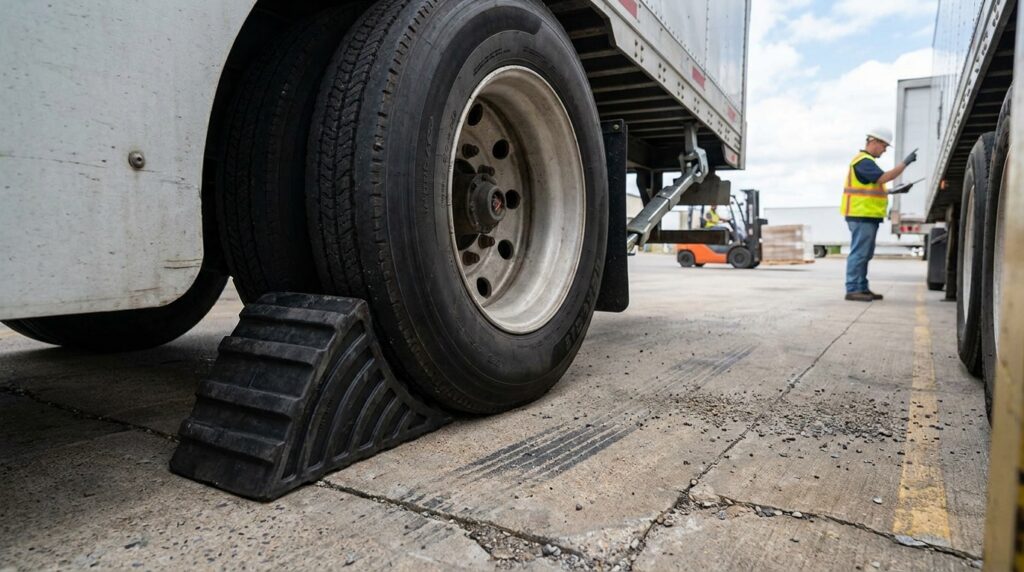
Understanding Trailer Creep: A Hidden Hazard in Your Loading Dock Operations
In the bustling world of industrial material handling, efficiency and safety are paramount. Warehouse managers, facility managers, safety managers, and purchasing professionals are constantly seeking ways to optimize operations while minimizing risks. One often-overlooked, yet potentially hazardous, phenomenon is “trailer creep.” This subtle movement of a trailer during loading and unloading operations can lead to serious accidents, equipment damage, and costly delays. At Fredon Handling, we understand the critical importance of secure loading dock procedures, and recognizing and preventing trailer creep is a vital part of that. This comprehensive guide will delve into what trailer creep is, why it’s a significant concern, and most importantly, how to effectively prevent it to ensure the safety and productivity of your facility.
If you’re looking to enhance your understanding of trailer creep and its prevention, you might find it helpful to explore related topics in material handling. A relevant article that discusses essential equipment for efficient warehouse operations can provide insights into how proper handling techniques can minimize issues like trailer creep. You can read more about it in this article on top material handling equipment for efficient warehouse operations: Top Material Handling Equipment for Efficient Warehouse Operations.
The Mechanics and Dangers of Trailer Creep
Trailer creep, also known as trailer drift, is the gradual, often imperceptible, movement of a semi-trailer away from the loading dock. This phenomenon occurs even when the trailer is seemingly parked and secured. Understanding the forces at play is crucial to appreciating its potential for danger.
Forces Driving Trailer Creep
Several factors contribute to trailer creep, often acting in combination:
- Air Brake System Dynamics: Modern trailers are equipped with air brakes. While these brakes are designed to hold the trailer, they are not foolproof. Over time, air can slowly leak from the brake system. This gradual loss of air pressure can allow the brakes to release incrementally, enabling the trailer to move. Factors exacerbating air leaks include aging seals, worn brake chambers, and even temperature fluctuations that can affect air volume.
- Dock Bounces and Vibrations: The act of loading and unloading heavy goods, especially with forklifts or other powered industrial trucks, generates significant vibrations and forces within the trailer. These dock bounces can cause the trailer’s suspension system to compress and rebound, subtly shifting the trailer’s position. Think of it like a gentle, repetitive jolt that can overcome the static friction holding the trailer in place.
- Uneven Dock Surfaces and Trailer Load Distribution: While docks are generally designed to be level, minor imperfections or slopes can contribute to creep. If the trailer is not perfectly positioned, or if the weight distribution within the trailer is uneven, gravity can exert a continuous, albeit small, force causing the trailer to slide. A heavy load shifted towards the rear, for instance, can create a tipping moment that encourages forward movement.
- Improper Chocking and Securing: The most common cause of trailer creep is the failure to properly secure the trailer to the dock. This includes insufficient or improperly placed wheel chocks, or relying solely on the trailer’s internal parking brakes which, as mentioned, can fail.
- Environmental Factors: Extreme weather conditions can also play a role. For instance, wet conditions can reduce the friction between the trailer tires and the dock surface, making it easier for the trailer to slide. High winds can also exert pressure on the trailer, particularly if it’s taller and has a larger surface area.
The Significant Risks Associated with Trailer Creep
The seemingly minor movement of a trailer can have serious and far-reaching consequences:
- Worker Injury: The most critical risk is the potential for severe injury or even fatality to personnel working on the dock or inside the trailer. If a trailer creeps away from the dock while a forklift is entering or exiting, or while a worker is inside, it can cause a catastrophic fall or crush incident. This is especially true when there’s a gap between the dock and the trailer bed.
- Equipment Damage: A shifting trailer can damage loading dock equipment, such as dock levelers, seals, and shelters. Furthermore, forklifts or other material handling equipment operating inside a moving trailer risk being damaged, tipping over, or causing damage to the trailer itself or its contents.
- Product Damage: The jarring motion and potential for a sudden stop caused by trailer creep can damage sensitive goods being loaded or unloaded, leading to significant financial losses and customer dissatisfaction.
- Operational Disruptions and Delays: Accidents caused by trailer creep lead to immediate work stoppages, investigations, and cleanup, all of which result in significant operational delays and lost productivity. This can disrupt supply chains and impact delivery schedules.
- Increased Insurance Premiums and Liability: Incidents stemming from trailer creep can lead to increased insurance costs and potential legal liabilities for your company, especially if negligence in safety procedures is identified.
Understanding these risks underscores the necessity of robust prevention strategies. At Fredon Handling, we advocate for a multi-layered approach to loading dock safety, where preventing trailer creep is a cornerstone.
Essential Trailer Restraint Systems for Preventing Creep
The most effective way to combat trailer creep is through the use of dedicated trailer restraint systems. These systems are designed to physically secure the trailer to the loading dock, preventing any unwanted movement. Investing in the right restraint system is a critical step towards enhancing safety and operational efficiency.
Wheel Chocks: The First Line of Defense
Wheel chocks are a fundamental safety measure, often used in conjunction with other restraint systems. They are wedges placed against the trailer wheels to prevent them from rolling.
- Types of Wheel Chocks:
- Rubber Chocks: Durable, good grip, and less likely to damage tires. They are cost-effective and suitable for many applications.
- **