
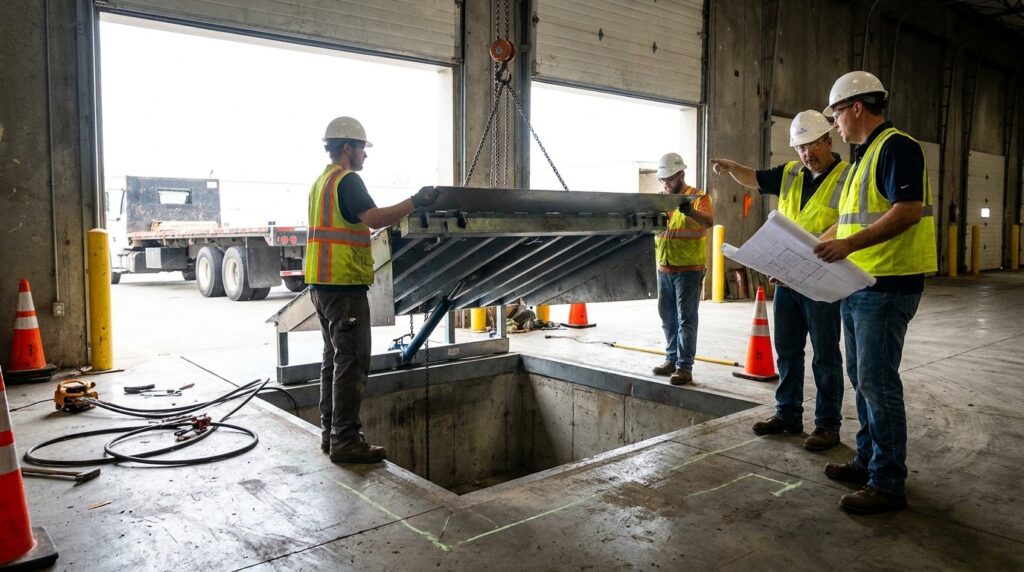
The Critical Role of Dock Levelers in Warehouse Efficiency
In the bustling world of industrial logistics, the loading dock is the nerve center of any warehouse or distribution facility. It’s where the crucial flow of goods in and out of your facility occurs. For efficient, safe, and cost-effective operations, the right equipment is paramount. Among the most vital pieces of equipment at the loading dock is the dock leveler. This seemingly simple piece of machinery bridges the gap between your warehouse floor and the trailer bed, ensuring a smooth transition for forklifts, pallet jacks, and personnel. For warehouse managers, facility managers, safety managers, and purchasing professionals, understanding the nuances of dock leveler installation, requirements, and planning is not just beneficial—it’s essential for optimizing throughput, minimizing damage, and upholding the highest safety standards.
At Fredon Handling, we understand that the investment in dock levelers extends far beyond the purchase price. Proper planning and installation are fundamental to realizing the full return on that investment, preventing costly downtime, and ensuring your material handling operations run like a well-oiled machine. This comprehensive guide will delve into the critical aspects of dock leveler installation, from initial site assessment and regulatory considerations to the selection of the appropriate equipment and best practices for a seamless integration into your facility.
When considering the installation of a dock leveler, it’s essential to understand the various requirements and planning steps involved to ensure a smooth process. For a more in-depth look at the factors to consider, you can refer to a related article that provides valuable insights and guidelines. Check out this informative piece on dock leveler installation at Dock Leveler Installation: Requirements and Planning.
Understanding Dock Leveler Types and Their Applications
Before embarking on the installation process, a thorough understanding of the different types of dock levelers available is crucial. Each type is designed to address specific operational needs, trailer heights, and dock configurations. Selecting the right type of dock leveler directly impacts the efficiency and safety of your loading and unloading operations.
Mechanical Dock Levelers: The Cost-Effective Workhorse
Mechanical dock levelers are a popular choice due to their robust design, reliability, and often lower initial cost compared to hydraulic alternatives. They are typically operated manually, using a pull chain or lever system to raise the leveler and deploy the lip.
- How they work: A system of springs and counterweights assists in lifting the deck. Once the deck is raised to its maximum height, the lip extends and locks into place on the trailer bed. The operator then lowers the deck until it rests on the trailer, creating a stable bridge.
- Advantages: Simpler design means fewer potential points of failure and generally lower maintenance requirements. They are excellent for facilities with consistent trailer heights and moderate traffic. They also offer a cost-effective solution for businesses on a tighter budget.
- Disadvantages: Operation requires more physical effort from the operator. They may be slower to deploy and retract than hydraulic models. In some applications with extreme height variations, they might not offer the same degree of flexibility.
- Ideal Applications: Facilities with lower to moderate forklift traffic, where budget is a primary consideration, and where trailer height variations are within a manageable range. They are often found in smaller warehouses or distribution centers.
Hydraulic Dock Levelers: Power, Precision, and Performance
Hydraulic dock levelers are the workhorses of high-volume, demanding loading dock environments. Powered by an electric motor and hydraulic pump, they offer smooth, controlled operation with minimal physical effort.
- How they work: An electric motor drives a hydraulic pump, which actuates a cylinder to lift the deck. The lip is typically extended and retracted via a separate hydraulic cylinder or a mechanical spring-loaded system. This powered operation allows for precise adjustments to accommodate a wide range of trailer heights and dock conditions.
- Advantages: Superior ease of use, faster operation cycles, and the ability to handle greater variations in trailer heights. They provide a smoother transition for personnel and equipment, reducing the risk of jolts and potential damage. Many models offer advanced features like automatic return-to-dock capabilities and integrated safety systems.
- Disadvantages: Higher initial cost and potentially more complex maintenance due to the hydraulic system. They require a reliable power source.
- Ideal Applications: High-traffic warehouses, distribution centers, and facilities that regularly handle a diverse range of trailer types and heights. They are essential for operations where speed, efficiency, and minimal operator strain are critical. Explore our range of hydraulic dock levelers to find the perfect fit for your demanding operations.
Air-Powered Dock Levelers: A Balancing Act of Efficiency and Simplicity
Air-powered dock levelers offer a unique solution, combining the ease of use of hydraulic systems with a simpler, spring-assisted design. They utilize an internal air bladder that inflates to lift the deck.
- How they work: A blower or air compressor inflates a heavy-duty air bladder beneath the deck. As the bladder inflates, it lifts the deck, and the lip extends. Releasing the air allows the deck to lower smoothly.
- Advantages: Offer a smooth, controlled lift and descent, similar to hydraulics, but with fewer mechanical parts. They are generally quieter than hydraulic systems and require less maintenance than hydraulic units. They provide a good balance between performance and simplicity.
- Disadvantages: May not offer the same lifting capacity or fine-tuning capabilities as high-end hydraulic models. Performance can be affected by temperature extremes if the air system is not properly designed or maintained.
- Ideal Applications: Facilities that require a smooth, efficient operation but may have concerns about hydraulic system complexity or maintenance. They are a good option for moderate to high-volume operations.
Edge-of-Dock Levelers: For Lighter Duty and Simpler Needs
Edge-of-dock (EOD) levelers are a more compact and often more budget-friendly option for lighter-duty applications. They are mounted directly to the edge of the dock face, providing a shorter transition plate.
- How they work: Typically operated manually with a pull chain or lever, they are raised and the lip is extended to bridge the gap.
- Advantages: Lower cost, simple installation, and ideal for situations where trailer height variation is minimal and the dock is not subjected to heavy, continuous forklift traffic. They require less structural modification to the dock face.
- Disadvantages: Limited by the width and length of the bridge plate, making them unsuitable for significant height differences or very wide loads. They cannot handle the same volume or weight as full-sized dock levelers.
- Ideal Applications: Facilities with consistent trailer bed heights, lighter loads, and less frequent loading/unloading cycles. They are often used for smaller trucks or vans. If you are considering a simpler solution for less demanding applications, explore our selection of edge-of-dock equipment.
Site Assessment and Planning: The Foundation for Successful Installation
Thorough site assessment and meticulous planning are non-negotiable steps before any dock leveler installation begins. Overlooking these crucial phases can lead to operational inefficiencies, safety hazards, and costly rework. This phase involves evaluating the existing dock structure, understanding operational needs, and considering regulatory compliance.
Structural Integrity of the Dock Pit and Foundation
The dock leveler is a piece of heavy-duty equipment that bears significant dynamic loads. Therefore, the structural integrity of the dock pit and the surrounding foundation is paramount.
- Load-Bearing Capacity: The concrete pit where the dock leveler will be installed must be capable of supporting the weight of the leveler itself, plus the substantial impact and rolling loads from forklifts and other material handling equipment. Manufacturers provide specifications for the required concrete thickness and reinforcement for their leveler models. A structural engineer may need to assess older dock structures to ensure they meet current standards.
- Pit Dimensions and Depth: The pit must be precisely sized and deepend to accommodate the specific dock leveler model. Incorrect dimensions can lead to improper fit, operational issues, and potential damage to the leveler or the dock structure. This includes ensuring adequate clearance for the leveler’s frame, hydraulics (if applicable), and any safety features.
- Reinforcement: Many dock pits require specific rebar reinforcement to withstand the stresses of operation. This reinforcement must be correctly placed and tied into the surrounding concrete structure to provide the necessary support.
- Drainage: Adequate drainage within the pit is essential to prevent water accumulation, which can lead to corrosion, frost damage, and slippery conditions. The pit should be designed with a slight slope towards a drainage point.
Electrical and Hydraulic Requirements
The power source for your dock leveler is a critical consideration, particularly for hydraulic and air-powered models.
- Power Supply: Hydraulic and air-powered dock levelers require a dedicated electrical circuit. This circuit must be sized appropriately for the motor’s amperage draw and voltage requirements, as specified by the manufacturer. It’s crucial to consult with a qualified electrician to ensure the power supply is adequate, safe, and meets all local electrical codes. Consider factors like the number of operational cycles per shift, as this can influence the power demands.
- Control Stations: The placement of the control station for the dock leveler is also important for ease of use and safety. It should be conveniently located for the operator, typically within view of the dock door and the trailer, and at an accessible height. Ensure wiring runs are safe and protected from damage.
- Hydraulic Fluid (for Hydraulic Levelers): If installing a hydraulic dock leveler, ensure that the correct type and quantity of hydraulic fluid are readily available. The type of fluid can be temperature-dependent, so consider your climate.
Dock Door and Trailer Compatibility
The dimensions and type of dock door, as well as the variety of trailers that will service the dock, directly influence the choice and installation of the dock leveler.
- Dock Door Size: The dock leveler must be sized to fit within the dock opening without obstruction. The width and height of the leveler, when retracted, should not interfere with the operation of the dock door. Consider the swing radius of the dock door.
- Trailer Width and Height: Different trailers have varying widths and bed heights. Your dock leveler must be able to safely bridge the gap for the most common trailer types you receive. This includes accounting for the full range of trailer bed heights, from very low to very high. A leveler with a wider lip or a greater operating range can accommodate more trailer types.
- Trailer Types: Consider whether you handle standard box trucks, trailers with ramp doors, or specialized vehicles. Some levelers are better suited for specific trailer types. For example, a standard leveler might not be ideal for a trailer with a walk ramp.
Operational Flow and Throughput Analysis
Understanding how your loading dock operates on a daily basis is key to selecting and installing the right dock leveler.
- Volume of Operations: How many trailers are typically loaded or unloaded per shift? High-volume operations benefit from faster, automated systems like hydraulic levelers, while lower-volume docks might be well-served by mechanical options.
- Type of Goods Handled: Are you handling fragile goods that require a smooth transition? Or are you moving heavy, bulk materials where durability is paramount? The type of goods can influence the choice of leveler and the need for features like automatic fall-off protection.
- Forklift Traffic: The frequency and type of forklift traffic (e.g., counterbalance, reach trucks) will impact the wear and tear on the dock leveler. A heavier-duty model or a leveler with enhanced durability features might be necessary for high-traffic areas.
- Ergonomics and Operator Safety: Consider the physical strain on your operators. Hydraulic and air-powered levelers reduce physical exertion, contributing to a safer and more productive work environment.
Selecting the Right Dock Leveler for Your Facility
Choosing the correct dock leveler involves a careful evaluation of your specific operational needs, budget, and site conditions. Fredon Handling offers a comprehensive range of solutions, and understanding the key selection criteria will help you make an informed decision.
Key Selection Criteria for Dock Levelers
- Load Capacity: This is arguably the most critical factor. The dock leveler must be rated to handle the maximum weight of your forklifts and loads. Overloading a leveler can lead to premature failure, damage, and severe safety hazards. Manufacturers provide duty cycle ratings and load capacities for their equipment.
- Operating Range (Vertical and Horizontal): Consider the typical range of trailer bed heights you encounter. A leveler with a wider vertical operating range can accommodate variations from loaded trailers dropping lower to empty trailers riding higher. The horizontal reach of the lip is also important for ensuring a secure connection to the trailer bed, especially for longer trailers.
- Lip Length and Width: The lip needs to be long enough to safely bridge the gap between the dock and the trailer, even when the trailer is slightly de-coupled. The width should be sufficient to accommodate the widest loads you handle. A common lip length is 16 inches, but longer lips may be required.
- Durability and Construction: For high-traffic facilities, robust construction and durable materials are essential. Look for features like heavy-gauge steel decks, reinforced lips, and industrial-grade components.
- Safety Features: Modern dock levelers come equipped with numerous safety features. These can include:
- Automatic safety legs: These deploy to prevent the leveler from collapsing under a load if the trailer accidentally pulls away.
- Friction
: A safety feature that prevents the deck from slamming down. - Built-in maintenance struts: These allow the leveler to be safely secured in a raised position for maintenance.
- Full-width safety tread: Prevents slipping.
- Non-slip surfaces: Crucial for operator safety.
- Maintenance Requirements: Consider the ongoing maintenance needs of each type of leveler. Mechanical levelers generally have fewer parts, while hydraulic systems require fluid checks and component inspections. Choose a leveler that aligns with your maintenance resources and capabilities.
- Budget: While initial cost is a factor, it’s essential to consider the total cost of ownership, including maintenance, potential downtime, and energy consumption. A more expensive, but more reliable and efficient, leveler might offer a better long-term return on investment.
Comparing Common Dock Leveler Types for Specific Needs
- For High-Volume Distribution Centers:
- Recommendation: Hydraulic dock levelers.
- Why: Their speed, ease of use, and ability to handle a wide range of trailer heights and frequent operational cycles make them ideal. Features like automatic return-to-dock and robust construction are crucial.
- Fredon Handling Solution: Explore our range of heavy-duty hydraulic dock levelers, designed for continuous operation and maximum throughput.
- For Smaller Warehouses with Moderate Traffic:
- Recommendation: Mechanical dock levelers.
- Why: They offer a reliable and cost-effective solution for facilities with less extreme variations in trailer heights and fewer operational cycles. Their simpler design translates to lower maintenance costs.
- Fredon Handling Solution: Our selection of durable mechanical dock levelers provides a dependable bridging solution for your operations.
- For Facilities Requiring Smooth Transitions and Quieter Operation:
- Recommendation: Air-powered dock levelers.
- Why: They provide a smooth, controlled operation similar to hydraulics but with a simpler mechanism and potentially quieter performance.
- Fredon Handling Solution: Consider our air-powered dock levelers for a balance of performance and simplicity in your loading dock operations.
- For Lighter Duty and Simpler Dock Setups:
- Recommendation: Edge-of-dock (EOD) levelers.
- Why: These are cost-effective for applications with minimal height variation and lighter loads, requiring less structural modification to the dock face.
- Fredon Handling Solution: If your needs are less demanding, our edge-of-dock solutions offer a practical and economical bridging option.
The Importance of Consulting Fredon Handling Experts
Navigating the options for dock levelers can be complex. The team at Fredon Handling possesses extensive knowledge of material handling equipment and industrial logistics. We can assist you in evaluating your specific requirements, performing site assessments (remotely or on-site where applicable), and recommending the most suitable dock leveler for your unique operational needs and budget. Our expertise ensures that you invest in a solution that maximizes efficiency, enhances safety, and provides long-term value.
When considering the installation of a dock leveler, it is essential to understand the various types of material handling equipment that can enhance operational efficiency. For a deeper insight into the tools that can complement your dock leveler, you can explore this informative article on essential tools for efficiency. Understanding these tools will help you make informed decisions during the planning and installation process, ensuring a seamless integration into your facility.
Dock Leveler Installation: Best Practices and Safety Considerations
Proper installation of a dock leveler is as crucial as selecting the right model. An improperly installed unit can lead to operational disruptions, premature wear, and serious safety hazards. Adhering to best practices and prioritizing safety during installation is paramount.
Professional Installation: Why It Matters
While some facility managers might consider DIY installation, the complexities involved in dock leveler installation necessitate professional expertise.
- Expertise in Structural Requirements: Professional installers understand the critical need for precise pit dimensions, proper concrete reinforcement, and ensuring the dock structure can withstand the operational loads.
- Electrical and Mechanical Connections: Correctly wiring electrical components and ensuring proper mechanical linkages are vital for the safe and efficient operation of the leveler. Incorrect connections can lead to malfunction or electrical hazards.
- Adherence to Manufacturer Specifications: Installers are trained to follow the specific installation guidelines provided by the dock leveler manufacturer, which are crucial for warranty validity and optimal performance.
- Safety Compliance: Professionals are aware of and adhere to relevant safety regulations and best practices, minimizing risks during the installation process.
- Warranty: Many manufacturers require professional installation to validate their product warranties.
Essential Installation Steps and Checks
A professional installation typically involves the following key steps:
- Site Preparation: This includes ensuring the dock pit is clean, free of debris, and meets the specified dimensions and structural requirements. Any necessary concrete work, such as forming and pouring, is completed at this stage.
- Leveler Placement and Anchoring: The dock leveler is carefully positioned within the pit. It is then securely anchored to the concrete using appropriate fasteners and techniques to prevent any shifting or movement during operation.
- Lip and Deck Alignment: The lip and deck of the leveler are meticulously aligned to ensure a smooth transition. This involves precise adjustments to the mounting and any associated components.
- Electrical and Hydraulic Connections: For powered levelers, electrical wiring is connected to the power source and control stations. For hydraulic models, hydraulic lines are connected, and the system is filled with the appropriate fluid. These connections are tested for leaks and proper functionality.
- Safety Feature Integration: All safety mechanisms, such as automatic safety legs and emergency stop buttons, are installed and tested to ensure they function correctly.
- Operational Testing: The leveler is cycled through its full range of motion multiple times to verify smooth operation, proper lip extension and retraction, and the correct engagement of safety features.
- Final Inspection: A thorough final inspection is conducted by the installer and often reviewed by the facility manager to confirm that all aspects of the installation meet specifications and safety standards.
Safety Regulations and Compliance
Operating a loading dock involves adherence to various safety regulations designed to protect workers. While specific regulations can vary by region and industry, some common areas of focus include:
- OSHA Standards: The Occupational Safety and Health Administration (OSHA) provides guidelines and regulations related to workplace safety, including aspects of material handling and dock operations. While OSHA may not have a specific standard for “dock leveler installation,” general safety principles apply. For instance, OSHA’s General Duty Clause requires employers to provide a workplace free from recognized hazards. This implicitly covers the need for safe and properly installed equipment. Standards related to powered industrial trucks (29 CFR 1910.178) are also relevant, as they dictate how equipment operates on docks.
- Fall Protection: Dock areas are inherently hazardous due to the potential for falls from elevated platforms or into the dock pit. Proper installation of dock levelers, including their safety features, contributes to mitigating these risks.
- Equipment Maintenance: Beyond installation, ongoing maintenance is crucial for safety. OSHA standards often mandate regular inspection and maintenance of machinery. (Refer to OSHA’s regulations on mechanical power presses, for example, as an analogy for the importance of proactive maintenance of heavy machinery).
- Manufacturer Guidelines: Always adhere to the specific installation, operation, and maintenance guidelines provided by the dock leveler manufacturer. These guidelines are often based on extensive testing and safety considerations.
Post-Installation Checks and Training
Once the dock leveler is installed, the process isn’t entirely complete.
- Thorough Walk-Through: Conduct a comprehensive walk-through with the installation team to understand the operation of the leveler, its safety features, and any maintenance requirements.
- Operator Training: It is imperative to provide thorough training to all personnel who will be operating the dock leveler. This training should cover:
- Proper startup and shutdown procedures.
- Safe operation of the controls.
- Understanding and utilizing all safety features (e.g., automatic safety legs).
- Recognizing potential hazards and what to do in emergency situations.
- Reporting any operational issues or damage immediately.
- Regular Inspections: Establish a schedule for regular visual inspections of the dock leveler. Look for any signs of wear, damage, or loose components.
By prioritizing professional installation, adhering to best practices, and maintaining a strong focus on safety, you ensure that your new dock leveler will operate reliably, efficiently, and securely for years to come. For reliable installation services and top-tier dock leveler equipment, Fredon Handling is your trusted partner.
Maintenance and Troubleshooting for Dock Levelers
Proactive maintenance and prompt troubleshooting are essential for ensuring the longevity, reliability, and safe operation of your dock levelers. Neglecting these aspects can lead to costly repairs, unexpected downtime, and potential safety incidents.
Routine Maintenance Schedule
A well-defined maintenance schedule is the cornerstone of preventing problems. The specific schedule may vary based on the type of dock leveler and its usage, but general guidelines include:
- Daily Checks (Operator Performed):
- Visual Inspection: Operators should perform a quick visual check before each use. Look for any obvious damage, debris in the pit, or unusual noises during operation.
- Functional Test: Cycle the leveler through its full range of motion to ensure it operates smoothly and all safety features engage correctly.
- Lip and Deck Condition: Inspect the lip and deck for any signs of bending, cracking, or excessive wear.
- Clearance: Ensure the dock door and surrounding areas are clear of obstructions.
- Weekly/Monthly Checks (Maintenance Staff):
- Lubrication: Lubricate all pivot points, hinges, and moving parts according to manufacturer recommendations. This is critical for smooth operation and preventing wear.
- Fastener Tightness: Check and tighten all bolts, nuts, and anchor points. Vibrations from operation can loosen these over time.
- Hydraulic System (Hydraulic Levelers):
- Check hydraulic fluid levels and top up if necessary with the correct type of fluid.
- Inspect hydraulic hoses and fittings for leaks.
- Listen for unusual noises from the pump.
- Springs and Counterweights (Mechanical Levelers): Inspect springs for signs of fatigue or damage. Ensure counterweights are securely in place.
- Safety Features: Test all safety legs, interlocks, and emergency stops to ensure they are functioning correctly.
- Cleanliness: Keep the dock pit and the leveler mechanism clean. Accumulated debris can interfere with operation and accelerate wear.
- Annual Inspections (Qualified Technician/Certified Professional):
- Comprehensive System Check: A thorough inspection of the entire system, including electrical components, hydraulic cylinders, seals, and all structural elements.
- Weld Integrity: Inspect all welds for any signs of cracking or stress.
- Component Wear: Assess critical wear points and consider proactive replacement of components nearing the end of their service life.
- Safety Leg Functionality Under Load: For safety-critical components like safety legs, a more rigorous test might be required.
- Compliance Review: Ensure the equipment continues to meet current safety standards.
Common Troubleshooting Scenarios
When issues arise, a systematic approach to troubleshooting can help identify and resolve problems efficiently.
- Problem: Dock leveler is slow to operate or doesn’t lift fully.
- Possible Causes:
- Low hydraulic fluid level (hydraulic models).
- Air in the hydraulic system (hydraulic models).
- Worn or damaged hydraulic pump or cylinder (hydraulic models).
- Friction or binding in mechanical components due to lack of lubrication or debris.
- Issues with the power supply (electrical models).
- Overloaded operation.
- Troubleshooting Steps: Check fluid levels, bleed air from the system, inspect for leaks, lubricate moving parts, verify power supply.
- Problem: Lip does not extend or retract properly.
- Possible Causes:
- Bent or damaged lip mechanism.
- Obstruction preventing movement.
- Issues with the lip extension/retraction mechanism (springs, hydraulics, or linkages).
- Improper adjustment.
- Troubleshooting Steps: Visually inspect for obstructions or damage. Check the integrity of the lip mechanism. Ensure proper alignment.
- Problem: Safety legs are not deploying or retracting correctly.
- Possible Causes:
- Debris or damage obstructing the mechanism.
- Worn or broken spring.
- Issues with the activation system.
- Bent or misaligned safety legs.
- Troubleshooting Steps: Clear any obstructions. Inspect springs and linkages. Ensure legs are properly aligned.
- Problem: Leveler makes excessive noise during operation.
- Possible Causes:
- Lack of lubrication.
- Loose components.
- Worn bearings or bushings.
- Issues with the hydraulic pump (hydraulic models).
- Troubleshooting Steps: Lubricate all moving parts. Tighten loose fasteners. Investigate pump performance.
When to Call a Professional
While routine maintenance can be handled by your in-house team, certain issues necessitate the intervention of a qualified professional.
- Complex Hydraulic Issues: Leaking hydraulic lines, failing pumps, or damaged cylinders require specialized knowledge and tools.
- Electrical Problems: Electrical troubleshooting and repairs should only be performed by a certified electrician.
- Structural Damage: Any signs of cracks, severe bending, or structural compromise to the leveler or its mounting require expert assessment.
- Safety Feature Malfunction: Any doubt about the proper functioning of safety-critical features should be addressed by a professional immediately.
- Persistent or Unresolved Issues: If you’ve attempted basic troubleshooting and the problem persists, it’s time to call in the experts.
Fredon Handling not only supplies high-quality dock levelers but also offers expert advice on maintenance and can connect you with trusted service providers. Regular, diligent maintenance ensures your dock leveler investment continues to perform safely and efficiently, contributing to a productive and secure operational environment.
Frequently Asked Questions About Dock Leveler Installation
What is the typical lifespan of a dock leveler?
The lifespan of a dock leveler can vary significantly depending on the quality of the unit, the intensity of its use, and the rigor of its maintenance schedule. However, with proper care and maintenance, most well-built dock levelers can last between 10 to 20 years or even longer. Heavy-duty models in high-traffic environments may require more frequent maintenance and component replacements to achieve this longevity.
How much lead time is typically needed for dock leveler installation?
Lead time for dock leveler installation can range from a few days to several weeks. This depends on the availability of the chosen dock leveler model, the complexity of the installation site, the schedule of the installation crew, and any necessary preparatory work (like concrete pouring or electrical upgrades). It is advisable to plan your installation well in advance of when you need the equipment operational, especially if custom solutions are required.
Can existing dock pits be modified to fit a new dock leveler?
In many cases, yes. If your existing dock pit is not the ideal size or shape for a new dock leveler, modifications may be possible. This often involves concrete work, such as extending the pit or reinforcing existing walls. The feasibility and cost of such modifications depend on the existing structure and the specifications of the new dock leveler. It is crucial to have a professional assess the existing pit and consult with the dock leveler manufacturer to ensure any modifications will meet structural and operational requirements.
What are the safety implications of not having a properly installed dock leveler?
Not having a properly installed dock leveler presents significant safety risks. These include:
- Falls: Gaps between the trailer and the dock can lead to personnel or equipment falling.
- Collisions: Improperly functioning levelers can cause forklifts or other equipment to collide with the dock or trailer.
- Trailer Separation Accidents: Without proper safety features, if a trailer accidentally pulls away while personnel or equipment are on the dock, it can lead to severe injury or fatality.
- Damage to Goods and Equipment: Rough transitions can damage products, forklifts, and the dock leveler itself.
- Ergonomic Strain: Difficult-to-operate levelers can cause strain and injury to warehouse staff.
What is the difference between a dock leveler and a dock ramp?
While both bridge the gap between a truck and a loading dock, they serve different purposes and have different installation requirements. A dock leveler is typically permanently installed within a dock pit and is designed to compensate for variations in trailer bed height. They are often powered or mechanically assisted for ease of use. A dock ramp, on the other hand, is a portable or semi-permanent structure that is often positioned on the outside of the dock or within the dock opening to create a gradual incline. Ramps are generally used when there isn’t a dock pit or when dealing with very large height differences, and they are typically used with walk ramps or to allow ground-level access to trailers. Fredon Handling also offers a range of loading dock ramps and related equipment.
Invest in Efficiency and Safety with Fredon Handling
The dock leveler is a critical component of efficient warehouse operations. From initial planning and site assessment through selection, installation, and ongoing maintenance, every step plays a vital role in ensuring safety, productivity, and cost-effectiveness. Understanding the different types of dock levelers, their applications, and the importance of professional installation and maintenance will empower you to make informed decisions that benefit your entire operation.
At Fredon Handling, we are committed to providing industrial material handling solutions that drive efficiency and prioritize safety. Our extensive range of dock levelers, from robust mechanical models to advanced hydraulic systems, is designed to meet the diverse needs of modern warehouses and distribution centers. Our team of experts is ready to assist you in evaluating your specific requirements, recommending the optimal equipment, and ensuring a seamless integration into your facility.
Don’t let an inefficient or unsafe loading dock hinder your operations. Contact Fredon Handling today to discuss your dock leveler needs and request a personalized quote. Let us help you build a more productive and secure future for your warehouse.