
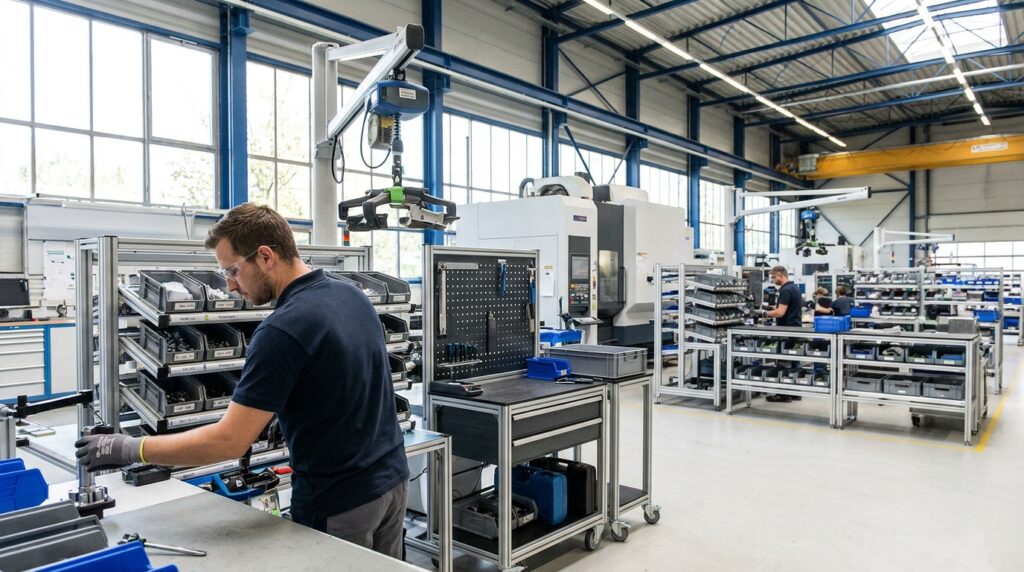
The Why Behind Putting Things Where They’re Needed
Think about your workday. Now, imagine you’re on an assembly line. You need a specific bolt, a particular screw, or a specialized tool. Where do you have to go to get it? If it’s far away, if you have to walk across the factory floor, or even just rummage through a big bin, that’s wasted time. And wasted time means slower production, more costs, and potentially unhappy customers.
This is where “point-of-use storage” comes in. It’s a fancy term for something really simple: keeping the things you need, right where you need them, when you need them. For manufacturing and assembly lines, this isn’t just about convenience; it’s a smart strategy that can make a big difference in how efficiently things get done. It’s about minimizing unnecessary movement and maximizing productive work.
Instead of one central warehouse or a large, shared storage area, point-of-use solutions break down storage into smaller, more accessible units. These units are placed directly alongside or within arm’s reach of the workstations where materials, tools, or parts are actually used. This might sound obvious, but the impact is significant when you start to really look at the details of a production process. It’s about taking the “journey” out of getting the right component.
Point-of-Use Storage Solutions for Manufacturing and Assembly Lines are essential for optimizing workflow and enhancing efficiency in production environments. For further insights on this topic, you can explore a related article that discusses innovative storage solutions and their impact on operational productivity. To read more, visit this link.
How Smaller Storage Brings Bigger Benefits
When you start thinking about point-of-use storage, you might picture small bins or shelves near a worker. That’s a good start, but the concept is broader. It’s about designing storage systems that are integrated into the workflow. This means not just putting things nearby, but putting them in a way that makes them easy to identify, access, and replenish.
One of the most immediate advantages is the reduction in wasted motion. Workers spend less time walking, searching, and waiting for supplies. This freed-up time can be directly applied to the core tasks of manufacturing or assembly. Imagine a painter needing different shades of paint. If they have to walk to a central paint room for each color change, that adds up quickly. If they have small, readily accessible dispensers at their station, they can switch colors almost instantly.
Beyond just saving steps, point-of-use storage can significantly improve inventory accuracy. When materials are stored in smaller quantities closer to their usage point, it’s easier to track exactly what’s being used and when. This helps prevent overstocking in one area and understocking in another, which can lead to production delays. It also makes it easier to identify discrepancies quickly, allowing for faster corrections.
Furthermore, this approach can boost overall productivity. When workers have everything they need at their fingertips, they can maintain a steady pace. There are fewer interruptions and less downtime waiting for parts or tools. This consistent flow is crucial for any manufacturing or assembly operation aiming for high output and efficient throughput. It’s about creating a smoother, more predictable production environment.
Designing Storage for the Flow of Work
Creating effective point-of-use storage isn’t just about shoving bins into empty spaces. It requires careful planning and a deep understanding of the specific processes on the assembly line. The goal is to integrate storage seamlessly into the workflow, making it an enabler rather than a hindrance.
One of the first steps is to analyze the actual tasks performed at each workstation. What materials are used? How often are they used? What tools are essential for the job? By observing and talking to the people doing the work, you can identify the most critical items that need to be kept close by. This isn’t a one-size-fits-all situation; what works for one station might not work for another.
Consider the types of materials being stored. Are they small fasteners that need organized compartments? Are they larger components that require a more robust shelf or cart? Are they delicate parts that need protection? The storage solution should be tailored to the physical characteristics and handling requirements of the items. For instance, using gravity-fed bins for small parts allows for continuous supply without manual replenishment as often.
The layout of the workstation itself is also a key factor. Storage should be placed within the worker’s “ergonomic reach” – the area where they can comfortably access items without excessive stretching or straining. This not only improves efficiency but also contributes to worker safety and well-being, reducing the risk of musculoskeletal injuries. Think about the “golden zone” of reach, both horizontally and vertically.
Finally, think about how the storage will be replenished. Having materials at the point of use is only effective if those points are kept stocked. This involves establishing clear replenishment procedures and schedules. Kanban systems, for example, can be very effective here. A simple visual signal (like an empty bin or a designated card) can indicate when a stock level has reached a minimum and requires refilling, ensuring a continuous flow of materials without overstocking.
Common Point-of-Use Storage Solutions
When we talk about point-of-use storage, a few common and effective systems come to mind. These are not just generic storage items; they are designed with manufacturing and assembly lines in mind, focusing on accessibility, organization, and integration.
Bins and Containers for Small Parts
For small items like screws, nuts, bolts, washers, connectors, and electronic components, specialized bins are indispensable. These often come with clear labels or transparent fronts, so workers can quickly identify what they need. Many are designed to be stackable or to fit into modular shelving systems, allowing for flexible configuration. Features like sloped fronts allow for easy access to parts, and some even have dividers to keep different items separate within a single bin.
Shelving and Workbenches with Integrated Storage
Beyond simple bins, dedicated shelving units and workbenches are crucial. These can be designed with multiple tiers of shelving, drawers, or even specialized slots for specific components. Workbenches themselves can have built-in storage solutions, such as overhead shelves, under-bench cabinets, or pegboards for tools. This ensures that frequently used items are not only close but also securely stored and readily available. Adjustable shelving allows for customization as production needs change.
Mobile Carts and Totes for Flexibility
Sometimes, the need for materials or tools isn’t fixed to a single point. Mobile carts offer a flexible solution. These can be equipped with shelves, bins, or specialized fixtures to carry a kit of parts or a set of tools to different workstations or assembly stages. This is particularly useful for tasks that might move along a line or for maintenance personnel who need to carry a range of equipment. They can be easily moved to the exact location where they are needed, bringing the storage directly to the task.
Tool Holders and Organizers
For assembly lines that rely heavily on hand tools, proper tool organization at the point of use is critical. This includes tool holders mounted on workbenches, wall-mounted pegboards with custom cutouts for specific tools, or even magnetic strips for metal tools. When tools are organized and easily accessible, workers don’t waste time searching for a wrench or a screwdriver, and they are less likely to misplace them. This also promotes a safer working environment.
Specialized Dispensing Systems
Some materials, like adhesives, sealants, or even specific lubricants, might benefit from specialized dispensing systems. These could range from simple, pressurized containers that sit on a workbench to more complex automated dispensing units that deliver precise amounts of material. The goal is to have the material ready to dispense the moment it’s needed, minimizing any preparation time and ensuring accuracy.
In exploring the benefits of Point-of-Use Storage Solutions for Manufacturing and Assembly Lines, it’s essential to consider how these systems can enhance efficiency and reduce waste. A related article discusses various material handling strategies that can further optimize production processes. For more insights on this topic, you can read the article here, which delves into innovative approaches to streamline operations and improve workflow.
Implementing and Maintaining Your Storage System
Setting up point-of-use storage is a great first step, but it’s only effective if it’s used correctly and maintained over time. Without ongoing attention, even the best-designed systems can become cluttered, inefficient, and eventually ignored.
The initial implementation should involve training. Workers need to understand not only where to find items but also how to use the storage system properly. This includes knowing how to return items, how to signal when stock is low, and the importance of keeping the storage area clean and organized. This training should be practical and hands-on, demonstrating the benefits they will experience.
Clear labeling is paramount. Every bin, drawer, and shelf should be clearly and consistently labeled. This applies to both the contents and any instructions related to usage or replenishment. Good labeling reduces confusion, speeds up retrieval, and makes it easier for anyone, not just the primary user, to locate what they need. Consider using durable, easy-to-read labels that can withstand the factory environment.
Regular audits and housekeeping are also essential. Schedule periodic checks to ensure the storage systems are still functioning as intended, that they are clean, and that the contents are accurate. This is also an opportunity to identify any new needs or to refine the existing setup based on changes in production or feedback from the workers. Keeping areas tidy prevents items from being misplaced and makes it easier to spot low stock.
Finally, foster a culture of continuous improvement. Encourage workers to provide feedback on the storage solutions. They are the ones using these systems every day, and they often have the best insights into what’s working well and what could be better. Make it easy for them to suggest changes, and be responsive to those suggestions. This ownership helps ensure the long-term success and effectiveness of your point-of-use storage strategy.