
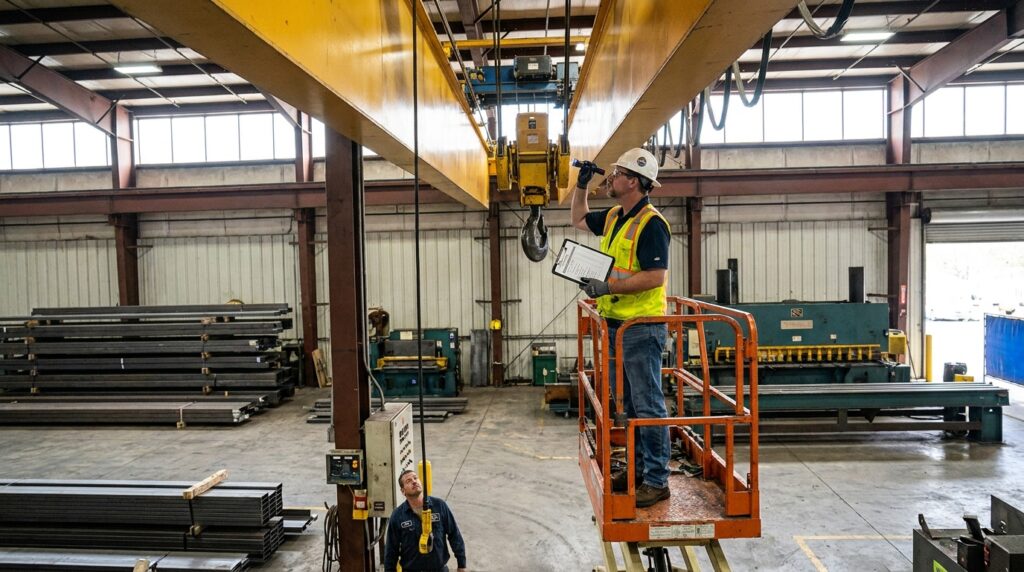
Mastering Overhead Crane Safety: A Comprehensive Inspection Checklist for Optimal Performance
SEO Title: Overhead Crane Inspection Checklist: Daily, Frequent & Periodic for Manufacturing Safety | Fredon Handling
Meta Description: Ensure peak operational safety and efficiency with Fredon Handling’s in-depth overhead crane inspection checklist. Covers daily, frequent, and periodic checks to meet OSHA & ASME standards.
Suggested URL Slug: overhead-crane-inspection-checklist-safety
The backbone of efficient material handling in manufacturing, warehousing, and heavy industry is the overhead crane. Its reliable operation is not merely a matter of productivity but a critical safety imperative. A robust inspection regimen is the most effective strategy to mitigate risks, prevent costly downtime, and extend the operational lifespan of these vital pieces of equipment. This comprehensive guide from Fredon Handling outlines a detailed inspection checklist, categorized into daily, frequent, and periodic checks, designed to empower manufacturing managers, warehouse operators, engineers, and maintenance teams to uphold the highest standards of overhead crane safety and performance.
For a comprehensive understanding of overhead crane safety and maintenance, you may find the article on “Overhead Crane Safety Guidelines” particularly useful. This article delves into essential safety practices and regulations that complement the inspection checklist, ensuring that operators are well-informed about the best practices for safe crane operation. To read more, visit the article here: Overhead Crane Safety Guidelines.
Understanding the Pillars of Overhead Crane Inspection
The necessity of regular overhead crane inspections is underscored by regulatory bodies like OSHA (Occupational Safety and Health Administration) and ASME (American Society of Mechanical Engineers). These organizations provide guidelines and standards that, when followed diligently, drastically reduce the potential for accidents and equipment failure.
OSHA’s Stance on Crane Safety: OSHA’s General Industry standards (29 CFR 1910 Subpart N, Material Handling Equipment) and Construction standards (29 CFR 1926 Subpart CC, Cranes and Derricks in Construction) mandate that lifting devices, including overhead cranes, be inspected regularly. The frequency and nature of these inspections are typically dictated by the type of crane, its usage, and its operating environment.
ASME Standards for Cranes: ASME B30.2, “Safety Standard for Overhead and Gantry Cranes,” is a cornerstone for overhead crane safety. It provides detailed requirements for the inspection, testing, and maintenance of these cranes. The standard differentiates between various inspection types: daily, frequent, and periodic, each serving a distinct purpose in ensuring safety.
By understanding and implementing these tiered inspection levels, organizations can move from a reactive to a proactive approach to crane maintenance, safeguarding personnel and assets.
Daily Crane Inspections: The First Line of Defense
Daily inspections are designed to be quick, visual checks performed by the crane operator or a designated personnel at the beginning of each shift. Their purpose is to identify obvious defects or conditions that could pose an immediate hazard. These checks are fundamental and should not be overlooked, regardless of the crane’s perceived condition.
Pre-Shift Visual Checks
Before the crane is put into operation, a thorough visual inspection should be conducted. This involves looking for any apparent damage or signs of wear that might have occurred during the previous operational period.
- Control Station and Cab: Check for cleanliness, clear visibility from the operator’s viewpoint, and proper functioning of all controls, including emergency stops. Ensure no unauthorized modifications or obstructions are present.
- Power Supply: Inspect the conductor system (e.g., festoon, busbar) for damage, loose connections, or excessive wear. Verify that the main power disconnect is accessible and clearly marked.
- Hook and Hoist: Visually inspect the hook for any deformation, cracks, or excessive wear on the throat opening. Ensure the safety latch is present and functioning correctly. Check the hoist rope for kinks, broken wires, corrosion, or flattening.
- End Trucks and Bridge: Examine the wheels and travel mechanisms for debris, damage, or signs of improper alignment. Check the condition of bumpers.
- Limit Switches: While not always fully testable visually, operators should be aware of their location and ensure no obvious obstructions are preventing their function. A quick visual check for physical damage is beneficial.
- Warning Devices: Verify that horns, lights, and other audible/visual warning signals are operational and clearly visible/audible.
Operational Checks
Following the visual inspection, a brief operational test should be performed to ensure basic functionality.
- Hoist Operation: Test the up and down motion of the hoist. Listen for unusual noises and observe for smooth operation.
- Bridge and Trolley Movement: Operate the bridge and trolley in both directions. Again, listen for any abnormal sounds and note the smoothness of movement.
- Limit Switch Function (Basic Test): Briefly engage the upper limit switch for the hoist to ensure it stops the upward motion. This is a critical safety feature to prevent the hook block from striking the bridge.
- Brake Function: Test the brakes by attempting to move the crane or hoist slightly and observing if they hold the load securely.
A simple checklist, often provided by the manufacturer or developed internally, should be used for these daily inspections. Any abnormalities noted must be reported immediately to supervision and maintenance personnel.
Frequent Inspections: Deeper Dives into Critical Components
Frequent inspections, typically performed monthly or quarterly, depending on usage and environment, involve more detailed checks of specific components. These are often performed by trained maintenance personnel. The frequency is determined by factors such as the crane’s duty cycle, environmental conditions (e.g., corrosive atmosphere, extreme temperatures), and manufacturer recommendations.
Detailed Component Examinations
This level of inspection goes beyond the superficial to assess the functional integrity and wear of key crane systems.
- Hoist System:
- Rope Inspection: Conduct a thorough examination of the hoist rope for broken wires, kinks, twists, corrosion, pitting, and wear. Compare findings against charts for acceptable degradation.
- Rope End Attachments: Inspect for secure seating and any signs of damage or wear.
- Sheaves and Drums: Check for grooving, cracks, and excessive wear. Ensure proper rope spooling on the drum.
- Brakes: Test brake effectiveness and inspect brake linings for wear. Ensure the brake mechanism is clean and free from oil or grease.
- Gear Systems: Listen for unusual noises during operation, which could indicate lubrication issues or worn gears.
- Hook Block Assembly:
- Hook Inspection: Measure the throat opening for deformation. Check for cracks using non-destructive testing methods if required. Ensure the safety latch is functioning and securely attached.
- Swivels and Bearings: Inspect for free rotation and wear.
- Electrical Systems:
- Control Circuitry: Inspect wiring for signs of chafing, insulation damage, or loose connections. Verify the condition of contactors, relays, and pushbuttons.
- Master Switches and Controllers: Check for wear and proper operation.
- Motor Condition: Listen for unusual motor sounds. Check for overheating.
- Limit Switches: Test functionality more rigorously. Ensure they are properly adjusted.
- Grounding: Verify that the crane’s grounding system is intact and effective.
- Structural Components:
- Bridges, Trolleys, and Gantry Frames: Inspect for cracks, deformation, loose bolts, or signs of corrosion.
- Welds: Visually inspect critical welds for cracks or defects.
- Trolley and Bridge Travel Systems:
- Wheels and Rails: Check for wear, cracks, and proper engagement with the runway. Ensure lubrication is adequate.
- Drive Mechanisms: Inspect gearboxes, motors, and brakes for proper operation and lubrication.
- End Stops and Bumpers: Verify their condition and secure mounting.
Lubrication and Cleaning
Frequent inspections are also an opportune time to ensure proper lubrication of all moving parts and to clean the crane of accumulated dust, grease, and debris, which can interfere with operations and mask developing issues. This is where a partnership with a reputable supplier like Fredon Handling, offering specialized lubricants and cleaning solutions, can be invaluable.
For those interested in ensuring the safety and efficiency of overhead cranes, a comprehensive inspection checklist is essential. To further enhance your understanding of crane maintenance, you might find the article on Overhead Crane Safety Tips particularly useful. This resource provides valuable insights into best practices for daily, frequent, and periodic checks, helping operators maintain optimal performance and safety standards.
Periodic Inspections: Comprehensive Safety Audits
Periodic inspections are the most thorough of the three types, occurring annually or semi-annually, depending on usage, environment, and regulatory requirements. These are typically performed by a qualified person or an independent testing agency and involve a comprehensive examination, including operational tests, material inspections, and potentially non-destructive testing (NDT).
Detailed Examination and Testing
This level of inspection is critical for ensuring long-term structural integrity and safety compliance.
- Structural Integrity Assessment: A deep dive into all structural elements, including welds and connections, looking for fatigue, corrosion, or deformation. This might involve magnetic particle testing (MT) or dye penetrant testing (PT) on critical welds.
- Load Testing: While not always required annually unless specified by regulations or previous findings, load testing (often to 110% or 125% of the rated load) is a crucial periodic check for verifying the crane’s lifting capacity and the integrity of its main components. This should only be performed by qualified personnel.
- Brake System Overhaul and Testing: A detailed inspection and testing of all brake systems to ensure they meet performance standards. This may include measuring lining thickness and checking for proper adjustment.
- Electrical System Health Check: A comprehensive review of all electrical components, including a check of insulation resistance and the condition of all wiring and connections.
- Wire Rope Analysis: Detailed analysis of wire rope condition, potentially including internal inspection methods if warranted.
- Bearing Wear Assessment: Checking for wear in all critical bearings within the hoist, trolley, and bridge systems.
- Functionality of All Safety Features: A complete test of all safety devices, including anti-two-blocking systems (if applicable), emergency stops, over-travel limit switches, and audible/visual warnings.
- Documentation Review: Review of previous inspection reports, maintenance logs, and repair history.
Compliance with Standards
Periodic inspections are paramount for ensuring ongoing compliance with OSHA and ASME B30.2 standards. The findings from these inspections form the basis for a comprehensive maintenance plan and help predict potential failure points before they become critical. Fredon Handling can provide guidance and support in understanding these requirements and recommending appropriate inspection schedules.
Selection Criteria, Capacities, and Applications: Matching the Right Crane for the Job
The effectiveness of any inspection regime is intrinsically linked to the suitability of the overhead crane itself for its intended application. Choosing the right crane from the outset, with appropriate capacities and features, simplifies maintenance and enhances safety. Fredon Handling specializes in providing material handling solutions tailored to specific industrial needs.
Key Selection Considerations
When procuring or specifying an overhead crane, several factors must be carefully evaluated:
- Load Capacity: The maximum weight the crane needs to lift is the primary consideration. This dictates the strength of the structure, hoist, and other components. Crane capacities can range from a few hundred pounds for light-duty applications to hundreds of tons for heavy industrial processes.
- Span: The distance the bridge needs to cover between the runway beams. Longer spans require more robust bridge structures to prevent deflection.
- Lift Height: The maximum vertical distance the hook needs to travel. This impacts hoist reeving and wire rope length.
- Duty Cycle: How often and for how long the crane will be used. Industrial cranes are categorized by duty classifications (e.g., Class A to Class E per CMAA standards), indicating their expected service life and the required robustness of their components. A crane used intermittently for light lifts will have different requirements than one used continuously for heavy lifts in a steel mill.
- Environment: Operating conditions such as temperature, humidity, dust, corrosive elements, or explosive atmospheres will influence the choice of materials, enclosure ratings (e.g., IP ratings), and special features required for safe and reliable operation.
- Power Source and Control Systems: AC vs. DC power, variable frequency drives (VFDs) for precise speed control, and radio remote controls vs. pendant controls all impact operational efficiency and safety.
- Trolley and Hoist Type: Different types of hoists (wire rope, chain) and trolley configurations are suited for various applications.
Common Applications
Overhead cranes are indispensable across a vast spectrum of industries:
- Manufacturing: Assembly lines, machine shops, fabrication shops, raw material handling, finished goods loading/unloading.
- Warehousing and Logistics: Moving pallets, large inventory items, and shipping/receiving.
- Heavy Industry: Steel mills, automotive plants, shipbuilding, power generation facilities, mining operations.
- Construction: Lifting large structural components, precast concrete elements.
- Aerospace: Aircraft assembly and maintenance.
- Port and Terminal Operations: Container handling.
Fredon Handling offers a range of overhead crane solutions, including single-girder and double-girder cranes, as well as specialized gantry and jib cranes, each designed to meet specific capacity and application demands. Our experts can guide you in selecting the optimal crane for your facility, ensuring it is designed for safe and efficient operation from the start.
Safety Considerations and Best Practices
Beyond regular inspections, a culture of safety surrounding overhead crane operation is paramount. This involves not only adherence to checklists but also comprehensive training, proper equipment usage, and a proactive approach to hazard identification.
Operator Training and Certification
- Competent Person Designation: OSHA requires that individuals performing inspections and operating cranes be competent persons, meaning they have the knowledge, training, and experience to identify hazards and take corrective action.
- Comprehensive Training Programs: Operators must receive thorough training covering crane operation, load charts, rigging practices, hazard recognition, and emergency procedures. Refresher training is also essential.
- Understanding Load Charts: Operators must be proficient in reading and understanding crane load charts to ensure they do not exceed the rated capacity for a given configuration.
Rigging and Load Handling
- Proper Rigging Techniques: Using the correct rigging equipment (slings, shackles, hooks) and ensuring they are in good condition is crucial. Rigging should be inspected before each use.
- Load Securing: Loads must be properly balanced and secured to prevent shifting or dropping during transit.
- Clearance Awareness: Operators must be constantly aware of their surroundings, including overhead obstructions, personnel, and other equipment, to prevent collisions.
- Communication: Clear and effective communication between the operator, signal person (if used), and ground personnel is vital.
Environmental and Operational Hazards
- Weather Conditions: Outdoor cranes should not be operated in high winds or lightning storms.
- Electrical Hazards: Maintaining safe distances from power lines and ensuring proper grounding of the crane are critical.
- Overload Prevention: Implementing systems and procedures to prevent overloading, such as load cells and audible alarms.
- Lockout/Tagout Procedures: Implementing robust lockout/tagout procedures during maintenance and repair to prevent accidental energization of the crane.
The Role of Fredon Handling in Safety
Fredon Handling is committed to promoting the highest safety standards. We offer:
- High-Quality Equipment: Providing reliable overhead cranes and components designed with safety features.
- Training Resources: Supporting your team with information and resources on safe operation and maintenance.
- Maintenance Services: Offering expert maintenance and repair services to ensure your cranes remain in optimal condition.
- Safety Audits: Assisting in conducting safety audits and recommending improvements.
OSHA and ASME Compliance: A Continuous Effort
Adhering to OSHA standards and ASME B30.2 requirements is not a one-time task but an ongoing commitment. Regular inspections, proper training, and a vigilant safety culture are the cornerstones of this compliance.
Maintenance Guidance and Best Practices
Proactive maintenance, guided by thorough inspections, is the key to maximizing overhead crane uptime and safety. This involves a systematic approach to addressing wear and tear before it leads to failure.
Preventive Maintenance Programs
- Scheduled Maintenance: Establishing a schedule for frequent and periodic inspections based on manufacturer recommendations, usage, and environmental factors.
- Lubrication Schedule: Implementing a strict lubrication schedule for all moving parts, using the correct types of lubricants as specified by the manufacturer. Fredon Handling can supply high-quality industrial lubricants.
- Component Replacement: Proactively replacing components that show significant wear or are nearing their service life, rather than waiting for them to fail. This includes items like brake linings, wire ropes, and electrical contacts.
- Record Keeping: Maintaining detailed records of all inspections, maintenance activities, repairs, and parts replaced. This documentation is invaluable for tracking equipment history, identifying trends, and ensuring compliance.
Troubleshooting Common Issues
- Unusual Noises: Grinding, squealing, or clanking noises often indicate lubrication issues, worn bearings, or damaged gears.
- Jerky Movement: Can be caused by electrical issues, worn drive components, or problems with the brakes.
- Overheating Motors: May point to electrical faults, insufficient lubrication, or excessive load.
- Slipping Brakes: Indicates worn brake linings, improper adjustment, or contamination of brake surfaces.
When to Call the Experts
While daily inspections can be handled by operators, and frequent inspections by internal maintenance teams, periodic inspections and complex repairs often require specialized expertise. Fredon Handling’s certified technicians possess the knowledge and experience to diagnose and repair intricate issues, ensuring your crane is returned to safe operating condition.
Purchasing Advice: Investing in Reliability with Fredon Handling
When it comes to purchasing overhead cranes or replacement parts, investing in quality and reliability is paramount. Fredon Handling partners with you to ensure you make informed decisions that enhance safety, productivity, and long-term value.
Key Considerations for Purchase
- Reputation of the Manufacturer: Choose established manufacturers with a proven track record for quality and reliability.
- Compliance and Certifications: Ensure the equipment meets all relevant OSHA and ASME standards and any other applicable industry certifications.
- After-Sales Support: Consider the availability of spare parts, technical support, and maintenance services from the supplier.
- Total Cost of Ownership: Look beyond the initial purchase price. Factor in maintenance costs, expected lifespan, and potential downtime.
- Customization Options: For specialized applications, ensure the supplier can offer customized solutions.
Why Choose Fredon Handling?
- Expert Consultation: Our team of material handling specialists will work with you to understand your unique requirements and recommend the optimal crane solution.
- Quality Equipment: We offer a comprehensive range of high-quality overhead cranes, hoists, and related components from leading manufacturers.
- Parts and Service: We provide a wide selection of genuine spare parts and offer expert maintenance and repair services to keep your equipment running smoothly.
- Commitment to Safety: Safety is at the core of everything we do. We are dedicated to helping you maintain a safe and productive working environment.
- End-to-End Solutions: From initial consultation and selection to installation, training, and ongoing support, Fredon Handling is your trusted partner for all your overhead crane needs.
Frequently Asked Questions
Q1: How often should an overhead crane be inspected?
A1: OSHA and ASME B30.2 standards categorize inspections into daily, frequent, and periodic. Daily checks are performed at the start of each shift by the operator. Frequent inspections (monthly to quarterly) are more detailed and typically done by maintenance personnel. Periodic inspections (annually or semi-annually) are comprehensive audits conducted by a qualified person or agency. The exact frequency depends on the crane’s usage, environment, and manufacturer recommendations.
Q2: What is the difference between frequent and periodic inspections?
A2: Frequent inspections are a more detailed visual and operational check of critical components, performed more often (monthly to quarterly). Periodic inspections are the most thorough, occurring annually or semi-annually, and may include operational tests, material inspections, and potentially non-destructive testing to assess structural integrity and long-term safety.
Q3: Who is qualified to perform overhead crane inspections?
A3: OSHA defines a “competent person” as someone who has the knowledge, training, and experience to identify hazards and take corrective action. For frequent and periodic inspections, this usually means trained maintenance personnel or a qualified third-party inspector. Daily inspections can be performed by a trained crane operator.
Q4: What are the most common causes of overhead crane failures?
A4: Common causes include inadequate maintenance and lubrication, overloading the crane, operating outside of its design parameters, environmental damage (corrosion, extreme temperatures), component wear (wire rope, brakes, electrical parts), and improper rigging practices. Regular inspections and a proactive maintenance program are crucial to prevent these failures.
Q5: Can Fredon Handling help me develop an inspection checklist for my specific overhead crane?
A5: Yes, Fredon Handling can assist in developing or refining your overhead crane inspection checklist. Our experts understand the various standards and can provide guidance tailored to your specific equipment and operational needs. We also offer relevant inspection documentation and can recommend the appropriate parts and services to address any findings.
Conclusion: Partnering for Unwavering Overhead Crane Safety and Efficiency
The integrity and safety of your overhead crane operations are non-negotiable. By implementing a rigorous inspection schedule – encompassing daily vigilance, frequent component checks, and thorough periodic audits – you not only comply with critical safety regulations but also safeguard your workforce and protect your valuable assets.
Fredon Handling is more than just a supplier; we are your dedicated partner in ensuring your material handling systems operate at peak performance with unwavering safety. From providing high-quality cranes and essential spare parts to offering expert maintenance services and invaluable guidance on inspection protocols, we are committed to supporting your operational excellence.
Don’t wait for an incident to highlight the importance of crane safety. Proactively invest in a robust inspection and maintenance strategy.
Contact Fredon Handling today to discuss your overhead crane inspection needs and discover how our expertise and solutions can enhance your safety, productivity, and operational reliability.