
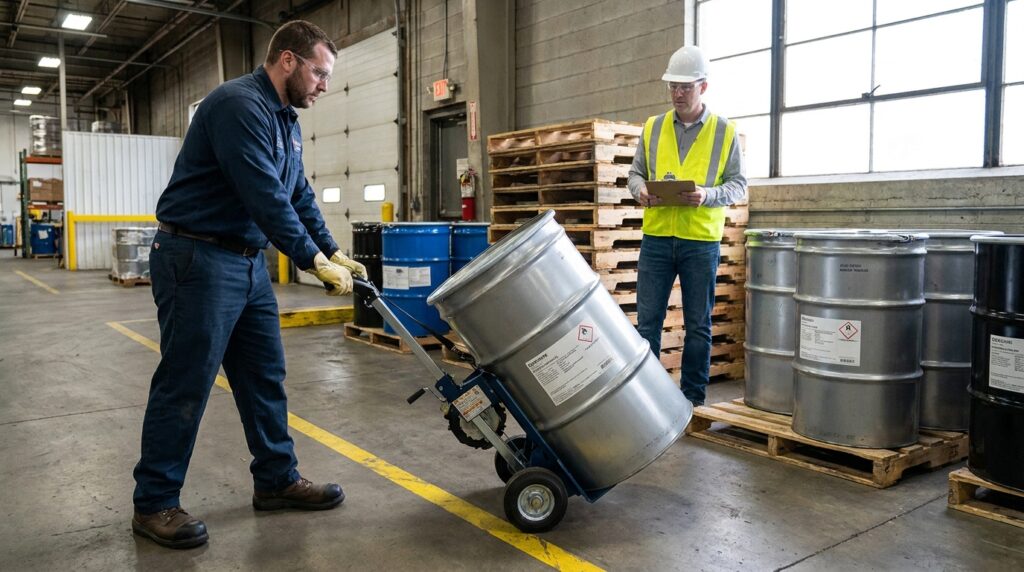
OSHA Drum Handling Requirements: What Employers Need to Know
SEO Title: OSHA Drum Handling Requirements: Essential Safety & Compliance Guide for Employers
Meta Description: Understand OSHA drum handling requirements to ensure workplace safety and compliance. This comprehensive guide covers regulations, best practices, equipment, and maintenance for effective drum management.
Focus Keyword: OSHA drum handling requirements
The safe and efficient handling of drums is a critical aspect of operations across numerous industries, from chemical manufacturing and pharmaceuticals to food processing and general warehousing. Drums, often containing hazardous or heavy materials, present significant ergonomic and safety challenges. Non-compliance with regulatory standards, particularly those set by the Occupational Safety and Health Administration (OSHA), can lead to severe injuries, costly fines, and operational disruptions. This article provides a comprehensive overview of OSHA drum handling requirements, equipping warehouse managers, plant engineers, safety managers, and industrial equipment buyers with the knowledge they need to create a safer and more compliant workplace.
At Fredon Handling, we understand the complexities of industrial material handling. Our expertise is rooted in practical experience and a commitment to providing solutions that meet stringent safety and operational demands. We offer a range of drum handling equipment designed to mitigate risks and improve efficiency, all while aligning with the principles underscored by OSHA regulations.
For employers seeking to understand the intricacies of OSHA drum handling requirements, it’s beneficial to explore related resources that provide comprehensive insights into safe handling practices. One such article is available at Fredon Handling, which outlines essential guidelines and best practices for managing drums in the workplace. This resource can enhance your understanding of compliance and safety measures necessary for protecting employees during drum handling operations.
Understanding the Legal Framework: OSHA’s General Duty Clause and Specific Standards
While OSHA doesn’t have a single, overarching standard explicitly titled “Drum Handling,” its regulations are firmly in place to protect workers from hazards associated with this activity. The cornerstone of OSHA compliance in this area is the General Duty Clause (Section 5(a)(1) of the OSH Act). This clause mandates that employers provide a workplace “free from recognized hazards that are causing or are likely to cause death or serious physical harm to his employees.” Drum handling, due to its inherent risks, falls squarely under this broad protective umbrella.
Beyond the General Duty Clause, several specific OSHA standards and interpretations are highly relevant to drum handling:
The General Duty Clause in Action
The General Duty Clause serves as a catch-all provision. If a specific OSHA standard doesn’t directly address a hazard, employers are still obligated to identify and mitigate that hazard through recognized good industrial hygiene and safety practices. For drum handling, this means proactively assessing the risks involved:
- Ergonomic Hazards: Lifting, tilting, and moving heavy drums can lead to musculoskeletal disorders (MSDs), including back injuries, sprains, and strains. OSHA emphasizes the importance of reducing these physical stresses.
- Chemical Exposure Hazards: Drums often contain chemicals, some of which can be toxic, flammable, or corrosive. Spills or leaks during handling can expose workers to dangerous substances.
- Crushing and Puncture Hazards: Improper handling can lead to drums falling, rolling, or being crushed, posing risks of severe injury.
- Fire and Explosion Hazards: Flammable liquids stored in drums present a significant fire risk if handled carelessly or near ignition sources.
Employers must demonstrate that they have taken reasonable steps to identify these hazards and implement controls. This often involves a combination of engineering controls, administrative controls, and personal protective equipment (PPE).
Relevant OSHA Standards and Directives
While no single “drum handling” standard exists, several existing OSHA regulations and directives provide clear guidance and requirements that apply:
- 29 CFR 1910.1450 – Occupational exposure to hazardous chemicals in laboratories: While this standard is specific to laboratories, its principles regarding hazard communication, safe handling procedures, and chemical hygiene plans are transferable to industrial settings where hazardous chemicals are handled in drums.
- 29 CFR 1910.176(b) – Material Handling: This standard addresses the general safe practices for material handling equipment and operations. It states, “Aisles and passageways shall be kept clear and free from material except those which contain material in the process of handled or being transported.” This directly applies to drum storage areas and pathways.
- 29 CFR 1910.178 – Powered industrial trucks: If forklifts or other powered industrial trucks are used to move drums, this extensive standard dictates requirements for operator training, truck maintenance, and safe operating practices, all of which are crucial for preventing accidents.
- 29 CFR 1910.106 – Flammable liquids: For drums containing flammable liquids, this standard imposes strict requirements on storage, dispensing, and handling to prevent fires and explosions. This includes grounding and bonding during dispensing, proper ventilation, and using approved containers and equipment.
- 29 CFR 1910.132 – Personal protective equipment (PPE): If drum handling tasks pose risks that cannot be fully mitigated by engineering or administrative controls, appropriate PPE (e.g., gloves, safety glasses, chemical-resistant aprons) must be provided and used.
- 29 CFR 1910.212 – General requirements for machine guarding: While more focused on machinery, the principle of preventing access to hazardous moving parts or pinch points is relevant when considering the mechanical aspects of drum handling equipment.
- OSHA Directives and Enforcement Interpretations: OSHA frequently issues directives and letters of interpretation that clarify how existing standards apply to specific situations, including aspects of drum handling. Staying updated with these can provide further insights.
Key Areas of OSHA Drum Handling Requirements and Best Practices
Effective drum handling under OSHA’s purview involves a multi-faceted approach, encompassing hazard assessment, proper equipment selection and use, safe work procedures, and comprehensive training.
Hazard Assessment and Risk Mitigation
The first step in complying with OSHA drum handling requirements is a thorough hazard assessment. This involves identifying potential risks at every stage of the drum’s lifecycle within your facility:
- Receiving: How are drums unloaded from transport vehicles? What are the risks of drops or spills?
- Storage: How are drums stacked and organized? Are they stable? Is there a risk of toppling? Are incompatible materials stored together?
- Movement/Transport: How are drums moved within the facility? What equipment is used? What are the ergonomic loads on personnel?
- Dispensing/Sampling: How is material removed from drums? Are there risks of spills, splashes, or vapor release?
- Disposal: How are empty or partially empty drums handled and stored for disposal?
Once hazards are identified, mitigation strategies must be implemented. This follows the hierarchy of controls:
- Elimination/Substitution: Can the process be redesigned to avoid handling drums altogether, or can smaller, lighter containers be used?
- Engineering Controls: This is the most effective level after elimination. Examples include:
- Drum Handling Equipment: Utilizing mechanical aids like drum lifters, tilters, palletizers, and forklifts with drum attachments significantly reduces manual strain and the risk of drops.
- Automated Systems: For high-volume operations, automated drum handling systems can be implemented.
- Ventilation: Proper local exhaust ventilation (LEV) for dispensing or filling operations.
- Containment: Secondary containment systems to manage spills.
- Administrative Controls: These involve changes in work practices:
- Safe Work Procedures (SWPs): Documented step-by-step instructions for all drum handling tasks.
- Training Programs: Comprehensive training on hazards, safe procedures, and equipment use.
- Job Rotation: To reduce exposure to repetitive strain.
- Clear Labeling and Signage: Indicating hazards and proper handling instructions.
- Personal Protective Equipment (PPE): The last line of defense, used when other controls cannot fully eliminate risk. This may include safety glasses, chemical-resistant gloves, safety shoes, and chemical-resistant clothing.
Drum Material, Size, Weight, and Capacity Considerations
Understanding the physical characteristics of the drums being handled is fundamental to selecting appropriate equipment and implementing safe practices. OSHA implicitly requires employers to consider these factors to prevent accidents.
- Drum Material: Drums are typically made from:
- Steel: Durable, strong, suitable for hazardous and non-hazardous materials, but susceptible to corrosion.
- Plastic (HDPE): Lightweight, corrosion-resistant, suitable for many chemicals, food-grade applications, and water. Less robust than steel for severe impact.
- Fiber: Primarily for non-hazardous solids or dry materials. Lightweight and disposable, but not suitable for liquids or hazardous substances.
- Drum Size: Common drum sizes in industrial settings include:
- 55-gallon (208-liter): The most prevalent size for liquids and solids.
- 30-gallon (113-liter): Often used for smaller quantities or specific product types.
- 15-gallon (57-liter): Less common but used for specialized applications.
- Smaller drums (e.g., 5-gallon pails): Handled with different equipment, but the principles of safe lifting and movement apply.
- Drum Weight: This is a critical factor for ergonomic risk. A full 55-gallon steel drum of water weighs approximately 450-500 lbs (204-227 kg). This weight far exceeds safe manual lifting limits. The density of the material inside will dictate the actual weight. Always ascertain the maximum potential weight of a fully loaded drum.
- Capacity: While the physical capacity of the drum itself is a design feature, it dictates the maximum volume of material it can contain, and consequently, its potential weight. Equipment must be rated to handle the maximum anticipated weight of the drums being processed.
Equipment Compatibility and Selection Factors
Choosing the right drum handling equipment is paramount to meeting OSHA drum handling requirements and improving operational efficiency. Fredon Handling offers a diverse range of solutions, each suited to specific needs. When selecting equipment, consider:
- Type of Drum: Steel, plastic, or fiber? Different grippers and attachments are designed for specific drum materials and rim types.
- Weight of Drum: The lifting capacity of the equipment must significantly exceed the maximum weight of the drums being handled, including a safety margin.
- Application:
- Vertical Lifting/Moving: Drum lifters, drum grabbers, drum stackers.
- Tilting/Pouring: Drum tilters, drum cradles, drum dispensers.
- Palletizing/Depalletizing: Drum palletizers, forklift drum clamps.
- Full Drum Handling: Forklift attachments, drum handlers.
- Empty Drum Handling: Often simpler grippers or manual dollies.
- Environment: Is the area wet, dry, hazardous, or does it have space constraints? Stainless steel options might be necessary for corrosive environments, while explosion-proof models are required in hazardous locations.
- Ergonomics: Prioritize equipment that minimizes manual effort and repetitive motions. Drum manipulators offer precise control and reduced physical strain.
- Mobility: Does the equipment need to be stationary or mobile? Wheeled dollies, drum carts, and portable lifters offer flexibility.
- Integration: Will the equipment integrate with existing workflows or automated systems?
Examples of Fredon Handling Equipment and Their Applications:
- Drum Lifters & Manipulators: Ideal for lifting, moving, and precisely positioning drums. They reduce the risk of back injuries and spills associated with manual lifting and tilting. Our range includes manual, semi-electric, and fully electric models, catering to varying lift heights and capacities.
- Drum Tilters & Dispensers: Essential for safely pouring liquids or solids from drums. These units allow controlled tipping, minimizing splashing and waste. We offer static tilters for dedicated dispensing stations and mobile tilters for versatile use.
- Drum Grabs & Clamps: Used with forklifts or overhead cranes to securely grip and transport drums. These attachments are crucial for efficient warehouse operations where drums are frequently moved. Ensure the clamp type is appropriate for the drum material and shape.
- Drum Palletizers: Automate the process of stacking drums onto pallets or removing them, significantly improving efficiency and reducing the physical demands on personnel.
Equipment Comparison:
| Equipment Type | Primary Function | Key Benefits | Ideal For |
| :– | : | :- | : |
| Manual Drum Lifter | Lift & maneuver drums | Cost-effective, simple operation, reduced strain | Smaller operations, infrequent handling, lighter drums |
| Electric Drum Lifter | Powered lift & maneuver | Effortless lifting, higher capacity, faster | Frequent handling, heavier drums, long-distance transport |
| Drum Tilter (Manual) | Controlled pouring | Precise dispensing, spill reduction, ergonomic | Manual dispensing, smaller batches, diverse drum types |
| Drum Tilter (Powered)| Powered controlled pouring | Greater control, higher capacity, less operator fatigue | High-volume dispensing, heavier drums, consistent pouring |
| Forklift Drum Clamp| Securely grip & transport | High-speed transport, integration with forklifts | Warehousing, large-scale logistics, moving full pallets of drums |
| Drum Manipulator | Precise positioning & control| Ergonomic, safe access, reduced risk of damage | Hazardous materials, high-value products, intricate dispensing tasks |
Visit our Drum Handling Equipment page at https://fredonhandling.com/drum-handling-equipment/ for more details on our product offerings.
Safe Work Procedures and Training
OSHA’s requirements for safe work practices and employee training are non-negotiable.
Developing Safe Work Procedures (SWPs)
SWPs are the backbone of safe drum handling. They should be:
- Task-Specific: Detail the exact steps for each drum handling operation.
- Hazard-Focused: Clearly identify the risks associated with each step.
- Control-Oriented: Specify the equipment, PPE, and actions required to mitigate risks.
- Accessible: Available to all employees involved in drum handling.
- Regularly Reviewed: Updated as processes change or new hazards are identified.
Example SWP Snippet (Lifting a 55-gallon drum with a drum lifter):
- Pre-Operation Check: Inspect the drum lifter for damage. Ensure all hydraulic/electric systems are functioning. Verify the drum is stable and not leaking.
- Approach Drum: Position the drum lifter directly in front of the drum, ensuring the grippers align with the drum’s chime.
- Engage Grippers: Slowly lower the lifting arm and engage the grippers securely around the drum’s upper and lower chimes. Confirm a firm grip.
- Lift Drum: Operate the lift mechanism to raise the drum approximately 6 inches off the ground. Check for stability and any signs of slippage.
- Transport Drum: Move the drum at a slow, controlled pace to the designated location. Maintain clear visibility.
- Position Drum: Lower the drum precisely onto the desired surface or into a dispenser.
- Release Grippers: Disengage the grippers only after the drum is fully stable.
- Post-Operation: Inspect the drum and surrounding area for any spills or damage.
Comprehensive Employee Training
OSHA mandates training for all employees who operate powered industrial trucks (29 CFR 1910.178) and requires general hazard communication and safety training. For drum handling:
- Hazard Recognition: Train employees to identify potential risks, including ergonomic strains, chemical exposure, and physical hazards.
- Equipment Operation: Provide hands-on training for all equipment used. This includes proper startup, operation, shutdown, and emergency procedures. Competency must be verified.
- SWP Adherence: Emphasize the importance of following established safe work procedures.
- PPE Use: Train on the correct selection, use, maintenance, and limitations of required PPE.
- Emergency Procedures: Outline steps to take in case of spills, injuries, or equipment malfunctions.
- Refresher Training: Conduct periodic refresher training to reinforce safe practices and address any new hazards or equipment.
Safety Considerations and Compliance
Beyond the fundamental requirements, several specific safety considerations are critical for robust OSHA compliance in drum handling.
Preventing Spills and Leaks
Spills are a primary concern, leading to slip hazards, chemical exposure, environmental contamination, and potential fires. To prevent them:
- Inspect Drums: Regularly check drums for damage, corrosion, or leaks before and during handling.
- Use Appropriate Equipment: Employ drum handling equipment that provides a secure grip and prevents accidental tipping. Forklift drum clamps and specialized lifters are designed for this purpose.
- Proper Dispensing: Utilize drum pumps, spigots, or dedicated dispensing systems rather than inverting drums manually without proper support. Drum tilters offer controlled pouring.
- Secondary Containment: Store drums in areas with secondary containment (e.g., spill pallets, berms) to capture any leaks.
- Secure Storage: Avoid stacking drums higher than recommended by the manufacturer or OSHA guidelines. Use appropriate shelving or racking systems designed for drums. Ensure drums are stored upright unless designed for horizontal storage.
Managing Hazardous Materials
When drums contain hazardous chemicals, compliance becomes more stringent:
- Hazard Communication: Ensure all drums are properly labeled according to OSHA’s Hazard Communication Standard (29 CFR 1910.1200). This includes product identifiers, signal words, hazard statements, precautionary statements, and pictograms. Safety Data Sheets (SDS) must be readily available.
- Ventilation: Provide adequate ventilation in areas where hazardous vapors may be released, especially during dispensing or filling.
- Ignition Source Control: In areas where flammable liquids are handled, eliminate all potential ignition sources (open flames, sparks, static electricity, hot surfaces). Use intrinsically safe equipment and ensure proper grounding and bonding.
- Spill Response: Have a well-defined spill response plan and ensure employees are trained on its implementation. Appropriate spill kits and emergency equipment should be readily accessible.
- PPE: Mandate the use of appropriate chemical-resistant gloves, eyewear, aprons, and respiratory protection as dictated by the SDS.
Ergonomic Risk Reduction
The repetitive nature of manual drum handling is a major contributor to musculoskeletal injuries. OSHA’s focus on ergonomics requires employers to:
- Minimize Manual Lifting: Whenever possible, eliminate manual lifting of drums. Utilize powered lifting equipment.
- Reduce Twisting and Bending: Position drums at ergonomic heights for access and pouring. Drum tilters and lifters help achieve this.
- Provide Mechanical Aids: Employ drum dollies, carts, lifters, and tilters to assist workers.
- Implement Safe Lifting Techniques: If manual lifting is unavoidable for smaller containers or specific tasks, train employees on proper biomechanical lifting techniques.
- Job Rotation: Rotate employees through different tasks to avoid prolonged exposure to strenuous activities.
Understanding OSHA Drum Handling Requirements is crucial for employers to ensure workplace safety and compliance. For those looking to enhance their material handling practices, a related article on essential material handling equipment can provide valuable insights. This resource discusses various tools and techniques that can improve efficiency and safety in manufacturing processes. You can read more about it in this essential material handling equipment article.
Maintenance and Inspection of Drum Handling Equipment
The reliability of your drum handling equipment is directly linked to safety and compliance. OSHA requires that equipment be maintained in good working order.
Routine Inspections
- Daily Checks: Before each shift, operators should perform a visual inspection of the equipment they will be using. This includes checking for:
- Damaged or worn parts (hoses, cables, belts, chains, tires).
- Leaks in hydraulic or pneumatic systems.
- Proper functioning of controls, brakes, and safety interlocks.
- Cleanliness of the equipment.
- Periodic Inspections (Weekly/Monthly): A more thorough inspection by a designated maintenance person or supervisor. This may involve:
- Checking fluid levels and pressures.
- Lubricating moving parts.
- Testing safety devices.
- Verifying that all safety decals and labels are present and legible.
- Annual or As-Needed Inspections: A comprehensive inspection by a qualified technician, often as recommended by the equipment manufacturer. This includes detailed mechanical and electrical checks.
Preventative Maintenance Program
A robust preventative maintenance (PM) program is crucial. This involves scheduling regular maintenance tasks based on manufacturer recommendations and usage patterns. PM helps identify and address potential issues before they lead to equipment failure, accidents, or costly downtime.
- Record Keeping: Maintain detailed records of all inspections, maintenance, and repairs performed on drum handling equipment. This documentation is vital for demonstrating compliance to OSHA.
- Operator Training: Ensure operators are trained to perform basic daily checks and report any defects or concerns immediately.
Understanding OSHA Drum Handling Requirements is crucial for maintaining workplace safety, but employers should also be aware of the various types of material handling equipment that can enhance efficiency and reduce risks. For more insights on essential tools that can aid in safe drum handling and overall material management, you can explore this informative article on types of material handling equipment. By integrating the right tools into your operations, you can ensure compliance with safety regulations while promoting a more productive work environment.
Frequently Asked Questions (FAQs) About OSHA Drum Handling Requirements
Q1: Does OSHA have specific limits for how high drums can be stacked?
While OSHA doesn’t set a universal stacking height limit for all drums, it does require that stacking be stable and safe, preventing toppling (29 CFR 1910.176(b)). Manufacturers’ recommendations and the type of drum (steel, plastic, fiber) are critical factors. For hazardous materials, specific storage requirements in standards like 29 CFR 1910.106 (Flammable Liquids) may dictate limitations. Always consult product data sheets and consider the stability of the materials and the environment.
Q2: What is the employer’s responsibility if an employee is injured while handling a drum?
Employers are responsible for reporting severe injuries to OSHA. More importantly, they must investigate the incident to determine the root cause and implement corrective actions to prevent recurrence. This investigation should consider whether existing safety procedures, training, or equipment were adequate and compliant with OSHA drum handling requirements.
Q3: Can employees manually lift drums if they feel they are strong enough?
Even if an employee feels capable, manual lifting of heavy drums (like a 55-gallon drum, which can exceed 450 lbs) significantly exceeds recommended ergonomic limits and is a recognized hazard. OSHA’s General Duty Clause requires employers to implement controls to prevent injuries, which means providing mechanical assistance for such tasks rather than relying on individual strength.
Q4: What type of PPE is typically required for drum handling?
The required PPE depends heavily on the material inside the drum and the specific task. Common PPE includes:
- Safety glasses or face shields: For eye protection.
- Chemical-resistant gloves: To protect skin from hazardous contents.
- Safety shoes: With steel toes and slip-resistant soles.
- Chemical-resistant aprons or suits: For dispensing or handling corrosive or highly toxic materials.
- Respiratory protection: If hazardous vapors are present.
Always consult the Safety Data Sheet (SDS) for the specific chemical being handled.
Q5: How does the Hazard Communication Standard (HazCom) apply to drum handling?
The HazCom standard (29 CFR 1910.1200) is critical. It mandates that employers ensure all hazardous chemicals are properly labeled, that Safety Data Sheets (SDS) are readily accessible to employees, and that employees are trained to understand the hazards of the chemicals they work with and the protective measures to take. For drums, this means ensuring every drum has an accurate and legible label identifying its contents and associated hazards.
Conclusion: Prioritizing Safety and Compliance with Fredon Handling
Effectively managing OSHA drum handling requirements is not merely about avoiding fines; it’s about fostering a safe and productive work environment. By understanding the legal framework, implementing robust hazard assessments, investing in appropriate drum handling equipment, prioritizing comprehensive training, and maintaining meticulous safety protocols, employers can significantly reduce the risk of injuries and ensure compliance.
At Fredon Handling, we are committed to partnering with businesses to achieve these goals. Our extensive range of high-quality drum handling equipment is designed with safety, efficiency, and durability in mind, offering solutions for virtually any industrial drum handling challenge. From ergonomic lifters and manipulators to robust tilters and secure clamps, our products are engineered to meet the demands of modern industry and align with the spirit and letter of OSHA regulations.
We encourage you to explore our comprehensive selection of drum handling solutions at https://fredonhandling.com/drum-handling-equipment/. Our team of experts is ready to assess your specific needs and recommend the most effective and compliant equipment for your operations.
Don’t leave drum handling safety to chance. Contact Fredon Handling today for a consultation and discover how our expertise and equipment can enhance your workplace safety, boost productivity, and ensure robust OSHA compliance.