
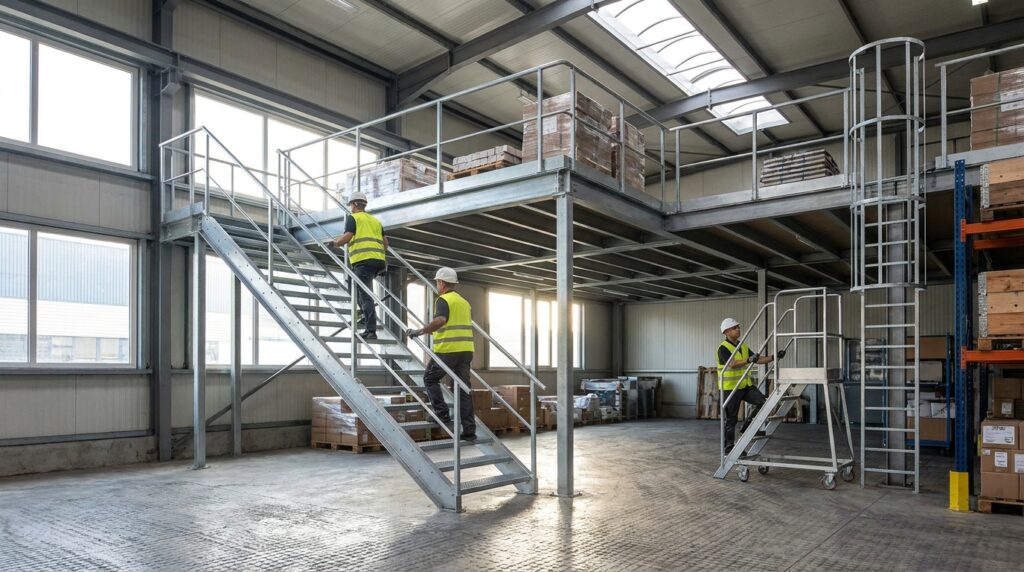
Understanding Industrial Mezzanine Access: Stairs, Ladders, and Beyond
Industrial mezzanines are a cornerstone of efficient warehouse operations, offering invaluable vertical space utilization. However, the effectiveness of these elevated structures hinges on safe and practical access for personnel and materials. For facility managers, engineers, warehouse operators, and purchasing professionals, understanding the various types of mezzanine access systems is crucial for optimizing workflow, ensuring safety, and maximizing ROI. This article delves into the world of mezzanine stairs, ladders, and other access solutions, providing a comprehensive overview of their applications, design considerations, benefits, and selection criteria.
For those interested in understanding the broader context of Mezzanine Stairs, Ladders, and Access Systems, a related article that delves into essential material handling equipment for efficient manufacturing processes can provide valuable insights. This article discusses various tools and systems that enhance productivity and safety in industrial environments. You can read more about it here: Essential Material Handling Equipment for Efficient Manufacturing Processes.
Navigating the Vertical: Types of Mezzanine Access Systems
The choice of access system for an industrial mezzanine is dictated by a multitude of factors, including traffic volume, frequency of use, personnel mobility, available space, and safety regulations. Fredon Handling provides a range of solutions designed to meet diverse operational needs, from simple access points to sophisticated material movement systems.
Straight and L-Shaped Staircases: The Workhorse of Mezzanine Access
Staircases are the most common and generally safest form of access for personnel to and from mezzanines, especially for areas with moderate to high foot traffic or where carrying tools and small equipment is frequent.
Standard Staircases: Design and Applications
Standard industrial staircases are typically constructed from robust steel, designed to withstand heavy use and comply with rigorous safety standards. They feature consistent riser heights and tread depths, providing a comfortable and familiar climbing experience. Applications include access to office spaces, break rooms, control rooms, or general production areas located on the mezzanine level.
Tread and Riser Considerations
The dimensions of treads (the horizontal part you step on) and risers (the vertical part between treads) are critical for safety and ergonomics. Standard industrial stair dimensions aim for consistency to minimize the risk of trips and falls. Factors like load capacity and the intended users’ average height influence these dimensions.
Handrail and Guardrail Requirements
Integral to staircase safety are handrails and guardrails. Handrails provide continuous support for users, while guardrails prevent accidental falls from the sides of the staircase and the mezzanine perimeter. Building codes and OSHA regulations often dictate the height, spacing, and strength requirements for these safety features.
L-Shaped and U-Shaped Staircases: Space-Saving Solutions
When space is at a premium, L-shaped (90-degree turn) and U-shaped (180-degree turn) staircases offer a more compact footprint compared to straight runs. They achieve this by incorporating landings within the staircase structure.
Landing Design and Functionality
Mezzanine landings serve as resting points and crucial safety features, particularly on longer flights of stairs or in emergency egress scenarios. They also facilitate changes in direction. Proper landing design ensures adequate turning radius and prevents congestion.
Suitability for High-Traffic Areas
While space-saving, L- and U-shaped staircases can sometimes create bottlenecks in extremely high-traffic areas if not adequately designed or if landings are too small. Careful consideration of flow patterns is essential.
Industrial Ladders: Direct and Efficient Access
Industrial ladders offer a direct and space-efficient means of accessing mezzanines, particularly for less frequent use or in situations where space is severely restricted.
Fixed Industrial Ladders: Permanent and Secure
Fixed industrial ladders are permanently attached to the mezzanine structure or the building’s wall. They are designed for durability and safety, often featuring non-slip rungs and appropriate handholds at the top and bottom.
Rung Spacing and Material
The spacing of rungs is standardized for safe climbing, and the material is typically steel, chosen for its strength and longevity. Rungs are often textured or designed with grip enhancements to prevent slippage.
Top and Bottom Safety Features
Crucial safety features for fixed ladders include secure anchoring at both the top and bottom. At the top, a safety cage or handrail extension extending beyond the landing is often required to ensure a safe transition. At the bottom, a stable base is paramount.
Ships’ Ladders (Stair Ladders): A Hybrid Approach
Ships’ ladders, also known as stair ladders, combine elements of both stairs and ladders. They feature steeper pitches than standard stairs but offer wider treads and often handrails, providing a more comfortable and safer ascent than a traditional ladder for frequent use.
Pitch and Tread Design
The steeper pitch of ships’ ladders allows them to fit into smaller footprints than full staircases. Their wider treads offer more surface area for the foot, increasing stability, especially when carrying small items.
When to Choose a Ships’ Ladder
Ships’ ladders are an excellent compromise when a full staircase is not feasible due to space constraints, but the frequency of use or the need to carry moderate loads makes a simple fixed ladder inadequate.
Cage Ladders and Safety Sleeves: Enhancing Fall Protection
For ladders extending to significant heights, safety cages or spiral safety sleeves are often implemented to prevent falls.
Ladder Cages: Preventing Side Falls
Ladder cages, also known as safety enclosures or hoops, surround the ladder, providing a barrier against side falls. They are typically constructed from metal bars and are a common requirement for ladders exceeding a certain height, as mandated by safety regulations.
Spiral Safety Sleeves: Continuous Protection
Spiral safety sleeves offer continuous fall protection as personnel ascend or descend. Users are typically tethered to a central mechanism within the sleeve, which arrests a fall instantly. These systems are often found in applications requiring the highest level of ladder safety.
Access Gates and Hatches: Controlled Entry Points
Beyond the primary climbing mechanism, controlled entry and exit points are vital for maintaining safety and managing workflow on mezzanines.
Mezzanine Swing Gates: Secure and Easy Access
Swing gates are commonly installed at the top of stairs and ladders leading to mezzanines. They swing inwards or outwards to allow passage while preventing accidental falls when not in use.
Self-Closing Mechanisms
Many industrial swing gates are equipped with self-closing mechanisms, ensuring that the gate automatically returns to its closed position after use, thereby maintaining a secure barrier.
Application in High-Traffic Zones
Swing gates are particularly effective in high-traffic areas where continuous fall protection is essential. They provide a positive barrier without impeding necessary movement.
Mezzanine Sliding Gates: Space-Saving Access Control
Sliding gates are an alternative to swing gates, particularly useful in areas where swing radius might be an issue. They slide open and closed along a track.
Considerations for Obstruction
When specifying sliding gates, it’s important to ensure the track and gate movement are not obstructed by surrounding equipment or materials.
Integration with Material Handling
Sliding gates can sometimes be integrated with automated material handling systems, allowing for automated opening and closing.
Mezzanine Hatches: Covered Openings
Hatches are typically used for covering openings in the mezzanine floor, providing access for personnel or materials, or for ventilation and inspection purposes.
Manual vs. Automatic Operation
Hatches can be manually operated or equipped with pneumatic or electric actuators for easier lifting and closing.
Durability and Sealing
The design of a hatch should consider its load-bearing capacity if it’s intended to be walked on, as well as any sealing requirements to prevent dust, moisture, or drafts.
Designing for Safety and Efficiency: Key Considerations
The selection and design of mezzanine access systems are not merely about getting from point A to point B; they are critical components of a safe, productive, and compliant industrial environment. Fredon Handling emphasizes a holistic approach that integrates access solutions into the overall warehouse design.
Regulatory Compliance and Building Codes
Adherence to local building codes, OSHA standards, and other relevant safety regulations is paramount. These codes dictate minimum requirements for tread depth, riser height, handrail spacing, load capacities, and fall protection.
OSHA Requirements for Industrial Stairs and Ladders
The Occupational Safety and Health Administration (OSHA) provides detailed guidelines for the safe design and use of stairs and ladders in the workplace. Familiarity with these standards is essential for engineers and facility managers.
Local Building Code Variations
It’s crucial to remember that building codes can vary significantly by municipality and region. Always consult with local authorities and qualified engineers to ensure compliance with specific local requirements.
User Experience and Ergonomics
The comfort and ease of use for personnel are vital for productivity and accident prevention.
Minimizing Climbing Effort
Access systems should be designed to minimize unnecessary climbing effort, especially for routes used frequently. This can involve optimizing riser heights and tread depths for standard stairs.
Accommodating Different User Abilities
Consideration should be given to users of varying physical abilities. Wider treads, more gentle slopes, and robust handrails can enhance accessibility.
Integration with Material Flow
Access systems are not just for people; they are often integral to material movement on and off the mezzanine.
Personnel vs. Material Access
Distinguishing between access points for personnel and those for material handling is crucial. Dedicated material lifts or conveyors might be more appropriate for heavy or frequent material transfers, complementing personnel access via stairs or ladders.
Forklift and Pallet Jack Access
While mezzanines themselves are not typically designed for direct forklift or pallet jack operation at elevated levels, the access points must accommodate the safe transfer of goods that may have been moved by these equipment at ground level. This might involve nearby loading docks or dedicated transfer points.
Durability and Maintenance
Industrial environments demand robust solutions that can withstand constant use and require minimal maintenance.
Material Selection for Longevity
The choice of materials (e.g., steel grades, coatings) significantly impacts the lifespan and durability of access systems. Galvanized steel or powder-coated finishes offer superior corrosion resistance.
Routine Inspection and Maintenance Schedules
Implementing a regular inspection and maintenance schedule is critical for identifying potential issues before they become safety hazards. This includes checking for wear and tear, loose fasteners, and structural integrity.
Selecting the Right Access System: A Practical Approach
Choosing the optimal access system for a mezzanine involves a systematic evaluation of operational needs, safety mandates, and budgetary constraints. Fredon Handling partners with clients to ensure informed decisions.
Evaluating Traffic Volume and Frequency
- High Traffic/Frequent Use: Standard industrial stairs with appropriate landings and handrails are generally the best choice for maximum safety and efficiency.
- Moderate Traffic/Occasional Use: Ships’ ladders or well-designed L- and U-shaped staircases can be effective.
- Low Traffic/Infrequent Use: Fixed industrial ladders with safety cages might suffice, provided they meet all safety regulations.
Assessing Load Requirements
- Personnel Only: Most standard access systems designed to code will accommodate typical personnel loads.
- Personnel Carrying Light Equipment/Materials: Wider treads, gentler slopes, and robust handrails on stairs or ships’ ladders are beneficial.
- Material Transfer (via personnel): The access route should facilitate the safe carrying of items. If significant weight or volume is involved, consider dedicated material handling equipment.
Space Constraints and Layout
- Limited Footprint: L- and U-shaped stairs, ships’ ladders, and fixed ladders are designed for space optimization.
- Open Areas: Straight staircases can be incorporated without significant disruption to surrounding space.
Budgetary Considerations
While safety and functionality are paramount, budget is always a factor.
- Cost-Effectiveness: Fixed ladders are typically the most economical, followed by ships’ ladders, then standard staircases.
- Long-Term Value: Investing in a more robust and compliant access system can lead to lower maintenance costs and reduced risk of accidents over the long term.
When exploring the various options for enhancing vertical access in your workspace, it’s essential to consider not only mezzanine stairs and ladders but also the broader context of material handling systems. For a deeper understanding of how these components fit into the overall efficiency of your operations, you might find this article on material handling particularly insightful. It discusses the importance and methods of material handling, providing valuable information that complements the specifics of mezzanine access solutions.
Frequently Asked Questions About Mezzanine Access Systems
Q1: What is the difference between a ladder and a staircase for mezzanine access?
A ladder is a vertical or near-vertical structure with equally spaced rungs for climbing, typically used for infrequent access or in very confined spaces. A staircase is a series of steps with consistent riser heights and tread depths, providing a safer and more comfortable means of ascent and descent, especially for frequent use or carrying items.
Q2: Are there specific regulations for how high a ladder can be before a cage is required?
Yes, OSHA and local building codes specify height thresholds for requiring safety cages on industrial ladders. These regulations are in place to prevent falls from significant heights. It is crucial to consult the latest relevant codes for precise requirements.
Q3: Can I use a simple attic ladder for my industrial mezzanine?
No, attic ladders are designed for residential use and are not built to withstand the rigorous demands or safety standards of an industrial environment. Industrial mezzanines require access systems engineered for heavy-duty use and compliance with workplace safety regulations.
Q4: How do I determine the correct load capacity for my mezzanine stairs?
The load capacity of mezzanine stairs is determined by engineering calculations that consider the intended use, material strength, and applicable building codes. A qualified structural engineer should perform these calculations and specify the appropriate design parameters. Fredon Handling can assist in the design process and ensure that the access system integrates seamlessly with the overall structural integrity of your mezzanine.
Q5: What are the benefits of a ships’ ladder compared to a standard ladder?
Ships’ ladders offer wider treads and often handrails, making them more stable and comfortable to use than standard ladders, especially when carrying items. They also typically have a less steep pitch, reducing climbing effort. They are a good compromise between the space-saving nature of a ladder and the user-friendliness of a staircase.
Q6: How can I ensure my mezzanine access system complies with safety standards?
Consult with experienced engineers and suppliers like Fredon Handling who understand industrial safety regulations. Ensure all designs adhere to OSHA guidelines and local building codes. Regular inspections and maintenance are also critical for ongoing compliance.
By carefully considering these factors and partnering with experienced providers like Fredon Handling, businesses can implement mezzanine access systems that not only enhance operational efficiency but also prioritize the safety and well-being of their workforce. Whether you’re looking to install a new mezzanine or upgrade existing access, exploring the comprehensive solutions available from Fredon Handling can help optimize your industrial space.