
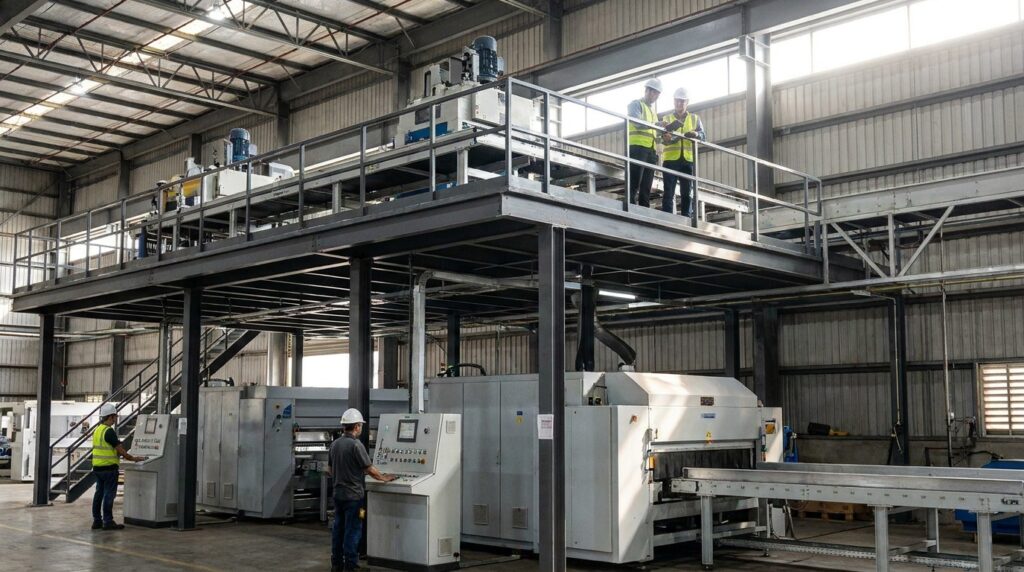
Maximizing Your Industrial Footprint: A Deep Dive into Industrial Equipment Platforms
In today’s competitive industrial landscape, efficient space utilization is not just an advantage; it’s a necessity. For facility managers, engineers, warehouse operators, and purchasing professionals grappling with limited floor space and the need for enhanced operational flow, industrial equipment platforms offer a transformative solution. These strategically designed structures, often built from robust structural steel, unlock vertical capacity, create dedicated operational zones, and significantly improve overall warehouse efficiency. Fredon Handling specializes in providing tailored material handling solutions, including expertly designed industrial equipment platforms, to meet these critical needs.
This comprehensive guide will explore the diverse applications, design considerations, benefits, and selection criteria for industrial equipment platforms, empowering you to make informed decisions for your facility.
In exploring the intricacies of Industrial Equipment Platforms, a related article that delves deeper into their applications and design considerations can be found at this link: Industrial Equipment Platforms: Applications & Design Considerations. This resource provides valuable insights into the various factors that influence the design and functionality of these platforms, making it an essential read for professionals in the field.
Understanding the Versatility of Industrial Equipment Platforms
Industrial equipment platforms, often referred to as structural steel platforms or even sometimes integrated into mezzanine systems, are elevated structures designed to support various industrial equipment and personnel. Their primary function is to create usable space above existing floor layouts, thereby maximizing the cubic capacity of a warehouse or manufacturing facility. This vertical expansion allows for a multitude of applications that can streamline operations, improve safety, and boost productivity.
Diverse Applications Across Industries
The adaptability of industrial equipment platforms makes them suitable for a wide array of industries and specific operational needs.
Manufacturing and Production Lines
In manufacturing settings, equipment platforms are frequently employed to:
- Elevate assembly lines: Placing assembly stations on a raised platform can improve ergonomics for workers, allowing for better visibility and easier access to components. This also frees up valuable floor space below for raw material staging or finished goods accumulation.
- Support intermediate processing steps: If a manufacturing process involves multiple stages, platforms can be used to house specific equipment or holding areas between stages, creating a more logical and efficient workflow. For example, a platform might hold a conveyor system that transfers parts to the next workstation on the main floor.
- Provide access to overhead machinery: Platforms can serve as stable, safe access points for maintenance or operation of machinery mounted overhead, such as large ventilation systems, cranes, or specialized processing units.
Warehousing and Logistics
The warehouse and logistics sector benefits immensely from the space-saving capabilities of equipment platforms.
- Creating dedicated picking or packing stations: Elevated packing stations can provide a focused workspace, separating order fulfillment activities from the high-traffic main floor. This can significantly reduce congestion and improve order accuracy.
- Supporting specialized storage systems: Platforms can be integrated with shelving or racking systems to create multi-level storage, effectively doubling or tripling storage density. This is particularly useful for storing slower-moving inventory or items that don’t require immediate forklift access.
- Housing conveyor systems and sortation equipment: Complex conveyor networks or automated sortation machinery can be efficiently housed on elevated platforms, allowing gravity to assist with product flow and minimizing floor congestion.
- Facilitating kitting and value-added services: Dedicated areas for kitting components or performing other value-added services can be established on platforms, keeping these operations separate and organized.
Distribution Centers
Similar to warehouses, distribution centers leverage equipment platforms for:
- Optimizing inbound and outbound flow: Platforms can be used to create distinct areas for receiving, inspection, and staging of goods, facilitating a smoother transition from inbound to outbound logistics.
- Supporting automated guided vehicle (AGV) or autonomous mobile robot (AMR) pathways: Elevated platforms can provide dedicated, unobstructed pathways for AGVs and AMRs, improving their efficiency and safety by separating them from human pedestrian traffic.
- Creating elevated office or control rooms: In large distribution centers, platforms can be used to construct elevated offices or control rooms, offering supervisors and operators a clear overview of the entire operation.
Food and Beverage Processing
Hygiene and operational efficiency are paramount in the food and beverage industry. Equipment platforms can be designed to meet stringent standards:
- Elevating processing equipment: Platforms can house processing machinery, allowing for easier cleaning of the floor space underneath and maintaining sanitary conditions.
- Creating wash-down zones: Platforms can be constructed with materials and finishes suitable for wash-down procedures, isolating areas that require frequent cleaning.
- Supporting packaging lines: Elevated packaging lines can improve workflow and worker ergonomics in a sterile environment.
Other Industrial Applications
The versatility extends to:
- Robotic work cells: Platforms can provide a stable, elevated base for robotic arms and associated equipment, optimizing their reach and workspace.
- Catwalks and access bridges: Integral to many platform systems, catwalks provide safe and efficient pedestrian access between different areas of a facility, especially across machinery or hazardous zones.
- Machine bases and risers: In some cases, platforms can be designed as integrated bases or risers for very large or specialized industrial machines, ensuring proper elevation and stability.
Design Considerations for Optimal Performance and Safety
The successful implementation of an industrial equipment platform hinges on meticulous design that considers both operational requirements and stringent safety standards. This is where the expertise of a provider like Fredon Handling, working with qualified engineers, becomes invaluable.
Structural Integrity and Load Capacity
- Load calculations: The foundation of any equipment platform design is accurate load calculation. This involves determining the anticipated static loads (weight of the platform itself, equipment, and stored materials) and dynamic loads (moving equipment, personnel, and potential impact loads). It is crucial to engage qualified structural engineers to perform these calculations and ensure compliance with all relevant building codes and standards.
- Material selection: Structural steel is the most common material due to its strength, durability, and cost-effectiveness. Different grades of steel and beam profiles are chosen based on load requirements and span lengths.
- Column spacing and bracing: The arrangement and spacing of support columns, along with appropriate bracing, are critical for ensuring the platform’s stability and preventing deflection or sway under load.
Layout and Ergonomics
- Workflow integration: The platform’s design must seamlessly integrate with existing material flow. This involves considering the movement of people, equipment, and goods both on and around the platform.
- Ergonomic considerations: For personnel working on the platform, ergonomic design is essential. This includes appropriate working heights, ample aisle widths, and comfortable access points.
- Visibility and supervision: In many applications, platforms are designed to provide a clear vantage point for supervisors to oversee operations.
Access and Egress
- Stairs and Ladders: The type and placement of stairs or ladders are dictated by the height of the platform, anticipated traffic volume, and safety regulations. Options range from simple fixed ladders for infrequent access to full staircases with handrails for frequent personnel movement. Local building codes will often dictate the specific requirements for stairs, including tread depth, riser height, and handrail design.
- Safety Gates: Self-closing safety gates are essential at the top of stairs and at any openings to prevent accidental falls. These gates should be designed to swing inwards to the platform.
- Elevator or Lift Integration: For heavier loads or higher platforms, integrating a goods lift or personnel elevator might be necessary.
Decking and Flooring
- Material choices: The decking material should be chosen based on the anticipated loads, traffic, and any specific environmental requirements. Common options include:
- Diamond plate steel: Offers excellent slip resistance and durability, ideal for high-traffic areas.
- Bar grating: Provides good light and air transmission, suitable for environments where ventilation is important and the risk of falling small items is low.
- Plywood or composite materials: Can be used for lighter loads or where specific flooring properties are needed.
- Slip resistance: Especially crucial in industrial environments, the flooring should provide adequate slip resistance to prevent accidents.
Integration with Existing Infrastructure
- Column interference: The platform design must account for existing building columns, ductwork, piping, and other overhead obstructions.
- Floor loading: The existing floor must be capable of supporting the concentrated loads from the platform’s columns. A structural engineer should verify the existing floor’s capacity if there are any doubts.
- Power and utilities: Planning for the routing of electrical conduits, plumbing, and compressed air lines to and from the platform is essential during the design phase.
Safety Features and Regulatory Compliance
Safety is paramount in any industrial environment, and industrial equipment platforms are no exception. Adhering to safety standards and local building codes is not just a matter of compliance; it’s about protecting your workforce and mitigating risk.
Guardrails and Handrails
- Purpose: Guardrails are vertical barriers designed to prevent personnel and materials from falling off the platform. Handrails provide support for individuals walking on stairs and walkways.
- Height and spacing: Standard heights for guardrails and handrails are typically defined by local building codes and occupational safety regulations. Spacing of balusters within guardrails is also critical to prevent small items or individuals from passing through.
- Material and construction: Guardrails and handrails are typically constructed from steel or other robust materials, ensuring they can withstand significant force.
Fall Protection Systems
- Beyond guardrails: In certain situations, additional fall protection measures may be required, especially in areas with a higher risk of falling or where guardrail heights might be compromised.
- Personal fall arrest systems (PFAS): For tasks requiring work near unprotected edges or at significant heights, employees may need to utilize PFAS, including harnesses, lanyards, and anchor points.
Fire Safety and Sprinkler Systems
- Fire-rated materials: If the platform is located within a building with specific fire-resistance requirements, the materials used for its construction, including decking and any associated walls or enclosures, may need to be fire-rated.
- Sprinkler system integration: Existing sprinkler systems often need to be extended or modified to provide adequate coverage for the elevated space created by the platform. Coordination with fire suppression system designers is essential.
Code Compliance and Permitting
- Local building codes: All industrial equipment platforms must comply with local building codes, occupational safety and health administration (OSHA) regulations, and any other relevant municipal or state requirements.
- Permitting process: Obtaining the necessary building permits before construction begins is a critical step. This typically involves submitting detailed design plans prepared by a licensed engineer for review and approval by the local building department. Fredon Handling works with clients to ensure their proposed solutions align with general design principles that would facilitate code compliance, but the ultimate responsibility for code interpretation and permitting rests with the facility owner and their engineering consultants.
When exploring the design considerations for Industrial Equipment Platforms, it is essential to understand their applications within various industries. A related article that delves into this topic is available at Top Material Handling Equipment for Efficient Warehouse Operations, which discusses how different equipment can enhance warehouse efficiency and streamline operations. This resource provides valuable insights into the types of equipment that can be integrated with industrial platforms to optimize performance and safety.
Equipment Options and Integration Possibilities
The true value of an industrial equipment platform is amplified when it’s seamlessly integrated with the right material handling equipment. Fredon Handling offers a broad spectrum of solutions that complement platform installations.
Material Handling Equipment
- Forklifts and Pallet Jacks: While platforms are often designed to create space above typical forklift traffic, designated areas on the platform may be suitable for lighter-duty forklifts or manual pallet jacks for specific internal movements.
- Conveyor Systems: Elevated platforms are ideal for housing various types of conveyor systems, from gravity conveyors to powered belt or roller conveyors, facilitating efficient product movement.
- Automated Storage and Retrieval Systems (AS/RS): In advanced warehousing operations, platforms can serve as the structural support for AS/RS, allowing for dense, automated storage.
- Vertical Lift Modules (VLMs) and Vertical Reciprocating Conveyors (VRCs): These systems can be integrated onto or alongside platforms to provide efficient vertical transportation of goods between different levels or the main floor.
- Mezzanine Storage Systems: Platforms can directly support various types of shelving and racking, from light-duty shelving to heavy-duty pallet racks, creating multi-level storage solutions. Fredon Handling’s expertise in shelving systems can be leveraged here.
Operational Equipment
- Workstations and Assembly Benches: Dedicated workstations for assembly, kitting, or quality control can be efficiently located on platforms, improving workflow and organization.
- Machinery Support: Platforms can be engineered to directly support specific processing machinery, providing a stable and accessible base.
- Control Rooms and Observation Decks: Elevated structures can serve as operator control rooms, offering a comprehensive view of the facility.
Catwalks and Access Solutions
- Interconnectivity: Catwalks are often an integral part of larger platform systems, providing safe pedestrian access between different sections of the elevated structure or connecting to other areas of the facility.
- Material: Typically constructed from steel grating or solid decking, catwalks are designed for safety and durability.
When exploring the various aspects of Industrial Equipment Platforms, it is essential to consider their applications and design considerations. A related article that delves into the types of material handling equipment can provide valuable insights into how these platforms enhance efficiency in various industries. For more information on essential tools that contribute to operational success, you can read the article on material handling equipment. This resource highlights the importance of selecting the right equipment to optimize workflows and improve productivity.
Selecting the Right Platform and Partner
Choosing the correct industrial equipment platform and the right provider is a critical decision that impacts operational efficiency, safety, and long-term cost-effectiveness.
Key Selection Criteria
- Load Requirements: As emphasized, accurate load calculations are paramount. Consider not just current needs but also potential future expansion.
- Space Constraints: Evaluate the available vertical and horizontal space. The platform must fit seamlessly within your existing footprint.
- Operational Flow: How will the platform integrate with your current material handling and production processes? Will it create bottlenecks or improve efficiency?
- Budget: While cost is a factor, prioritize long-term value, durability, and safety over the cheapest initial option.
- Safety Regulations and Codes: Ensure the proposed solution will meet or exceed all applicable safety standards and local building codes.
- Future Flexibility: Can the platform be reconfigured or expanded if your needs change in the future?
Why Partner with Fredon Handling?
Fredon Handling is more than just a supplier; we are your strategic partner in optimizing industrial space. Our approach is built on:
- Expert Consultation: We begin by understanding your unique challenges and objectives. Our team works closely with you to assess your facility and operational needs.
- Customized Solutions: We don’t offer one-size-fits-all solutions. We design and engineer platforms tailored to your specific requirements, ensuring maximum utility and efficiency.
- Engineering Collaboration: We partner with qualified structural engineers to ensure every platform we provide meets rigorous safety standards and local building codes.
- Integrated Material Handling Expertise: Our comprehensive understanding of material handling equipment, including shelving, racking, and conveying systems, allows us to design platforms that are fully integrated into your overall workflow.
- Commitment to Safety: Safety is at the forefront of every design and installation. We adhere to best practices and ensure our solutions promote a secure working environment.
- Proven Track Record: We have a history of successfully delivering robust and efficient industrial equipment platform solutions to businesses across various sectors.
Frequently Asked Questions
Q1: What is the difference between a mezzanine and an equipment platform?
While the terms are sometimes used interchangeably, a mezzanine typically refers to an intermediate floor within a larger building, often designed for additional office or storage space. An equipment platform is more specifically designed to support and provide access to industrial machinery or specific operational processes, though it can also incorporate storage or work areas. Both are often constructed using structural steel.
Q2: Do I need a permit for an industrial equipment platform?
In most jurisdictions, yes. Building permits are almost always required for the construction of structural modifications like equipment platforms. It is crucial to consult with your local building department to understand the specific requirements and initiate the permitting process. Fredon Handling can assist in providing documentation that facilitates this process for your engineering partners.
Q3: How long does it take to design and install an equipment platform?
The timeline can vary significantly depending on the complexity of the design, the size of the platform, site conditions, and the permitting process. A typical project might take several weeks for design and engineering, followed by several weeks for fabrication and installation.
Q4: Can an equipment platform be relocated or modified later?
Many industrial equipment platforms are designed with some degree of modularity, allowing for potential relocation or modification. However, the ease and cost of such changes depend heavily on the initial design and the complexity of the installation. It’s best to discuss potential future flexibility during the initial design phase.
Q5: What are the limitations of industrial equipment platforms?
Limitations can include the load-bearing capacity of the existing floor, building height restrictions, the need for adequate fire suppression, and potential interference with existing building systems like HVAC or sprinkler lines. A thorough site assessment is crucial to identify and address these.
By strategically implementing industrial equipment platforms, businesses can unlock significant potential within their existing facilities. These structures are more than just additions; they are integral components of a well-designed, efficient, and safe operational environment.
Are you ready to explore how industrial equipment platforms can transform your facility? Contact Fredon Handling today for a personalized consultation and discover how our expertise in material handling solutions and warehouse space optimization can help you achieve your operational goals.