
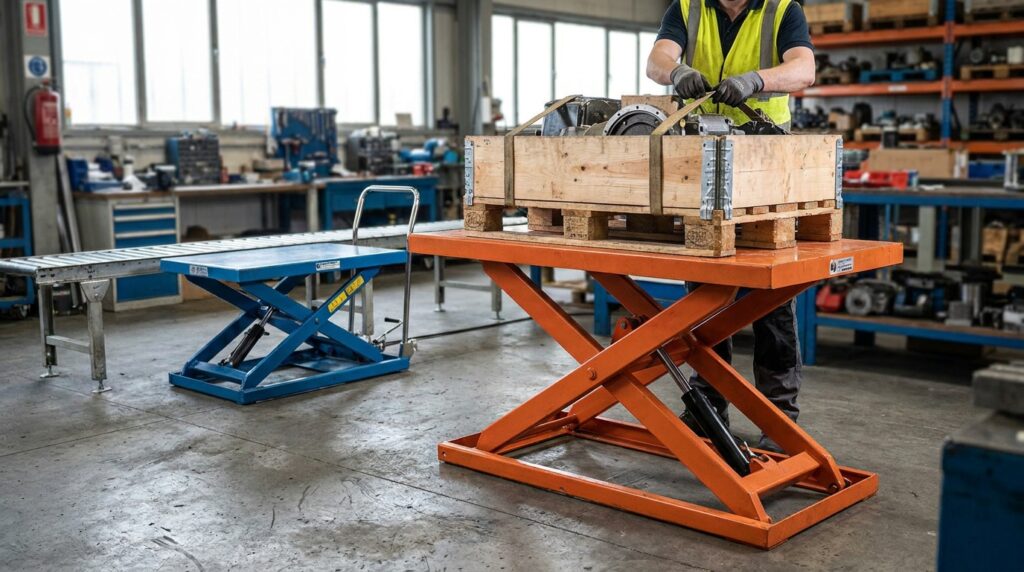
Elevating Efficiency: A Comprehensive Guide to Hydraulic Lift Tables for Industrial Applications
In the demanding world of industrial operations, optimizing workflows, ensuring worker safety, and maximizing productivity are paramount. Meeting these objectives often hinges on the right equipment, and few pieces of machinery are as versatile and impactful as hydraulic lift tables. These robust, reliable units are the unsung heroes of many warehouses, manufacturing plants, and assembly lines, providing critical ergonomic support and streamlining material handling processes. At Fredon Handling, we understand the nuances of industrial equipment and are dedicated to providing solutions that drive tangible results for our clients. This comprehensive guide delves into the world of hydraulic lift tables, exploring their diverse types, essential applications, the significant benefits they offer, crucial selection factors, vital safety considerations, and indispensable maintenance practices.
For those interested in exploring more about hydraulic lift tables, a related article that provides valuable insights into their applications and benefits can be found at Fredon Handling. This resource delves into the various types of hydraulic lift tables available in the market and discusses their uses in different industries, making it a great complement to understanding how these essential tools can enhance productivity and safety in the workplace.
Understanding the Mechanics: How Hydraulic Lift Tables Work
At their core, hydraulic lift tables rely on the fundamental principles of hydraulics to generate lifting power. This system leverages Pascal’s Principle, which states that pressure applied to a confined fluid is transmitted equally in all directions. The primary components include a hydraulic cylinder, a power unit (typically an electric motor driving a hydraulic pump), a reservoir for hydraulic fluid, and control valves.
The Hydraulic Power Unit: The Heart of the System
The electric motor drives a hydraulic pump, which draws fluid from the reservoir and forces it into the hydraulic cylinder. As fluid enters the cylinder, it pushes a piston upwards, extending the cylinder rod. This rod is connected to the lift table’s platform, causing it to rise. The speed of ascent is controlled by the rate at which fluid is pumped into the cylinder and the configuration of the control valves.
Control Valves and Fluid Dynamics
Control valves are essential for managing the operation of the lift table. By manipulating these valves, operators can initiate the lifting process, hold the platform at a specific height, or allow the fluid to return to the reservoir, lowering the platform. The smooth and controlled movement is a hallmark of hydraulic systems, offering a significant advantage over purely mechanical lifting mechanisms. The enclosed nature of the hydraulic system also contributes to its durability and longevity in demanding industrial environments.
Safety Features Integrated into the Hydraulic System
Modern hydraulic lift tables are equipped with numerous safety features directly integrated into their hydraulic systems. These can include pressure relief valves to prevent overloading and system damage, check valves to maintain platform position if fluid pressure is lost, and overload sensors. The controlled descent is a critical safety aspect, ensuring loads are lowered gently and predictably, minimizing the risk of accidents.
Navigating the Landscape: Types of Hydraulic Lift Tables
The versatility of hydraulic lift tables is evident in the wide array of types available, each designed to address specific operational needs and challenges. Understanding these distinctions is key to selecting the most appropriate solution for your facility.
Standard Hydraulic Scissor Lift Tables
The most common and recognizable type is the standard hydraulic scissor lift table. Characterized by its crisscrossing “X” frame, these tables utilize the mechanical advantage of the scissor mechanism to achieve significant vertical travel from a relatively compact base. They are incredibly versatile and can be found in countless industrial settings.
Applications of Standard Scissor Lifts
- Assembly Lines: Providing ergonomic workstations for assemblers, bringing components to the optimal working height and reducing strain.
- Material Transfer: Lifting and transporting pallets, crates, and other heavy items between different levels or workstations.
- Loading/Unloading Docks: Bridging height differences between trucks and loading docks, facilitating efficient goods movement.
- Machine Tending: Positioning workpieces at the correct height for feeding into or receiving from machinery.
Advantages and Limitations
The primary advantage of standard scissor lifts is their robust construction, high lifting capacity, and ability to achieve substantial vertical lift. Their simplicity in design often translates to lower initial costs and straightforward maintenance. However, their footprint can be larger when fully extended, and the scissor mechanism can sometimes present pinch points if not properly guarded.
Low Profile Hydraulic Lift Tables
Designed to minimize the initial height, low profile hydraulic lift tables are ideal for applications where a pit or ramp is not feasible or desirable. These tables often feature a very shallow collapsed height, allowing them to be easily integrated into existing floor levels.
Scenarios Benefiting from Low Profile Designs
- Ease of Access: Facilitating the loading and unloading of wheeled carts or equipment without the need for ramps.
- Minimizing Footprint: Ideal for tight spaces where a standard lift table’s base would be an obstruction.
- Ergonomic Loading: Allowing workers to roll items onto the platform with minimal lifting.
Key Features and Considerations
Low profile tables often utilize a more compact scissor mechanism or alternative lifting configurations. Their weight capacity might be slightly less than equivalent standard scissor lifts due to design constraints, but they offer unparalleled convenience in specific scenarios.
Drum Handling Lift Tables
Specialized for the unique challenges of handling drums, these lift tables incorporate features specifically designed for drum manipulation and transfer. They can include built-in cradles, clamping mechanisms, and tilting capabilities.
Specific Use Cases for Drum Lifts
- Chemical and Pharmaceutical Industries: Safely moving and dispensing from drums of raw materials or finished products.
- Food and Beverage Manufacturing: Transferring ingredients or finished goods packaged in drums.
- Waste Management: Handling and compacting drummed waste materials.
Enhanced Functionality for Drum Operations
Drum handling tables can often rotate, tilt, or empty drums, significantly improving efficiency and safety in operations involving these often unwieldy containers. They eliminate the need for manual tilting and pouring, reducing the risk of spills and worker injuries.
Stainless Steel Hydraulic Lift Tables
For environments that demand superior hygiene, corrosion resistance, and compliance with stringent regulatory standards, stainless steel hydraulic lift tables are the preferred choice.
Industries Requiring Stainless Steel Construction
- Food and Beverage Processing: Meeting strict sanitation requirements to prevent contamination.
- Pharmaceutical Manufacturing: Ensuring sterile environments and preventing chemical reactions.
- Medical Device Production: Maintaining cleanroom conditions and resisting sterilization processes.
- Corrosive Chemical Environments: Resisting degradation from exposure to harsh chemicals.
Benefits of Stainless Steel in Demanding Settings
The inherent properties of stainless steel make these tables highly durable, easy to clean, and resistant to rust and corrosion. This translates to longer service life, reduced maintenance costs, and enhanced operational safety in sensitive industries.
Portable Hydraulic Lift Tables
Designed for mobility, portable hydraulic lift tables are equipped with casters, making them easy to move from one workstation to another as needed.
Applications Where Portability is Key
- Temporary Workstations: Providing lifting support for tasks that change location frequently.
- Maintenance and Repair: Easily bringing equipment to a comfortable working height for servicing.
- Flexible Production Lines: Adapting to changing layouts and production demands.
Considerations for Portable Units
While offering great flexibility, portable lift tables typically have lower weight capacities than their stationary counterparts. It’s crucial to ensure the casters are robust and the locking mechanisms are secure before operating to prevent accidental movement.
Compact and Mini Hydraulic Lift Tables
For lighter-duty applications or confined spaces, compact and mini hydraulic lift tables offer a streamlined and cost-effective solution.
Ideal Scenarios for Smaller Lift Tables
- Small Part Assembly: Ergonomically positioning small components for assembly.
- Office Environments: Assisting with lifting and positioning of sensitive equipment.
- Laboratory Use: Facilitating experiments or material handling within a lab setting.
Efficiency in Limited Spaces
These units provide the essential ergonomic benefits of larger tables in a smaller package, making them perfect for niche applications where space or weight capacity is not a primary concern.
Unlocking Productivity: Key Benefits of Hydraulic Lift Tables
The adoption of hydraulic lift tables by businesses across diverse sectors is a testament to the tangible benefits they provide. These advantages extend beyond simple lifting, contributing significantly to operational efficiency, worker well-being, and overall business success.
Enhancing Ergonomics and Reducing Workplace Injuries
One of the most significant benefits of hydraulic lift tables is their ability to dramatically improve workplace ergonomics. By allowing workers to adjust the height of materials and equipment to their optimal working level, these tables:
- Minimize Bending and Stooping: Reducing strain on the lower back and preventing musculoskeletal disorders (MSDs).
- Reduce Reaching and Stretching: Alleviating pressure on the shoulders, neck, and arms.
- Prevent Overexertion: Eliminating the need for manual lifting of heavy or awkward loads, which is a leading cause of workplace injuries.
The financial implications of reduced injuries are substantial, including lower workers’ compensation claims, decreased absenteeism, and improved employee morale.
Streamlining Material Handling Processes
Hydraulic lift tables are powerful tools for optimizing material flow within a facility. They:
- Facilitate Seamless Transitions: Effortlessly bridge height gaps between different workstations, conveyors, or vehicles.
- Improve Loading and Unloading Efficiency: Significantly speeding up the process of transferring goods onto and off trucks or into storage.
- Enable Precise Positioning: Allowing for accurate placement of materials for assembly, packaging, or further processing.
- Reduce Bottlenecks: By ensuring a smooth and consistent flow of materials, they help prevent delays and production slowdowns.
Boosting Productivity and Throughput
When workers can perform tasks more comfortably and efficiently, productivity naturally increases. Hydraulic lift tables contribute to this by:
- Reducing Task Time: Less time spent struggling with awkward lifts or manual positioning translates to more time spent on value-added activities.
- Increasing Throughput: Faster material handling and assembly processes lead to a higher volume of goods produced or processed.
- Improving Quality: When workers are not fatigued or straining, they are better able to focus on the accuracy and quality of their work.
Versatility and Adaptability for Diverse Operations
The wide range of types and configurations available means that hydraulic lift tables can be adapted to almost any industrial setting. Whether it’s a heavy-duty manufacturing environment, a food processing plant, or a logistics hub, there’s a lift table solution to meet specific needs. This adaptability ensures that businesses can invest in a solution that grows with their evolving operational requirements.
Cost-Effectiveness and Return on Investment (ROI)
While the initial investment in a hydraulic lift table is a consideration, the long-term cost savings and productivity gains often result in a strong return on investment. Benefits include:
- Reduced Injury-Related Costs: As mentioned, this is a significant driver of ROI.
- Increased Output: Higher productivity directly impacts revenue.
- Extended Equipment Lifespan: By preventing damage to goods and equipment from improper handling.
- Lower Labor Costs: By enabling fewer personnel to handle heavier loads or by reducing overtime due to increased efficiency.
Hydraulic lift tables are essential tools in various industries, providing efficient solutions for lifting and lowering heavy loads. For those looking to understand more about the broader context of material handling, a related article can be found at this link, which explores the fundamentals of material handling systems and their significance in optimizing workflows. By integrating hydraulic lift tables into these systems, businesses can enhance productivity and safety in their operations.
Making the Right Choice: Selecting Your Hydraulic Lift Table
Choosing the correct hydraulic lift table is a critical decision that impacts the long-term success of your material handling operations. A thorough assessment of your specific needs and operational environment is essential.
Determining Load Capacity and Lift Height Requirements
The most fundamental considerations are the maximum weight your table will need to lift and the total vertical distance it must travel.
- Load Capacity: Always factor in a safety margin. If your typical load is 500 kg, consider a table rated for at least 750 kg or 1000 kg to account for variations and potential future needs. Refer to the Fredon Handling Load Capacity Guide for detailed specifications.
- Lift Height: Measure the lowest and highest points your materials need to reach. This will determine the stroke length of the hydraulic cylinder and the overall design of the scissor mechanism.
Evaluating Platform Size and Configuration
The dimensions and design of the lift table’s platform should accommodate the typical sizes and shapes of the materials you handle.
- Dimensions: Ensure the platform is large enough to securely hold your largest loads without overhang that could compromise stability.
- Configuration: Consider if specialized features are needed, such as a beveled edge for easy loading, cutouts for specific equipment, or a rotating platform for improved access.
Assessing the Operating Environment
The environment in which the lift table will operate plays a crucial role in material selection and design features.
- Indoor vs. Outdoor: Outdoor use may require weatherproofing and corrosion-resistant materials.
- Temperature Extremes: High or low temperatures can affect hydraulic fluid performance.
- Presence of Chemicals or Corrosives: Dictates the need for materials like stainless steel or specialized coatings.
- Hygiene Requirements: As discussed in the stainless steel section, stringent sanitation standards are critical in food and pharmaceutical industries.
Power Source and Control Options
Consider the available power sources at your facility and the preferred method of operation.
- Electrical Power: Standard models are typically electric, requiring a suitable power outlet.
- Air-Operated: Some models may use compressed air for specific applications.
- Manual Operation: Basic models might offer manual pumping capabilities for occasional use or backup.
- Control Types: Options range from simple push-button controls to foot pedals, remote controls, or integrated control panels for automated systems.
Safety Features and Compliance Standards
Prioritize safety features to protect workers and prevent accidents.
- Guarding: Ensure adequate guarding around pinch points and moving parts.
- Emergency Stops: Easily accessible emergency stop buttons are essential.
- Overload Protection: Systems that prevent the table from being operated beyond its rated capacity.
- Toe Guards: Prevent feet from being trapped under the platform during descent.
- Compliance: Verify that the chosen lift table meets relevant industry safety standards and regulations (e.g., ANSI, OSHA). Fredon Handling is committed to providing equipment that adheres to the highest safety standards.
Hydraulic lift tables are essential tools in various industries, providing efficient solutions for lifting and moving heavy loads. For those looking to optimize their warehouse operations, understanding the different types and uses of hydraulic lift tables can be incredibly beneficial. You might find it interesting to explore a related article that discusses the top material handling equipment for efficient warehouse operations. This resource offers insights into how hydraulic lift tables fit into a broader strategy for improving productivity and safety in the workplace. To read more about it, visit this article.
Ensuring Safe Operation: Best Practices for Hydraulic Lift Tables
The inherent safety of a well-designed hydraulic lift table is significantly amplified by proper operational practices. Adherence to these guidelines is crucial for preventing accidents and ensuring the longevity of the equipment.
Pre-Operational Checks: A Foundation for Safety
Before each use, a brief but thorough inspection can prevent potential hazards.
- Visual Inspection: Check for any visible damage, leaks, or loose components.
- Control Functionality: Test all controls to ensure they are responsive and functioning correctly.
- Platform Stability: Verify the platform is stable and secure before loading.
- Surrounding Area: Ensure the area around the lift table is clear of obstructions and personnel.
Safe Loading and Unloading Procedures
The way materials are placed on and removed from the lift table is critical.
- Centering Loads: Always center the load on the platform to maintain stability. Avoid off-center loading that can cause tilting or tipping.
- Secure Loads: If necessary, secure unstable loads with strapping or other methods to prevent shifting during lifting or lowering.
- Clearance: Ensure sufficient overhead and surrounding clearance before lifting.
- Controlled Descent: Lower the platform slowly and steadily, being mindful of any personnel or obstructions in the path.
Operator Training and Awareness
Proper training is non-negotiable for anyone operating a hydraulic lift table.
- Manufacturer’s Instructions: Ensure all operators are thoroughly trained on the specific model’s operation and safety features.
- Understanding Limitations: Operators must understand the load capacity and operational limits of the table.
- Emergency Procedures: Familiarize operators with emergency stop procedures and what to do in case of a malfunction.
Maintaining a Clear Work Area
A cluttered workspace around a lift table can lead to accidents.
- Keep Aisles Clear: Ensure easy access to and from the lift table.
- No Unauthorized Personnel: Prevent unauthorized individuals from entering the operational zone.
- Spill Containment: Promptly clean up any hydraulic fluid leaks to prevent slip hazards.
Extending Lifespan: Essential Maintenance for Hydraulic Lift Tables
Regular and proactive maintenance is the cornerstone of ensuring the reliability, safety, and longevity of your hydraulic lift table. Neglecting maintenance can lead to costly breakdowns, unexpected downtime, and potential safety hazards.
Routine Inspections: The First Line of Defense
Scheduled inspections are crucial for identifying potential issues before they escalate.
- Weekly/Monthly Checks: Inspect hydraulic hoses for wear or leaks, check fluid levels, examine the condition of the scissor mechanism for any signs of damage or bending, and verify that all safety guards are in place and secure.
- Annual Comprehensive Inspections: A more detailed inspection should be performed annually by a qualified technician, including a review of the hydraulic system’s pressure, cylinder seals, and overall structural integrity.
Hydraulic Fluid Management: The Lifeblood of the System
The hydraulic fluid is essential for the smooth and efficient operation of the lift table.
- Fluid Level: Regularly check the hydraulic fluid level in the reservoir and top up as needed with the recommended fluid type. Low fluid levels can lead to pump cavitation and inefficient operation.
- Fluid Quality: Over time, hydraulic fluid can degrade due to heat, contamination, and oxidation. Contaminated or degraded fluid can damage seals, pumps, and valves. It is recommended to have the fluid tested periodically and replaced as per the manufacturer’s recommendations. Fredon Handling offers a range of high-quality hydraulic fluids suitable for industrial applications.
- Filter Replacement: Hydraulic systems utilize filters to remove contaminants. These filters should be replaced regularly according to the manufacturer’s schedule to ensure clean fluid and prevent wear on internal components.
Lubrication: Reducing Friction and Wear
Proper lubrication of moving parts is essential for smooth operation and preventing premature wear.
- Pivot Points and Bearings: Regularly lubricate all pivot points, bearings, and sliding surfaces of the scissor mechanism and any other moving components. Use the manufacturer-recommended lubricant to ensure compatibility and optimal performance.
- Frequency: The frequency of lubrication will depend on the operating environment and usage. Consult your user manual for specific guidance.
Addressing Wear and Tear: Proactive Repairs
Don’t wait for a minor issue to become a major problem.
- Hose Replacement: If hydraulic hoses show signs of cracking, fraying, or leakage, they should be replaced immediately. Damaged hoses can lead to sudden fluid loss and system failure.
- Seal Replacement: Worn or damaged seals in the hydraulic cylinder can lead to leaks and a loss of lifting power. These should be replaced promptly by a qualified technician.
- Structural Integrity: Any signs of bending, cracking, or deformation in the scissor mechanism or platform should be addressed by a professional repair service.
Frequently Asked Questions About Hydraulic Lift Tables
Q1: What is the typical lifespan of a hydraulic lift table?
A1: With proper maintenance and operation, a well-maintained hydraulic lift table can have a lifespan of 10-15 years or even longer. Regular inspections and adherence to maintenance schedules are key to maximizing its operational life.
Q2: Can hydraulic lift tables be used in outdoor environments?
A2: Yes, many hydraulic lift tables can be used outdoors, but it’s crucial to select models designed for outdoor use. These will typically feature weather-resistant coatings, corrosion-resistant materials, and potentially features to protect the hydraulic system from the elements.
Q3: What is the difference between a hydraulic and a pneumatic lift table?
A3: Hydraulic lift tables use hydraulic fluid to generate lifting power, offering robust strength and controlled descent. Pneumatic lift tables use compressed air, which can be faster for lighter loads but may offer less precise control and a lower weight capacity compared to their hydraulic counterparts.
Q4: How often should I check the hydraulic fluid level?
A4: It’s recommended to check the hydraulic fluid level at least monthly, or more frequently if you notice a significant drop in performance or signs of leakage. Refer to your specific model’s manual for the manufacturer’s recommended checking frequency.
Q5: What safety standards should I look for when purchasing a hydraulic lift table?
A5: Look for lift tables that comply with relevant industry safety standards such as ANSI (American National Standards Institute) and OSHA (Occupational Safety and Health Administration) guidelines. Fredon Handling ensures all our products meet or exceed these critical safety benchmarks.
Q6: Can I overload a hydraulic lift table?
A6: It is strongly advised not to overload a hydraulic lift table. Exceeding the rated load capacity can cause structural damage, premature wear, system failure, and most importantly, create a severe safety hazard. Always operate within the specified load limits.
Elevate Your Operations with Fredon Handling
In the competitive landscape of industrial operations, investing in the right equipment is not just about efficiency; it’s about safety, reliability, and long-term profitability. Hydraulic lift tables from Fredon Handling are engineered to deliver on all these fronts. Our comprehensive range of solutions, from standard scissor lifts to specialized stainless steel units, is designed to meet the diverse and demanding needs of modern industry. By understanding the types, benefits, selection criteria, and maintenance requirements, you can make an informed decision that will empower your workforce, streamline your material handling processes, and ultimately, drive your business forward.
Ready to explore how hydraulic lift tables can revolutionize your operations? Contact the experts at Fredon Handling today to discuss your specific requirements and discover the perfect lifting solution for your facility. Let us help you elevate your efficiency, enhance safety, and achieve new levels of productivity. Visit fredonhandling.com to learn more about our product offerings and to request a consultation.