
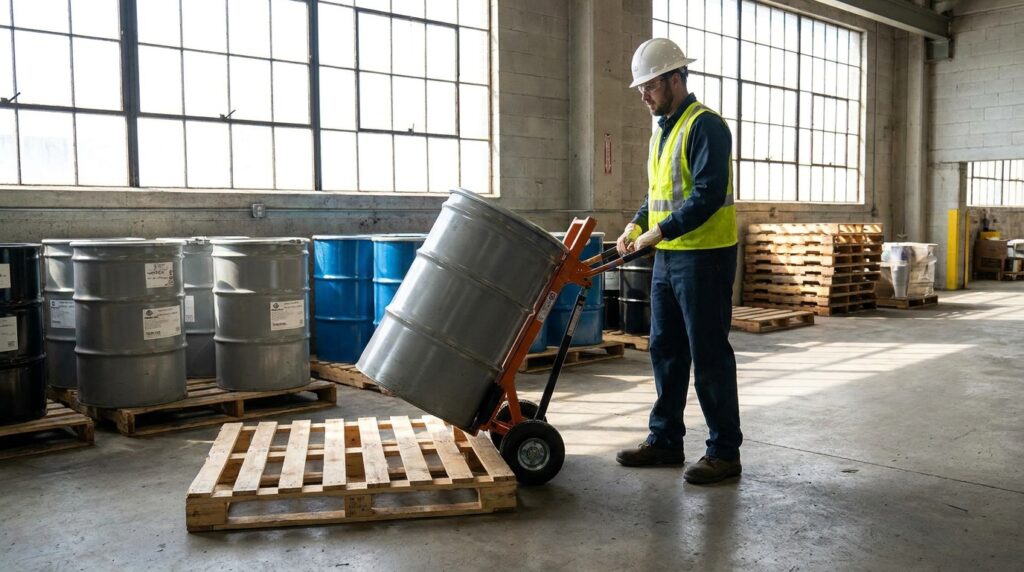
Unlock Efficient and Safe 55-Gallon Drum Handling: Your Ultimate Guide to Pallet Loading and Unloading
SEO Title: 55-Gallon Drum Pallet Loading & Unloading: Expert Guide | Fredon Handling
Meta Description: Master the art of safely loading and unloading 55-gallon drums from pallets. Discover equipment, techniques, and safety best practices for warehouse managers, engineers, and buyers.
The 55-gallon drum, a ubiquitous workhorse in numerous industries, presents a unique set of challenges when it comes to handling, particularly when moving it on and off pallets. Whether you’re dealing with raw materials, finished products, or hazardous waste, the safe and efficient loading and unloading of these substantial containers is paramount. This guide is designed for warehouse managers, plant engineers, safety managers, and industrial equipment buyers who need to optimize their drum handling operations. We will delve into the critical aspects of this process, from understanding the drums themselves to selecting the right equipment and implementing best practices.
For more information on safe handling and storage practices, you may find our related article on proper drum storage techniques helpful. It provides insights into the best methods for organizing and securing 55-gallon drums on pallets to ensure safety and efficiency in your workspace. You can read the article by following this link: Proper Drum Storage Techniques.
Understanding the 55-Gallon Drum: A Foundation for Safe Handling
Before we explore the mechanics of loading and unloading, it’s crucial to understand the fundamental characteristics of the 55-gallon drum. This knowledge directly influences the type of equipment needed and the safety protocols to be implemented.
Drum Material: Properties and Implications
55-gallon drums are primarily constructed from three materials: steel, plastic (HDPE), and fiber. Each offers distinct properties that impact their weight, durability, chemical resistance, and ultimately, how they are handled.
- Steel Drums: These are robust and offer excellent protection against punctures and impacts. They are often used for flammable liquids, oils, and viscous materials. Steel drums typically have a UN rating, indicating their suitability for transporting hazardous materials. Their weight can be significant, making mechanical assistance essential for safe lifting and maneuvering.
- Plastic (HDPE) Drums: High-density polyethylene (HDPE) drums are lighter than steel drums and offer superior corrosion resistance, making them ideal for chemicals, acids, and water-based products. They are also often translucent, allowing for visual inspection of contents. While durable, they can be susceptible to puncture from sharp objects or extreme temperatures.
- Fiber Drums: Made from compressed paperboard or fiber, these drums are the lightest option and are typically used for non-hazardous solid materials like powders, granules, or dried goods. They offer good protection against moisture but are not suitable for liquids or hazardous substances. Their handling requirements are generally less demanding due to their lower weight.
Size, Weight, and Capacity: Key Determinants for Equipment Selection
The nominal capacity of a 55-gallon drum is approximately 208 liters, but the actual volume can vary slightly. The empty weight also differs significantly by material:
- Empty Steel Drum: Typically weighs between 40-50 lbs (18-23 kg).
- Empty HDPE Drum: Usually weighs between 15-25 lbs (7-11 kg).
- Empty Fiber Drum: Can weigh as little as 10-15 lbs (4.5-7 kg).
When filled, a 55-gallon drum can weigh anywhere from 400 lbs to over 600 lbs (180-270 kg), depending on the density of the product. This substantial weight is the primary reason why manual lifting of full drums is strongly discouraged and often prohibited by safety regulations. The capacity and the filled weight are critical considerations when selecting lifting and moving equipment, as the equipment must be rated to handle the maximum expected load.
Equipment Compatibility: Ensuring a Seamless Workflow
The type of pallet used also plays a role. While standard wooden pallets are common, specialized pallets may be used for certain industries or hazardous materials. Ensuring that your drum handling equipment can interface effectively with the existing pallet infrastructure is vital for operational efficiency. This includes the ability of forks, grippers, or cradles to securely engage with or lift the drum and pallet combination.
Methods for Loading and Unloading 55-Gallon Drums from Pallets
Successfully moving 55-gallon drums to and from pallets requires a systematic approach and the right equipment. The method chosen will depend on the volume of drums, the frequency of operation, the available space, and crucially, safety considerations.
Manual Handling: The Risky and Discouraged Approach
While it might seem like the simplest method, manual handling of full 55-gallon drums is highly discouraged and extremely risky. The sheer weight and awkward shape of these drums make them prone to causing severe back injuries, crushing injuries, and spills. Regulations in most developed countries strictly limit or prohibit manual lifting of loads exceeding certain weight thresholds, which full 55-gallon drums easily surpass.
Why Manual Handling is a Hazard:
- Ergonomic Strain: Bending, twisting, and lifting loads of this magnitude put immense stress on the spine, shoulders, and knees.
- Loss of Grip: The smooth surfaces of drums make them difficult to grip securely, increasing the risk of dropping.
- Instability: Drums can easily roll, leading to falls and potential damage to the drum or surrounding equipment.
- Product Spills: Dropping a drum can result in hazardous leaks, creating slip hazards and exposing workers to dangerous chemicals.
Therefore, any discussion of loading and unloading 55-gallon drums from pallets must prioritize mechanical solutions.
Mechanical Solutions: The Safe and Efficient Path
Mechanical drum handling equipment is designed to eliminate the risks associated with manual lifting and provide a more efficient workflow. The choice of equipment often depends on whether you need to move drums on or off a pallet, or both, and the environment in which the operation takes place.
Drum Lifters and Stackers: Versatile Lifting Power
Drum lifters and stackers are arguably the most common and versatile solutions for handling drums on and off pallets. These devices are designed to grip, lift, and transport drums, allowing them to be placed onto or removed from pallets with ease.
- How they work: Typically, these machines feature a clamping mechanism or a cradle that securely holds the drum. Once the drum is secured, the operator can lift it using a hydraulic system, powered by a hand pump, foot pump, or electric motor. They can then maneuver the drum into position above the pallet for loading or unloading.
- Types:
- Manual Drum Lifters/Stackers: Operated via hand or foot pumps for hydraulic lifting. They are suitable for lower-volume operations or where electric power is not readily available.
- Electric Drum Lifters/Stackers: Utilize an electric motor for lifting and sometimes for powered travel, offering greater ease of use and speed for higher throughput operations.
- Pallet Drum Lifters: Specifically designed to lift drums that are already on a pallet, allowing them to be placed onto higher storage locations or a truck bed.
- Advantages: Relatively compact, easy to maneuver in tight spaces, and can lift drums to significant heights for stacking. They are excellent for loading and unloading from standard pallet positions.
- Considerations: Ensure the lifter’s capacity matches the filled drum weight. The clamping mechanism needs to be compatible with the drum material and size.
Drum Grabs and Clamps: Focused Drum Engagement
Drum grabs and clamps are attachments that can be fitted to forklifts, cranes, or other lifting equipment. They are designed to securely grasp the rim or body of a drum for lifting.
- How they work: These devices use mechanical jaws or a clamping action to securely hold the drum by its top rim or sometimes its body. They allow for precise positioning and can be used to lift drums individually or in multiples, depending on the attachment’s design.
- Types:
- Forklift Drum Clamps: Designed to attach to forklift tines, allowing the forklift to lift and move drums directly. They often have a single clamp or dual clamps for handling multiple drums.
- Overhead Drum Grabs: Suspended from a crane or hoist, these grabs engage the drum rim for lifting.
- Advantages: Highly efficient when integrated with existing forklift fleets. Allows for quick pick-up and placement. Can handle drums in various configurations, including stacking them.
- Considerations: Requires an appropriate lifting machine (forklift, crane). Operator skill is crucial for safe operation to prevent damage to the drum or product. Ensure the clamp pressure is sufficient to hold the drum securely without crushing it. Compatibility with the drum’s top rim is essential.
Drum Palletizers and Depalletizers: Automated Efficiency
For high-volume operations, automated palletizers and depalletizers offer the ultimate in efficiency and safety. These systems can automatically load or unload drums onto and off pallets.
- How they work: These sophisticated machines use a combination of conveyors, robotic arms, and sensors to pick up drums from a designated infeed area (e.g., a conveyor or truck), position them onto a pallet in a pre-programmed pattern, and then secure them. The reverse process occurs for depalletizing.
- Advantages: Significantly increases throughput, reduces labor costs, and minimizes the risk of human error or injury.
- Considerations: Requires a substantial investment and dedicated space. Best suited for facilities with consistent, high-volume drum handling needs. Integration with existing warehouse management systems (WMS) can further enhance efficiency.
Best Practices for Loading and Unloading 55-Gallon Drums from Pallets
Beyond selecting the right equipment, establishing and adhering to robust best practices is crucial for ensuring safety and efficiency in every drum handling operation.
Pre-Operation Checks: Ensuring Equipment Readiness
Before any drum is moved, a thorough pre-operation check of all equipment is non-negotiable.
- Inspect the Drum: Check for any signs of damage, leaks, or bulging. If a drum appears compromised, do not attempt to move it. Instead, isolate it and consult with your safety or maintenance team.
- Inspect the Pallet: Ensure the pallet is in good condition, free from broken boards, protruding nails, or excessive wear. A damaged pallet can lead to instability during lifting and transport.
- Inspect the Equipment:
- Load Capacity: Verify that the equipment’s rated load capacity is greater than the weight of the filled drum.
- Hydraulic Systems: For hydraulic equipment, check for leaks, proper fluid levels, and smooth operation of the pump and release valve.
- Clamping/Gripping Mechanisms: Ensure all clamps, grabs, or cradles are functioning correctly, have no visible damage, and can securely engage the drum.
- Tires and Wheels: Inspect for proper inflation (if applicable) and wear.
- Safety Features: Confirm that any safety interlocks, alarms, or guards are in place and operational.
- Clear the Work Area: Ensure the path of travel is clear of obstructions, personnel, and other equipment. Designate a clear area for placing unloaded drums or preparing drums for loading.
Safe Lifting and Positioning Techniques
Once equipment is deemed ready, the lifting and positioning process requires precision and care.
- Approach the Drum: Position lifting equipment squarely in front of the drum on the pallet. For forklift attachments, ensure the forks are aligned with the pallet and the drum.
- Secure the Drum:
- Drum Lifters/Stackers: Carefully bring the lifting mechanism to the drum. Engage the clamping or cradle system according to the manufacturer’s instructions. Ensure a firm and stable grip before attempting to lift.
- Forklift Clamps: Position the clamp around the drum body or rim. Close the clamp firmly, ensuring even pressure. Avoid overtightening, which can damage plastic drums or deform steel ones.
- Lift Slowly and Steadily: Once secured, lift the drum slowly and smoothly. Avoid jerky movements.
- Maneuver with Caution: When moving the drum, travel at a slow, controlled speed. Be mindful of overhead clearances and surrounding obstacles. Ensure the drum is held at a safe transport height, typically just enough to clear the pallet or any obstructions on the ground.
- Precise Placement: When loading onto or unloading from a pallet, position the drum directly above its intended location. Lower the drum slowly and steadily onto the pallet or designated surface.
- Release the Drum: Once the drum is stable, carefully disengage the lifting mechanism. Ensure the drum is no longer supported by the equipment before moving the equipment away.
Pallet Stabilization and Drum Securing
After the drum is placed on the pallet, or before it is lifted, ensuring stability is critical.
- During Loading/Unloading: When placing a drum onto a pallet, ensure it sits squarely and is not leaning. If multiple drums are being loaded onto a single pallet, consider their arrangement to create a stable load.
- Securing for Transport: For transport beyond the immediate loading/unloading area, drums on pallets should be secured to prevent shifting. This can involve:
- Stretch Wrap: Using industrial stretch wrap to bind the drums to the pallet and to each other.
- Strapping: Employing heavy-duty strapping for added security.
- Edge Protectors: Using corner protectors to prevent strapping from damaging drum rims.
- Load Bars/Bracing: In truck trailers, using load bars or bracing to keep the palletized drums from moving during transit.
If you’re looking to enhance your understanding of material handling techniques, you might find the article on streamlining your workflow particularly insightful. It covers various systems that can improve efficiency in loading and unloading processes, which complements the information on how to load and unload 55-gallon drums from pallets. For more details, you can check out the article here.
Choosing the Right Equipment: Factors for Industrial Buyers
Selecting the appropriate drum handling equipment for loading and unloading 55-gallon drums from pallets involves a careful evaluation of various factors.
Throughput and Frequency of Operations
- Low Volume/Infrequent Use: For businesses that handle only a few drums per day or week, manual drum lifters/stackers or basic forklift attachments might suffice. The investment in complex automated systems would likely be unwarranted.
- Medium Volume/Regular Use: Businesses handling dozens of drums daily will benefit from electric drum lifters/stackers or more advanced forklift drum clamps that offer faster operation and reduced operator fatigue.
- High Volume/Continuous Operation: Facilities with extremely high throughput, such as large chemical plants or distribution centers, will find automated drum palletizers and depalletizers to be the most cost-effective and efficient solution in the long run, despite the higher initial investment.
Operational Environment and Space Constraints
- Narrow Aisles and Tight Spaces: Drum lifters and stackers are generally more maneuverable in confined areas compared to larger forklift attachments. Consider compact models designed for tight environments.
- Outdoor Operations: For outdoor use, ensure the equipment is rated for outdoor conditions, including exposure to weather elements. Electric models may require access to charging stations.
- Hazardous Areas: If you are handling flammable or explosive materials, you will need equipment certified for use in hazardous locations (e.g., ATEX-rated for Europe, or equivalent certifications elsewhere).
Drum Type and Product Characteristics
- Material Compatibility: As discussed, the material of the drum (steel, plastic, fiber) influences how it should be gripped. Some clamps are better suited for steel drums, while others are designed to avoid damaging plastic drums. Always check manufacturer specifications.
- Product Density and Weight: Ensure the equipment’s lifting capacity exceeds the maximum possible weight of a filled drum, considering the density of the products you handle.
- Temperature Sensitivity: If products are temperature-sensitive, the speed of handling and the time drums are exposed to ambient conditions can be a factor.
Integration with Existing Infrastructure
- Forklift Fleet: If you already have a fleet of forklifts, investing in forklift-mounted drum clamps or grabs can leverage your existing assets.
- Conveyor Systems: For facilities with existing conveyor systems, drum handling equipment that can interface with conveyors will streamline the workflow.
- Storage Systems: Consider how the drums will be stored after being unloaded. Equipment that can stack drums to higher levels may be necessary for maximizing vertical storage space.
Budget and Return on Investment (ROI)
- Initial Cost: Drum handling equipment varies significantly in price. Balance the upfront cost with the expected benefits in terms of safety, efficiency, and labor savings.
- Maintenance Costs: Factor in the ongoing costs of maintenance, repairs, and spare parts.
- Safety and Compliance: The cost of an accident or non-compliance with safety regulations can far outweigh the investment in proper equipment. Prioritize safety when making your purchasing decisions.
For those interested in efficient handling techniques, you may find the article on pallet safety and best practices particularly useful. It provides insights into the proper methods for loading and unloading heavy items, which complements the guidance on managing 55-gallon drums from pallets. Understanding these techniques can enhance workplace safety and improve overall operational efficiency.
Safety Considerations: Prioritizing Personnel and Product Protection
Safety is not an afterthought in drum handling; it’s an integral part of the process. Implementing comprehensive safety measures protects your workforce, prevents costly product loss, and ensures compliance with regulatory standards.
Training and Competency
- Operator Training: All personnel operating drum handling equipment must receive thorough training on its specific operation, safety features, and emergency procedures. This training should be documented and refreshed regularly.
- Hazard Awareness: Employees should be trained to recognize potential hazards, such as damaged drums, unstable pallets, or obstructed pathways.
- Personal Protective Equipment (PPE): Appropriate PPE should be mandatory. This typically includes:
- Safety Footwear: Steel-toed boots are essential.
- Gloves: Chemical-resistant gloves if handling hazardous materials, and durable work gloves for grip.
- Eye Protection: Safety glasses or goggles.
- Protective Clothing: Depending on the product, chemical suits or durable work attire may be required.
- Hearing Protection: If the equipment generates significant noise.
Emergency Procedures
- Spill Response: Have a clear and well-rehearsed plan for responding to drum leaks or spills. This includes having appropriate spill containment kits readily available and knowing how to use them.
- Equipment Malfunction: Establish protocols for what to do if the lifting equipment malfunctions while a drum is suspended.
- First Aid: Ensure readily accessible first aid stations and trained personnel are available.
Regulatory Compliance
- OSHA Standards (or local equivalents): Familiarize yourself with and comply with all relevant occupational safety and health regulations. This includes guidelines on manual handling, mechanical lifting devices, and hazardous material handling.
- Equipment Certifications: Ensure any equipment used for hazardous materials or in specific environments (like food-grade or pharmaceutical applications) meets relevant certifications and standards.
Maintenance and Longevity of Drum Handling Equipment
Proper maintenance is key to extending the lifespan of your drum handling equipment, ensuring its safe operation, and minimizing downtime.
Routine Inspections
- Daily Checks: Operators should perform quick visual inspections before each use, checking for obvious damage, leaks, or loose parts.
- Weekly/Monthly Inspections: A more thorough inspection by maintenance personnel should include checking hydraulic fluid levels, hose conditions, battery charge (for electric models), and the functionality of all moving parts.
- Annual Inspections: Consider a comprehensive annual inspection by a qualified technician, especially for equipment used in critical operations or hazardous environments.
Lubrication
- Moving Parts: Regularly lubricate all pivot points, rollers, and bearings according to the manufacturer’s recommendations. This reduces wear and tear and ensures smooth operation.
Hydraulic System Care
- Fluid Levels: Maintain correct hydraulic fluid levels. Low levels can cause the system to perform poorly and potentially damage the pump.
- Filter Replacement: Replace hydraulic filters as recommended to prevent contaminants from damaging the system.
- Leak Detection: Promptly address any hydraulic fluid leaks. Leaks not only pose a safety hazard but can also lead to system failure.
Battery Maintenance (Electric Models)
- Charging: Follow the manufacturer’s guidelines for charging batteries. Avoid overcharging or deep discharging, which can reduce battery life.
- Cleaning: Keep battery terminals clean and free from corrosion.
Record Keeping
- Maintenance Logs: Maintain detailed records of all inspections, maintenance performed, and repairs. This helps track the equipment’s history, identify recurring issues, and schedule preventative maintenance effectively.
Frequently Asked Questions (FAQs)
Q1: What is the maximum weight a standard 55-gallon drum can hold when filled?
A1: A filled 55-gallon drum can weigh anywhere from 400 lbs to over 600 lbs (180-270 kg), depending on the density of the product. It is crucial to check the specific weight of your product and ensure your handling equipment has a rated capacity well above this figure.
Q2: Is it ever acceptable to manually lift a 55-gallon drum off a pallet?
A2: No, manual lifting of full 55-gallon drums is extremely hazardous and strongly discouraged due to the significant risk of severe injury. Always use appropriate mechanical lifting equipment.
Q3: How can I ensure the drum gripper on my forklift won’t damage a plastic drum?
A3: When using forklift drum clamps, look for models specifically designed with features to prevent damage to plastic drums. This might include softer grip materials, adjustable pressure settings, or specialized clamp designs that distribute pressure evenly. Always test the clamp on an empty drum first or consult the equipment manufacturer.
Q4: What are the most important safety checks before operating a drum lifter?
A4: Before operating a drum lifter, check the drum for damage, ensure the pallet is stable, verify the equipment’s load capacity, inspect all moving parts and the gripping mechanism, and confirm the work area is clear. Always refer to the manufacturer’s specific pre-operation checklist.
Q5: How can stretch wrap help secure drums on a pallet?
A5: Stretch wrap, when applied correctly, binds the drums together and to the pallet, creating a cohesive load that resists shifting during transport or handling. It is an essential part of load stabilization for palletized drums.
Conclusion: Investing in Safety and Efficiency with Fredon Handling
Safely and efficiently loading and unloading 55-gallon drums from pallets is a critical operation in many industrial settings. By understanding the characteristics of the drums, selecting the appropriate mechanical handling equipment, implementing rigorous best practices, and prioritizing ongoing maintenance and safety training, you can significantly reduce risks and improve operational efficiency.
Fredon Handling is your trusted partner in navigating the complexities of industrial material handling. We offer a comprehensive range of high-quality drum handling equipment designed to meet the demands of various industries. From robust drum lifters and stackers to specialized forklift attachments and integrated systems, we have solutions to optimize your workflow and enhance workplace safety.
Ready to enhance your 55-gallon drum handling operations? Contact Fredon Handling today for expert advice and a consultation to find the perfect equipment for your needs. Explore our extensive selection of drum handling equipment at https://fredonhandling.com/drum-handling-equipment/.