
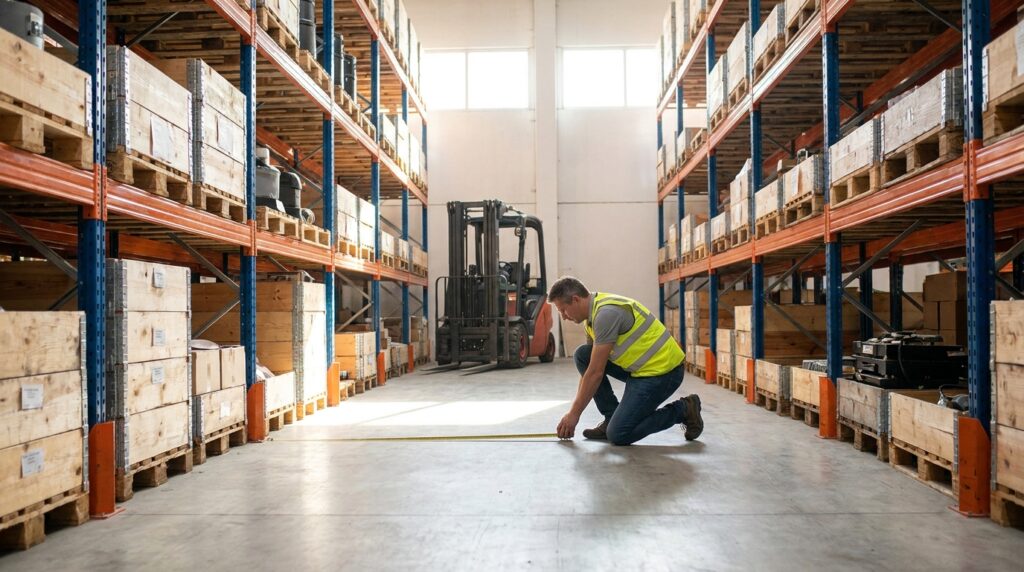
The Strategic Importance of Pallet Rack Aisle Width for Optimized Warehousing
In the intricate world of industrial material handling, every decision carries significant weight, influencing operational efficiency, safety, and ultimately, profitability. For warehouse managers, manufacturers, engineers, and facility operators in Michigan and beyond, understanding the nuances of warehouse design is paramount. Among the most critical design considerations is determining the optimal pallet rack aisle width. This seemingly simple measurement dictates how smoothly inventory moves, how safely equipment operates, and how effectively valuable warehouse space is utilized. Fredon Handling, a trusted Michigan-based supplier of industrial material handling solutions since 1975, understands that the right aisle width isn’t just about fitting things in; it’s about creating a streamlined, safe, and productive environment. This comprehensive guide will delve into the multifaceted factors influencing pallet rack aisle width, offering practical advice and insights to help you make informed decisions that benefit your operations.
When considering the optimal pallet rack aisle width for your warehouse, it’s essential to also understand the various types of material handling equipment that can enhance efficiency in your operations. For a deeper insight into the essential tools that can complement your pallet racking system, you can refer to this informative article on the types of material handling equipment. It provides valuable information that can help you make informed decisions about your warehouse layout and equipment selection. You can read more about it here: Types of Material Handling Equipment: Essential Tools for Efficiency.
Understanding the Core Principles of Aisle Width
The width of a pallet rack aisle is the clear, unobstructed space between opposing rows of racking systems. Its primary function is to allow for the safe and efficient movement of forklifts, pallet jacks, and other material handling equipment, along with the personnel operating them. The seemingly straightforward concept becomes complex when you consider the myriad variables that impact the ideal width. Factors such as the type of material handling equipment used, the dimensions of the product being stored, the desired storage density, and crucial safety regulations all play a vital role.
## Defining Key Terminology: Clear Width vs. Overall Width
Before diving deeper, it’s important to clarify some terminology. When discussing aisle width, we often encounter two key terms:
### Clear Aisle Width
This refers to the actual, unobstructed space available for equipment to maneuver. It is the distance between the outermost points of two opposing rack bays, excluding any overhangs or obstructions. This is the most critical measurement for operational flow and safety.
### Overall Aisle Width
This encompasses the clear aisle width plus any additional space required for operational buffers, turning radius of equipment, and potential safety margins. While not directly used for maneuvering calculations, it influences the overall footprint of your racking layout.
Factors Dictating Pallet Rack Aisle Width
The selection of an appropriate aisle width is not a one-size-fits-all proposition. It’s a strategic decision driven by a combination of operational needs, equipment capabilities, and safety considerations. Neglecting any of these factors can lead to inefficiencies, increased risk of damage, and underutilization of space.
## Material Handling Equipment (MHE) Capabilities
The type of MHE you utilize is arguably the most influential factor in determining aisle width. Different equipment has varying turning radii, mast heights, and load handling capabilities, all of which necessitate specific clearances.
### Forklifts
- Counterbalance Forklifts: These are the workhorses of many warehouses. Their design, with a counterweight at the rear, allows them to lift heavy loads but requires wider aisles for stable operation and turning. Standard counterbalance forklifts typically require aisle widths of 12 to 15 feet to operate safely.
- Reach Trucks: Designed for narrow aisles, reach trucks can extend their forks into the rack to pick and place pallets. They have a smaller turning radius than counterbalance forklifts. Aisle widths for reach trucks can range from 8 to 10 feet, significantly improving storage density.
- Articulated (VNA) Forklifts: These highly specialized machines are engineered for very narrow aisles, often capable of operating in spaces as small as 6 feet. They have a unique pivoting mast that allows them to turn their forks perpendicular to the aisle. VNA forklifts are ideal for maximizing storage capacity in large warehouses but require precise racking and floor conditions.
- Turret Trucks (Swing Reach Trucks): Similar to VNA forklifts, turret trucks can rotate their forks 180 degrees within the aisle, allowing them to access pallets from either side without turning the entire truck. They also enable very narrow aisles, typically in the 5.5 to 7 feet range.
Practical Example: A manufacturer storing high-volume, fast-moving goods might find counterbalance forklifts efficient for rapid loading and unloading but require larger open areas. Conversely, a distributor with a vast SKU count and limited space might opt for reach trucks or VNA forklifts to maximize their vertical and horizontal storage capacity, necessitating narrower aisles.
### Pallet Jacks
- Manual Pallet Jacks: These are simple, cost-effective tools for moving pallets over short distances. They generally have a smaller turning radius than forklifts, allowing for narrower aisles, typically 8 to 10 feet.
- Electric Pallet Jacks: Offering powered movement, electric pallet jacks are more efficient for longer distances. Their maneuverability is comparable to manual jacks, generally requiring 8 to 10 feet of aisle width.
Consideration: Even if your primary MHE is a reach truck, you may still need wider aisles to accommodate occasional deliveries requiring a counterbalance forklift or for maintenance access.
## Load Dimensions and Storage Configuration
The size and orientation of the products you store directly impact the required aisle width.
### Pallet Size
Standard pallet sizes vary by region and industry (e.g., GMA pallets in North America are 40″ x 48″). The dimensions of the pallet, including any overhang of the product itself, are crucial. You must account for the widest and deepest part of the load.
### Load Overhang
If products extend beyond the edges of the pallet, this overhang must be factored into the maneuvering space. An overhang of just a few inches can significantly reduce the effective aisle width if not properly managed.
### Storage Orientation
Are pallets stored lengthwise or widthwise in the rack? This decision influences the turning maneuver required. Storing pallets lengthwise in a rack often necessitates a wider aisle for turning than storing them widthwise.
Comparison Table: MHE and Aisle Width
| Material Handling Equipment | Typical Clear Aisle Width | Advantages | Disadvantages |
| :– | : | : | : |
| Counterbalance Forklift | 12-15 feet | Versatile, handles heavy loads | Requires significant space, slower in tight areas |
| Reach Truck | 8-10 feet | Good for narrow aisles, good visibility | Less stable with extremely heavy loads |
| Articulated (VNA) Forklift | 5.5-7 feet | Maximizes storage density | High upfront cost, requires precise floor |
| Turret Truck | 5.5-7 feet | Maximizes storage density, no aisle turn | High upfront cost, specialized operator training |
| Manual Pallet Jack | 8-10 feet | Cost-effective, simple operation | Limited range and speed, manual effort |
| Electric Pallet Jack | 8-10 feet | Powered, efficient for longer distances | Requires charging, less maneuverable than VNA |
## Storage Density vs. Accessibility
A fundamental trade-off in warehouse design is between storage density (how much you can store) and accessibility (how easily you can retrieve items). Narrower aisles allow for more racking, thus increasing storage density. However, this comes at the cost of potentially slower retrieval times and increased risk of equipment damage if operations are not optimized.
### High-Density Storage Needs
For operations with a vast inventory or limited warehouse space, maximizing storage density is often the priority. This would lead to considering narrower aisles, utilizing MHE like reach trucks or VNA forklifts.
### Fast-Moving Inventory and Quick Access
If your operation involves a high volume of fast-moving SKUs that require rapid put-away and picking, wider aisles might be more beneficial. This allows for quicker movements and reduces the time operators spend maneuvering, potentially improving order fulfillment speed.
Actionable Advice: Conduct an ABC analysis of your inventory. High-demand “A” items might benefit from placement in easily accessible locations with wider aisles, while slower-moving “C” items can be stored in denser configurations.
## Safety Regulations and Best Practices
Safety is non-negotiable in any industrial environment. Regulations and industry best practices provide essential guidelines for determining safe aisle widths.
### OSHA Guidelines
The Occupational Safety and Health Administration (OSHA) sets standards for workplace safety. While OSHA doesn’t specify exact aisle widths for all scenarios, it mandates that aisles and passageways be kept clear and in good repair, with sufficient width to permit passage of employees and the safe use of materials handling equipment. They also emphasize the need for adequate lighting and the elimination of tripping hazards.
### Forklift Manufacturer Recommendations
Each forklift manufacturer provides recommended operating clearances for their equipment. These recommendations are based on extensive testing and are crucial for ensuring safe operation and preventing damage to both the equipment and the racking system. Always consult the operator’s manual for your specific MHE.
### Insurance Requirements
Your insurance provider may have specific requirements regarding aisle width and overall warehouse layout to mitigate risk and ensure coverage. It’s wise to consult with your insurer during the design phase.
Key Takeaway: Always err on the side of caution when it comes to safety. A slightly wider aisle is often a small price to pay for preventing accidents, injuries, and costly equipment damage.
## Warehouse Layout and Flow
The overall layout of your warehouse plays a significant role in determining aisle configurations. Consider the flow of goods from receiving to shipping.
### Receiving and Shipping Dock Access
Aisles leading to and from receiving and shipping docks may need to be wider to accommodate the movement of larger vehicles and more frequent traffic.
### Cross-Aisles and Turnarounds
Adequate space for cross-aisles and turnarounds is essential to prevent bottlenecks and allow for efficient movement of MHE within the warehouse. These areas require sufficient width to allow forklifts to turn and maneuver without obstruction.
### Obstructions and Fixed Equipment
Permanent fixtures, such as mezzanines, columns, fire suppression systems, or conveyor belts, must be carefully considered. Their placement can dictate minimum aisle widths and require specific clearances.
Scenario: Imagine a warehouse with a central column. The aisles running perpendicular to the column might need to be adjusted to ensure clear passage around the obstruction.
Calculating Your Optimal Pallet Rack Aisle Width
The process of determining the ideal aisle width involves a systematic approach, considering all the factors discussed.
## Step 1: Identify Your Primary Material Handling Equipment
This is the starting point. Determine which type of MHE will be used for the majority of your pallet handling within the racking system.
## Step 2: Consult MHE Specifications
Obtain the manufacturer’s specifications for your chosen MHE. Pay close attention to the turning radius and recommended operating clearances.
Example: If you are using a Yale MPB045-E electric pallet jack, its specifications might indicate a minimum turning radius of 59.6 inches. You will then need to add clearance for the pallet itself and a safety margin.
## Step 3: Measure Your Loads
Accurately measure the dimensions of your standard pallets and any significant product overhangs. Record the widest and deepest dimensions.
## Step 4: Factor in Safety Margins and Buffer Zones
This is where best practices and regulations come into play. Add a safety margin to account for:
- Operator Error: Minor misjudgments are inevitable.
- Load Shifts: Pallets can sometimes shift slightly during transit.
- Equipment Stability: Ensuring sufficient space for stable operation.
- Clearance for Maintenance: Allowing access for routine checks and repairs.
A common recommendation is to add 6 to 12 inches of clearance on each side of the MHE’s operational envelope.
## Step 5: Perform Layout Simulations
Once you have a preliminary aisle width in mind, it’s beneficial to simulate your warehouse layout. This can be done using CAD software or even physically marking out the space in your facility. This allows you to visualize the flow and identify potential issues.
Formula for Basic Calculation (Illustrative):
- Clear Aisle Width = MHE Turning Radius + Pallet Depth + Safety Margin (each side)
Important Note: This is a simplified formula. Always refer to detailed MHE specifications and consult with experts for precise calculations.
When considering the optimal pallet rack aisle width, it’s essential to also evaluate the overall layout of your warehouse to maximize efficiency. A related article that provides valuable insights on warehouse design and space utilization can be found at this link. Understanding the interplay between aisle width and warehouse layout can significantly enhance your storage capabilities and operational flow.
Specialized Aisle Width Considerations
Certain applications and racking systems require unique approaches to aisle width.
## Very Narrow Aisle (VNA) Warehouses
VNA warehouses are designed for maximum storage capacity and are a cornerstone of modern, high-density logistics.
### VNA Equipment and Technology
VNA operations rely on specialized MHE like VNA forklifts and turret trucks, which are guided by either wire guidance systems embedded in the floor or optical guidance systems. This precision guidance allows for extremely tight clearances.
### Infrastructure Requirements for VNA
Implementing VNA requires a significant investment in facility infrastructure:
- Precision Floor Grinding: The floor must be perfectly level and smooth to accommodate the guidance systems and prevent damage to the MHE.
- Guidance Systems: Installation of wire or optical guidance systems.
- Specialized Racking: Racking must be installed with exceptional precision to match the guidance systems.
Benefit: VNA can reduce aisle width by up to 70% compared to traditional forklift aisles, dramatically increasing storage capacity. Fredon Handling offers solutions and expertise in designing and implementing VNA systems. Explore our VNA Storage Solutions page for more information.
## Drive-In and Drive-Thru Racking
These high-density storage systems offer a different approach to aisle management.
### Drive-In Racking
In drive-in racking, forklifts drive directly into the rack structure to store pallets. This eliminates traditional aisles between rack rows, creating “lanes” of storage.
- Aisle Width: The “aisle” here is primarily the space required for the forklift to maneuver into and out of the lane. This is typically determined by the forklift’s turning radius and the pallet dimensions. The space between rack rows is eliminated.
- LIFO (Last-In, First-Out) Operation: Drive-in racking operates on a LIFO basis, meaning the last pallet loaded is the first one removed.
### Drive-Thru Racking
Similar to drive-in, but with access from both sides, allowing for FIFO (First-In, First-Out) operation.
- Aisle Width: Requires two access aisles, one on each side of the rack block. The width is determined by the MHE used to enter and exit the lanes.
Consideration: Drive-in and drive-thru systems are excellent for storing large quantities of the same SKU but are less ideal for operations requiring frequent access to a wide variety of items. Learn more about Drive-In & Drive-Thru Racking at Fredon Handling.
## Pallet Flow Racking
Pallet flow racking utilizes gravity to move pallets through the system.
- Aisle Width: The primary aisle is the loading aisle. The width is determined by the MHE used to place pallets onto the inclined rollers. The unloading area requires clear space for pallet removal.
- Lane Configuration: Pallet flow lanes are typically narrow, as the pallets move independently along the rollers.
Advantage: Pallet flow systems provide excellent FIFO stock rotation and high-density storage. Discover our Pallet Flow Racking Systems for efficient inventory management.
When considering the optimal pallet rack aisle width for your warehouse, it’s also beneficial to explore related topics that can enhance your understanding of material handling. For instance, you might find valuable insights in an article that discusses various aspects of material handling systems, which can help you make informed decisions about your storage solutions. You can read more about it in this informative piece on material handling.
Optimizing Your Warehouse for Efficient Aisle Width
Once you’ve determined the ideal aisle widths, consider how to optimize your warehouse for seamless operation.
## Clear Communication and Training
Ensure all personnel are trained on the proper use of MHE within the defined aisle widths. Clear signage indicating aisle numbers and potential hazards is essential.
## Regular Maintenance and Inspection
Regularly inspect racking systems and warehouse floors for any damage or obstructions that could reduce effective aisle width or pose a safety risk. This includes checking for bent uprights, damaged beams, or debris on the floor.
## Technology Integration
Consider using warehouse management systems (WMS) that can optimize storage locations based on aisle configurations and MHE capabilities. Slotting optimization tools can ensure that frequently accessed items are placed in the most accessible locations.
## Future-Proofing Your Design
While it’s impossible to predict the future perfectly, consider potential changes in your business operations. Will you be introducing new types of MHE? Will your product mix change significantly? Building in some flexibility can save costly modifications down the line.
Expert Tip: Fredon Handling’s team of experts can assist you in analyzing your current operations and future needs to design a racking system with optimized aisle widths that align with your strategic goals.
Frequently Asked Questions About Pallet Rack Aisle Width
Here are some common questions we receive at Fredon Handling:
## Q1: How much space do I need for a forklift to turn around in an aisle?
The space required for a forklift to turn around depends heavily on the specific forklift model. It’s not just about the turning radius; you also need to account for the length of the forklift and the pallet it’s carrying. Always refer to the forklift manufacturer’s specifications for the recommended clear turning radius, and add at least the length of the pallet plus an additional safety buffer (typically 1-2 feet on each side).
## Q2: Can I use narrower aisles if I have a smaller forklift?
Yes, using smaller or specialized equipment like reach trucks or VNA forklifts is precisely how warehouses achieve narrower aisles and increase storage density. However, even with smaller equipment, never compromise on the manufacturer’s recommended safety clearances. The goal is to optimize, not to create unsafe conditions.
## Q3: What happens if my aisles are too narrow?
Too-narrow aisles can lead to several problems:
- Increased risk of accidents: Collisions between MHE, racking, and personnel.
- Damage to products and racking: Frequent scrapes and impacts.
- Reduced operational efficiency: Slower picking and put-away times due to difficulty maneuvering.
- Increased wear and tear on MHE: Operators may force equipment into tight spaces.
- Higher insurance premiums: Due to increased risk factors.
## Q4: How do I calculate the aisle width for a new warehouse?
For a new warehouse, start by defining your primary material handling equipment. Obtain the manufacturer’s specifications for turning radius and required clearances. Measure your largest product loads, including any overhangs. Then, add safety margins based on OSHA guidelines and industry best practices. It’s highly recommended to consult with a material handling specialist, like Fredon Handling, who can perform detailed layout analyses and simulations.
## Q5: Does the height of my racking system affect aisle width?
While racking height primarily affects vertical clearance and MHE mast height, it doesn’t directly dictate horizontal aisle width. However, taller racking systems are often used in conjunction with narrower aisles and specialized MHE (like VNA) to maximize cubic space utilization. The MHE’s ability to reach the upper levels safely is the primary factor in this scenario.
Conclusion: Investing in the Right Aisle Width for Long-Term Success
Determining the optimal pallet rack aisle width is a critical component of an efficient, safe, and profitable warehouse operation. It’s a decision that requires careful consideration of your material handling equipment, product dimensions, storage density goals, and the unwavering imperative of safety. By understanding the interplay of these factors and employing a systematic approach to calculation and design, you can create a warehouse environment that maximizes productivity and minimizes risk.
Fredon Handling, with its decades of experience serving Michigan’s industrial sector since 1975, is your trusted partner in navigating these complex decisions. We offer a comprehensive range of Industrial Racking Systems and Material Handling Solutions designed to meet the unique needs of manufacturers, warehouse managers, engineers, and facility operators. Don’t leave your aisle width to chance.
Ready to optimize your warehouse layout for peak performance?
Request a Quote today for a personalized assessment of your material handling needs and discover how Fredon Handling can help you achieve unparalleled efficiency and safety.
Or, Book a Consultation with our expert team to discuss your specific project requirements and design a material handling solution that sets your operation apart.