
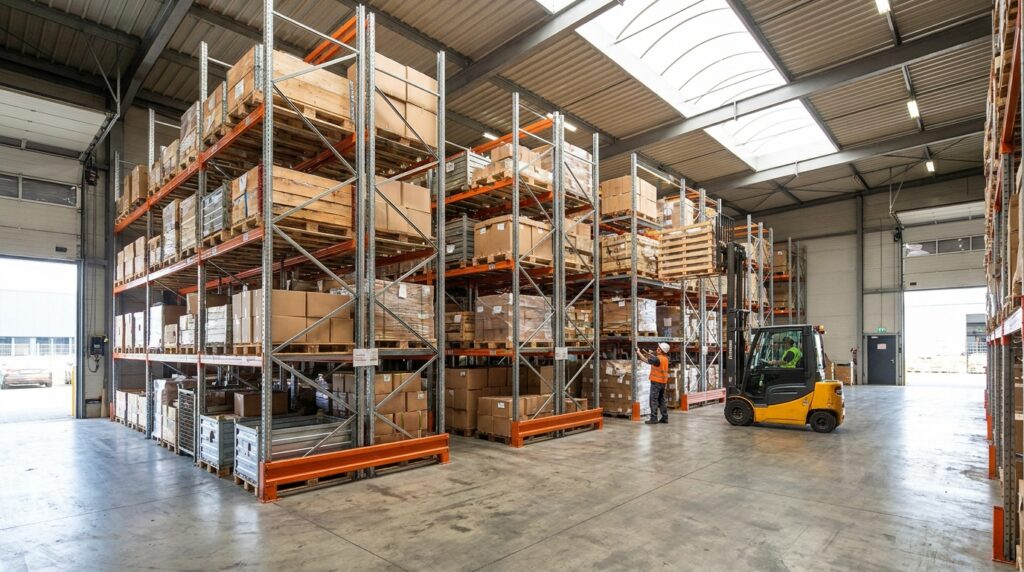
Optimizing Your Michigan Warehouse: A Comprehensive Guide to Pallet Racking
In the dynamic landscape of Michigan’s manufacturing and distribution sectors, efficient material handling is not just a convenience; it’s a critical driver of profitability and operational success. For businesses across the Great Lakes State, from bustling automotive plants to growing food and beverage producers, the backbone of any warehouse lies in its pallet racking system. Established in 1975, Fredon Handling has been a trusted partner for Michigan industries, providing expert guidance and top-tier solutions for all their material handling needs. This comprehensive guide is designed for warehouse managers, manufacturers, engineers, and facility operators seeking to understand, select, and optimize their pallet racking systems for maximum efficiency, safety, and return on investment.
The sheer volume of goods moving through Michigan’s logistics hubs necessitates robust and intelligent storage solutions. Choosing the right pallet racking is a strategic decision that impacts everything from inventory management and order fulfillment speed to warehouse safety and space utilization. With a myriad of options available, navigating the world of pallet racking can seem daunting. This guide will demystify the process, covering the most common types of pallet racking, key considerations for selection, crucial factors like load capacity and safety, as well as insights into cost and maintenance.
Understanding the Core Components and Purpose of Pallet Racking
At its simplest, pallet racking is a system designed to store materials on pallets in horizontal rows of shelves. These shelves are supported by upright frames, creating multiple levels of storage. The primary goal of pallet racking is to maximize vertical storage space, allowing businesses to hold more inventory in a smaller footprint. This directly translates to reduced facility costs and improved operational flow.
The typical components of a pallet racking system include:
- Upright Frames (or Reels): These are the vertical supports that bear the weight of the stored product. They consist of two vertical posts connected by horizontal and diagonal bracing for stability. The height and depth of the frames are critical for matching your warehouse dimensions and inventory.
- Beams (or Step Beams): These are the horizontal members that connect the upright frames, forming the shelves. They come in various lengths and styles, designed to carry specific loads. The beams are typically secured to the uprights with safety pins or locking mechanisms.
- Pallet Supports (or Decking): While not always standard, these are often used to provide a solid surface for the pallet, especially for non-standard pallet sizes or when storing loose items. Options include wire mesh decking, solid wood or metal decking, or cross bars.
- Hardware: This includes safety pins, clips, nuts, and bolts that secure the system together, ensuring structural integrity and safety.
The purpose of pallet racking extends beyond mere storage. It is instrumental in:
- Maximizing Vertical Space: Turning unused ceiling height into valuable storage.
- Improving Inventory Accessibility: Allowing for easy retrieval of individual pallets.
- Enhancing Safety: Providing a stable and organized storage environment, reducing the risk of falling loads.
- Streamlining Operations: Facilitating faster picking and put-away processes.
- Optimizing Space Utilization: Reducing the overall footprint required for inventory.
Fredon Handling, with decades of experience serving Michigan’s industrial needs, understands that each warehouse has unique requirements. Our expertise lies in helping you identify the precise pallet racking solution that aligns with your operational goals.
Exploring the Diverse World of Pallet Racking Types
The material handling industry offers a wide array of pallet racking solutions, each designed to address specific operational demands, product types, and warehouse layouts. Selecting the correct type is paramount to achieving optimal efficiency and safety. Michigan businesses often benefit from systems that can adapt to fluctuating inventory levels and demanding production schedules.
Here’s an in-depth look at the most prevalent pallet racking types:
For those looking to deepen their understanding of warehouse optimization, a related article that complements the “Complete Guide to Pallet Racking: Types, Costs, Capacity & Selection” is available at this link: Warehouse Management Best Practices. This article provides valuable insights into efficient inventory management and space utilization strategies that can enhance the effectiveness of your pallet racking systems.
Selective Pallet Racking: The Industry Standard
Selective pallet racking is the most widely used type of pallet racking system globally and is a cornerstone of many warehouses. Its primary advantage is its inherent selectivity, meaning every pallet stored is immediately accessible. This makes it ideal for operations with a high volume of different SKUs and frequent order picking.
How It Works
Selective pallet racking consists of upright frames and horizontal beams. Pallets are loaded onto the beams by forklifts. The open design allows forklifts direct access to any pallet on any level, without needing to move other pallets.
Key Features and Benefits
- 100% Accessibility: Every pallet is individually accessible, enabling fast and efficient picking.
- Versatility: Adaptable to a wide range of industries and product types.
- Cost-Effective: Generally the most economical pallet racking solution for general-purpose storage.
- Easy Installation: Relatively simple to install and reconfigure.
- Configurable: Can be customized with different beam lengths, frame heights, and accessories like wire decking.
Considerations for Michigan Businesses
For Michigan manufacturers and distributors who deal with a diverse product mix and require rapid order fulfillment, selective pallet racking is often the go-to choice. Its straightforward operation minimizes training time for forklift operators and reduces the likelihood of operational bottlenecks during peak seasons. For example, a food and beverage distributor in Grand Rapids might use selective pallet racking to store a wide variety of bottled goods, each requiring quick access for order fulfillment.
Drive-In / Drive-Thru Pallet Racking: Maximizing Storage Density
When maximizing storage density is the top priority, drive-in and drive-thru pallet racking systems offer an exceptional solution. These systems significantly reduce the number of aisles required in a warehouse, allowing for more vertical and horizontal storage space. This is particularly beneficial for businesses in Michigan that face high real estate costs or need to store large quantities of homogenous product.
Drive-In Racking
In a drive-in system, forklifts drive into the rack structure to deposit and retrieve pallets. The system operates on a Last-In, First-Out (LIFO) principle, as the last pallet loaded into a bay is the first one that must be removed.
- Benefits: Extremely high storage density, reduced aisle space.
- Considerations: LIFO operation can lead to stock rotation challenges for perishable goods. Requires careful product management.
Drive-Thru Racking
A drive-thru system is similar to drive-in but allows for entry and exit from opposite sides. This enables a First-In, First-Out (LIFO) inventory management system, which is crucial for products with expiration dates or strict stock rotation requirements.
- Benefits: High storage density, FIFO inventory management.
- Considerations: Requires more aisle space than drive-in systems to accommodate forklift maneuverability from both sides.
Considerations for Michigan Businesses
A cold storage facility in Northern Michigan dealing with seasonal produce might benefit from a drive-in system for maximizing cold storage space. Conversely, a pharmaceutical distribution center in the Detroit area might opt for a drive-thru system to ensure strict FIFO compliance for sensitive medications, minimizing waste and ensuring product efficacy. Fredon Handling can help assess your product flow and storage needs to determine if drive-in or drive-thru is the optimal solution.
Push-Back Pallet Racking: Efficient Density with Improved Selectivity
Push-back pallet racking offers a compromise between the high density of drive-in systems and the selectivity of selective racking. It allows for storage of multiple pallets deep on each level but provides better selectivity than drive-in.
How It Works
Pallets are stored on wheeled carts that ride on inclined rails. When a new pallet is loaded, it pushes the previous pallet back. For retrieval, the forklift removes the front pallet, and the rear pallets roll forward. This system typically operates on a LIFO basis.
Key Features and Benefits
- High Storage Density: Stores 2 to 5 pallets deep.
- Improved Selectivity: Better than drive-in, as pallets can be accessed individually from the front.
- Reduced Forklift Maneuvering: Forklifts only need to access the front of each lane.
- Durable: Designed to withstand the forces of pallets being pushed back.
Considerations for Michigan Businesses
A manufacturing plant in West Michigan that needs to store large batches of raw materials or finished goods awaiting shipment might find push-back racking ideal. It allows for efficient use of space while still permitting reasonably quick access to specific product batches. For example, a furniture manufacturer could store multiple units of the same product deep within a push-back lane, yet still access them efficiently when needed for assembly or shipping.
For those looking to deepen their understanding of storage solutions, a related article that explores the fundamentals of logistics and storage systems can be found here. This resource provides valuable insights into the principles of material handling, which can complement the information presented in the Complete Guide to Pallet Racking: Types, Costs, Capacity & Selection. By understanding the broader context of material handling, readers can make more informed decisions regarding their pallet racking needs and overall warehouse efficiency. For more details, check out this article.
Pallet Flow Racking (Gravity Flow Racking): True FIFO and High Density
Pallet flow racking, also known as gravity flow racking, is a dynamic storage solution that offers true First-In, First-Out (FIFO) inventory management combined with high storage density. It’s an excellent choice for businesses dealing with products that have a limited shelf life or require strict rotation.
How It Works
This system uses inclined roller lanes. Pallets are loaded at the higher end and move via gravity to the lower unloading end. Each lane is separate, allowing for individual pallet access.
Key Features and Benefits
- True FIFO: Ensures products are picked in the order they were received.
- High Storage Density: Multiple pallets can be stored deep within each lane.
- Increased Throughput: Gravity assist speeds up product flow.
- Reduced Forklift Traffic: Forklifts are only needed at the loading end.
Considerations for Michigan Businesses
Businesses in the food and beverage sector, pharmaceuticals, or any industry with perishable or time-sensitive inventory across Michigan would greatly benefit from pallet flow racking. A beverage bottler in Flint could implement pallet flow to ensure that the oldest cases are always presented for shipment first, minimizing spoilage and waste. This system also lends itself well to case-picking operations, improving efficiency.
For those looking to enhance their understanding of warehouse efficiency, a related article on essential tools for material handling can provide valuable insights. This resource covers various types of equipment that complement pallet racking systems, ensuring optimal organization and productivity in your storage space. You can explore this further in the article on types of material handling equipment, which highlights the importance of selecting the right tools to maximize your operational efficiency.
Cantilever Racking: Ideal for Long or Bulky Items
Cantilever racking is specifically designed for the storage of long, heavy, or irregularly shaped items that cannot be safely stored on conventional pallet racking. This includes items like lumber, pipes, metal bars, large appliances, and carpet rolls.
How It Works
Cantilever racks consist of a vertical column with horizontal arms extending outwards. There are no horizontal beams or uprights to obstruct the front of the load. Items are loaded directly onto these arms.
Key Features and Benefits
- Storage of Long/Bulky Items: Specifically engineered for items that don’t fit standard racks.
- Full Accessibility: No front uprights mean complete access for forklifts.
- Configurable Arms: Arms can be adjusted to accommodate different product sizes.
- Robust Construction: Designed for heavy-duty loads.
Considerations for Michigan Businesses
Michigan’s strong manufacturing base often involves handling long materials. A steel service center in the Upper Peninsula or a custom cabinet maker in the Detroit suburbs would find cantilever racking indispensable for storing raw materials and finished goods. This system ensures that long lengths of steel, wood, or piping are stored safely and can be easily accessed without damaging surrounding inventory.
Specialty Racking Systems
Beyond these core types, various specialty pallet racking systems exist, including:
- Double-Deep Racking: Stores pallets two deep in each bay, requiring a reach truck for access. Offers increased density over selective racking with better selectivity than drive-in.
- Drive-Thru Pallet Flow: A combination of drive-in and pallet flow, allowing goods to enter one side and exit the other via gravity, ensuring FIFO.
- Mobile Pallet Racking (Cantilever or Selective): Racks are mounted on a mobile base that moves on tracks, consolidating aisles into one movable access lane. Maximizes space by eliminating permanent aisles.
Fredon Handling works with Michigan businesses to analyze their unique inventory, workflow, and space constraints to recommend the most suitable pallet racking type or combination of systems. Our goal is to provide a solution that not only stores your goods but actively enhances your operational efficiency.
Evaluating Load Capacity, Safety, and Regulations
The cornerstone of any effective pallet racking system is its ability to safely support the intended loads. Overlooking load capacity or compromising on safety can lead to catastrophic failures, resulting in product damage, injuries, and significant downtime. For Michigan companies, adherence to safety standards is not just good practice; it’s a legal and ethical imperative.
Understanding Load Capacity
Pallet racking components are engineered and tested to withstand specific weight limits. This is typically specified as:
- Beam Capacity: The maximum weight a pair of beams can safely support. This is usually stated for a uniformly distributed load across the beam span.
- Frame Capacity: The maximum weight an entire upright frame can support. This depends on the frame height, width, beam capacity, and the number of beam levels.
- Bay Capacity: The total weight a single bay of racking can hold, considering the combined capacity of its frames and beams.
Crucial Factors Affecting Load Capacity:
- Uniformly Distributed Load (UDL): Assumes the weight is spread evenly across the beam or frame.
- Concentrated Load: When weight is concentrated in a smaller area, reducing the effective capacity.
- Span Length: Longer beams generally have lower capacities.
- Frame Depth and Height: Taller and deeper frames can support more weight.
- Rack Configuration: The arrangement of beams and frames impacts overall stability and load distribution.
- Environmental Factors: Extreme temperatures or seismic activity (less of a concern in Michigan but relevant for overall safety principles) can affect structural integrity.
Michigan-Specific Considerations: Forklift operations in Michigan warehouses often involve heavy loads from manufacturing outputs. It’s vital to know the exact weight of your loaded pallets, including variations, and to ensure your pallet racking system is rated to handle this with a healthy safety margin. Fredon Handling can perform detailed load calculations based on your specific inventory and operational needs.
Safety Standards and Best Practices
Safety is non-negotiable when it comes to pallet racking. National and industry standards provide a framework for safe design, installation, and use.
- RMI (Rack Manufacturers Institute) Standards: The RMI is the primary source of standards for industrial steel storage racks in North America. These standards cover design, testing, and safety.
- OSHA (Occupational Safety and Health Administration): OSHA regulations dictate general workplace safety requirements, including those related to material handling equipment and storage systems.
- Local Building Codes: While specific pallet racking codes are rare, general building safety regulations always apply.
Key Safety Practices:
- Proper Installation: Racking must be installed by qualified professionals who understand the manufacturer’s specifications and relevant standards. Fredon Handling ensures all installations adhere to these stringent requirements.
- Load Capacity Labels: All bays should clearly display their load capacity to prevent overloading.
- Regular Inspections: Conduct frequent visual inspections for any signs of damage, such as bent beams, deformed frames, or missing safety pins.
- Rack Protection: Consider installing column protectors and end-of-aisle guards to prevent damage from forklifts.
- Clear Aisles: Keep aisles clear of obstructions to allow for safe forklift operation and emergency egress.
- Employee Training: Ensure all personnel operating forklifts or working near racking are trained on safe operating procedures and hazard awareness.
- Anchoring: Racking systems must be properly anchored to the floor and potentially to the building structure in seismic zones or for tall installations to prevent tipping.
Understanding Rack Damage and its Implications
Damage to pallet racking can occur due to forklift impacts, overloading, or improper use. Even minor damage can compromise the structural integrity of the entire system.
- Bent Beams: A bent beam is a critical safety hazard and should be replaced immediately. It signifies it has been overloaded or impacted.
- Deformed Frames: Crushed or deformed uprights can significantly reduce the frame’s load-bearing capacity.
- Missing or Damaged Safety Pins: These pins prevent beams from accidentally dislodging. They must always be in place.
Michigan’s Industrial Environment: In the busy industrial settings common in Michigan, forklift traffic is high. Proactive measures like rack protection, ongoing training, and diligent inspections are crucial to mitigate the risks of rack damage. Fredon Handling offers comprehensive rack inspection services to help identify potential hazards before they become critical issues.
Cost Considerations for Pallet Racking
The investment in pallet racking is a significant one, and understanding the factors that influence cost is crucial for budgeting and making informed decisions. While the initial outlay might seem substantial, the long-term benefits in terms of space optimization, efficiency, and safety often provide a strong return on investment.
Factors Influencing Pallet Racking Costs
- Type of Racking: As discussed earlier, different pallet racking systems have varying costs. Selective pallet racking is generally the most economical, while more complex systems like drive-in, push-back, or pallet flow can be more expensive due to their specialized components and engineering.
- Material: Most pallet racking is made from steel. The gauge and type of steel used, along with the quality of the finish (e.g., powder coating for durability), will affect the price.
- Height and Depth of Racking: Taller systems require more material and potentially more robust frames, increasing costs. Deeper systems also use more material.
- Length of Beams and Frames: Longer beams and frames mean more steel and a higher price.
- Load Capacity Requirements: Higher load capacity often necessitates heavier-duty materials and more robust designs, leading to increased costs.
- Accessories and Decking: Wire mesh decking, solid decking, pallet supports, column protectors, and other accessories add to the overall cost.
- Installation Costs: Professional installation is highly recommended and is a significant component of the total cost. Factors include the complexity of the system, the size of the installation, and site preparation requirements.
- Location: While not a direct product cost, shipping and freight charges to your Michigan facility will factor into the total price.
- Brand and Manufacturer: Reputable manufacturers known for quality and durability may have higher price points. Fredon Handling partners with leading manufacturers to ensure you receive quality and value.
Estimating Costs and ROI
Providing exact pricing without a detailed site survey and understanding of specific needs is impossible, as prices are subject to market fluctuations, material costs, and the bespoke nature of each project. However, we can discuss general cost ranges and how to approach ROI.
- Selective Racking: This is typically the most budget-friendly option, making it a popular choice for many Michigan businesses.
- Density Racking (Drive-In, Push-Back, Pallet Flow): These systems offer higher storage density, which can translate to significant savings by reducing the need for larger or additional warehouse space. The increased upfront cost is often offset by lower real estate and operational costs over time.
- Cantilever Racking: The cost will depend on the length of the arms, the height of the units, and the required load capacity for long items.
Calculating Return on Investment (ROI):
To understand the ROI of a pallet racking investment, consider:
- Increased Storage Capacity: How much more inventory can you store, and what is the value of that inventory?
- Reduced Real Estate Costs: If denser storage allows you to avoid expanding your facility or lease a smaller one.
- Improved Efficiency: Faster picking and put-away times can reduce labor costs and increase throughput.
- Reduced Product Damage: Fewer damaged goods mean less waste and fewer lost sales.
- Enhanced Safety: Preventing accidents and injuries can save on insurance costs and lost productivity.
Fredon Handling excels at helping Michigan businesses perform these calculations. We provide detailed quotes that break down costs and can assist in demonstrating the long-term financial benefits of investing in the right pallet racking solution.
Installation and Maintenance: Ensuring Longevity and Performance
The lifecycle of your pallet racking extends beyond its initial purchase and installation. Proper maintenance and understanding the installation process are critical for ensuring its longevity, safety, and optimal performance throughout its operational life. For Michigan’s industrial settings, which can experience varying climates and demanding operational cycles, a proactive approach to installation and maintenance is essential.
Professional Installation: A Critical First Step
While some smaller, simpler pallet racking systems might seem like DIY projects, professional installation is strongly recommended for several reasons:
- Safety and Compliance: Professional installers are trained to adhere to manufacturer specifications and industry safety standards (e.g., RMI standards). They understand the importance of proper beam engagement, frame bracing, and anchoring, which are crucial for system stability and safety.
- Structural Integrity: Incorrect installation can compromise the load-bearing capacity of the racking and lead to premature failure.
- Warranty: Many manufacturers require professional installation to validate warranties.
- Efficiency: Experienced installers can complete the job quickly and efficiently, minimizing disruption to your operations.
- System Optimization: Professionals can ensure the racking is configured optimally for your specific warehouse layout and workflow.
Fredon Handling offers expert installation services throughout Michigan. Our experienced teams ensure your pallet racking system is installed correctly, safely, and to the highest standards, providing peace of mind and a solid foundation for your material handling operations.
Routine Maintenance and Inspection
A proactive maintenance program is key to preventing costly repairs, downtime, and safety incidents. Regular inspections should be a part of your warehouse management routine.
Key Maintenance Activities:
- Visual Inspections: Regularly (daily or weekly) perform visual checks for:
- Bent or damaged beams.
- Deformed or crushed uprights.
- Missing or damaged safety pins, clips, or hardware.
- Signs of corrosion or rust, especially in areas with humidity.
- Any other visible damage.
- Load Capacity Verification: Ensure that the weight of stored pallets does not exceed the rated capacity of the beams and frames. Use clear labeling.
- Cleanliness: Keep the racking system and surrounding areas clean. Accumulated dust and debris can hide damage and create slip hazards.
- Rack Protection: Inspect and maintain column protectors and end-of-aisle guards. Repair or replace them immediately if damaged.
- Anchoring Integrity: Periodically check that anchoring bolts are secure.
- Documentation: Keep a log of all inspections, any identified issues, and repairs performed.
What to Do If Damage is Found:
- Immediate Action: If any damage is found, particularly bent beams or frames, the affected section should be immediately unloaded and cordoned off to prevent further use.
- Professional Assessment: Contact a qualified pallet racking supplier like Fredon Handling to assess the damage. They can determine if the damaged component can be repaired (rarely) or, more typically, if it needs to be replaced.
- Replacement: Always use identical or equivalent replacement parts from a reputable supplier to maintain the system’s integrity and load capacity.
Leveraging Technology and Expertise
Modern technology can aid in maintenance. Some systems offer sensors for monitoring stress, though regular visual inspections by trained personnel remain the most critical aspect.
Fredon Handling offers comprehensive pallet racking inspection services. Our experts can conduct thorough assessments of your existing racking systems, identify potential hazards, and recommend appropriate solutions. This proactive approach can save your Michigan business significant costs and ensure a safe working environment.
FAQs about Pallet Racking
Here are answers to some frequently asked questions about pallet racking systems:
Q1: How do I determine the right load capacity for my pallet racking?
A1: To determine the right load capacity, you must first know the exact weight of your loaded pallets. This includes the weight of the product plus the pallet itself. It’s also essential to consider the maximum weight you anticipate storing on any given level or bay. Always consult with a reputable pallet racking supplier like Fredon Handling. We can help you calculate the required beam capacity, frame capacity, and overall bay capacity based on your specific inventory and operational needs, ensuring a safety margin is included.
Q2: Is it necessary to anchor pallet racking to the floor?
A2: Yes, anchoring pallet racking to the floor is almost always necessary and is a critical safety requirement. Anchoring prevents the racks from tipping over, especially when loaded, unloaded, or impacted by forklifts. Anchoring requirements can vary based on rack height, configuration, seismic zone considerations, and local building codes. Fredon Handling ensures all installations are properly anchored according to manufacturer specifications and safety regulations.
Q3: What is the difference between RMI and OSHA standards for pallet racking?
A3: OSHA (Occupational Safety and Health Administration) sets general workplace safety regulations that apply to all industries. The RMI (Rack Manufacturers Institute) develops specific standards for the design, manufacture, and testing of industrial steel storage racks. While OSHA mandates safe working environments, RMI provides the detailed technical specifications for building safe and compliant pallet racking systems. Compliance with RMI standards is a key way to meet OSHA’s general requirements for safe storage equipment.
Q4: How often should I inspect my pallet racking system?
A4: Visual inspections should be conducted frequently, ideally daily or at least weekly, by warehouse personnel who are trained to recognize damage. A more comprehensive inspection by a qualified professional or a dedicated safety team should be performed at least annually, or more often if there’s evidence of frequent impacts or significant operational changes.
Q5: Can pallet racking be reconfigured or relocated?
A5: Yes, most standard pallet racking systems, such as selective pallet racking, are designed to be reconfigured and relocated. However, this process should be performed by experienced professionals to ensure the system is reassembled correctly and safely. Some specialized systems, like drive-in or pallet flow, may be more complex to reconfigure. Fredon Handling can assist with planning and executing racking reconfigurations or relocations.
Partner with Fredon Handling for Your Michigan Pallet Racking Needs
For over four decades, Fredon Handling has been the trusted source for industrial material handling solutions in Michigan. We understand the unique challenges and opportunities faced by manufacturers, distributors, engineers, and warehouse managers across the state. From the bustling industrial corridors of Detroit to the agricultural heartlands and beyond, we are committed to providing robust, safe, and efficient pallet racking systems that drive your business forward.
Selecting the right pallet racking is a critical decision that impacts your operational efficiency, storage capacity, and overall profitability. Our expert team is ready to guide you through every step of the process. We offer comprehensive site assessments, expert advice on system selection, professional installation, and ongoing support to ensure your investment delivers maximum value.
Don’t let outdated or inadequate storage solutions hinder your progress. Optimize your warehouse space, enhance safety, and streamline your operations with a custom-designed pallet racking system from Fredon Handling.
Ready to transform your warehouse operations?
Contact Fredon Handling today to request a personalized quote or schedule a consultation with one of our material handling experts. Let us help you build a more efficient and productive future for your Michigan business.