
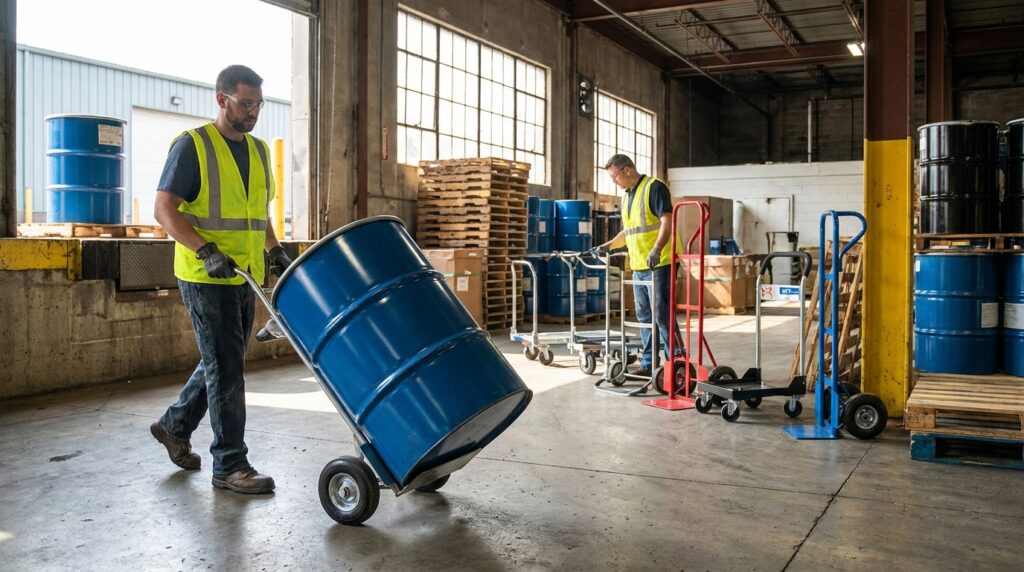
SEO Title: Drum Hand Trucks: Your Essential Guide to Types, Features, and Smart Buying for Warehouses
Meta Description: Master drum handling with our comprehensive guide to drum hand trucks. Explore types, features, selection factors, safety, and maintenance to optimize your warehouse operations. Find the right equipment for your needs.
Understanding the Backbone of Drum Handling: Why Drum Hand Trucks Matter
In the intricate ecosystem of a modern warehouse or industrial facility, efficient and safe material handling is paramount. Among the myriad of tasks, managing drums – whether they contain raw materials, finished goods, hazardous substances, or waste – presents unique challenges. These cylindrical containers, often heavy, bulky, and potentially perilous, demand specialized equipment to be moved, lifted, and stored effectively. This is where drum hand trucks, also known as drum dollies or drum movers, emerge as indispensable tools.
For warehouse managers seeking to streamline operations, plant engineers aiming to optimize workflows, safety managers prioritizing workforce well-being, and industrial equipment buyers looking for robust solutions, understanding the nuances of drum hand trucks is crucial. These seemingly simple devices can dramatically impact productivity, reduce the risk of injuries, and prevent costly damage to both personnel and product. This article will delve deep into the world of drum hand trucks, equipping you with the knowledge to make informed decisions, enhance safety protocols, and ultimately, improve your bottom line. We will explore the various types available, dissect their key features, outline critical selection factors, discuss applications, highlight safety considerations, provide maintenance advice, and offer buying guidance, all to ensure you find the perfect drum handling solution for your unique operational needs.
If you’re looking to delve deeper into the world of material handling equipment, you might find our related article on “Drum Hand Trucks: Types, Features and Buying Considerations” particularly insightful. This comprehensive guide covers various types of drum hand trucks, their essential features, and key factors to consider when making a purchase. To explore this topic further, visit our article at here.
Navigating the Spectrum: Types of Drum Hand Trucks and Their Strengths
The landscape of drum hand trucks is diverse, offering a solution for nearly every scenario. Choosing the right type is the first, and perhaps most critical, step towards optimizing your drum handling processes. Each type is engineered with specific operational demands in mind, from simple manual maneuvering to powered lifting and tilting. Understanding these distinctions will empower you to select equipment that perfectly aligns with your workflow and the nature of the drums you handle.
Manual Drum Hand Trucks: The Workhorses of Simplicity
Manual drum hand trucks are the most prevalent and often the most cost-effective solution for basic drum movement. They rely on human power for operation and are ideal for situations where drums are frequently moved over short distances and where precise positioning is less critical. Their simplicity translates to reliability and ease of use, making them a staple in many industrial environments.
Standard Drum Trucks: The Classic Approach
The classic drum truck typically features a steel frame with a tilting mechanism, a drum cradle or clamp, and wheels. The operator positions the truck behind the drum, secures the drum within the cradle or with the clamp, and then tilts the drum back onto the truck’s frame. From there, the drum can be rolled to its destination.
- Drum Material Compatibility: These trucks are generally designed for steel, plastic, and fiber drums. The cradle or clamp mechanism is usually adjustable or designed to accommodate standard drum diameters.
- Size and Weight Considerations: Standard models are built to handle typical 55-gallon drums but can often be adjusted for smaller sizes. Their weight capacity will vary, with most capable of handling up to 1,000 pounds.
- Equipment Compatibility: These trucks are standalone units and do not typically interface with other equipment. Their primary function is direct manual transport.
Practical Example: A chemical processing plant uses standard drum trucks to move 55-gallon drums of cleaning solvents from a storage area to a filling station on the production floor. The short distances and predictable routes make this manual solution efficient and safe.
Drum Dollies: Low-Profile Agility
Drum dollies offer a low-profile alternative for stationary positioning or very short-distance horizontal movement. They consist of a circular or square base with caster wheels, onto which a drum is placed. While they don’t offer lifting or tilting capabilities, they excel at allowing a drum to be easily spun or moved laterally once placed on the dolly.
- Drum Material Compatibility: Suitable for all common drum materials, as the drum simply rests on the dolly’s surface.
- Size and Weight Considerations: Available in various diameters to match common drum sizes. Weight capacities can range from a few hundred pounds to over a thousand pounds, depending on construction.
- Equipment Compatibility: Primarily used in conjunction with other lifting devices or for positioning drums where they can be accessed by forklifts or other machinery.
Practical Example: A paint manufacturer uses drum dollies to keep 5-gallon drums of paint on a painter’s palette, allowing them to easily rotate the drum as needed during dispensing operations.
Powered Drum Handling Equipment: Enhancing Efficiency and Ergonomics
For facilities handling a high volume of drums, heavier drums, or requiring more precise control, powered drum handling equipment offers significant advantages. These machines reduce physical strain on operators, increase speed, and provide greater safety, especially when dealing with hazardous materials.
Electric Drum Trucks and Lifters: The Future of Effortless Movement
Electric drum trucks and lifters automate the lifting and tilting processes. These units utilize battery-powered motors to raise, lower, and often tilt drums with the push of a button. This drastically reduces the physical effort required and minimizes the risk of back injuries or dropped loads.
- Drum Material Compatibility: Designed to securely grip steel, plastic, and fiber drums using various clamping mechanisms (e.g., rim grabs, expander grips). Some models can handle specialized drum types.
- Size and Weight Considerations: Capacities vary widely, from models designed for 30-gallon drums to those capable of handling 55-gallon or larger drums weighing up to 1,000 pounds or more.
- Equipment Compatibility: Can be used independently or integrated into automated systems for loading onto pallets, conveyor belts, or into storage racks.
Practical Example: A pharmaceutical company employs electric drum lifters to move and precisely position 200-liter drums of active pharmaceutical ingredients (APIs) into mixing vessels, ensuring accurate dispensing and minimizing airborne contamination.
Hydraulic Drum Lifters and Tippers: Controlled Power for Dexterity
Hydraulic drum lifters and tippers use hydraulic systems to provide smooth, controlled lifting and tilting. They offer a robust and powerful solution for tasks requiring precise pouring or dispensing of drum contents.
- Drum Material Compatibility: Similar to electric models, they typically use robust clamping mechanisms for steel, plastic, and fiber drums.
- Size and Weight Considerations: Capable of handling heavier loads and offering precise control over tilt angles. Capacities can range from standard drum weights to significantly heavier industrial drums.
- Equipment Compatibility: Excellent for controlled pouring into tanks, vats, or smaller containers, making them invaluable in batch processing and chemical handling.
Practical Example: A food processing plant utilizes hydraulic drum tippers to accurately pour liquid ingredients from 55-gallon drums into industrial mixers, ensuring consistent product quality and reducing spillage.
Decoding the Features: What to Look for in Your Drum Hand Truck
Beyond the basic type, a drum hand truck’s features dictate its suitability for your specific operational needs. These components and functionalities are what differentiate a good solution from a great one, impacting efficiency, safety, and longevity.
Drum Clamping and Securing Mechanisms: The Grip of Reliability
The most critical function of a drum hand truck is its ability to securely hold a drum. Different mechanisms exist, each with its own advantages:
- Rim Grips: These are common on manual and powered drum trucks. They physically latch onto the lip or rim of the drum.
- Pros: Simple, effective for steel drums, and often adjustable for different rim widths.
- Cons: May not be ideal for all plastic drums with thinner or non-standard rims.
- Expander Grips/Booms: These use expanding jaws or a secure strap to grip the body of the drum.
- Pros: Excellent for a wider range of drum types, including plastic drums, and can provide a very secure hold.
- Cons: Can sometimes be more complex to operate than simple rim grips.
- Pallet Adapters/Cradles: Some units have a cradle that the drum rests in, often combined with a strap or clamp for added security.
- Pros: Provides a stable base and can be effective for various drum materials.
- Cons: Might require slightly more space for loading and unloading.
Practical Example: A facility that handles both steel and HDPE plastic drums would opt for a drum truck with an expander grip to ensure secure handling of all drum types without risking damage to the plastic.
Lifting and Tilting Capabilities: Precision and Power
The ability to lift and tilt drums is a core function for many applications.
- Lifting Height: Consider the maximum height the drum needs to be lifted to for your operations (e.g., onto a pallet, into a machine).
- Tilt Angle: For dispensing, the maximum tilt angle is crucial. Many units offer 90-degree tilt, while others provide more controlled, variable tilting.
- Lifting Mechanism: Whether it’s manual leverage, hydraulic cylinders, or electric actuators, the mechanism affects the ease of operation and the precision of movement.
Practical Example: A laboratory that needs to precisely pour small amounts of liquid from a drum into test tubes would require a drum tipper with a finely controllable tilt mechanism.
Wheel Types and Maneuverability: Navigating Your Environment
The wheels are the unsung heroes of any hand truck, determining its ability to navigate your facility.
- Wheel Material:
- Rubber/Polyurethane: Offer good traction, quiet operation, and are non-marking. Ideal for smooth, clean floors.
- Nylon: Durable and resistant to chemicals, suitable for rougher surfaces.
- Cast Iron: Extremely durable but can be noisy and mark floors.
- Wheel Configuration:
- Two large rear wheels and two smaller front casters: Common on manual trucks for stability and easy pivoting.
- Four swivel casters: Found on dollies, offering excellent maneuverability in tight spaces but potentially less stability with heavy loads.
- Brakes: For static positioning, especially on inclines or when precision is critical, brakes are essential.
Practical Example: A warehouse with polished concrete floors would benefit from rubber or polyurethane wheels to minimize noise and floor damage, while a manufacturing plant with asphalt or concrete with debris might prefer more robust nylon or even cast iron wheels.
Drum Size and Weight Capacity: Matching Equipment to Load
This is a non-negotiable factor. Always match the drum hand truck’s specifications to the drums you handle.
- Drum Diameter: Ensure the clamping mechanism or cradle can accommodate the diameter of your drums (e.g., 30-gallon, 55-gallon).
- Drum Height: While less critical for basic trucks, it can be a factor for some lifting mechanisms.
- Weight Capacity: Crucially, the truck’s rated capacity must exceed the maximum weight of the drums you intend to move. Never overload the equipment.
Practical Example: If your facility regularly handles 55-gallon drums filled with dense chemicals that can weigh up to 900 pounds, you must select a drum truck with a rated capacity of at least 1,000 pounds.
Critical Selection Factors for Your Industrial Drum Handling Needs
Choosing the right drum hand truck is more than just picking a model that fits your budget. It involves a thorough assessment of your operational environment, the specific demands of your tasks, and long-term considerations. A well-selected unit will enhance efficiency and safety for years to come.
Analyzing Your Workflow and Application Requirements
The first step in selecting the appropriate drum hand truck is to meticulously analyze your current workflow and the specific applications it will be used for.
- Frequency of Drum Movement: How often are drums moved? If it’s daily and for long distances, powered options will significantly boost productivity and ergonomics. If it’s infrequent and short distances, a manual option might suffice.
- Distance of Travel: Are drums moved across a small room or throughout a large warehouse? Longer distances favor powered or ergonomically designed manual trucks.
- Terrain: The type of flooring (smooth concrete, rough asphalt, uneven surfaces) dictates the wheel type and overall durability needed. Consider the presence of thresholds, ramps, or debris.
- Dispensing Needs: Do you need to pour drum contents? If so, the precision and tilt angle capabilities of a hydraulic or electric tipper are crucial.
- Storage Configuration: Will drums be stacked? Lifted onto shelves? Placed into specific machinery? This influences the required lifting height and maneuverability.
Practical Example: A brewery needs to move 55-gallon drums of cleaning agents from a receiving dock to various brewing stations. The terrain is mostly smooth concrete, but there are occasional inclines. Drums are moved multiple times a day. This suggests a powered drum truck with good maneuverability and stability on inclines would be a worthwhile investment over basic manual trucks.
Drum Material, Size, and Weight: The Foundation of Compatibility
As discussed earlier, understanding the physical characteristics of the drums you handle is fundamental.
- Drum Material: Steel, plastic (HDPE, PP), or fiber drums require different gripping mechanisms for optimal security. Always verify the truck’s compatibility with your specific drum materials.
- Drum Diameter and Height: Ensure the equipment can physically accommodate your drum dimensions. Standard 55-gallon drums are common, but smaller or larger sizes exist.
- Drum Weight: This is a critical safety factor. Always choose a hand truck with a rated capacity significantly above the heaviest drum you will handle to ensure a safety margin. Consider the weight of the drum plus its contents.
Practical Example: A facility storing and moving 55-gallon plastic drums of oils would need a drum hand truck designed for plastic drums, likely featuring an expander grip or straps, and with a weight capacity sufficient for full drums.
Ergonomics and Operator Safety: Protecting Your Most Valuable Asset
The well-being of your employees is paramount. Ergonomic design and safety features reduce the risk of musculoskeletal injuries and accidents.
- Reduced Physical Strain: Powered options eliminate much of the physical exertion associated with manual drum handling.
- Stable Lifting and Tilting: Smooth, controlled movements prevent sudden jerks or spills that could lead to injuries.
- Ease of Operation: Intuitive controls and easy loading/unloading processes minimize operator error and frustration.
- Visibility: Good visibility around the equipment and the drum being handled is essential for safe navigation.
- Foot Guards/Safety Features: Some units include guards to protect operators’ feet.
Practical Example: A safety manager insists on investing in electric drum lifters for a department that previously used manual trucks for 55-gallon drums. The decision is driven by a reduction in reported back strains and a noticeable increase in employee satisfaction with the handling process.
Budgetary Considerations and Return on Investment (ROI)
While initial cost is a factor, it’s essential to consider the long-term ROI.
- Initial Purchase Price: This varies significantly between manual and powered units, and even within categories.
- Maintenance Costs: More complex powered equipment may have higher maintenance requirements and costs.
- Productivity Gains: How much time and labor will be saved by using more efficient equipment?
- Reduced Injury Claims: The cost of worker’s compensation claims and lost productivity due to injuries can be substantial.
- Reduced Product Damage: Less spillage and fewer damaged drums translate to cost savings.
Practical Example: A warehouse manager calculates that the increased throughput and reduced overtime hours achieved with a new electric drum handler will pay for the equipment within 18 months, factoring in lower injury rates and less product spoilage.
When considering the best options for transporting heavy materials, it’s essential to explore various types of equipment that can enhance efficiency in your operations. For instance, you might find it useful to read about essential material handling equipment in this article, which provides insights into how different tools, including drum hand trucks, can streamline manufacturing processes. Understanding the features and buying considerations of drum hand trucks can significantly impact your choice, ensuring you select the right equipment for your specific needs. For more information, check out the article on essential material handling equipment.
Enhancing Safety and Extending Lifespan: Maintenance and Best Practices
Proper maintenance and adherence to best practices are crucial for the safe and efficient operation of any drum hand truck. Neglecting these aspects can lead to premature equipment failure, costly repairs, and, most importantly, dangerous accidents.
Routine Inspection and Preventive Maintenance Schedule
A proactive approach to maintenance is the most effective way to prevent issues.
- Daily Visual Checks: Before each use, operators should visually inspect the drum hand truck for any obvious signs of damage, wear, or loose parts. This includes checking wheels, tires, hydraulic hoses, electrical connections, and clamping mechanisms.
- Weekly Checks: A more thorough inspection should occur weekly, focusing on:
- Lubrication: Greasing pivot points, wheel bearings, and other moving parts as recommended by the manufacturer.
- Hydraulic System (if applicable): Checking hydraulic fluid levels and looking for leaks.
- Battery and Charging System (if applicable): Ensuring batteries are charged and connections are clean.
- Clamping Mechanism: Testing its grip and ensuring it engages securely.
- Monthly/Quarterly Checks: Depending on usage intensity, more in-depth inspections might be needed, including checking for hydraulic pressure (if applicable), electrical component integrity, and structural integrity of the frame.
- Manufacturer Recommendations: Always refer to the specific owner’s manual for detailed maintenance schedules and procedures recommended by the manufacturer.
Practical Example: A plant engineer implements a checklist for daily drum truck inspections, requiring operators to sign off on pre-use checks. This simple step has identified several minor issues (e.g., a slightly loose bolt, a small hydraulic leak) before they became major problems.
Safe Operating Procedures: The Human Element of Safety
Even the most robust equipment is only as safe as the operator using it. Establishing and enforcing clear operating procedures is critical.
- Operator Training: All personnel who operate drum hand trucks must receive comprehensive training on their specific model, including loading/unloading procedures, safe tilting, braking, and emergency shutdown procedures.
- Load Capacity Awareness: Operators must always be aware of and respect the maximum load capacity of the equipment. Never attempt to move an overloaded drum.
- Clear Pathways: Ensure pathways are clear of obstructions, spills, and other hazards before moving a drum.
- Proper Braking: Always engage brakes when stationary, especially on inclines, and during loading/unloading.
- Securing the Drum: Ensure the drum is fully and securely clamped or cradled before lifting or moving.
- Controlled Movements: Avoid sudden starts, stops, or turns, especially with heavy loads.
- Awareness of Surroundings: Operators should be aware of pedestrians, other equipment, and overhead obstacles.
- Personal Protective Equipment (PPE): Operators should always wear appropriate PPE, including safety shoes, gloves, and potentially eye protection.
Practical Example: A safety manager conducts mandatory quarterly refresher training sessions for all staff involved in drum handling, focusing on real-world scenarios and reinforcing best practices for safe operation.
Troubleshooting Common Issues
Being able to identify and address common problems can prevent downtime and ensure safety.
- Difficulty Lifting/Tilting: Could be due to low hydraulic fluid, air in the hydraulic lines, a faulty pump, or electrical issues with powered units.
- Drum Slipping: May indicate a worn clamping mechanism, incorrect adjustment, or an incompatible drum type.
- Unusual Noises: Often a sign of worn bearings, lack of lubrication, or loose components.
- Wheels Sticking/Not Rolling Smoothly: Could be due to debris in the wheel, damaged bearings, or flat spots on the tire.
Practical Example: When a hydraulic drum lifter starts to show a slow descent, an experienced maintenance technician immediately checks the hydraulic fluid level and inspects for leaks, identifying a minor seal issue that is quickly repaired.
When considering the purchase of drum hand trucks, it is essential to understand the various types, features, and buying considerations that can affect your decision. For those looking for expert advice on handling equipment, you can find valuable insights in a related article that discusses the importance of selecting the right tools for your specific needs. To learn more about this topic, feel free to check out the information provided by experts at Fredon Handling. Their guidance can help ensure you make an informed choice when investing in drum hand trucks.
Choosing Wisely: A Buyer’s Guide to Drum Hand Trucks
Investing in the right drum hand truck is a strategic decision that impacts efficiency, safety, and operational costs. This guide provides practical advice to help industrial equipment buyers make informed choices.
Assessing Your Specific Needs: A Checklist Approach
Before you even begin looking at models, create a comprehensive needs assessment. Use this checklist to guide your evaluation:
- Drum Type(s) and Material(s): (Steel, plastic, fiber, specific dimensions)
- Drum Volume and Weight: (Max weight of drums you handle)
- Frequency of Use: (Daily, weekly, occasional)
- Typical Travel Distance: (Short, medium, long)
- Terrain and Floor Conditions: (Smooth concrete, rough, indoors, outdoors)
- Lifting Requirements: (Height needed, tilt capabilities for dispensing)
- Maneuverability Needs: (Tight spaces, open areas)
- Ergonomic Requirements: (Minimizing manual effort)
- Budget: (Initial purchase vs. total cost of ownership)
- Safety Regulations: (Any specific industry or company mandates)
Practical Example: A buyer for a large chemical distributor uses this checklist to define requirements for a new fleet of drum handlers. The assessment reveals a need for units that can handle both 55-gallon steel and plastic drums, lift them to pallet height, tilt for decanting, and navigate a combination of smooth warehouse floors and slightly rougher outdoor staging areas.
Comparing Manufacturers and Models: Due Diligence is Key
Once your needs are clear, research potential manufacturers and their offerings.
- Reputation and Reliability: Look for established manufacturers with a proven track record in industrial material handling. Read reviews and seek recommendations from industry peers.
- Product Specifications: Carefully compare the specifications of different models against your checklist. Pay close attention to weight capacities, lifting heights, tilt angles, and dimensions.
- Build Quality and Materials: Examine the construction materials and overall build quality. Robust frames, high-quality welds, and durable components are indicators of longevity.
- Warranty and Support: Understand the warranty offered on the equipment and the availability of spare parts and technical support.
- Demo/Trial Options: If possible, arrange for a demonstration or a trial period to test the equipment in your actual work environment.
Practical Example: A plant engineer narrows down their choices to two leading brands of electric drum handlers. They request a demo of each, allowing operators to test them in real-world scenarios to assess ease of use, maneuverability, and clamping security before making a final decision.
Understanding Drum Handling Equipment Compatibility
Ensure the drum hand truck integrates seamlessly with your existing material handling infrastructure.
- Pallet Compatibility: Can the drum truck easily place drums onto standard pallets for shipping or storage?
- Aisle Widths: Consider the overall width of the drum handler and if it can navigate your existing aisles.
- Dock Levelers and Ramps: If used in conjunction with loading docks, ensure the drum truck can safely navigate these transitions.
- Integration with Other Equipment: For more advanced operations, can the drum handler interface with conveyor systems or automated storage and retrieval systems?
Practical Example: A buyer ensures that the selected electric drum handler has a narrow enough chassis to comfortably maneuver through their 8-foot wide aisles without excessive maneuvering.
Long-Term Cost of Ownership vs. Initial Price
Don’t let the initial price tag be the sole deciding factor. Consider the total cost of ownership over the equipment’s lifespan.
- Durability and Lifespan: Higher-quality, more robust equipment may have a higher upfront cost but will last longer and require fewer repairs.
- Maintenance and Repair Costs: Factor in the cost of routine maintenance, potential repairs, and the availability and price of spare parts.
- Energy Efficiency (for powered units): Consider the battery life and charging efficiency of electric models.
- Productivity and Labor Savings: Quantify the expected gains in efficiency and labor reduction.
- Safety and Injury Prevention: The cost savings from preventing injuries (worker’s comp, lost productivity) can significantly outweigh equipment costs.
Practical Example: A procurement manager chooses a slightly more expensive, heavy-duty manual drum truck from a reputable brand over a cheaper alternative. Their analysis shows that the higher quality will result in a longer lifespan, fewer repairs, and reduced risk of costly downtime due to equipment failure, making it the more economical choice in the long run.
Conclusion: Optimizing Your Operations with the Right Drum Hand Truck
The selection and use of drum hand trucks are critical components of efficient, safe, and cost-effective warehouse and industrial operations. By understanding the diverse types of drum hand trucks, meticulously analyzing their features, critically evaluating selection factors, and prioritizing maintenance and safety, you can make informed purchasing decisions. Whether you’re managing a large-scale distribution center or a specialized manufacturing facility, the right drum handling equipment is an investment that pays dividends in productivity, employee well-being, and operational integrity. Explore the world of drum handling equipment at Fredon Handling, where we offer solutions designed to meet the rigorous demands of your industry.
Frequently Asked Questions About Drum Hand Trucks
What is the difference between a drum hand truck and a drum dolly?
A drum hand truck typically features a frame that allows for tilting and lifting of a drum, enabling movement over longer distances and potentially onto higher surfaces. A drum dolly, on the other hand, is a low-profile platform with wheels that a drum rests on, primarily used for stationary positioning or very short horizontal movements.
How do I know what weight capacity I need for a drum hand truck?
You need to determine the maximum weight of the drums you intend to handle, including the drum itself and its contents. Always select a drum hand truck with a rated capacity that significantly exceeds this maximum weight to ensure a safe operating margin.
Are drum hand trucks suitable for both steel and plastic drums?
The suitability depends on the specific design of the drum hand truck. Many models are designed with adjustable clamping mechanisms or expander grips that can securely hold both steel and plastic drums. However, it’s crucial to verify the manufacturer’s specifications for material compatibility with the specific model you are considering. You can find a wide range of compatible drum handling equipment at
What are the key safety features to look for in a drum hand truck?
Key safety features include a secure and reliable clamping mechanism, stable lifting and tilting operations, appropriate braking systems, ergonomic design to minimize operator strain, and clear visibility around the equipment. Always ensure operators are properly trained on safe operating procedures.
How often should a drum hand truck be inspected and maintained?
Routine daily visual inspections by the operator are essential. A more thorough inspection, including lubrication and checking key components, should be performed weekly. Refer to the manufacturer’s manual for a detailed preventive maintenance schedule tailored to the specific equipment model.
Can I use a drum hand truck to move drums on uneven surfaces or inclines?
While some drum hand trucks are designed for greater stability, moving drums on uneven surfaces or inclines significantly increases risk. Always ensure the equipment is rated for such conditions, use extreme caution, and engage brakes securely. For inclines, powered equipment with robust braking systems is generally recommended.
Ready to optimize your drum handling operations? Contact Fredon Handling today for a personalized consultation and expert advice on selecting the perfect drum hand truck for your facility.