
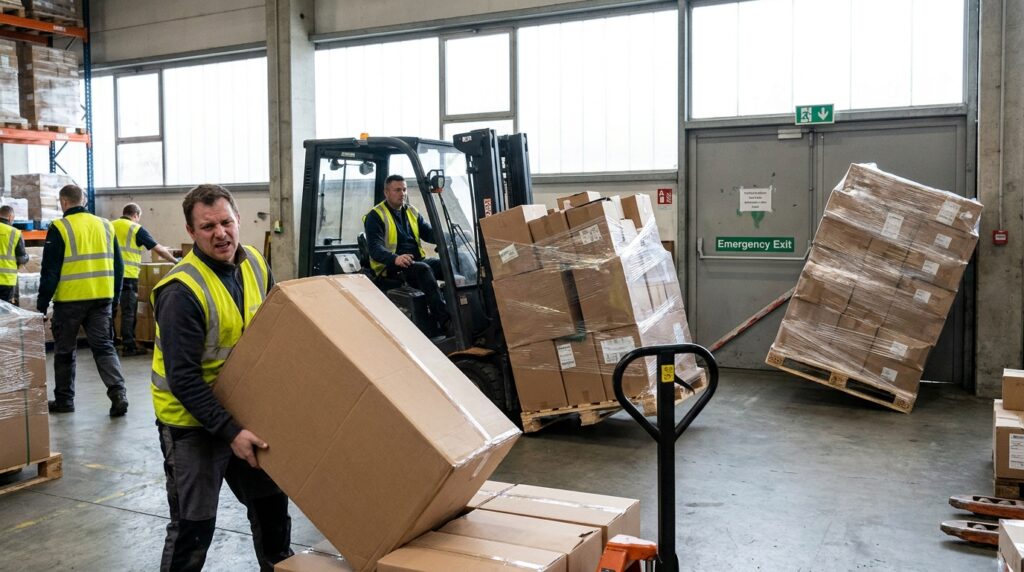
Material handling mistakes cost businesses thousands of dollars annually in damaged products, workplace injuries, equipment repairs, and operational inefficiencies. Whether you operate a warehouse, manufacturing facility, or distribution center, avoiding these common material handling mistakes can dramatically improve your bottom line while creating a safer work environment for your team.
Understanding where operations typically go wrong is the first step toward building more efficient, safer, and cost-effective material handling processes. This comprehensive guide examines the most frequent errors facility managers and operations leaders encounter, along with practical solutions to address each one.
Inadequate Employee Training and Certification Gaps
One of the most widespread common material handling mistakes involves insufficient training programs for equipment operators and warehouse personnel. Many organizations underestimate the complexity of modern material handling operations and fail to provide comprehensive education to their teams.
Forklift and Powered Equipment Training Deficiencies
OSHA requires that all powered industrial truck operators receive proper training before operating equipment. However, many facilities either skip this requirement entirely or provide only minimal instruction that fails to address real-world scenarios workers will encounter.
Effective forklift training should include:
- Pre-operation inspection procedures
- Load capacity understanding and calculation
- Proper stacking and destacking techniques
- Pedestrian awareness and traffic management
- Emergency procedures and shutdown protocols
- Site-specific hazard recognition
Operators who receive inadequate training are more likely to cause accidents, damage inventory, and reduce equipment lifespan through improper operation. Refresher training should occur at least every three years, though best practices suggest annual reviews.
Manual Handling and Ergonomic Education
Beyond powered equipment, workers who manually move materials need education on proper lifting techniques, team lifting procedures, and recognition of when mechanical assistance is required. Back injuries remain among the most common workplace incidents, and many result from improper manual handling practices.
Training should cover the NIOSH lifting equation basics, helping workers understand how factors like horizontal distance, vertical location, and lifting frequency affect injury risk. Workers should also learn to recognize when a load exceeds safe manual handling limits and requires equipment assistance.
Documentation and Certification Management
Facilities frequently struggle with maintaining proper training records and certification documentation. When certifications expire or documentation gaps exist, organizations face compliance risks and potential liability exposure. Implementing a digital tracking system for all operator certifications helps ensure continuous compliance.
In addition to understanding common material handling mistakes, it’s beneficial to explore best practices that can enhance efficiency and safety in the workplace. A related article that provides valuable insights on this topic is available at Fredon Handling’s Education Center, where you can find expert advice and strategies for optimizing your material handling processes.
Poor Equipment Selection and Maintenance Practices
Selecting inappropriate equipment for specific tasks ranks among the costliest common material handling mistakes organizations make. Similarly, neglecting maintenance schedules leads to premature equipment failure, unexpected downtime, and safety hazards.
Mismatched Equipment for Application Requirements
Every material handling challenge has optimal equipment solutions. Using a standard counterbalance forklift in narrow aisles when a reach truck would be appropriate wastes space and increases accident risk. Similarly, deploying manual pallet jacks for high-volume operations when powered alternatives exist creates unnecessary labor costs and physical strain on workers.
Consider these factors when selecting material handling equipment:
- Load weights and dimensions typically handled
- Aisle widths and turning radius requirements
- Floor conditions and grade variations
- Indoor versus outdoor operation needs
- Throughput volume expectations
- Integration with existing systems and workflows
Working with experienced material handling partners like Fredon Handling ensures you receive equipment recommendations based on your specific operational requirements rather than generic solutions.
Neglected Preventive Maintenance Schedules
Equipment breakdowns rarely occur at convenient times. More often, failures happen during peak operations when equipment is under maximum stress. Preventive maintenance programs significantly reduce unexpected downtime by identifying and addressing potential issues before they cause failures.
Essential maintenance activities include:
- Daily pre-shift inspections by operators
- Regular fluid checks and changes
- Tire and wheel inspections
- Battery maintenance for electric equipment
- Hydraulic system inspections
- Safety feature verification
Many facilities attempt to extend maintenance intervals to reduce costs, but this approach typically results in higher total ownership costs through more frequent major repairs and shortened equipment lifespan.
Using Damaged or Worn Equipment Beyond Safe Limits
Continuing to operate equipment with known defects represents a serious safety violation and common material handling mistake. Bent forks, malfunctioning brakes, inoperative warning devices, and hydraulic leaks all require immediate attention. Facilities should establish clear protocols for removing defective equipment from service until repairs are completed.
Warehouse Layout and Traffic Flow Problems
Inefficient facility layouts create bottlenecks, increase travel distances, and multiply opportunities for accidents. Many common material handling mistakes stem from poor spatial planning rather than equipment or personnel issues.
Inadequate Aisle Width and Clearance
Aisles that are too narrow for the equipment operating within them lead to damaged racking, product impacts, and increased accident risk. Conversely, excessively wide aisles waste valuable storage space. Proper aisle width depends on the equipment used, load dimensions, and traffic patterns.
Standard guidelines suggest:
- Counterbalance forklifts typically require 12-13 foot aisles
- Reach trucks can operate in 8-10 foot aisles
- Very narrow aisle (VNA) equipment works in 5-6 foot aisles
- Pedestrian-only aisles need minimum 28 inches clearance
Poor Traffic Pattern Design
Facilities without clearly defined traffic patterns experience more near-misses and collisions. Separating pedestrian and vehicle traffic, establishing one-way lanes where appropriate, and creating designated crossing points all reduce accident risk.
Effective traffic management includes:
- Floor markings indicating travel lanes
- Mirrors at blind corners and intersections
- Speed limits for different zones
- Designated pedestrian walkways
- Loading and unloading zones separated from through-traffic
Inefficient Product Placement and Slotting
Storing high-velocity items far from shipping areas or placing heavy items on upper racks creates unnecessary travel time and handling difficulty. Proper slotting analysis places fast-moving products in easily accessible locations while considering weight, size, and picking frequency.
Regular slotting reviews should occur as product mix changes. What worked when you stocked different inventory may create inefficiencies with your current product lineup.
Load Handling and Securement Errors
Improper load handling causes product damage, creates falling object hazards, and can destabilize equipment. These common material handling mistakes often result from rushing, inadequate training, or using inappropriate equipment.
Exceeding Equipment Load Capacity
Every forklift, pallet jack, and conveyor system has rated capacity limits. These limits exist because exceeding them creates tip-over risks, structural failures, and equipment damage. Operators must understand how load center affects effective capacity and recognize when loads approach or exceed safe limits.
Factors that reduce effective capacity include:
- Extended load centers beyond nameplate rating
- Elevated loads that raise center of gravity
- Attachments that reduce baseline capacity
- Uneven or shifting loads
- Operating on grades or uneven surfaces
Unstable Load Configuration
Stacking products improperly, failing to interlock layers, or building loads taller than stable limits all create collapse risks. Proper palletizing techniques include:
- Building pyramid or column patterns appropriate to product type
- Interlocking layers when possible
- Using corner boards for edge protection
- Keeping loads within pallet footprint boundaries
- Applying appropriate stretch wrap tension
Inadequate Load Securement for Transport
Loads that shift during transport arrive damaged or create hazards when doors open. Proper securement includes stretch wrapping, banding, blocking, and bracing appropriate to the cargo type and transport method.
When it comes to improving efficiency in warehouses, understanding common material handling mistakes is crucial. For a deeper insight into optimizing your operations, you might find it beneficial to explore the article on best practices for warehouse management. This resource highlights key strategies that can help prevent errors and enhance productivity, ensuring that your material handling processes run smoothly.
Ignoring Safety Protocols and Compliance Requirements
Perhaps the most serious category of common material handling mistakes involves disregarding established safety protocols and regulatory requirements. The consequences range from OSHA citations and fines to serious injuries and fatalities.
Bypassing Safety Devices and Interlocks
Equipment manufacturers install safety devices for specific reasons. Bypassing seat belts, disabling backup alarms, or defeating interlock systems dramatically increases accident risk. Facilities should establish zero-tolerance policies for safety device tampering.
Failure to Conduct Regular Safety Audits
Without periodic evaluation, unsafe practices become normalized. Regular safety audits identify hazards before they cause incidents. Audits should examine:
- Equipment condition and maintenance records
- Operator behaviors and protocol compliance
- Physical facility conditions
- Training documentation currency
- Near-miss and incident trend analysis
For all safety and compliance topics, verify current requirements with OSHA, ANSI, ASME, MHI, equipment manufacturers, or local authorities, as regulations and standards evolve.
Inadequate Personal Protective Equipment
Workers in material handling environments need appropriate PPE based on specific hazards present. This may include safety footwear, high-visibility clothing, hard hats in certain areas, hearing protection, and gloves appropriate to materials handled.
Frequently Asked Questions About Material Handling Mistakes
What is the most common cause of forklift accidents?
Operator error accounts for the majority of forklift incidents, including speeding, improper turning, inadequate load handling, and failure to observe pedestrians. Proper training and supervision address most operator-error causes.
How often should material handling equipment be inspected?
Operators should conduct pre-shift inspections before each use. More thorough inspections by qualified technicians should occur according to manufacturer recommendations, typically monthly or quarterly depending on equipment type and usage intensity.
What are signs that warehouse layout needs improvement?
Indicators include frequent product damage, traffic congestion, long travel times between pick locations, near-miss incidents, and workers consistently taking shortcuts or workarounds.
How can facilities reduce manual handling injuries?
Implement mechanical lifting aids where practical, train workers on proper techniques, rotate tasks to prevent repetitive strain, and design workstations to minimize awkward postures and excessive reaching.
Building Safer and More Efficient Operations
Avoiding common material handling mistakes requires ongoing attention to training, equipment, facility design, and safety culture. No single improvement eliminates all risk, but systematic attention to each area creates compounding benefits.
Start by assessing your current operations against the issues outlined in this guide. Identify your most significant gaps and prioritize improvements based on safety impact and operational benefit. Consider partnering with experienced material handling specialists like Fredon Handling who can evaluate your facility and recommend targeted improvements.
Remember that the goal extends beyond simply avoiding mistakes. Building truly efficient material handling operations requires proactive optimization, not just error elimination. Regular review of processes, investment in appropriate equipment, and commitment to ongoing training create operations that perform safely and efficiently over the long term.