
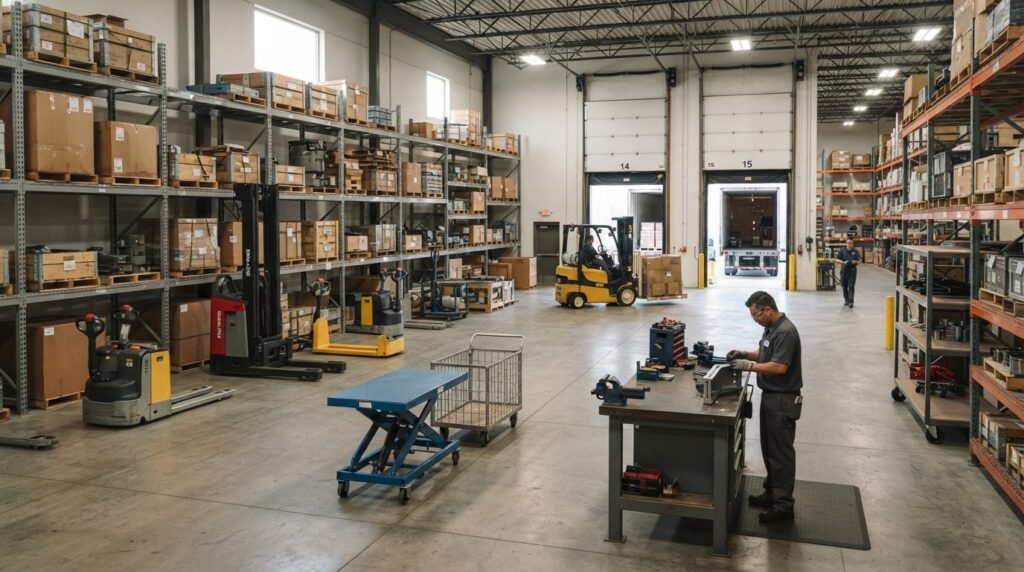
Michigan manufacturers and warehouses handle everything from fabricated components and automotive-related parts to packaged products and maintenance inventory. Many facilities need equipment that can cope with varied loads, existing layouts, production schedules and limited floor space.
Fredon Handling is based in Jackson, Michigan, at 3590 Scheele Dr, Jackson, MI 49202. Its contact page provides a way to share project documents, photos, specifications and RFQs for equipment discussions.
When evaluating a material handling equipment supplier in Michigan, begin by defining the job the equipment must perform. The supplier’s ability to interpret your application, explain tradeoffs and document what is included matters as much as the catalog. Fredon Handling provides material handling equipment across several industrial categories.
Identify the Operational Problem First
Requests such as ‘we need more warehouse equipment’ are too broad for a meaningful comparison. Define the current movement, storage or lifting problem. Is a production line waiting for parts? Is a maintenance crib disorganized? Are employees repeatedly lifting stock from an inconvenient height? Is the receiving dock creating traffic conflicts?
Measure handling frequency, time spent, maximum load, damaged goods and space constraints. A clear problem statement helps the supplier determine whether a change in equipment, layout, process or all three is most appropriate.
Equipment Options for Michigan Industrial Facilities
Frequent equipment categories include pallet racking for palletized inventory, industrial shelving for smaller items, lift tables for vertical positioning, workstations for assembly and maintenance, and cranes or hoists for suitable overhead lifting. Loading dock equipment and mezzanines address other facility needs.
Explore pallet racking, hydraulic lifts, workstations, dock equipment and mezzanines. The equipment mix should follow the actual process, not a general list.
Information to Prepare for a Supplier
For most projects, gather drawings or dimensions, maximum and typical load weights, load shape, current transfer method, frequency of use and the required change. Include floor conditions, doorway or aisle clearances, ceiling obstructions, power availability and whether the area must remain operational during installation.
For a lift, platform dimensions and height range matter alongside load rating. For storage, specify pallet size, load distribution and retrieval method. For a crane, describe the load path, duty and existing structural conditions. Ask which unknowns must be verified before a firm equipment recommendation.
Local Site Conditions and Approvals
Michigan industrial facilities vary in age and construction. Floor slabs, roof structures, existing building systems, fire protection and exit routes can affect equipment feasibility. Projects involving structural storage, mezzanines or overhead systems may require site-specific professional review and approvals.
Do not assume one universal building or safety rule applies across all facilities. Confirm requirements with the local authority having jurisdiction, manufacturer instructions and qualified design or safety professionals. The supplier should clearly distinguish assumed conditions from verified ones.
Questions Worth Asking Before Requesting a Quote
Ask which manufacturer and exact configuration are proposed; whether load, duty cycle and dimensions are suitable; what is required from the building; whether delivery, assembly, installation and startup are included; and how ongoing inspection and service will be handled.
Clarify lead times and exclusions in writing. A good proposal explains what the offered equipment will do and what it will not do. If the application is unusual, ask what testing, engineering or additional documentation may be required.
Compare Total Installed Cost, Not Only Equipment Price
The equipment purchase price may exclude freight, installation, electrical work, guarding, floor modifications or operator training. Plan for preventive maintenance and likely replacement parts. A low initial price can be offset by higher labor requirements or downtime.
For a consistent comparison, evaluate the same application, expected useful life and service scope. Fredon’s total cost of ownership guide outlines the main categories to include.
Selecting for Factory and Warehouse Workflows
A manufacturing line may prioritize predictable replenishment and ergonomic positioning; a warehouse may prioritize pallet access, aisle safety and picking speed; a maintenance area may value organized point-of-use storage. Each needs different load profiles and operating assumptions.
Instead of selecting a product based solely on a photograph or a general equipment type, describe the specific task and ask the supplier to explain alternatives. The equipment selection guide offers an additional decision checklist.
Build a Useful Request for Quote
Summarize the desired change, current process, loads, site layout, environmental requirements, peak rate, available power and preferred schedule. Include photographs of transfer points and note whether the project needs a budget estimate or a fully scoped proposal.
This allows a better initial conversation and reduces the risk of purchasing a product that does not fit the physical or operational constraints. Where professional verification is required, make that a defined step before order approval.
For an overview of storage, transport, lifting and positioning options, read the complete guide to material handling equipment.
Next Steps
Michigan industrial buyers can review Fredon’s equipment categories and schedule a 30-minute consultation about their actual application, facility layout and equipment requirements.