
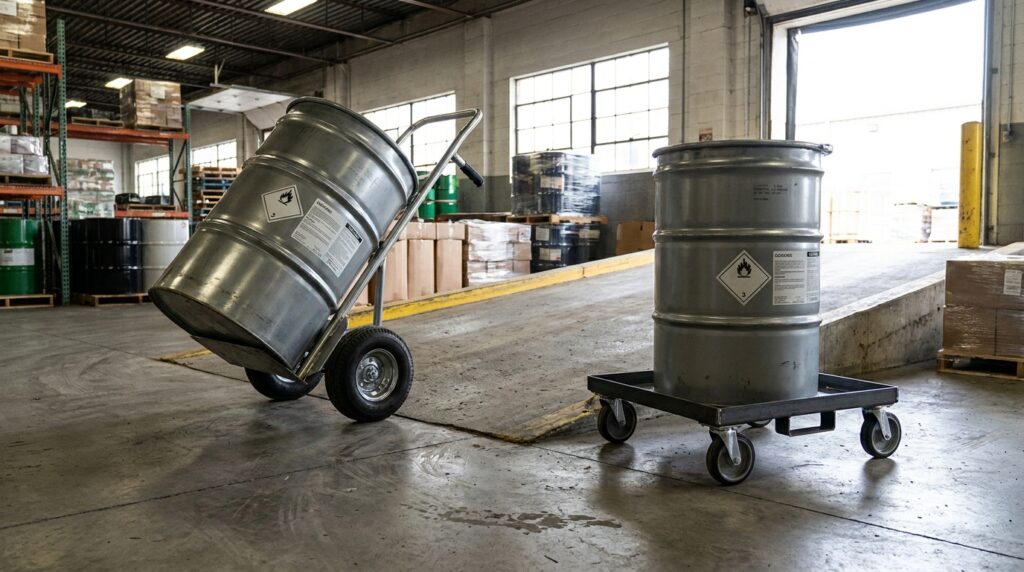
SEO Title: Drum Trucks vs. Drum Dollies: Choosing the Right Equipment for Your Warehouse
Meta Description: Navigate the essential differences between drum trucks and drum dollies. Discover which equipment best suits your warehouse operations, considering material, size, weight, capacity, and compatibility. Optimize your drum handling strategy with expert insights from Fredon Handling.
Understanding the Core of Drum Handling Equipment
Efficient and safe handling of drums is a cornerstone of smooth warehouse operations, plant maintenance, and industrial production. Drums, whether filled with raw materials, finished goods, or waste, present unique challenges due to their shape, weight, and potential contents. Incorrect handling can lead to injuries, product damage, and costly downtime. This is where specialized drum handling equipment becomes indispensable. Among the most common and fundamental tools are drum trucks and drum dollies. While both serve the purpose of moving drums, their design, functionality, and optimal applications differ significantly. Understanding these differences is crucial for warehouse managers, plant engineers, safety officers, and equipment buyers to make informed decisions that enhance productivity, safety, and cost-effectiveness. This article will delve into the specifics of drum trucks and drum dollies, examining their key distinctions, material considerations, size and weight factors, capacity limits, equipment compatibility, and various applications. By the end, you’ll have a clear understanding of which piece of equipment is the right fit for your specific needs, empowering you to optimize your drum handling processes.
For those interested in learning more about the nuances of material handling equipment, a related article can be found at the Fredon Handling Education Center. This resource provides valuable insights into various tools and techniques that enhance efficiency in warehouse operations. You can explore this informative content by visiting Fredon Handling Education Center, where you will find a wealth of information on topics such as Drum Trucks and Drum Dollies, along with their key differences and applications.
Drum Trucks: Leverage and Mobility for Vertical Movement
Drum trucks, often referred to as drum lifters or drum movers, are designed to provide leverage for lifting and transporting drums. Their fundamental design incorporates a frame, wheels, and a mechanism to grip or cradle the drum. This allows an operator to tilt the drum, lift it off the ground, and then maneuver it to a new location. The primary advantage of a drum truck lies in its ability to handle drums in situations where they need to be raised or tilted for dispensing, emptying, or positioning.
The Anatomy of a Drum Truck
At its core, a drum truck typically consists of a robust frame, often made of steel for durability. It features a base with at least two wheels, and often a third smaller caster wheel at the front for stability and maneuverability. The key component is the drum engaging mechanism. This can take several forms:
- Claw or Gripper Mechanism: This is a common design where a set of jaws or a clamping mechanism secures around the rim or chime of the drum. Once engaged, the operator can tilt the truck, lifting the drum slightly off the ground.
- Cradle or Saddle Design: Some drum trucks have a saddle or cradle that the bottom of the drum rests in, with a mechanism at the top to secure it. This design can be more stable for certain types of drums or when dealing with liquids.
- Foot Lever or Pedal: Many drum trucks incorporate a foot lever or pedal. This allows the operator to easily engage or disengage the gripping mechanism and also provides leverage for lifting the drum.
The handle of a drum truck is ergonomically designed for a comfortable grip and sufficient leverage to control the movement of the drum. The wheels are chosen based on the intended operating environment, with solid rubber or polyurethane wheels being common for indoor use, and pneumatic tires for outdoor or uneven surfaces.
Drum Truck Materials and Construction
The materials used in drum truck construction directly impact their durability, load capacity, and resistance to corrosive environments.
- Steel: The most common material for drum truck frames is steel. It offers excellent strength and rigidity, making it suitable for handling heavy drums. Steel trucks are often powder-coated to provide a protective layer against rust and corrosion. For highly corrosive environments, stainless steel drum trucks are available, offering superior resistance but at a higher cost.
- Aluminum: While less common for heavy-duty applications, aluminum drum trucks can be found, offering lighter weight and good corrosion resistance. They are typically suited for lighter loads or specific environments where weight is a critical factor.
The quality of welding and the overall construction of the frame are also important. A well-built drum truck will withstand the stresses of repeated use and the weight of full drums without bending or breaking.
Drum Size, Weight, and Capacity Considerations for Trucks
When selecting a drum truck, understanding the physical characteristics of the drums you will be handling is paramount.
- Drum Material: Most standard industrial drums are made of steel or high-density polyethylene (HDPE). Drum trucks are generally designed to accommodate both, but the gripping mechanism might vary slightly in its effectiveness between the two. Steel drums are rigid, while HDPE drums can have some flex, which might require a different grip adjustment.
- Drum Size: Standard industrial drums typically come in 55-gallon (200-liter) capacities. However, smaller drums (e.g., 30-gallon or 15-gallon) and larger intermediate bulk containers (IBCs) also exist. Ensure the drum truck you choose is designed to accommodate the diameter and height of your specific drums. Many drum trucks are adjustable to fit a range of drum sizes.
- Drum Weight: The weight of the drum, especially when full, is a critical factor. Drum trucks are rated for a maximum load capacity. This rating represents the maximum weight the truck can safely lift and maneuver. Never exceed the manufacturer’s specified load capacity. A 55-gallon steel drum filled with water weighs approximately 450-500 pounds. Heavier substances like chemicals or viscous liquids will increase this weight. Always consider the weight of the contents when calculating the total load.
- Capacity: The term “capacity” for a drum truck refers to its maximum load-bearing capability. This is usually clearly marked by the manufacturer. It’s important to distinguish this from the drum’s volumetric capacity (e.g., 55 gallons).
Applications Where Drum Trucks Excel
Drum trucks are the go-to equipment for operations that involve frequent tilting, dispensing, or moving drums vertically.
- Dispensing and Pouring: The ability to tilt a drum is essential for accurately pouring liquids or other materials from the drum. Drum trucks allow operators to position the drum over a collection vessel or filling point and control the flow.
- Loading and Unloading: They can be used to move drums from pallet racks, loading docks, or production lines, making them versatile for inbound and outbound logistics.
- Emptying Drums: For processes that require residual material to be removed from a drum, the tilting capability of a drum truck is invaluable.
- Storage and Staging: While not designed for long-term stacking, drum trucks can be used to move drums to temporary staging areas or into position for storage on racks.
- Ergonomic Lifting: They significantly reduce the manual effort and risk of back strain associated with manually lifting and tilting heavy drums.
Advantages and Disadvantages of Drum Trucks
Advantages:
- Vertical Movement & Tilting: Enables controlled pouring and dispensing.
- Leverage: Reduces operator strain.
- Maneuverability: Generally good for navigating tight spaces.
- Versatility: Can handle various drum sizes with adjustable models.
Disadvantages:
- Can Require More Effort: While easier than manual lifting, tilting and moving heavy drums still requires operator strength.
- Not Ideal for High Stacking: Not designed for stacking drums directly on top of each other.
- Potential for Drum Damage: If not used correctly, the gripping mechanism could potentially damage drum rims.
Drum Dollies: Stable Support for Horizontal Movement
Drum dollies, in contrast to drum trucks, are designed primarily for providing a stable, mobile base for drums, facilitating their movement along a horizontal plane. They are essentially low-profile platforms with wheels that a drum rests upon. The focus is on stability and ease of sliding or rolling, rather than lifting or tilting.
The Design of a Drum Dolly
A typical drum dolly is a circular or square platform, usually made from metal or heavy-duty plastic. It features several caster wheels mounted underneath, allowing for 360-degree movement. The top surface of the dolly might be flat or feature a slight depression or lip to help keep the drum centered and prevent it from rolling off.
- Platform Type:
- Circular Dollies: These are most common and designed to cradle the circumference of a drum.
- Rectangular or Square Dollies: These are less common for standard drums but might be used for other shaped containers or when a wider base is needed.
- Wheels: The number and type of wheels vary. Most have four to five caster wheels, allowing for smooth movement in any direction. The wheels are typically small, solid rubber, or polyurethane, suitable for smooth, flat surfaces. For rougher terrain, larger, more robust wheels might be integrated.
- Drum Securing: Some drum dollies incorporate straps or locking mechanisms to secure the drum to the platform, especially if the dolly will be tilted or moved over uneven surfaces. However, many rely solely on the drum’s weight and the dolly’s stable platform to keep it in place.
Drum Dolly Materials and Construction
The materials used for drum dollies are chosen for strength, durability, and resistance to the environment.
- Steel: Similar to drum trucks, steel is a prevalent material for its strength and load-bearing capacity. Steel dollies are often powder-coated or painted for corrosion resistance.
- Aluminum: Lighter weight and good corrosion resistance make aluminum an option for some drum dollies, especially for less demanding applications or where weight is a concern.
- Heavy-Duty Plastic (Polypropylene/Polyethylene): High-quality plastic dollies offer excellent corrosion resistance, are often lighter than steel, and can be very durable. They are a good choice for environments where chemicals might be present.
- Wood: While less common in modern industrial settings, wooden dollies exist. They are typically less durable and susceptible to moisture and damage compared to metal or plastic options.
The caster wheels are a crucial component. High-quality casters with sealed bearings will provide smoother operation and longer life.
Drum Size, Weight, and Capacity for Dollies
When choosing a drum dolly, consider the physical dimensions and weight of the drums you intend to move.
- Drum Material: Drum dollies are generally compatible with both steel and HDPE drums. The circular design allows them to fit snugly around the drum’s base.
- Drum Size: Most drum dollies are designed to accommodate standard 55-gallon (200-liter) drums. However, some models may be adjustable or specifically designed for smaller or larger diameter drums. Always check the diameter range the dolly is designed to fit.
- Drum Weight: Like drum trucks, drum dollies have a maximum load capacity. This is crucial as a heavy drum on an overloaded dolly can lead to structural failure, spills, and accidents. Always verify the dolly’s weight capacity and ensure it comfortably exceeds the weight of your heaviest drums, including their contents. A 55-gallon drum filled with a dense liquid can easily exceed 500 pounds.
- Capacity: The capacity of a drum dolly refers to the maximum weight it is engineered to support and move safely.
Applications Where Drum Dollies Are Ideal
Drum dollies are best suited for situations where drums need to be moved horizontally across flat surfaces with minimal effort.
- Moving Drums in Storage Areas: Excellent for positioning drums in warehouses, moving them to and from pallet racks, or reorganizing storage layouts.
- Transporting Drums on Production Floors: Facilitate the movement of drums between workstations, filling stations, or packaging areas.
- Under Drum Pumps and Funnels: Provide a mobile platform for drums when using drum pumps or funnels for precise dispensing, allowing the drum to be moved into the perfect position.
- Reclaiming Space: Easily move drums aside to create temporary workspaces or to access other equipment.
- Preventing Drum Bottom Damage: By lifting the drum slightly off the floor, dollies can prevent the bottom of the drum from corroding or becoming damaged by contact with concrete or other surfaces.
Advantages and Disadvantages of Drum Dollies
Advantages:
- Excellent Stability: Provides a very stable platform for drums.
- Easy Horizontal Movement: Effortless to roll or slide drums in any direction.
- 360-Degree Maneuverability: Allows for precise positioning.
- Simple to Use: Requires no complex operation; simply place the drum on top.
- Protects Drum Bottoms: Elevates drums off potentially damaging floor surfaces.
Disadvantages:
- No Lifting or Tilting Capability: Cannot be used for dispensing or emptying drums directly.
- Requires a Pulling/Pushing Force: While easy to move, it still requires an operator to apply force to move the combined weight of the dolly and drum.
- Limited on Uneven Surfaces: Best suited for smooth, level floors. Performance can degrade significantly on rough or sloped surfaces.
Comparing Drum Trucks and Drum Dollies: Key Differences Summarized
The choice between a drum truck and a drum dolly hinges on the primary function required for your drum handling operations. Here’s a direct comparison of their core differences:
| Feature | Drum Truck | Drum Dolly |
| : | :- | :- |
| Primary Function | Lifting, tilting, and moving | Stable horizontal transport |
| Movement Type | Vertical lift and tilt; rolling/sliding | Primarily rolling/sliding in any direction |
| Design Focus | Leverage and controlled motion | Stability and ease of horizontal displacement |
| Operator Effort | Moderate to high for lifting/tilting | Low for horizontal movement on smooth surfaces |
| Dispensing/Pouring | Yes, excellent for controlled dispensing | No, cannot directly facilitate dispensing |
| Stacking | Not designed for direct stacking | Not designed for stacking |
| Maneuverability | Good in aisles; can be tricky with very heavy loads | Excellent 360-degree movement on flat surfaces |
| Surface Needs | Can handle slightly more varied surfaces | Best on smooth, level surfaces |
| Complexity | More mechanical components | Simpler design, fewer moving parts |
Equipment Compatibility: Ensuring a Perfect Fit
When acquiring either a drum truck or a drum dolly, ensuring compatibility with your existing infrastructure and the specific drums you use is crucial.
- Drum Compatibility: As discussed, both are generally compatible with standard steel and HDPE drums. However, always confirm the diameter range supported by the specific model. For non-standard drum sizes or shapes, custom solutions might be necessary.
- Floor Conditions: The type of wheels on both trucks and dollies will dictate their performance on different floor surfaces. Smooth, sealed concrete is ideal for most industrial handling equipment. For rougher concrete, epoxy-coated floors, or even outdoor asphalt, pneumatic tires or larger, more robust casters might be needed. Consider the environment where the equipment will be used most often.
- Aisle Widths and Turning Radii: The dimensions of the drum truck or dolly, and how it articulates with the drum, will affect its ability to navigate narrow aisles and tight corners. Drum trucks, with their upright stance, can often be more agile in tight spaces when tilted. Dollies offer 360-degree movement but require slightly more clearance to turn.
- Integration with Other Equipment: Consider how these drum handling tools will interact with forklifts, pallet jacks, or conveyor systems. For example, a drum truck might need to maneuver a drum to a position where a forklift can then lift it onto a higher rack.
Material Considerations for Specific Environments
The choice of material for your drum handling equipment should align with your operational environment to ensure longevity and safety.
- Chemical Processing: In areas where corrosive chemicals are present, stainless steel drum trucks and plastic or stainless steel drum dollies are highly recommended. These materials resist degradation from chemical spills or fumes.
- Food and Beverage: For industries with strict hygiene requirements, stainless steel equipment is often preferred due to its ease of cleaning and non-porous surface.
- General Warehousing: Standard steel drum trucks and dollies with durable powder coating are usually sufficient for general warehousing and manufacturing environments.
- Explosive Atmospheres: In environments where flammable vapors are present, specialized non-sparking materials and anti-static coatings may be required for both drum trucks and dollies to prevent ignition.
When considering the best equipment for transporting drums, it’s essential to understand the differences between drum trucks and drum dollies. For a deeper insight into the various types of material handling equipment that can enhance operational efficiency, you can explore this informative article on essential tools for efficiency. Understanding these tools can help you make informed decisions about which equipment best suits your needs. You can read more about it here.
Safety: The Paramount Concern in Drum Handling
Regardless of whether you choose a drum truck or a drum dolly, safety must be the absolute priority. Improper use or selection of equipment can lead to severe injuries, including strains, sprains, crushed limbs, and chemical exposure.
Best Practices for Drum Truck Safety
- Load Capacity: Always adhere to the maximum load capacity specified by the manufacturer. Overloading is a primary cause of equipment failure and accidents.
- Secure Grip: Ensure the drum is firmly gripped by the truck’s mechanism before attempting to lift or move it. Double-check that the drum is properly seated.
- Controlled Tilting: Tilt drums slowly and deliberately. Be aware of your surroundings and ensure no personnel or obstructions are in the path of the tilting drum.
- Clear Path: Ensure the path of travel is clear of obstacles, spills, or debris. Be mindful of uneven surfaces or ramps.
- Operator Training: All personnel operating drum trucks must be adequately trained on their correct use, load limits, and emergency procedures.
- Personal Protective Equipment (PPE): Operators should wear appropriate PPE, including safety shoes, gloves, and eye protection.
- Regular Inspections: Visually inspect drum trucks before each use for any signs of wear, damage, or loose components.
Best Practices for Drum Dolly Safety
- Load Capacity: Just like with drum trucks, never exceed the drum dolly’s rated load capacity.
- Centering the Drum: Ensure the drum is centrally positioned on the dolly for maximum stability.
- Securing the Drum: If the dolly has securing straps or locks, use them, especially when moving drums over inclines or where there’s a risk of tipping.
- Smooth Surfaces: Use dollies primarily on smooth, level surfaces. Avoid significant inclines or rough terrain where the drum could roll off.
- Controlled Movement: Push or pull the dolly with controlled movements. Avoid sudden starts or stops that could cause the drum to shift.
- Awareness of Surroundings: Be vigilant about other personnel, equipment, and potential hazards in the path of movement.
- Regular Inspections: Check the dolly’s wheels for smooth rotation and inspect the platform for cracks or damage before each use.
Choosing the Right Equipment for Injury Prevention
Both drum trucks and drum dollies significantly reduce the risk of manual handling injuries compared to trying to move drums by hand. The key is selecting the right tool for the job. If your primary need is to move drums from point A to point B on a flat floor, a drum dolly is safer and more efficient. If you need to lift, tilt, or dispense from drums, a drum truck is the appropriate and safer choice. Investing in the correct equipment is a direct investment in the health and safety of your workforce.
Maintenance and Longevity: Keeping Your Equipment in Top Condition
Proper maintenance is essential for extending the lifespan of your drum handling equipment and ensuring its continued safe operation.
Maintaining Your Drum Truck
- Regular Cleaning: Clean the truck after each use, especially if it has come into contact with any spills or residues. This prevents buildup that can interfere with mechanisms.
- Lubrication: Lubricate moving parts, such as pivot points and wheel bearings, according to the manufacturer’s recommendations.
- Inspection of Gripping Mechanism: Regularly check the drum gripping jaws or claws for wear and tear. Ensure they can still achieve a secure hold.
- Wheel Inspection: Inspect wheels for damage, wear, or embedded debris. Replace wheels that are damaged or worn significantly.
- Frame and Weld Inspection: Periodically examine the frame and welds for any signs of cracking or deformation.
- Tighten Fasteners: Ensure all bolts and fasteners are securely tightened.
Maintaining Your Drum Dolly
- Cleaning: Keep the platform and wheels clean.
- Wheel Maintenance: Regularly check casters for free rotation and inspect for damage. Lubricate bearings if accessible and recommended by the manufacturer.
- Platform Integrity: Inspect the platform for any cracks, bends, or signs of stress.
- Securing Mechanism Check: If your dolly has straps or locks, check their condition and functionality.
Preventative Maintenance Schedule: Establish a routine preventative maintenance schedule. This could involve daily visual checks, weekly lubrication and cleaning, and monthly detailed inspections by a qualified individual. Refer to the manufacturer’s manual for specific maintenance guidelines.
Making the Right Choice: A Buying Guide for Warehouse Managers
When it comes time to purchase drum handling equipment, a structured approach will lead to the best outcome.
Step 1: Assess Your Needs
- What type of drums do you handle? (Material, size, weight)
- What is the primary action required? (Horizontal movement, lifting, tilting, dispensing)
- What is your operational environment? (Indoor/outdoor, floor surface, presence of chemicals, temperature extremes)
- What is your required volume of handling? (Frequency and quantity of drums moved)
- What are your budget constraints?
Step 2: Evaluate Equipment Options
- Drum Trucks:
- Consider manual vs. powered options (e.g., electric drum trucks for very heavy loads or frequent use).
- Look at the gripping mechanism: claw, cradle, etc., and how well it will suit your drums.
- Check the lift height and tilting angle capabilities.
- Verify wheel type and suitability for your floor conditions.
- Examine the ergonomic design of the handle and controls.
- Drum Dollies:
- Determine the required diameter range for your drums.
- Confirm the load capacity is well above your heaviest drum.
- Assess the quality and number of casters for maneuverability and load distribution.
- Consider if a dolly with securing straps is necessary.
- Evaluate material for corrosion resistance if needed.
Step 3: Consider Fredon Handling Solutions
At Fredon Handling, we offer a comprehensive range of drum handling equipment designed to meet the diverse needs of industrial environments. Our selection includes robust drum trucks, stable drum dollies, and other specialized solutions like drum lifters and tippers. We understand the critical importance of choosing the right equipment for safety, efficiency, and productivity.
You can explore our dedicated drum handling equipment page at https://fredonhandling.com/drum-handling-equipment/ to view our product offerings and specifications. Our team is equipped with the industrial expertise to help you identify the perfect solution for your specific application.
Step 4: Consult with Experts
Don’t hesitate to seek expert advice. Fredon Handling’s experienced team can provide personalized recommendations based on your specific operational requirements. We can help you navigate the technical specifications, safety considerations, and compatibility issues to ensure you make the most informed purchasing decision.
Frequently Asked Questions about Drum Trucks and Drum Dollies
Q1: Can a drum dolly be used to empty a drum?
A1: No, a drum dolly is designed purely for stable horizontal transport. It does not have the lifting or tilting capabilities required for emptying or dispensing from a drum. For dispensing, a drum truck or a specialized drum tipper would be necessary.
Q2: What is the difference in effort required to move a drum with a truck versus a dolly?
A2: Moving a drum horizontally with a dolly on a smooth surface generally requires less effort than moving it with a drum truck, especially if the truck’s lifting mechanism needs to be engaged. However, the effort for a drum truck is significantly less than manual handling. The effort for a drum truck is more concentrated on the lifting and tilting action.
Q3: Are drum trucks suitable for moving both steel and plastic drums?
A3: Most standard drum trucks are designed to accommodate both steel and HDPE (plastic) drums. However, the gripping mechanism’s effectiveness can vary. It’s always best to check the specific drum truck’s specifications and, if possible, test it with your particular drum types.
Q4: How do I determine the correct load capacity for my drum handling equipment?
A4: You need to know the maximum weight of the drums you will be handling. This includes the weight of the drum itself plus the weight of its contents. Always choose equipment with a load capacity that significantly exceeds this maximum weight to ensure a safety margin. For example, if your heaviest full drum weighs 500 lbs, select equipment rated for at least 600-700 lbs.
Q5: Can I use a drum dolly outdoors?
A5: Drum dollies are best suited for smooth, indoor surfaces. While some may have more robust wheels that can handle slightly rougher terrain, their stability and maneuverability can be compromised outdoors, especially on uneven, wet, or sloped surfaces. For outdoor use, consider equipment with larger, pneumatic tires or more specialized outdoor handling solutions.
Conclusion: Optimizing Your Drum Handling Workflow
Understanding the distinct roles and capabilities of drum trucks and drum dollies is fundamental to establishing a safe, efficient, and productive drum handling operation. Drum trucks offer the crucial ability to lift and tilt, making them indispensable for dispensing and precise placement. Drum dollies, on the other hand, provide unwavering stability and effortless horizontal mobility, perfect for moving drums across warehouse floors or production areas.
By carefully considering your specific operational needs, drum types, environmental factors, and safety requirements, you can confidently select the equipment that will best serve your purpose. Investing in the right drum handling solutions from a reputable supplier like Fredon Handling not only enhances workflow efficiency but also, and most importantly, safeguards your personnel from the inherent risks of manual drum manipulation.
Ready to optimize your warehouse operations and ensure the safety of your team? Contact Fredon Handling today for expert consultation and to explore our comprehensive range of drum handling equipment. Let us help you find the perfect solution for your material handling challenges.