
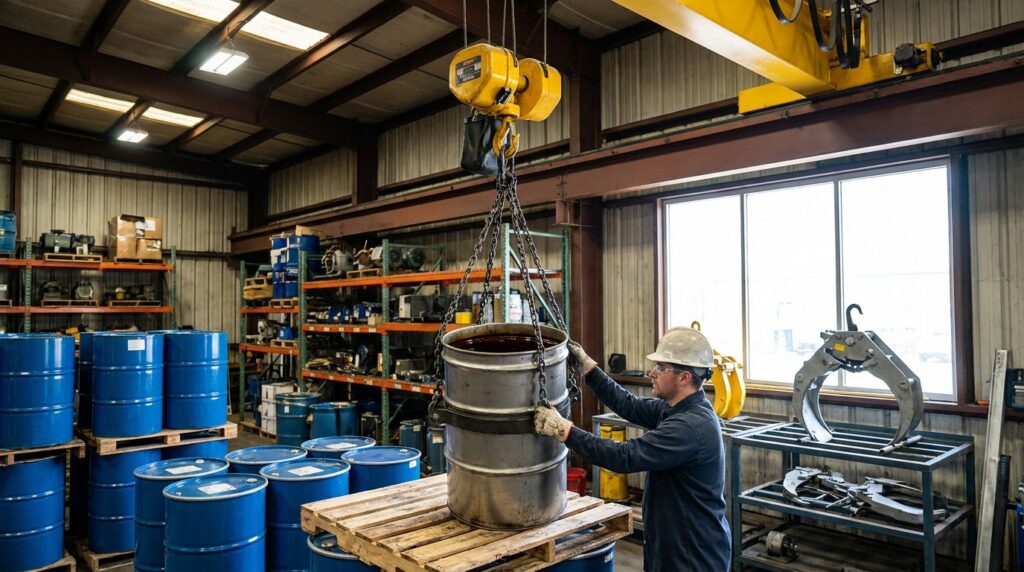
SEO Title: Below-the-Hook Drum Lifters: Comprehensive Guide for Warehouse Managers & Industrial Buyers
Meta Description: Explore the essential types, applications, and selection factors for below-the-hook drum lifters. Optimize your warehouse operations with expert insights from Fredon Handling.
Understanding Below-the-Hook Drum Lifters: Essential for Safe and Efficient Operations
In the demanding environment of warehouses, manufacturing plants, and industrial facilities, the safe and efficient handling of drums is paramount. Drums, often containing hazardous materials, chemicals, oils, or finished products, represent a significant ergonomic challenge and a potential safety risk if not managed properly. This is where below-the-hook drum lifters come into play, offering a specialized solution to lift, move, and manipulate drums with enhanced safety and reduced manual labor. These devices attach to overhead lifting equipment, such as cranes, hoists, or forklifts with mast-mounted attachments, providing a secure connection point for drums. Their primary function is to alleviate the strain on personnel, prevent back injuries, and minimize the risk of drum damage or spillage. For warehouse managers, plant engineers, and industrial equipment buyers, understanding the various types, applications, and selection criteria for these lifters is crucial for optimizing operational efficiency and ensuring a safe working environment. Fredon Handling is a leading provider of such equipment, with a comprehensive range of solutions designed to meet diverse industrial needs.
The necessity of below-the-hook drum lifters stems from the inherent difficulties in manual drum handling. Drums are typically heavy, cumbersome, and can be slippery, especially if contents have leaked. Attempting to manually lift or tilt them can lead to accidents, including dropped loads, personal injuries, and costly product loss. Below-the-hook drum lifters provide a mechanical advantage, allowing a single operator to control the movement of multiple drums with precision and ease, significantly improving productivity and safety. This article will delve into the intricacies of these vital pieces of industrial equipment, covering their types, operational advantages, critical selection factors, and the importance of proper maintenance, all to empower you to make informed purchasing decisions.
For those interested in learning more about Below-the-Hook Drum Lifters, a related article that provides valuable insights into various lifting solutions can be found at Fredon Handling. This resource offers a comprehensive overview of different types of lifting equipment, their specific uses, and guidance on how to select the right tools for your lifting needs, making it an excellent complement to the information on drum lifters.
Key Types of Below-the-Hook Drum Lifters
The market offers a diverse array of below-the-hook drum lifters, each designed for specific drum types, lifting methods, and operational requirements. Understanding these distinctions is the first step towards selecting the most suitable equipment for your facility. The common types can be broadly categorized based on their gripping mechanism and operational function.
Single Drum Lifters
Single drum lifters are the most common and versatile type, designed to secure and lift one drum at a time. They are ideal for operations where individual drum movement is frequent and varied.
Clamp-Type Drum Lifters
These lifters utilize a robust clamping mechanism that grips the rim or chime of the drum. They are particularly effective for steel and plastic drums with a distinct rim. The clamp automatically tightens as the load is applied, ensuring a secure hold. Some models offer automatic release upon setting the drum down.
- Advantages: Simple to operate, generally provide a secure grip on standard drums, versatile for various drum materials.
- Considerations: Require a clear rim for proper engagement. Drum deformation can affect gripping security.
- Typical Drum Materials: Steel, plastic (HDPE).
- Typical Drum Sizes: Standard 55-gallon (200-liter) drums are most common, but variations exist for smaller or larger drums.
- Typical Drum Weight Capacity: Varies significantly, from 500 lbs to over 1000 lbs.
Grab-Type Drum Lifters
Similar to clamp-type lifters, grab-type lifters also engage with the drum rim but often use a different leverage system or multiple gripping points. Some feature a “parrot beak” or similar design that securely engages the rim.
- Advantages: Can be very secure, some designs are effective even with slight drum imperfections.
- Considerations: Can exert pressure on the drum rim, potentially causing minor deformation on very thin-walled drums.
- Typical Drum Materials: Steel, some plastic drums.
- Typical Drum Sizes: Similar to clamp-type, primarily standard drums.
- Typical Drum Weight Capacity: Comparable to clamp-type lifters.
Fork-Mounted Drum Grabs
While often used as forklift attachments rather than strictly below-the-hook, fork-mounted drum grabs offer a specialized solution for moving drums with a forklift. They attach to the forklift tines and secure the drum, allowing for transport and lifting.
- Advantages: Integrates with existing forklift infrastructure, can be efficient for horizontal transport.
- Considerations: Limited vertical lifting capability beyond the forklift’s mast height. Primarily for transport, not precise placement or tilting.
- Typical Drum Materials: Steel, plastic.
- Typical Drum Sizes: Standard drums.
- Typical Drum Weight Capacity: Dependent on forklift capacity and grab design.
Multiple Drum Lifters
For operations involving the movement of multiple drums simultaneously, specialized lifters are available, significantly boosting throughput.
Drum Palletizers/Lifters
These devices are designed to lift and transport a palletized load of drums, or a specific configuration of drums (e.g., two drums side-by-side). They often feature a frame that supports the drums and a gripping mechanism.
- Advantages: High efficiency for moving multiple drums, can handle drums stacked on pallets.
- Considerations: Require adequate space for maneuvering multiple drums.
- Typical Drum Materials: Any standard drum type.
- Typical Drum Sizes: Accommodate standard drums, often designed for specific pallet configurations.
- Typical Drum Weight Capacity: Higher overall capacity to account for multiple drums.
Drum Carriers/Racks
While not always strictly “lifters,” drum carriers and racks, when used with below-the-hook devices, allow for the secure transport and temporary storage of multiple drums. They are designed to hold drums in an upright or sometimes horizontal position.
- Advantages: Streamlines storage and movement of groups of drums.
- Considerations: Require a separate lifting device to move the carrier itself.
- Typical Drum Materials: All drum types.
- Typical Drum Sizes: Designed for standard drum footprints.
Specialized Drum Lifters
Beyond the common categories, specialized lifters address unique handling challenges.
Drum Tippers and Rotators
These lifters are designed not just to lift but also to tilt or rotate drums, facilitating controlled dispensing of contents. They are invaluable in chemical processing, food and beverage production, and waste management where precise pouring is required.
- Advantages: Enable controlled dispensing, reduce manual pouring efforts and associated risks.
- Considerations: Can be more complex and expensive than basic lifters. Requires careful integration with the dispensing process.
- Typical Drum Materials: Steel, plastic.
- Typical Drum Sizes: Standard drums.
- Typical Drum Weight Capacity: Varies, with some designed for heavier drums or larger volumes.
Explosion-Proof Drum Lifters
For hazardous environments where flammable or explosive materials are present, explosion-proof below-the-hook drum lifters are essential. These are constructed with materials and designs that prevent the generation of sparks or excessive heat, meeting stringent safety standards.
- Advantages: Critical for safety in hazardous locations, prevent ignition sources.
- Considerations: Higher cost due to specialized materials and design. May have specific operational limitations.
- Typical Drum Materials: Steel, plastic.
- Typical Drum Sizes: Standard drums.
- Typical Drum Weight Capacity: Varies by model.
Applications of Below-the-Hook Drum Lifters
The versatility of below-the-hook drum lifters makes them indispensable across a wide spectrum of industries. Their ability to handle drums safely and efficiently translates into tangible benefits in various operational contexts.
Warehouse and Logistics Operations
In warehousing, efficient storage, retrieval, and movement of goods are critical. Drum lifters streamline these processes by enabling:
- Receiving and Put-Away: Quickly and safely unload incoming drums from trucks and transport them to designated storage areas.
- Order Picking: Retrieve specific drums from racks for order fulfillment with minimal manual effort.
- Loading and Shipping: Efficiently move drums from storage to loading docks for shipment.
- Inventory Management: Facilitate the repositioning of drums for better space utilization and stock rotation.
Manufacturing and Production
Manufacturing plants often handle drums containing raw materials, intermediate products, or finished goods. Drum lifters are essential for:
- Material Transfer: Move drums of raw materials to production lines or mixing tanks.
- Dispensing and Dosing: Controlled pouring or dispensing of drum contents into processing equipment, especially with drum tippers and rotators.
- Work-in-Progress Handling: Move drums containing partially processed materials between workstations.
- Finished Goods Packaging: Load drums of finished products for shipping.
Chemical and Petrochemical Industries
These sectors frequently deal with hazardous chemicals and volatile substances, making safety paramount. Below-the-hook drum lifters play a crucial role in:
- Safe Handling of Hazardous Materials: Minimizing direct human contact with potentially dangerous substances.
- Controlled Dispensing: Precisely pouring chemicals into reactors or blending tanks, reducing spillage and exposure.
- Transfer of Oils and Lubricants: Efficiently moving drums of oils, greases, and other petroleum products.
- Waste Management: Safely collecting and transporting drums of hazardous waste.
Food and Beverage Industry
Hygiene and product integrity are key in this sector. Drum lifters contribute by:
- Ingredient Transfer: Moving drums of food-grade ingredients to processing areas.
- Controlled Pouring: Accurately dispensing liquids or solids from drums into mixing vats.
- Sanitation: Facilitating the movement of drums during cleaning and sanitation procedures.
Pharmaceutical Industry
Similar to the food and beverage sector, the pharmaceutical industry demands strict control over material handling. Drum lifters are used for:
- Raw Material Handling: Safely transferring pharmaceutical ingredients.
- Process Material Movement: Moving drums of compounds and intermediates between production stages.
- Maintaining Purity: Reducing the risk of contamination through controlled, mechanical handling.
Waste Management and Recycling
Handling drums of waste, including hazardous materials, requires robust safety measures. Drum lifters enable:
- Collection and Segregation: Safely gathering and moving drums of different waste streams.
- Transfer to Treatment Facilities: Efficiently loading drums for transport to recycling or disposal centers.
- Spill Prevention: Minimizing the risk of leaks and spills during movement.
Selecting the Right Below-the-Hook Drum Lifter
Choosing the optimal below-the-hook drum lifter requires a thorough assessment of your operational needs, the types of drums you handle, and the existing infrastructure. Overlooking these factors can lead to inefficient operations, equipment damage, and safety hazards.
Assessing Your Drum Inventory
The first and most critical step is to thoroughly understand the characteristics of the drums you intend to lift.
- Drum Material:
- Steel Drums: Generally robust and can withstand significant clamping force. Common for hazardous materials and bulk liquids.
- Plastic (HDPE) Drums: Lighter than steel but can be more prone to deformation under excessive clamping pressure. Rim design is crucial for effective gripping. Essential to ensure the lifter is designed for plastic drums.
- Fiber Drums: Less common for lifting with standard below-the-hook devices due to their construction. Specialized equipment might be needed if these are frequently handled.
- Drum Size and Diameter: Standard sizes (e.g., 55-gallon/200-liter) are most common, but lifters are available for smaller (e.g., 30-gallon) or larger drums. Ensure the lifter’s gripping mechanism can accommodate your drum diameters.
- Drum Weight and Capacity: Always consider the maximum weight of the drums you will be lifting. The drum lifter’s rated capacity must exceed the maximum drum weight by a safe margin. This capacity often dictates the required overhead lifting equipment.
- Drum Chime/Rim Condition: The presence and integrity of the drum’s rim or chime are vital for many lifter designs. Damaged or deformed rims can compromise the grip of clamp- or grab-type lifters.
Evaluating Your Lifting and Handling Requirements
Beyond the drums themselves, your operational workflow and lifting equipment are equally important considerations.
- Frequency of Use: Will the lifter be used daily, occasionally, or for specific tasks? High-frequency use warrants more robust and ergonomic designs.
- Lifting Height and Reach: Consider the maximum height required for stacking or placing drums, and the reach needed from your overhead crane or hoist.
- Lifting Equipment Compatibility:
- Overhead Cranes and Hoists: Most below-the-hook drum lifters are designed to be attached to the hook of an overhead crane or hoist. Ensure the lifter’s connection point (e.g., shackle, eyelet) is compatible with your hoist’s hook.
- Forklifts: While some drum handling devices are forklift attachments, dedicated below-the-hook lifters still require an overhead lifting point accessible by the forklift (e.g., using a lifting boom attachment).
- Environment:
- Hazardous Locations: If operating in areas with flammable vapors or explosive dust, explosion-proof rated lifters are mandatory.
- Corrosive Environments: Consider materials of construction that are resistant to corrosion from chemicals or atmospheric conditions.
- Cleanroom Applications: For pharmaceutical or food processing, ensure materials and designs meet sanitary standards.
- Need for Tilting or Dispensing: If controlled pouring or emptying of drum contents is required, a drum tipper or rotator lifter is essential.
- Automation and Integration: For highly automated facilities, consider lifters that can integrate with automated control systems.
Key Selection Factors and Features to Look For
When comparing different models, pay close attention to these critical aspects:
- Lifting Mechanism Security: Ensure the gripping mechanism is robust, reliable, and designed to maintain its hold throughout the lifting and transporting process. Look for features like automatic locking and release.
- Ergonomics and Ease of Use: A well-designed lifter should be intuitive to operate, requiring minimal physical effort to attach, secure, and detach drums.
- Durability and Construction Quality: Opt for lifters made from high-quality materials with robust welds and components to ensure longevity and withstand demanding industrial use.
- Safety Features: Look for features such as secondary safety latches, audible alarms for improper attachment, and overload protection.
- Maintenance Requirements: Consider the ease of maintenance and the availability of spare parts. Regular maintenance is crucial for the safe and reliable operation of any lifting equipment.
- Manufacturer Reputation and Support: Choose a reputable manufacturer like Fredon Handling, known for quality products, reliable support, and adherence to safety standards.
When considering the best equipment for lifting heavy loads, it is essential to explore various options, including Below-the-Hook Drum Lifters. These devices come in different types and serve specific purposes, making it crucial to understand their uses and selection criteria. For further insights into material handling solutions, you can check out a related article that delves into the intricacies of lifting equipment and their applications. This resource can provide valuable information to enhance your understanding of the topic. To learn more, visit this article.
Safety Considerations and Best Practices
The safe operation of below-the-hook drum lifters is non-negotiable. Implementing rigorous safety protocols and adhering to best practices is essential to prevent accidents and ensure the well-being of personnel.
Pre-Operation Checks
Before each use, a thorough inspection of the drum lifter and the surrounding area is mandatory.
- Inspect the Lifter: Check for any visible signs of wear, damage, corrosion, or deformation on the lifting mechanism, frame, chains, or any other components.
- Verify Load Capacity: Ensure the lifter’s rated capacity is appropriate for the drum being lifted and that the overhead lifting equipment (crane, hoist) also has sufficient capacity.
- Check for Proper Function: Test the gripping and release mechanisms to ensure they operate smoothly and securely.
- Inspect the Drum: Ensure the drum is in good condition, with no significant dents, punctures, or leaks that could compromise the lifter’s grip or lead to spillage. Verify the rim or chime is intact.
- Clear the Area: Ensure the lifting path is clear of obstructions, personnel, and other equipment.
Operational Procedures
Adhering to established procedures during operation is crucial for safety.
- Secure Attachment: Ensure the lifter is securely attached to the drum according to the manufacturer’s instructions. For clamp and grab types, confirm the grip is firm and the lifter is centered.
- Controlled Lifting and Lowering: Lift and lower drums slowly and smoothly. Avoid sudden movements or jerky operations, which can cause the load to swing or become unstable.
- Maintain Clear Overhead Space: Always ensure there is adequate overhead clearance for the drum and lifter.
- Avoid Overloading: Never exceed the rated load capacity of the lifter or the lifting equipment.
- Keep Personnel Clear: Maintain a safe distance from the suspended load. Never allow personnel to stand or walk underneath a lifted drum.
- Proper Drum Placement: When setting a drum down, ensure the surface is stable and level. Carefully guide the drum into its final position.
- Securing Drums During Transport: If transporting drums over longer distances, ensure they are properly secured to prevent shifting or tipping.
Training and Competency
Adequate training for all personnel involved in operating below-the-hook drum lifters is paramount.
- Manufacturer’s Instructions: All operators must be trained on the specific operating manual and safety guidelines provided by the manufacturer of the drum lifter.
- Hazard Awareness: Training should cover potential hazards associated with drum handling, including chemical exposure, spillage, and mechanical risks.
- Emergency Procedures: Personnel should be trained on emergency procedures in case of equipment malfunction, spills, or accidents.
- Regular Refresher Training: Periodic refresher training helps maintain awareness and reinforces safe operating practices.
Maintenance and Inspection Schedule
A proactive maintenance program is vital for ensuring the continued safe and reliable operation of drum lifters.
- Daily Checks: As outlined in the pre-operation checks.
- Periodic Inspections: Conduct more detailed visual inspections at regular intervals (e.g., weekly, monthly) as recommended by the manufacturer. This includes checking for wear on critical components, lubrication points, and the overall structural integrity.
- Annual Thorough Inspections: Performed by a qualified person or certified technician, these inspections involve a more in-depth examination of the equipment, including functional tests and checks for any hidden defects.
- Record Keeping: Maintain detailed records of all inspections, maintenance, and repairs. This documentation is crucial for tracking equipment history, identifying recurring issues, and ensuring compliance with safety regulations.
- Prompt Repairs: Any identified defects or issues must be addressed and repaired promptly by qualified personnel before the equipment is put back into service.
When considering the various types of Below-the-Hook Drum Lifters, it’s essential to understand their applications in the broader context of material handling. For a comprehensive overview of material handling techniques and equipment, you can refer to this informative article on material handling. This resource provides valuable insights that can help you make informed decisions when selecting the right drum lifter for your specific needs.
Maintaining Your Drum Lifters for Longevity and Reliability
Proper maintenance is not just about safety; it’s also about maximizing the lifespan and reliability of your below-the-hook drum lifters. Consistent care ensures they perform optimally and avoid costly downtime.
Cleaning and Lubrication
- Regular Cleaning: After each use, or at the end of the day, clean the drum lifter to remove any dust, dirt, or chemical residue. This prevents the buildup of corrosive substances and ensures the gripping mechanisms function freely. Use appropriate cleaning agents based on the materials handled and the lifter’s construction.
- Lubrication: Moving parts, pivot points, and bearing surfaces should be lubricated regularly according to the manufacturer’s recommendations. Use the specified type of lubricant to ensure smooth operation and prevent wear. Over-lubrication can attract dirt, so apply sparingly.
Inspecting Wear and Tear
- Gripping Surfaces: Regularly inspect the surfaces that come into contact with the drum, such as jaws, pads, or rollers. Look for excessive wear, gouges, or damage that could reduce their effectiveness. Replace worn components as needed.
- Pivot Points and Hinges: Ensure all pivot points and hinges move freely and are free from excessive play or stiffness.
- Structural Integrity: Periodically examine welds, frame members, and attachment points for any signs of cracking, bending, or corrosion.
- Chains and Cables (if applicable): If your lifter uses chains or cables, inspect them for kinks, broken strands, or excessive wear.
Component Replacement
- Worn Parts: Have a stock of common replacement parts, such as gripping pads, springs, or adjustment bolts. Prompt replacement of worn components prevents minor issues from escalating into major failures.
- Manufacturer’s Guidance: Always refer to the manufacturer’s parts list and guidelines for ordering and installing replacement parts to ensure compatibility and maintain the equipment’s integrity.
Storage
When not in use, store below-the-hook drum lifters in a clean, dry, and protected area. This prevents exposure to the elements, which can accelerate corrosion and damage. Ensure they are stored in a way that prevents accidental damage.
By diligently following these maintenance practices, you can significantly extend the service life of your below-the-hook drum lifters, reduce the likelihood of unexpected failures, and maintain a safer working environment for your team. Fredon Handling is committed to providing durable and reliable equipment, and our team is available to offer advice on the best maintenance practices for your specific models.
Frequently Asked Questions (FAQs)
What is the primary benefit of using a below-the-hook drum lifter?
The primary benefit is enhanced safety and efficiency. These lifters eliminate the need for manual lifting, reducing the risk of back injuries and other musculoskeletal disorders. They also ensure a secure grip, minimizing the chances of dropped drums, spills, and product damage.
Can I use a below-the-hook drum lifter with any type of drum?
While many lifters are versatile, compatibility depends on the lifter’s design and the drum’s characteristics. Steel drums with a defined rim are generally compatible with clamp and grab-type lifters. Plastic drums require lifters designed to handle their specific material properties and rim design. Always check the manufacturer’s specifications for compatibility.
How do I determine the correct weight capacity for a drum lifter?
You must identify the heaviest drum you intend to lift. The drum lifter’s rated capacity should be at least 10-20% greater than the maximum drum weight to ensure a safe working margin. Always consider the capacity of the overhead lifting equipment as well.
Are explosion-proof drum lifters necessary for all chemical handling applications?
Explosion-proof below-the-hook drum lifters are essential only in hazardous locations classified as potentially explosive due to the presence of flammable gases, vapors, or dust. For non-hazardous environments, standard drum lifters are sufficient. Always consult safety data sheets (SDS) and local regulations to determine the appropriate classification of your workspace.
What is the difference between a clamp-type and a grab-type drum lifter?
Both types grip the drum’s rim or chime. Clamp-type lifters typically use a lever or cam mechanism that exerts pressure on the rim to secure the drum. Grab-type lifters often use a pincer-like action or a “parrot beak” design that engages the rim for a secure hold. The specific mechanism can influence suitability for different drum types and conditions.
Optimize Your Operations with Fredon Handling
Efficient and safe drum handling is a cornerstone of successful industrial operations. At Fredon Handling, we understand the critical role that below-the-hook drum lifters play in achieving these goals. Our extensive range of drum lifters, from versatile single drum lifters to specialized tippers and explosion-proof models, is designed to meet the diverse demands of modern warehouses, manufacturing plants, and processing facilities.
We pride ourselves on offering high-quality, durable, and reliable equipment that prioritizes operator safety and operational efficiency. Whether you’re looking to streamline your receiving processes, improve material transfer on the production floor, or ensure the safe handling of hazardous materials, Fredon Handling has a solution tailored to your needs.
Explore our comprehensive selection of drum handling equipment and discover how we can help you:
Visit our dedicated Drum Handling Equipment page at https://fredonhandling.com/drum-handling-equipment/ to view our full product catalog.
Ready to find the perfect below-the-hook drum lifter for your facility? Contact our expert team today for a personalized consultation. We’re here to help you assess your requirements, recommend the most suitable equipment, and ensure you make an informed investment that enhances safety, productivity, and profitability for your operations.