
Mastering Overhead Crane Capacity: A Comprehensive Guide for Industrial Operations
The efficient and safe movement of materials is the lifeblood of any manufacturing, warehousing, or heavy industrial operation. At the core of this material handling lies the overhead crane, a powerful and versatile piece of equipment. However, selecting the right overhead crane is a critical decision that hinges on accurately determining its capacity and understanding specific lifting requirements. An undersized crane can lead to production delays, damage to goods, and hazardous situations, while an oversized crane represents unnecessary capital expenditure. This article will serve as your authoritative guide, empowering manufacturing managers, warehouse operators, engineers, and industrial equipment buyers to confidently assess their overhead crane needs and make informed purchasing decisions.
When considering how to determine overhead crane capacity and lifting requirements, it’s also essential to explore related topics that can enhance your understanding of material handling. A valuable resource is the article on how to choose the right material handling equipment for your business, which provides insights into selecting the appropriate tools based on your specific needs. You can read more about it here: How to Choose the Right Material Handling Equipment for Your Business. This article complements the discussion on crane capacity by addressing broader equipment selection criteria.
Understanding the Fundamentals of Crane Capacity
Crane capacity is not a singular, arbitrary number; it’s a carefully calculated parameter that dictates the maximum safe working load (SWL) a crane can lift. Understanding the factors that contribute to this capacity is the first step in accurate assessment.
Defining Safe Working Load (SWL)
The Safe Working Load (SWL) is the maximum load that a crane, hoist, or lifting accessory can safely handle. This is not the breaking strength of the equipment. Instead, it incorporates significant safety factors mandated by regulatory bodies and industry best practices to ensure that the equipment can operate without risk of failure under normal conditions, and with a margin of safety for potential unforeseen stresses. Regulatory bodies like OSHA (Occupational Safety and Health Administration) and ASME (American Society of Mechanical Engineers) provide stringent guidelines for determining and labeling SWL. It is crucial to note that SWL can vary depending on the specific configuration of the crane, the type of hoist, the length of the hoist rope, and the lifting attachments used.
Factors Influencing Crane Capacity Calculation
Several key factors must be meticulously considered when calculating the required crane capacity:
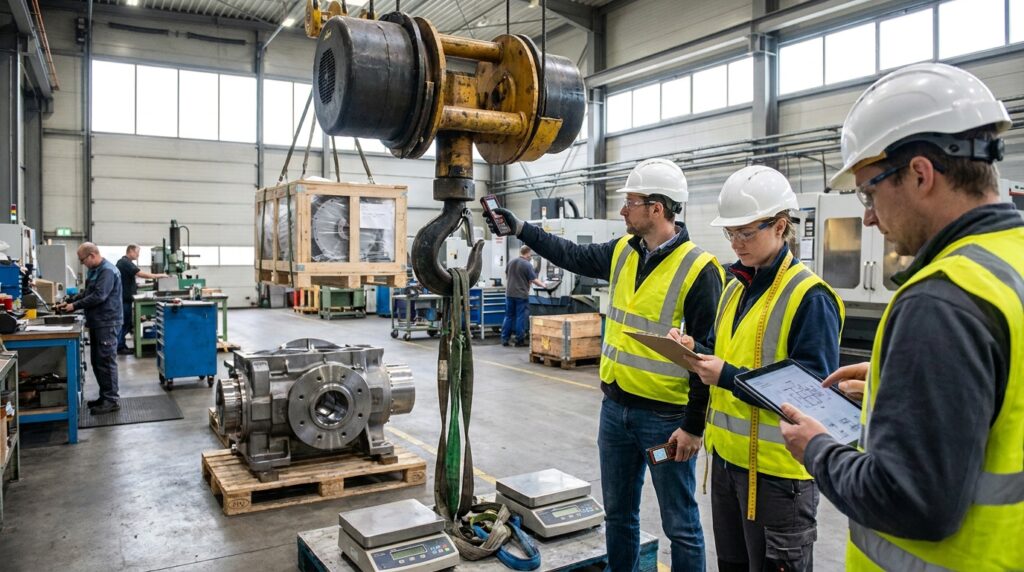
- Maximum Load Weight: This is the most direct component. It includes the weight of the workpiece or material being lifted, plus the weight of any lifting accessories (e.g., slings, spreader bars, fixtures, magnets). It is essential to weigh or accurately estimate the heaviest single item or assembly that will ever be lifted.
- Dynamic Loads: Lifting is not a static process. When a load is accelerated, decelerated, or swung, dynamic forces are introduced, increasing the effective load on the crane. These dynamic loads can be significantly higher than the static weight of the load itself. Proper hoist and crane controls, as well as operator training, can help mitigate these effects.
- Duty Cycle and Classification: Industrial environments vary greatly in their operational intensity. Cranes are classified based on their duty cycle (how often and how long they are used) and the severity of the service. A crane operating continuously in a heavy manufacturing plant will have different requirements than one used intermittently in a light assembly area. ASME provides classifications (e.g., Class A for infrequent use, Class D for heavy service) that influence the design and capacity ratings of the crane.
- Environmental Factors: Extreme temperatures, corrosive atmospheres, or areas prone to dust and moisture can impact the structural integrity and operational performance of a crane. These factors may necessitate the selection of specialized materials or designs that can affect the overall capacity or require additional safety considerations.
- Service Life Expectations: The intended operational lifespan of the crane is also a factor. A crane expected to operate for many decades under heavy use will require more robust construction and higher quality components, which can influence its initial capacity rating.
Assessing Specific Lifting Requirements
Beyond the raw weight, a deep understanding of how the load will be lifted is paramount. This involves analyzing the operational workflow, the nature of the loads, and the desired lifting behavior.
Analyzing the Workflow and Lifting Patterns
Every facility has a unique operational flow. Mapping out how materials will move through the facility is crucial for determining the optimal crane configuration and capacity.
- Pick-up and Drop-off Points: Identify the precise locations where loads will be picked up and set down. This helps determine the required bridge and trolley travel, as well as hook height.
- Frequency and Duration of Lifts: How often will lifts occur? Will they be quick, single-item lifts, or will they involve extended periods of suspending heavy loads? This directly relates to the duty cycle and the need for efficient movement.
- Maneuvering and Positioning Needs: Will loads need to be precisely positioned, rotated, or maneuvered in tight spaces? This may require specialized hoists with variable frequency drives (VFDs) for smooth acceleration and deceleration, or even powered trolleys for enhanced lateral movement.
- Simultaneous Lifts: In some advanced applications, multiple cranes might be used to lift a single, exceptionally large or awkward object. In such scenarios, the capacity of each individual crane must be carefully calculated to ensure they can share the load safely and effectively.
Characterizing the Loads
The physical characteristics of the items being lifted play a significant role in selection.
- Size and Shape: Large, bulky, or irregularly shaped loads may require specialized lifting accessories like spreader beams to distribute the weight evenly and prevent damage. This adds to the overall weight the crane must handle.
- Center of Gravity: Loads with an off-center gravity can create uneven forces and potentially cause the load to swing. The crane and lifting gear must be capable of compensating for these imbalances.
- Fragility or Sensitivity: Delicate materials may necessitate specialized lifting devices and hoisting mechanisms that offer precise control and minimize shock or vibration during lifting and lowering.
- Temperature or Hazardous Properties: Loads that are extremely hot, cold, or pose a safety hazard (e.g., molten metal, hazardous chemicals) require specialized crane designs and safety features, including explosion-proof components or insulated cabins.
Defining Desired Lifting Performance
The desired performance goes beyond just lifting the weight.
- Speed of Lifting and Traversing: For high-volume operations, faster lifting and traversing speeds can significantly boost productivity. VFDs on hoists and cranes are essential for achieving this, allowing for adjustable speeds to match different lifting tasks.
- Precision and Control: Some applications demand exceptional precision in load placement. This can be achieved through advanced hoist controls, trolley positioning systems, and operator training.
- Hook Height Requirements: The maximum height the load needs to be lifted is a critical factor. This determines the required hoist lift, taking into account the height of the load itself, the lifting accessories, and the clearance needed to position the load.
Selecting the Right Overhead Crane Configuration
With a clear understanding of capacity and lifting requirements, the next step is to match these needs with the appropriate overhead crane configuration. Fredon Handling offers a wide range of solutions to meet diverse industrial demands.
Types of Overhead Cranes and Their Capacities
The general categories of overhead cranes offer distinct advantages and capacity ranges:
- Single Girder Overhead Cranes: These are the most common type, featuring a single bridge girder. They are typically used for lighter to medium-duty applications, with capacities generally ranging from 1 to 20 tons. They are often more cost-effective and simpler to install. Fredon Handling’s single girder cranes are designed for reliability and efficiency in various manufacturing and assembly environments.
- Double Girder Overhead Cranes: These cranes have two bridge girders, providing greater strength and stability. They are suitable for heavier lifting applications, with capacities that can extend to 500 tons and beyond. The increased height between the girders allows for a higher hook height, which is essential for certain lifting tasks. Our double girder cranes are engineered for demanding industrial use, offering superior lifting performance.
- Jib Cranes: While not strictly overhead cranes in the same sense as bridge cranes, jib cranes are crucial for localized lifting tasks. They consist of a boom (jib) that supports a hoist and can rotate. They are ideal for workstations and smaller areas, with capacities typically ranging from a few hundred pounds to several tons. Fredon Handling offers a variety of jib crane solutions, including wall-mounted and freestanding models.
- Gantry Cranes: These cranes have legs that support the bridge, allowing them to span over machinery or work areas. They are often used outdoors or in facilities where building support structures for overhead cranes are not feasible. Capacities vary widely, from light-duty portable gantries to heavy-duty industrial models.
Matching Crane Type to Application
The choice of crane type is directly dictated by the lifting requirements previously assessed:
- For General Manufacturing and Assembly: Single girder overhead cranes are often the ideal choice, offering a balance of capacity, cost-effectiveness, and operational flexibility for loads up to 20 tons.
- For Heavy Fabrication and Large Component Handling: Double girder overhead cranes are essential for lifting exceptionally heavy loads, providing the necessary structural integrity and hook height.
- For Workstation Support and Spot Lifts: Jib cranes are invaluable for localized lifting, improving ergonomics and reducing strain on workers in specific work cells.
- For Areas Without Overhead Support or Outdoor Operations: Gantry cranes provide a robust and adaptable solution for lifting and moving materials where traditional overhead infrastructure is absent.
Understanding Hoist Types and Their Role in Capacity
The hoist is the heart of the lifting mechanism. The type of hoist chosen significantly impacts the crane’s overall capacity and functionality.
- Electric Wire Rope Hoists: These are the most common for industrial applications, offering high lifting capacities and durability. They are suitable for a wide range of loads and are available with various lifting speeds and controls. Fredon Handling provides robust electric wire rope hoists designed for demanding environments.
- Electric Chain Hoists: Generally used for lighter to medium-duty applications, electric chain hoists are known for their precise control and compact size. They are ideal for tasks requiring accurate load positioning.
- Manual Hoists: While less common in fully automated industrial settings, manual chain hoists are a cost-effective option for very infrequent or light-duty lifting tasks.
When selecting a hoist, consider its capacity rating, lifting speed, duty cycle, and the specific features required for your application, such as VFD controls for smooth operation.
When considering how to determine overhead crane capacity and lifting requirements, it’s essential to understand the broader context of material handling. A related article that delves into various aspects of this topic can be found at Fredon Handling’s Education Center, where you can explore additional insights and best practices that can enhance your understanding of safe and efficient lifting operations. This resource provides valuable information that complements your knowledge of crane capacities and helps ensure optimal performance in material handling tasks.
Safety First: Essential Considerations for Overhead Crane Operation
Safety is paramount in any industrial operation, and overhead cranes demand rigorous adherence to safety protocols and regulatory requirements. Ignoring these can lead to severe accidents, injuries, and costly damages.
Regulatory Compliance: OSHA and ASME Standards
Compliance with safety regulations is not optional; it’s a legal and ethical imperative.
- OSHA Standards: The Occupational Safety and Health Administration (OSHA) has specific regulations governing the use of overhead and gantry cranes. Key standards include 29 CFR 1910.179 (Overhead and Gantry Cranes), which covers aspects like inspection, maintenance, operator qualifications, and load handling procedures.
- ASME Standards: The American Society of Mechanical Engineers (ASME) develops consensus standards that are often referenced by OSHA. ASME B30.17 (Overhead and Gantry Cranes) and ASME B30.16 (Overhead Hoists) provide detailed guidelines for the design, construction, inspection, testing, and operation of cranes and hoists.
It is crucial for all personnel involved with overhead cranes to be familiar with these standards. Fredon Handling ensures all its equipment meets or exceeds relevant safety standards.
Pre-Operational Inspections and Load Testing
Regular inspections are the first line of defense against potential failures.
- Daily Inspections: Operators must perform a visual inspection before each shift, checking for obvious signs of wear, damage, or loose parts. This includes inspecting the hoist, trolley, bridge, runways, end stops, limit switches, and all lifting accessories.
- Periodic Inspections: More thorough inspections by qualified personnel should be conducted at regular intervals (e.g., monthly, annually), depending on the crane’s usage and environment. These inspections involve checking for wear on wire ropes, reeving, brake systems, electrical components, and structural integrity.
- Load Testing: New installations, repairs, or modifications typically require load testing to verify the crane’s capacity and structural soundness. This is a critical step to ensure the crane can safely handle its rated load.
Operator Training and Certification
A qualified and well-trained operator is indispensable for safe crane operation.
- Knowledge of Controls: Operators must be thoroughly trained on the specific controls of the crane they will be operating, including understanding the functions of all buttons, levers, and indicators.
- Understanding Load Charts and SWL: Operators must understand how to read load charts and be aware of the Safe Working Load (SWL) of the crane and any lifting accessories.
- Proper Rigging Practices: Operators should have a basic understanding of proper rigging techniques and be able to identify unsafe rigging practices.
- Communication: Effective communication with ground personnel, including the use of hand signals or radio communication, is crucial for safe lifting operations.
- Certification: Many organizations require formal certification for overhead crane operators, demonstrating their proficiency and knowledge.
Safe Lifting Practices and Procedures
Beyond inspections and training, adhering to safe lifting practices is a continuous effort.
- Never Exceed SWL: This is the most fundamental rule. Operators must never attempt to lift loads exceeding the crane’s rated capacity.
- Center the Load: Ensure the load is centered directly above the lifting point to prevent swinging and uneven stress on the crane.
- Avoid Side Pulling: Loads should be lifted vertically. Side pulling can create significant lateral forces that the crane is not designed to withstand.
- Smooth and Controlled Movements: Accelerate, decelerate, and stop the crane and hoist smoothly to prevent sudden jolts and load swing.
- Clear the Area: Ensure the lifting path is clear of personnel and obstructions before starting a lift.
- Use Appropriate Rigging Gear: Always use slings, shackles, and other rigging equipment that are properly rated for the load and in good condition.
When considering how to determine overhead crane capacity and lifting requirements, it’s essential to understand the broader context of material handling systems. A related article that delves into optimizing these systems can be found here: material handling systems explained. This resource provides valuable insights into streamlining workflows and enhancing efficiency, which can directly impact the effectiveness of your overhead crane operations.
Maintenance and Longevity: Ensuring Optimal Crane Performance
Proactive maintenance is key to maximizing the lifespan, reliability, and safety of your overhead crane investment. Neglecting maintenance can lead to unexpected downtime, costly repairs, and safety hazards.
Preventive Maintenance Schedules
A well-defined preventive maintenance (PM) schedule is crucial. This typically includes:
- Daily Checks: As mentioned in the safety section, operator checks are the first step.
- Monthly Inspections: Lubrication of moving parts, inspection of wire ropes, brakes, and electrical connections.
- Quarterly Inspections: More in-depth checks of hoist mechanisms, trolley and bridge travel systems, and structural components.
- Annual Inspections: Comprehensive examinations by a qualified technician, including detailed functional tests, electrical system checks, and non-destructive testing (NDT) of critical components if necessary.
Fredon Handling offers comprehensive maintenance programs and spare parts to support your PM schedule, ensuring your equipment operates at peak performance.
Key Maintenance Areas
Focusing on specific areas during maintenance can prevent common issues:
- Lubrication: Proper lubrication of all moving parts, including trolley wheels, bridge wheels, gearboxes, and hoist mechanisms, is essential for reducing wear and ensuring smooth operation.
- Wire Rope Inspection: Regular inspection of wire ropes for broken wires, kinks, corrosion, and proper reeving is critical. Damaged ropes must be replaced immediately.
- Brake System Maintenance: The braking system is a critical safety feature. Regular checks of brake linings, adjustment, and testing are essential to ensure they can hold the rated load.
- Electrical System Checks: Inspecting wiring, control panels, limit switches, and power feeds for signs of wear, damage, or corrosion is vital to prevent electrical failures.
- Structural Integrity: Periodically inspect the crane structure, including girders, end trucks, and runways, for any signs of deformation, cracks, or excessive wear.
Troubleshooting Common Issues
Understanding common problems and their solutions can minimize downtime:
- Jerky or Stuttering Hoist Movement: This could indicate issues with the motor, VFD, electrical connections, or worn gearbox components.
- Crane Not Moving: Check power supply, fuses, contactors, and limit switches.
- Load Drifting: This often points to brake issues on the hoist or trolley.
- Excessive Noise: Can be a sign of worn bearings, gears, or improper lubrication.
When encountering complex issues, it is always best to consult with qualified technicians or contact Fredon Handling for expert support. Our team is equipped to diagnose and resolve a wide range of crane-related problems.
Purchasing Advice: Investing in the Right Overhead Crane Solution
Selecting and purchasing an overhead crane is a significant investment. Making the right choice requires careful planning, thorough research, and a clear understanding of your operational needs and budget.
Getting a Quote: What Information to Provide
When approaching a supplier like Fredon Handling for a quote, having specific information ready will expedite the process and ensure accuracy:
- Required Lifting Capacity (SWL): The maximum weight you anticipate lifting.
- Span: The distance between the crane runways.
- Lift Height: The total vertical distance the hook needs to travel.
- Trolley and Bridge Travel: The distances the trolley and bridge need to cover.
- Power Requirements: Voltage, phase, and frequency available at the site.
- Duty Cycle/Classification: An estimate of how frequently and intensely the crane will be used.
- Environmental Conditions: Information about the operating environment (e.g., temperature, dust, humidity, hazardous atmosphere).
- Existing Infrastructure: Details about runways, supports, or building limitations.
- Specific Application Needs: Any unique requirements like precise positioning, specific hook types, or specialized lifting attachments.
- Budget Considerations: While not always stated upfront, having a budget range can help suppliers tailor their recommendations.
Fredon Handling: Your Partner in Material Handling Solutions
At Fredon Handling, we understand the complexities of selecting the right overhead crane. Our experienced team works closely with clients to assess their unique requirements and provide tailored solutions.
- Expert Consultation: Our specialists can guide you through the entire process, from initial assessment to final selection, ensuring you choose the most efficient and cost-effective crane for your application.
- Customization Options: We offer a range of customization options to ensure our cranes perfectly fit your operational needs, whether it’s specific dimensions, specialized controls, or unique lifting attachments.
- Quality and Reliability: We partner with leading manufacturers and prioritize quality components to ensure the durability and reliability of our overhead crane systems.
- Comprehensive Support: Beyond sales, Fredon Handling provides ongoing support, including installation guidance, maintenance services, and spare parts, ensuring your investment is protected.
Understanding Total Cost of Ownership
When evaluating purchasing options, consider the total cost of ownership, not just the initial price tag:
- Initial Purchase Price: The cost of the crane and its installation.
- Installation Costs: Including runway construction, electrical hook-up, and commissioning.
- Maintenance Costs: Regular preventive maintenance, repairs, and potential spare parts.
- Operational Costs: Energy consumption.
- Downtime Costs: The financial impact of unplanned equipment failure and production stoppages.
- Safety and Compliance Costs: Investments in training, inspections, and safety equipment.
A higher quality, well-specified crane from a reputable supplier like Fredon Handling may have a higher initial cost but can offer significant savings over its lifespan through reduced maintenance, fewer breakdowns, and enhanced safety.
Frequently Asked Questions About Overhead Crane Capacity
Q1: How do I determine the exact weight of the heaviest load I will lift?
A1: The most accurate method is to weigh the heaviest object directly. If direct weighing is not feasible, consult engineering specifications, material datasheets, or use calibrated load cells. Always err on the side of caution and add an estimated weight for rigging gear (slings, shackles, spreader bars) which can add a significant amount to the total load.
Q2: What is the difference between a crane’s rated capacity and its actual lifting capacity?
A2: The rated capacity, or Safe Working Load (SWL), is the maximum load the crane is certified to lift safely, including a substantial safety factor. The actual lifting capacity can be affected by factors like the configuration of the hoist (e.g., number of reeved parts of wire rope), the extension of the trolley beyond the runway, or the use of specialized lifting attachments that may reduce the effective SWL. Always refer to the crane’s load chart for specific conditions.
Q3: Can I use an overhead crane for side pulling?
A3: No, side pulling is strictly prohibited. Overhead cranes are designed for vertical lifting only. Applying a side pull can generate immense lateral forces that can damage the crane, the hoist, the runway, and potentially lead to catastrophic failure or load dropping.
Q4: What are the consequences of overloading an overhead crane?
A4: Overloading an overhead crane can lead to immediate structural failure, dropping of the load, severe damage to the crane and surrounding equipment, and serious injury or fatality to personnel. It can also void warranties and lead to significant legal liabilities. Adhering to the SWL is the most critical safety protocol.
Q5: How often should my overhead crane be inspected?
A5: Daily inspections should be performed by the operator before each shift. More thorough periodic inspections by a qualified person are required at regular intervals, typically monthly for frequent use and at least annually, with more frequent inspections for cranes used in severe service or hazardous environments, as per OSHA and ASME guidelines.
Conclusion: Partner with Fredon Handling for Optimal Lifting Solutions
Accurately determining overhead crane capacity and understanding specific lifting requirements are fundamental to ensuring operational efficiency, productivity, and, most importantly, safety. By meticulously assessing load weights, workflow, and desired performance, and by partnering with experienced professionals, you can make an informed investment that supports your business objectives.
Fredon Handling is committed to providing high-quality overhead crane solutions and expert guidance. Our team is ready to assist you in navigating the complexities of crane selection, ensuring you acquire a system that not only meets your current needs but also contributes to your long-term operational success.
Don’t leave your lifting requirements to chance. Contact Fredon Handling today to discuss your specific needs and discover the ideal overhead crane solution for your operation.
SEO Title: Overhead Crane Capacity & Lifting Requirements: A Comprehensive Buyer’s Guide
Meta Description: Learn how to determine overhead crane capacity and lifting requirements for your industrial operations. This guide covers SWL, load analysis, crane types, safety, maintenance, and purchasing advice.
URL Slug: overhead-crane-capacity-lifting-requirements