
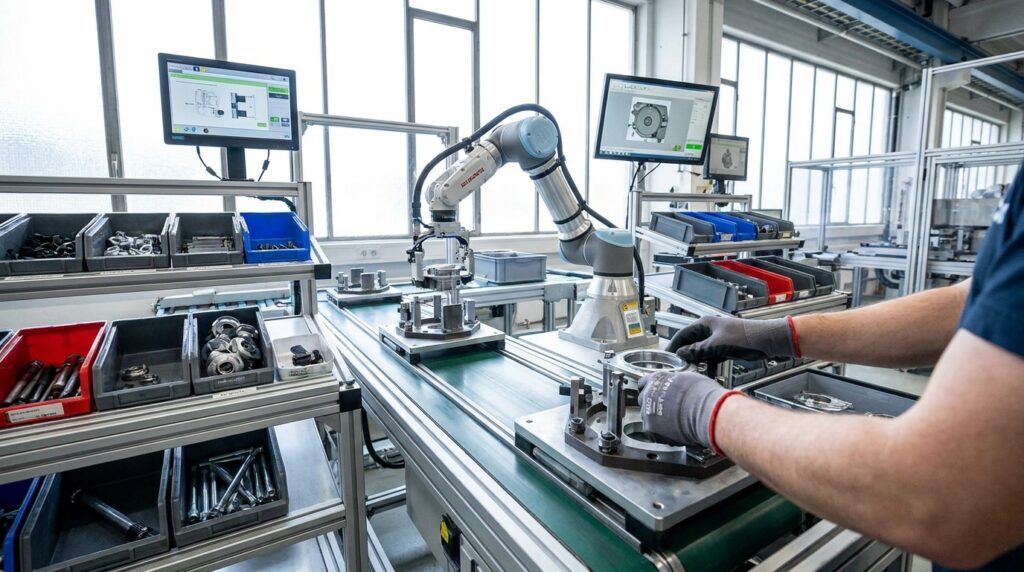
Optimizing Your Assembly Line with Precision Material Positioning
In the complex ecosystem of modern manufacturing, the efficiency and throughput of an assembly line are paramount. While sophisticated robotics and advanced automation often steal the spotlight, a fundamental element that underpins the success of any assembly operation is material positioning. The ability to deliver the right components, to the right place, at the right time, with the correct orientation, is not merely a logistical nicety; it is a critical determinant of productivity, quality, and cost-effectiveness. For industrial equipment buyers, engineers, and facility managers, understanding and implementing optimal material positioning strategies can unlock significant gains, reduce waste, and enhance worker ergonomics.
At Fredon Handling, we understand that every millimeter, every second, and every component placement matters. Our expertise lies in providing solutions that address these precise needs, from the initial concept to the final implementation. This comprehensive guide will delve into the intricacies of material positioning for assembly lines, exploring its importance, the technologies involved, practical applications, benefits, selection criteria, and best practices for maintenance and safety. We aim to equip you with the knowledge to make informed decisions that will elevate your assembly line performance.
In the realm of optimizing assembly lines, understanding the importance of material positioning is crucial for enhancing efficiency and productivity. A related article that delves into this topic is focused on the top material handling equipment for efficient warehouse operations. This resource provides valuable insights into how the right equipment can streamline processes and improve overall workflow. For more information, you can read the article here: Top Material Handling Equipment for Efficient Warehouse Operations.
The Undeniable Impact of Material Positioning on Assembly Line Performance
The strategic placement of raw materials, sub-assemblies, and components within an assembly line directly influences its overall efficiency and output. Inefficient material delivery and imprecise positioning can lead to a cascade of problems, including production bottlenecks, increased cycle times, higher scrap rates, and compromised product quality. Conversely, a well-orchestrated material positioning system fosters a smooth, continuous workflow, empowering operators and automation alike to perform their tasks with maximum efficacy.
Why Precision Matters: Beyond Just Getting Parts There
It’s easy to overlook the seemingly simple act of getting a part to a workstation. However, the nuances of its presentation are crucial. Consider these critical aspects:
- Operator Ergonomics and Safety: When parts are consistently presented at an optimal height, angle, and reach, it significantly reduces strain on assembly line workers. This leads to fewer repetitive motion injuries, improved morale, and increased focus on the task at hand. Incorrect positioning can force awkward movements, leading to discomfort, errors, and potential accidents.
- Reduced Cycle Times: The time an operator or robot spends searching for, orienting, or adjusting a component is unproductive time. Precise material positioning eliminates these delays, allowing for faster and more consistent assembly cycles. This directly translates to higher throughput.
- Enhanced Product Quality: When components are presented in the correct orientation and location, the likelihood of incorrect assembly is drastically reduced. This minimizes defects, rework, and the associated costs. Imagine trying to screw a bolt into a hole that is slightly misaligned due to poor component presentation – the result is likely a stripped thread or a weak connection.
- Optimized Space Utilization: Thoughtful material positioning often involves integrating storage and delivery mechanisms, freeing up valuable floor space around workstations. This can be crucial in facilities where space is at a premium.
- Improved Automation Integration: For automated assembly processes, precise material positioning is non-negotiable. Robots and vision systems rely on predictable and consistent input. Any variation in component placement can lead to gripper misfires, incorrect part identification, or system downtime.
Key Technologies Enabling Effective Material Positioning
A variety of technologies and equipment are employed to achieve precise material positioning on assembly lines. The selection of the right tools depends on the nature of the components, the desired level of automation, and the specific requirements of the assembly process.
Advanced Conveyor Systems: The Backbone of Flow
Conveyors are the workhorses of material movement within a manufacturing facility. For assembly lines, specialized conveyor systems offer enhanced control over material presentation.
- Pallet Conveyors: These systems move individual pallets carrying components or sub-assemblies to specific workstations. Their strength lies in their ability to precisely index and stop at designated locations, ensuring consistent positioning. Explore Fredon Handling’s range of Pallet Conveyor Systems for robust solutions.
- Belt Conveyors: Versatile and adaptable, belt conveyors can transport a wide range of materials. With the addition of guides, fixtures, or stops, they can be configured to deliver components to precise points.
- Roller Conveyors: Ideal for heavier items or those requiring smooth, low-friction movement, roller conveyors can be equipped with stops or diverters for accurate placement.
- Chain Conveyors: These robust systems are suitable for heavy loads and repetitive movements, offering excellent positional accuracy when integrated with indexing mechanisms.
Robotic Integration: The Pinnacle of Precision
Robotics has revolutionized material positioning, offering unparalleled accuracy, repeatability, and flexibility.
- Articulated Robots: With multiple axes of movement, these robots can pick and place components from various angles and orientations, presenting them precisely to the assembly point.
- SCARA Robots (Selective Compliance Assembly Robot Arm): Known for their speed and precision in a planar workspace, SCARA robots are excellent for pick-and-place tasks where components need to be positioned quickly and accurately on a horizontal plane.
- Delta Robots: These parallel robots are exceptionally fast and are ideal for high-speed pick-and-place operations of lightweight components, often used in conjunction with vision systems.
- Collaborative Robots (Cobots): Cobots can work alongside human operators, safely assisting with material handling and positioning, thereby improving ergonomics and efficiency.
Automated Guided Vehicles (AGVs) and Autonomous Mobile Robots (AMRs): Flexible Material Flow
For dynamic and flexible material delivery, AGVs and AMRs offer sophisticated solutions.
- AGVs: Following predefined paths (magnetic strips, optical sensors), AGVs can transport bins, pallets, or work-in-progress to designated assembly stations, ensuring timely and accurate delivery.
- AMRs: Unlike AGVs, AMRs navigate autonomously using sensors and AI, allowing for more flexible routing and dynamic adjustments to delivery paths. They can adapt to changing factory layouts and congestion, ensuring continuous material flow. Discover how Fredon Handling’s material handling solutions can integrate with AGVs and AMRs for seamless operations.
Pick-to-Light and Put-to-Light Systems: Enhancing Human-Assisted Positioning
These systems leverage visual cues to guide human operators, ensuring accuracy and speed in component kitting and placement.
- Pick-to-Light: Lights illuminate the location of the correct component to be picked from a bin or shelf, directing the operator. This is highly effective for kitting operations that prepare parts for assembly.
- Put-to-Light: Lights illuminate the destination bin or workstation where a picked component should be placed, ensuring accurate and error-free assembly.
Vision Systems and Sensors: The Eyes of Precision
Crucial for both automated and human-assisted positioning, vision systems and sensors provide the intelligence to guide accurate placement.
- Machine Vision Systems: These systems use cameras and software to identify, inspect, and locate components, allowing robots or operators to pick and place them with extreme precision. They can verify orientation, detect defects, and ensure the correct part is selected.
- Proximity Sensors and Photoelectric Sensors: Used to detect the presence or absence of components and to trigger actions at specific points in the assembly process, ensuring that materials are in the correct position before the next step commences.
Practical Applications and Equipment in Action
The principles of material positioning are applied across a vast spectrum of industries and assembly processes. Here are a few illustrative examples:
Automotive Manufacturing: High-Volume, High-Precision Demands
In automotive assembly, the precise placement of thousands of components – from small fasteners to large body panels – is critical.
- Application: Delivering dashboards to the vehicle cabin.
- Solution: A combination of AGVs transporting pre-kitted dashboard assemblies and robotic arms, guided by vision systems, precisely positioning and securing the dashboard within the vehicle. The AGVs ensure the dashboard arrives at the correct line-side location, while the robots handle the intricate alignment and fastening.
- Fredon Handling Relevance: Our material flow solutions are designed to integrate seamlessly with such automated systems, ensuring a consistent supply of pre-kitted components.
Electronics Assembly: Miniature Components, Maximum Accuracy
The assembly of printed circuit boards (PCBs) and electronic devices involves handling extremely small and delicate components.
- Application: Placing surface-mount components onto a PCB.
- Solution: High-speed pick-and-place machines, equipped with sophisticated vision systems, accurately identify and position tiny resistors, capacitors, and integrated circuits onto solder paste.
- Fredon Handling Relevance: While not directly manufacturing pick-and-place machines, our solutions for staging and delivering component reels and trays ensure that these high-precision machines are continuously supplied with the correct parts.
Aerospace Manufacturing: Criticality and Complex Sub-Assemblies
The aerospace industry demands the highest levels of precision and traceability for safety-critical components.
- Application: Assembling and positioning intricate wing components.
- Solution: Custom-designed jigs and fixtures, often integrated with guided robotics, ensure that large and complex sub-assemblies are held in the correct orientation for welding, riveting, or inspection. AGVs can deliver these heavy sub-assemblies to the assembly stations.
- Fredon Handling Relevance: We provide robust handling equipment that can support the weight and precise movement of large aerospace sub-assemblies.
Consumer Goods: Efficiency and Throughput at Scale
For high-volume production of consumer goods, efficiency and speed are paramount.
- Application: Packaging bottles or cans on a filling line.
- Solution: Converging belts, with integrated guides and sensors, ensure that bottles or cans are precisely spaced and oriented as they enter packaging machinery. Robotic arms can then pick and place them into cartons.
- Fredon Handling Relevance: Our range of belt conveyors can be customized with precise guides and stops for such high-speed applications.
In the realm of optimizing assembly lines, understanding the intricacies of material positioning is crucial for enhancing efficiency and productivity. A related article that delves into the broader topic of material handling systems can provide valuable insights into streamlining workflows. For those interested in exploring this further, you can read about it in this informative piece on material handling systems, which discusses various strategies to improve operational effectiveness in manufacturing environments.
Benefits of Investing in Optimized Material Positioning
The advantages of implementing a robust material positioning strategy extend far beyond simple convenience. They directly impact a company’s bottom line and competitive edge.
Quantifiable Improvements and Competitive Advantages
- Increased Throughput and Productivity: Reduced downtime, faster cycle times, and fewer manual adjustments lead to a significant increase in the number of units produced per shift.
- Reduced Operational Costs: Minimizing scrap and rework, optimizing labor allocation, and reducing material waste directly contribute to lower manufacturing expenses.
- Enhanced Product Quality and Consistency: Precise component placement minimizes assembly errors, leading to a more consistent and higher-quality end product, reducing warranty claims and improving customer satisfaction.
- Improved Worker Safety and Ergonomics: By reducing the need for awkward movements and repetitive strain, facilities can create a safer and more comfortable working environment, leading to lower injury rates and improved employee retention.
- Greater Flexibility and Agility: Modern material positioning systems, particularly those incorporating AGVs, AMRs, and modular conveyor setups, can be reconfigured to adapt to changing production demands or new product introductions.
- Optimized Space Utilization: Efficient material delivery and integrated storage solutions can free up valuable floor space, allowing for better layout optimization or expansion.
Selecting the Right Material Positioning Solutions for Your Needs
Choosing the optimal material positioning system requires a thorough understanding of your specific operational requirements. A one-size-fits-all approach will rarely yield the best results.
Key Factors to Consider for Informed Decision-Making
- Component Characteristics:
- Size and Weight: This will dictate the load-bearing capacity of conveyors, manipulators, and delivery vehicles.
- Shape and Fragility: Delicate or irregularly shaped components may require specialized grippers, fixtures, or handling techniques.
- Orientation Requirements: Does the component need to be presented in a specific orientation (e.g., upright, horizontal, angled)?
- Production Volume and Speed: High-volume, high-speed lines necessitate automation and rapid material delivery. Slower, batch-oriented processes might benefit from more manual or semi-automated solutions.
- Level of Automation Desired: Are you aiming for full automation, or will human operators play a significant role? This will influence the choice between robotic systems, AGVs, and manual assistance technologies like pick-to-light.
- Existing Infrastructure and Layout: Consider how new systems will integrate with your current facility layout, power sources, and communication networks.
- Budget and ROI: Balance the initial investment with the projected return on investment, considering cost savings in labor, reduced waste, and increased throughput.
- Integration Capabilities: Ensure that the chosen systems can communicate and integrate with your existing Manufacturing Execution Systems (MES) or Enterprise Resource Planning (ERP) software.
- Scalability and Future Needs: Can the system be easily expanded or modified to accommodate future production growth or changes in product lines?
A Comparative Look: Automation vs. Semi-Automation
| Feature | Fully Automated Systems (Robotics, AGVs/AMRs) | Semi-Automated Systems (Pick-to-Light, Manual Jigs) |
| : | :- | : |
| Precision | Extremely high, consistent repeatability | High, but dependent on human accuracy and training |
| Speed | Capable of very high throughput | Generally slower than fully automated, limited by human pace |
| Flexibility | High, especially with AMRs and reconfigurable robotics | Moderate, can be adapted with changes in jigs or training |
| Labor Dependency| Low, but requires skilled maintenance and programming staff | High, requires trained operators |
| Initial Cost | High | Moderate to low |
| Ergonomics | Excellent, removes manual strain | Can improve ergonomics, but may still require some manual manipulation |
| Ideal Use Cases | High-volume production, hazardous environments, extremely high precision needs | Moderate volume, tasks requiring human dexterity or judgment, cost-sensitive ops |
Fredon Handling offers a comprehensive suite of solutions, from foundational conveyor systems to advanced material handling equipment, all designed to be integrated into both automated and semi-automated workflows.
Safety and Maintenance: Ensuring Long-Term Success
The most advanced material positioning systems are only as good as their upkeep and the safety protocols surrounding them.
Prioritizing Safety in Material Handling
Safety must be the cornerstone of any material positioning strategy.
- Risk Assessments: Conduct thorough risk assessments for all material handling operations, identifying potential hazards related to moving parts, pinch points, falling objects, and worker proximity.
- Guardrails and Interlocks: Implement physical guards around moving machinery and employ safety interlocks that automatically stop operations when guards are opened.
- Emergency Stops: Ensure readily accessible emergency stop buttons are strategically placed throughout the assembly line.
- Operator Training: Provide comprehensive training to all personnel involved in material handling, covering safe operating procedures, hazard recognition, and emergency protocols.
- Clear Signage and Markings: Use clear and concise signage to indicate safety zones, hazards, and required personal protective equipment (PPE).
- Ergonomic Design: As mentioned, designing workstations and material delivery systems with ergonomics in mind is a critical safety measure, reducing the risk of musculoskeletal injuries.
Proactive Maintenance for Uninterrupted Operations
Regular and proactive maintenance is crucial to prevent downtime and ensure the longevity of your material positioning equipment.
- Scheduled Inspections: Implement a regular schedule for visual inspections of all equipment, checking for wear and tear, loose fasteners, or damaged components.
- Lubrication: Follow manufacturer recommendations for lubrication schedules for moving parts to reduce friction and wear.
- Calibration and Alignment: Periodically calibrate sensors, vision systems, and robotic end-effectors to maintain their precision. Ensure conveyor belts and tracks are properly aligned.
- Software Updates: For automated systems, ensure that firmware and software are kept up-to-date to benefit from performance enhancements and security patches.
- Preventive Maintenance Programs: Consider implementing a comprehensive preventive maintenance program with your equipment supplier, such as those offered by Fredon Handling, to ensure specialized care and minimize unexpected breakdowns.
- Record Keeping: Maintain detailed records of all maintenance activities, including inspections, repairs, and part replacements. This data can help identify recurring issues and inform future maintenance strategies.
Frequently Asked Questions about Material Positioning for Assembly Lines
Q1: How can I determine the optimal positioning for a component that requires manual insertion?
A1: For manual insertion, focus on ergonomics. The ideal position should allow the operator to reach the component with minimal bending, twisting, or stretching. The part should be presented at a comfortable height, within their natural reach envelope, and with sufficient clearance for their hands. Consider using adjustable stands, tilt bins, or articulating arms. Visual aids like diagrams or digital displays can also reinforce correct orientation.
Q2: What are the biggest challenges in implementing robotic material positioning?
A2: Common challenges include the initial investment cost, the need for skilled programming and maintenance personnel, integrating the robot with existing systems, and ensuring the robot’s end-effector (gripper) is suitable for the range of components being handled. Variability in component presentation can also be a significant hurdle, often requiring sophisticated vision systems.
Q3: How do AGVs and AMRs differ in their approach to material positioning on an assembly line?
A3: AGVs follow fixed, predefined paths, making them predictable but less flexible. AMRs navigate dynamically using sensors and AI, allowing them to adapt to obstacles and optimize routes in real-time. For assembly lines requiring constant, predictable material flow to specific stations, AGVs might suffice. For more dynamic environments or those with frequent layout changes, AMRs offer greater adaptability.
Q4: What is the role of vision systems in material positioning, especially with complex parts?
A4: Vision systems act as the “eyes” of automated positioning. They can identify parts, verify their orientation, detect defects, and provide precise coordinates for robotic pick-and-place operations or guide human operators. For complex parts with multiple potential orientations or intricate features, advanced machine vision algorithms are essential to ensure accurate identification and placement.
Q5: How can I improve the material positioning for a bottleneck station on my assembly line without a complete overhaul?
A5: Start by analyzing the specific task at the bottleneck. Can you introduce simple aids like angled bins or chutes to improve component presentation? Could a basic pick-to-light system guide operators more effectively? Even small, targeted improvements, like optimizing the distance components are presented or adding clear visual cues for orientation, can have a significant impact. Fredon Handling’s experts can help assess your specific bottleneck and recommend cost-effective solutions.
Q6: Is it always necessary to invest in expensive automation for precise material positioning?
A6: Not necessarily. While automation offers the highest levels of precision and throughput, simpler solutions can be highly effective depending on your needs. Well-designed jigs, fixtures, and manual positioning aids can significantly improve accuracy and ergonomics at a much lower cost. The key is to understand your specific requirements and match them with the most appropriate, cost-effective technology.
Elevate Your Assembly Line Efficiency with Fredon Handling
Optimizing material positioning is not an optional enhancement; it’s a foundational strategy for achieving superior assembly line performance. From reducing cycle times and minimizing defects to enhancing worker safety and driving down operational costs, the benefits are substantial and far-reaching.
At Fredon Handling, we are dedicated to providing the industrial equipment and expertise you need to achieve your material positioning goals. Whether you require robust conveyor systems, advanced robotic integration solutions, flexible AGV/AMR deployment, or ergonomic workstations, we have the capabilities to support your operations.
Don’t let inefficient material positioning hinder your productivity.
Contact Fredon Handling today to discuss your specific assembly line challenges and discover how our tailored solutions can help you achieve unparalleled precision, efficiency, and success.
Visit Fredon Handling at fredonhandling.com or call us at [Your Phone Number] to schedule a consultation.