
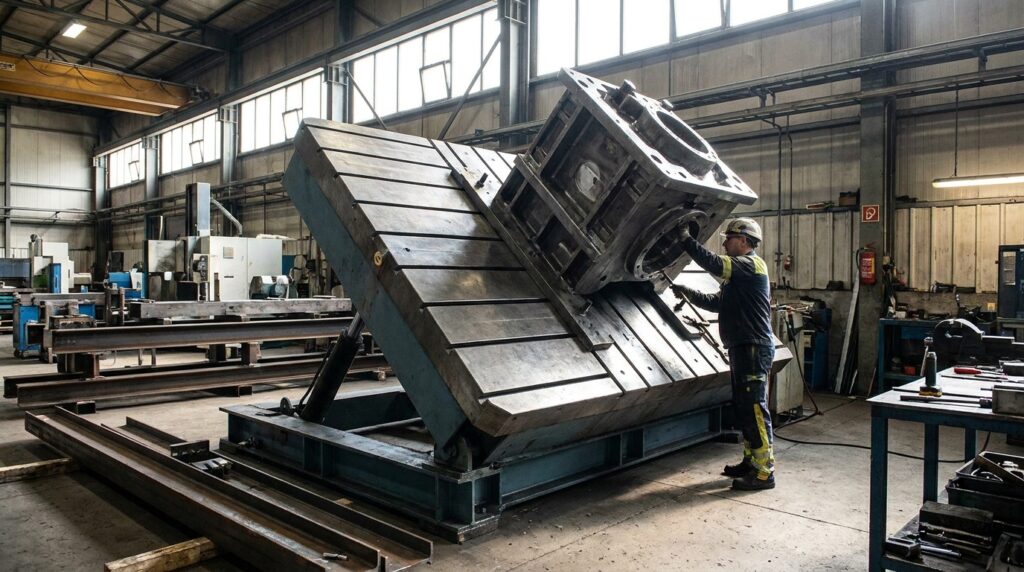
Understanding the Versatile Power of Industrial Tilt Tables: Revolutionizing Material Handling
In the demanding landscape of industrial operations, efficiency, safety, and ergonomic design are paramount. Material handling, in particular, presents numerous challenges that can impact productivity, worker well-being, and ultimately, profitability. From repetitive lifting to awkward positioning of heavy components, traditional methods can be time-consuming, injury-prone, and lead to operational bottlenecks. This is where industrial tilt tables emerge as indispensable tools, offering a sophisticated yet straightforward solution to a wide array of material manipulation needs.
At Fredon Handling, we understand the critical role that specialized equipment plays in optimizing workflows. Our comprehensive range of industrial tilt tables is designed to address the intricate demands of modern manufacturing, assembly, warehousing, and logistics. These robust machines are far more than just simple lifting devices; they are engineered solutions that enhance ergonomics, improve access for assembly and inspection, and streamline the movement of materials in a controlled and safe manner. Whether you are dealing with large, flat panels, intricate components, or entire sub-assemblies, an industrial tilt table from Fredon Handling can significantly transform your operational capabilities. This article will delve deep into the diverse applications and uses of industrial tilt tables, exploring how they can benefit your facility, what factors to consider when selecting one, and best practices for their implementation and maintenance.
Industrial tilt tables are versatile tools widely used in various sectors for enhancing efficiency and safety during material handling processes. For a deeper understanding of the applications and uses of these tables, you can explore a related article that discusses the different types of handling equipment and their benefits in industrial settings. To learn more, visit this article.
## Key Applications and Uses of Industrial Tilt Tables
The versatility of industrial tilt tables is their greatest strength. They are not confined to a single industry or task but can be adapted to a multitude of scenarios where precise angling and controlled movement of materials are required. Their primary function is to elevate and tilt loads, bringing them to an ergonomic working height and angle, thereby reducing the need for manual lifting, twisting, and bending. This not only protects workers from musculoskeletal injuries but also allows for more efficient and accurate handling of materials.
### Manufacturing and Assembly Lines
Manufacturing environments are prime beneficiaries of tilt table technology. In assembly processes, components often need to be presented at specific angles for precise placement, welding, riveting, or fastening.
- Component Presentation: Tilt tables can hold large panels, chassis, or sub-assemblies, tilting them to allow operators easy access for installing smaller parts, wiring harnesses, or applying adhesives. This is common in the automotive, aerospace, and electronics industries. For instance, an automotive assembly line might use a tilt table to present a car door at an angle for the installation of windows, locks, and interior trim.
- Ergonomic Workstations: By tilting a workpiece, operators can maintain a neutral posture, reducing strain on their back, neck, and shoulders. This is crucial for tasks involving prolonged standing or sitting.
- Palletizing and Depalletizing: While specialized palletizers exist, tilt tables can assist in breaking down or building up palletized loads, especially for items that cannot be easily handled by standard forklifts or automated systems. They can tilt pallets to make it easier to remove or place individual items.
### Warehousing and Logistics
The efficient movement and storage of goods are critical in warehouses and distribution centers. Tilt tables offer solutions for various handling challenges.
- Order Picking and Packing: For bulky or oddly shaped items, a tilt table can bring the product to the picker or packer at an accessible height and angle, improving speed and reducing errors.
- Loading and Unloading: Tilt tables can assist in the controlled unloading of items from shelves or racks, bringing them down to a manageable level. Conversely, they can help in staging items for loading onto trucks or other transport.
- Material Flow Optimization: In facilities where materials move between different stages of processing or storage, tilt tables can act as transitional points, ensuring that items are presented correctly for the next step.
### Inspection and Quality Control
Ensuring product quality often requires detailed inspection, which can be hampered by poor access to the item being examined.
- 360-Degree Viewing: Tilt tables can rotate and tilt an object, allowing inspectors to view all sides and surfaces without physically manipulating a heavy or awkward item. This is vital in industries like metal fabrication, where welds and surface finishes need close scrutiny.
- Accessibility for Measurement and Testing: For tasks requiring precise measurements or the attachment of testing equipment, a tilt table can position the product optimally, ensuring accuracy and ease of access.
### Maintenance and Repair
In maintenance depots or repair shops, tilt tables can significantly simplify the process of working on machinery and equipment.
- Component Servicing: Large components like engines, transmissions, or industrial machinery parts can be mounted on a tilt table and maneuvered to provide optimal access for repair and servicing. This avoids the need for complex overhead cranes for smaller, yet heavy, parts.
- Testing and Calibration: Equipment undergoing repair may need to be tilted for specific testing procedures or calibration, which a tilt table can facilitate.
### Material Handling of Specific Items
Certain types of materials lend themselves particularly well to handling with tilt tables.
- Sheet Metal and Panels: Large, flat, and often heavy sheet metal, glass panels, or composite materials can be easily handled, tilted, and positioned for cutting, welding, or assembly. This is a core application in metal fabrication and construction.
- Molds and Dies: In manufacturing operations that utilize molds or dies, tilt tables can assist in their loading, unloading, and positioning for maintenance or changeovers.
- Heavy Machinery Components: As mentioned, individual components of larger machinery can be managed with precision.
## Types of Industrial Tilt Tables and Their Features
Fredon Handling offers a variety of industrial tilt tables, each designed with specific functionalities and capacities to meet diverse operational needs. Understanding the differences between these types is crucial for making an informed selection.
### Hydraulic Tilt Tables
Hydraulic tilt tables are the most common type, known for their robustness, high lifting capacities, and smooth operation. They utilize a hydraulic power unit to lift and tilt the platform.
- Mechanism: A hydraulic cylinder actuates the tilting motion, and a hydraulic pump provides the necessary power.
- Capacities: Available in a wide range of capacities, from a few hundred pounds to several tons.
- Features: Often come with safety features like toe guards, emergency stops, and pressure relief valves. Some models offer variable speed control for tilting.
- Ideal For: Heavy-duty applications, repetitive tasks, and situations requiring precise control over the tilt angle.
### Pneumatic Tilt Tables
Pneumatic tilt tables use compressed air to power their lifting and tilting mechanisms. They are generally lighter and faster than hydraulic models.
- Mechanism: Compressed air acts upon cylinders or actuators to move the platform.
- Capacities: Typically suited for lighter to medium-duty loads compared to hydraulic systems.
- Features: Known for their speed and responsiveness. They can be a good choice where an air supply is readily available and rapid cycling is required.
- Ideal For: Lighter assembly tasks, order picking, and applications where speed is a priority and air infrastructure exists.
### Mechanical Tilt Tables
Mechanical tilt tables operate using mechanical systems, often involving gears, chains, or screw mechanisms, powered by an electric motor.
- Mechanism: Electric motor drives a mechanical linkage to achieve lifting and tilting.
- Capacities: Can vary significantly depending on the specific mechanical design.
- Features: Often provide very precise positioning and can hold a load at any angle without continuous power. They are generally less maintenance-intensive than hydraulic systems.
- Ideal For: Applications requiring extremely precise positioning, stability, and where minimizing hydraulic fluid is desirable.
### Low Profile Tilt Tables
These tilt tables are designed with a very low platform height when lowered, minimizing or eliminating the need for a pit or ramp for loading.
- Mechanism: Can be hydraulic, pneumatic, or electric, but designed for minimal ground clearance.
- Capacities: Varies by specific model and power source.
- Features: Excellent for retrofitting into existing facilities where structural modifications are not feasible. Reduces manual lifting for operators loading directly from the floor or low carts.
- Ideal For: Facilities with space constraints or where minimizing installation complexity is a priority.
### Custom Tilt Tables
Fredon Handling specializes in providing custom-designed tilt tables to meet unique operational challenges.
- Customization: Tailored to specific dimensions, weight capacities, tilt ranges, articulation, and integration with existing machinery.
- Specialized Features: Can include integrated conveyors, turntables, clamping mechanisms, or specific control systems.
- Ideal For: Highly specialized applications, unique material shapes, or integration into complex automated systems where off-the-shelf solutions are insufficient.
## Benefits of Implementing Industrial Tilt Tables
The adoption of industrial tilt tables yields a multitude of advantages that directly impact a company’s bottom line, operational efficiency, and workforce well-being. Investing in the right tilt table solution can be a strategic move towards a more productive and safer workplace.
### Enhanced Ergonomics and Worker Safety
This is arguably the most significant benefit. Musculoskeletal disorders (MSDs) are a leading cause of workplace injuries and lost productivity. Tilt tables directly combat these by:
- Reducing Manual Lifting: By bringing heavy or awkward items to an accessible height and angle, the need for workers to bend, twist, and lift is drastically reduced.
- Minimizing Awkward Postures: Operators can work in a more natural, neutral posture, reducing strain on the back, neck, shoulders, and wrists.
- Preventing Slips and Falls: Improved access and controlled material movement reduce the likelihood of accidents caused by unstable loads or tripping hazards.
- Improving Operator Comfort: Comfortable operators are more focused and less prone to fatigue-related errors.
### Increased Productivity and Efficiency
Ergonomic improvements often translate directly into productivity gains.
- Faster Work Cycles: When materials are presented optimally, tasks like assembly, inspection, or kitting can be completed more quickly.
- Reduced Errors: Better access and visibility lead to fewer mistakes in handling, assembly, or placement.
- Streamlined Material Flow: Tilt tables can facilitate smoother transitions between different stages of a process, preventing bottlenecks.
- Optimized Space Utilization: By allowing controlled manipulation of materials, tilt tables can sometimes enable more efficient use of floor space.
### Improved Quality Control and Precision
The ability to precisely position and angle materials is crucial for quality-dependent operations.
- Better Access for Inspection: Allows for thorough visual inspection of all surfaces and joints.
- Precise Component Placement: Essential for tasks requiring accurate alignment of parts.
- Consistent Welding and Fabrication: Tilting can ensure uniform application of welding or other fabrication processes.
### Cost Savings
The benefits of tilt tables ultimately contribute to significant cost reductions.
- Reduced Workers’ Compensation Claims: Lower rates of MSDs and workplace injuries lead to fewer claims and associated costs.
- Decreased Downtime: Fewer injuries mean less lost work time for employees and less disruption to production schedules.
- Minimized Product Damage: Controlled handling reduces the risk of dropping or damaging materials and finished goods.
- Extended Equipment Lifespan: Proper material handling can reduce wear and tear on both the materials and surrounding equipment.
### Versatility and Adaptability
As previously discussed, tilt tables are not one-trick ponies. Their ability to handle a wide range of materials and integrate into various workflows makes them a valuable asset.
- Adaptable to Different Materials: From small components to large panels.
- Flexible Integration: Can be incorporated into existing assembly lines, workstations, or warehousing layouts.
- Scalable Solutions: Fredon Handling offers a range of capacities and configurations to suit growing business needs.
Industrial tilt tables are versatile tools that enhance efficiency in various manufacturing and warehousing processes. They are particularly useful in applications such as assembly lines, packaging, and material handling, where the ability to tilt and position items can significantly reduce strain on workers and improve workflow. For a deeper understanding of how these tables can be integrated into your operations, you might find this related article on industrial handling solutions to be quite informative.
## Selecting the Right Industrial Tilt Table for Your Needs
Choosing the optimal industrial tilt table requires a thorough assessment of your specific operational requirements. A mismatch can lead to underperformance, premature wear, or even safety hazards. Fredon Handling is committed to guiding you through this critical decision-making process.
### Key Factors to Consider
- Load Capacity: This is paramount. Determine the maximum weight of the items you will be handling. Always select a tilt table with a capacity significantly exceeding your heaviest load to ensure longevity and safety. Refer to our Heavy Duty Tilt Tables for high-capacity solutions.
- Platform Size and Configuration: The dimensions of the tilt table platform must be adequate to securely accommodate the largest items you intend to handle. Consider the shape of your materials – are they flat panels, irregularly shaped parts, or containers? Custom platform designs may be necessary.
- Tilt Range and Angle: What is the required angle for your specific application? Some tasks require a full 90-degree tilt for vertical positioning, while others may only need a slight angle for ergonomic access.
- Lifting Height: Determine the desired working height for your operators or for integration with other equipment.
- Power Source:
- Hydraulic: Ideal for heavy loads and robust applications, but requires a power unit and fluid maintenance.
- Pneumatic: Faster operation, lighter, good for medium loads, requires a reliable compressed air supply.
- Electric/Mechanical: Precise positioning, lower maintenance, suitable for lighter to medium loads.
- Operating Environment: Consider factors like temperature extremes, moisture, dust, and the presence of corrosive materials. The tilt table material and its protective finishes should be suitable for your environment.
- Frequency of Use: For high-frequency applications, durability and speed become more critical.
- Integration with Existing Systems: Will the tilt table need to interface with conveyors, automated machinery, or other handling equipment? This might necessitate custom controls or specialized features.
- Ergonomic Requirements: Assess the specific needs of your operators regarding working heights, reach, and posture.
- Safety Features: Ensure the chosen model includes essential safety features such as toe guards, emergency stop buttons, pressure relief valves, and overload protection.
- Budget: While cost is a factor, prioritize functionality, durability, and safety over the lowest price point to ensure a long-term, beneficial investment.
### Customization Options from Fredon Handling
At Fredon Handling, we understand that standard solutions don’t always fit the unique demands of every industrial setting. Our expertise in custom tilt table design allows us to tailor equipment precisely to your needs.
- Tailored Platform Dimensions: We can fabricate platforms to exact sizes, accommodating oversized or unusually shaped materials.
- Variable Tilt Angles and Ranges: If your process requires specific, non-standard tilt angles, we can engineer them.
- Integrated Controls: We can develop custom control systems for seamless integration with your existing automation and safety protocols.
- Specialized Attachments: From custom fixtures to secure heavy or delicate items, to integrated weighing systems, we can add specialized features.
- Material Selections: For harsh environments, we can specify materials and coatings to ensure longevity and resistance.
- Power Source Modifications: Adapting to available utilities or specific performance requirements.
Explore our Custom Material Handling Solutions to learn more about our bespoke engineering capabilities.
## Safety and Maintenance Guidelines for Industrial Tilt Tables
Safe operation and proper maintenance are critical for maximizing the lifespan, performance, and safety of your industrial tilt table. Following these guidelines will help prevent accidents and ensure consistent operation.
### Safety Best Practices
- Operator Training: All personnel who operate the tilt table must receive comprehensive training on its operation, safety features, load limits, and emergency procedures.
- Pre-Operation Checks: Before each use, conduct a visual inspection of the tilt table. Check for any visible damage, leaks (for hydraulic systems), loose connections, or obstructions around the platform.
- Load Capacity Adherence: Never exceed the manufacturer’s specified load capacity. Overloading can lead to equipment failure and serious accidents.
- Secure Load Placement: Ensure that loads are centered on the platform and stable before initiating any movement. Use tie-downs or securing mechanisms if necessary, especially for tall or unstable items.
- Clearance Zones: Maintain a clear area around the tilt table during operation. Ensure no personnel or obstructions are within the tilt path or in the immediate vicinity.
- Emergency Stop Accessibility: Operators should know the location of and how to activate the emergency stop button at all times.
- Lockout/Tagout Procedures: Implement strict lockout/tagout procedures during maintenance, repair, or when the tilt table is not in use.
- Regular Inspections: Schedule regular safety inspections by qualified personnel to identify potential hazards or wear and tear.
- Avoid Riding the Platform: Never allow personnel to stand or ride on the tilt table platform unless it is specifically designed and approved for such use (which is rare for industrial tilt tables).
### Routine Maintenance Schedule
A proactive maintenance schedule will significantly reduce the likelihood of unexpected breakdowns and extend the operational life of your tilt table.
- Daily Checks (Operator):
- Visual inspection for damage or leaks.
- Check for obstructions.
- Test emergency stop button functionality.
- Weekly Checks (Operator/Supervisor):
- Inspect hydraulic fluid levels and appearance (if applicable).
- Check for any unusual noises during operation.
- Verify that all safety guards are in place and secure.
- Monthly Checks (Trained Maintenance Personnel):
- Lubricate moving parts as per manufacturer’s recommendations.
- Inspect electrical connections for tightness and corrosion.
- Check hydraulic hoses and fittings for wear or leaks (replace if necessary).
- Test hydraulic system pressure against specifications.
- Inspect mechanical components for wear or damage.
- Quarterly/Annual Checks (Qualified Technician):
- Full system inspection, including cylinders, pumps, valves, and control systems.
- Hydraulic fluid change and filter replacement (as per manufacturer’s schedule).
- Calibration of safety sensors and controls.
- Thorough cleaning of the unit.
- Check and tighten all fasteners.
Note: Always refer to the specific operation and maintenance manual provided by Fredon Handling for your particular tilt table model. This manual will contain detailed instructions and recommended service intervals.
For ongoing support and maintenance planning, contact Fredon Handling’s service department.
## Frequently Asked Questions About Industrial Tilt Tables
We understand that investing in specialized equipment like industrial tilt tables can bring about questions. Here, we address some common inquiries to provide clarity and confidence.
Q1: What is the primary benefit of using a tilt table in a manufacturing assembly line?
A1: The primary benefit is enhanced ergonomics and worker safety. Tilt tables bring heavy or awkward components to an optimal working height and angle, reducing the risk of musculoskeletal injuries caused by bending, twisting, and repetitive lifting. This also improves operator comfort and can lead to increased productivity.
Q2: Can tilt tables handle extremely heavy loads, like industrial machinery components?
A2: Yes, industrial tilt tables are available in a wide range of capacities, including heavy-duty models designed to handle loads weighing several tons. Fredon Handling offers robust hydraulic tilt tables specifically engineered for the most demanding applications. It’s crucial to match the table’s capacity to your heaviest anticipated load with a safety margin.
Q3: How do I determine the correct size of the tilt table platform?
A3: The platform size should be adequate to fully support and stabilize the largest items you intend to handle. Consider the length, width, and even height of your materials. If you handle a variety of sizes, consider a larger platform or custom solutions that can accommodate your full range of materials.
Q4: Are there specific safety certifications or standards that industrial tilt tables adhere to?
A4: Reputable manufacturers like Fredon Handling design their equipment to meet or exceed relevant safety standards. While specific certifications can vary by region and application, common safety considerations include compliance with OSHA guidelines for material handling equipment and ensuring features like load holding valves, overload protection, and emergency stops are incorporated. Always inquire about compliance with relevant industry standards.
Q5: What is the difference between hydraulic, pneumatic, and electric tilt tables, and which is best for my application?
A5:
- Hydraulic: Known for high capacity, smooth operation, and robustness. Best for heavy-duty, repetitive tasks. Requires hydraulic fluid maintenance.
- Pneumatic: Faster operation, lighter, and more responsive. Best for medium loads where speed is critical and compressed air is readily available.
- Electric/Mechanical: Offers precise positioning and typically lower maintenance than hydraulic. Best for applications requiring fine control and stability.
The “best” choice depends on your specific load requirements, desired speed, available utilities, and precision needs.
Q6: Can Fredon Handling provide custom-engineered tilt tables if standard models don’t meet my needs?
A6: Absolutely. Fredon Handling specializes in custom material handling solutions. We can design and manufacture tilt tables with specific platform dimensions, capacities, tilt ranges, control systems, and integration capabilities to precisely match your unique operational requirements.
## Elevate Your Operations with Fredon Handling
Industrial tilt tables are not just pieces of equipment; they are strategic investments that can profoundly impact your facility’s safety, productivity, and overall operational efficiency. By reducing ergonomic strain, streamlining material flow, and enabling precise manipulation of goods, these versatile machines empower your workforce and optimize your processes.
At Fredon Handling, we are dedicated to providing industrial buyers, engineers, and facility managers with the most effective and reliable material handling solutions. Our extensive range of industrial tilt tables, coupled with our expertise in custom design and unwavering commitment to quality and safety, ensures that you will find the perfect solution for your unique challenges.
Don’t let manual material handling limit your potential. Explore the possibilities and discover how Fredon Handling’s industrial tilt tables can revolutionize your operations. Contact our expert team today to discuss your specific needs and receive a personalized consultation. Let’s build a safer, more productive future for your business together.