
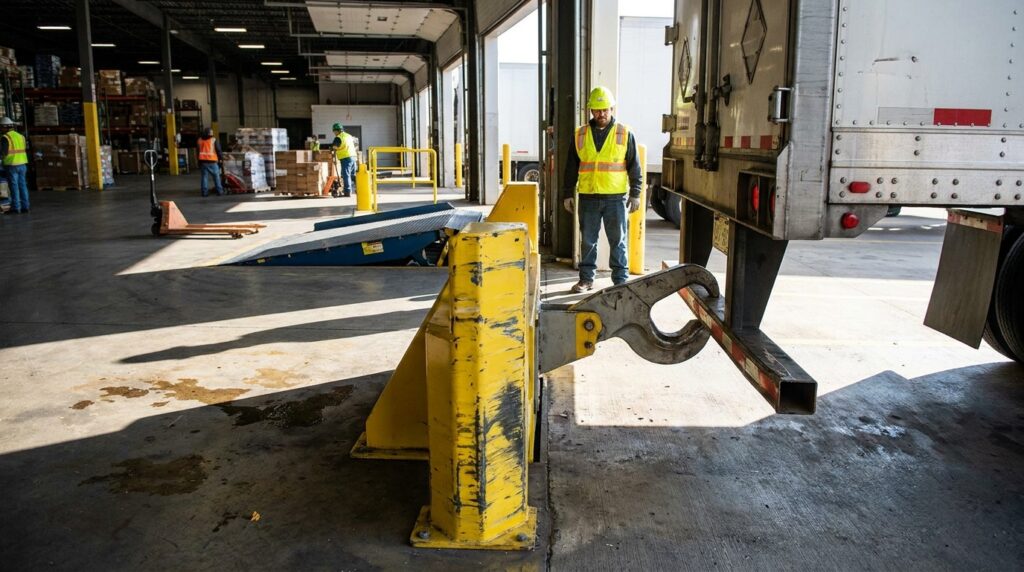
Enhancing Warehouse Safety and Efficiency: A Guide to Loading Dock Restraint Systems
In the dynamic world of industrial operations, the loading dock stands as a critical nexus of activity, facilitating the constant flow of goods. However, this vital area also presents significant safety risks, with potential hazards like vehicle separation during loading/unloading (dock walk), unauthorized dock entry, and premature truck departure posing constant threats to personnel and inventory. Implementing robust loading dock restraint systems is not merely a best practice; it’s a fundamental requirement for ensuring a secure and efficient operation. For warehouse managers, facility managers, safety managers, and purchasing professionals, understanding the nuances of these systems is paramount. This comprehensive guide from Fredon Handling (fredonhandling.com) will equip you with the knowledge to select and implement the most effective dock restraint solutions for your facility, ultimately boosting productivity and minimizing risk.
When considering the best Loading Dock Restraint Systems for your facility, it’s essential to explore various options and understand their functionalities. A related article that provides valuable insights into selecting the right system is available at Fredon Handling Projects. This resource offers detailed information on different types of dock restraint systems and their applications, helping you make an informed decision tailored to your specific needs.
Understanding the Critical Role of Loading Dock Restraint Systems
The loading dock environment, characterized by the constant movement of heavy machinery, trailers, and personnel, is inherently susceptible to accidents. Without proper safeguards, the gap between a trailer and the dock can become a dangerous zone. This is where industrial dock restraints come into play, acting as a vital line of defense. These systems are designed to prevent catastrophic incidents, safeguarding against:
The Perils of Dock Separation (Dock Walk)
Dock walk, the gradual drifting of a semi-trailer away from the dock, is a silent but deadly threat. As forklifts load or unload, the weight distribution shifts, and hydraulic systems can lose pressure, causing the trailer to creep away. This can result in:
- Trailer Separation: A severe and sudden separation can cause a forklift, its operator, and valuable cargo to fall to the ground, leading to severe injuries or fatalities.
- Damage to Equipment and Product: The impact of separation can damage forklifts, loading equipment, the trailer itself, and the goods being handled.
- Operational Downtime: Accidents at the loading dock necessitate investigations, cleanup, and repairs, leading to significant disruptions in workflow and productivity.
Preventing Unauthorized Dock Entry and Premature Departures
Beyond the physical dangers of dock walk, uncontrolled access to trailers and the risk of trucks departing before loading or unloading is complete also present significant liabilities.
- Unauthorized Access: A trailer’s open doors can invite theft or tampering with goods, both while parked at the dock and before it is secured.
- Premature Departure: A truck driver, unaware that loading or unloading is still in progress, might depart the dock. This can result in dropped loads, damaged equipment, and severe injuries to personnel still inside or near the trailer.
Loading dock restraint systems are engineered to mitigate these risks by physically securing the trailer to the dock until the operation is safely completed. They are a crucial component of any comprehensive loading dock safety program. Fredon Handling (fredonhandling.com) offers a wide array of solutions designed to address these specific challenges.
Types of Loading Dock Restraint Systems: A Comparative Overview
The market offers a variety of trailer restraint systems, each with its own advantages and ideal applications. Understanding these differences is key to making an informed purchasing decision.
Wheel Chocks: The Basic Line of Defense
Wheel chocks are the simplest form of trailer restraint. They are wedge-shaped blocks placed against the trailer’s wheels to prevent it from rolling.
- How they work: Placed behind the drive tires, chocks create a physical barrier preventing the trailer from moving.
- Pros: Inexpensive, easy to use, require minimal installation.
- Cons: Rely heavily on manual placement and removal, prone to misplacement or failure if not properly secured, can be overcome by significant trailer movement, and do not prevent dock walk. Their effectiveness is entirely dependent on human diligence.
- Ideal applications: Low-traffic docks, facilities with limited budgets where more advanced systems are not feasible, or as a supplementary safety measure.
- Fredon Handling Recommendation: While basic, ensure you