
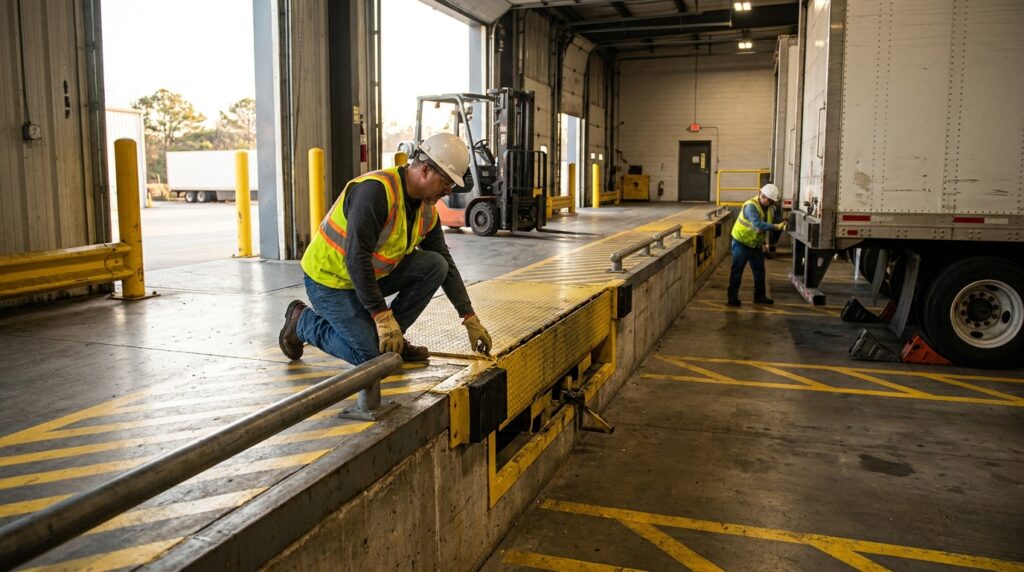
Navigating the Labyrinth of Loading Dock Safety: A Comprehensive Guide for Industrial Facilities
The loading dock is the bustling heart of many industrial operations, a critical nexus where goods enter and exit your facility. While essential for commerce, it’s also an area rife with potential hazards. Statistics from the Bureau of Labor Statistics consistently highlight the loading dock as a significant source of workplace injuries and fatalities, ranging from falls and struck-by incidents to electrocutions and being caught between objects. For warehouse managers, facility managers, safety managers, and purchasing professionals, understanding and implementing robust OSHA loading dock safety requirements isn’t just a matter of compliance; it’s a fundamental responsibility to protect your most valuable asset: your people.
This article delves deep into the essential OSHA loading dock safety requirements, providing actionable insights, practical examples, and crucial information to help you create a safer, more efficient, and compliant loading dock environment. We’ll explore key hazard areas, necessary equipment, best practices, and the importance of continuous training and evaluation.
For facilities looking to enhance their understanding of OSHA loading dock safety requirements, it is beneficial to explore related resources that provide comprehensive insights into material handling best practices. One such article is available at Fredon Handling’s Education Center, which covers various aspects of material handling and safety protocols that can help ensure a secure and efficient loading dock environment.
Understanding the Core Hazards of Loading Dock Operations
Loading docks, by their very nature, present a unique set of challenges that can lead to serious accidents if not adequately addressed. A thorough understanding of these inherent risks is the first step in developing effective safety protocols.
Slips, Trips, and Falls
The movement of materials, personnel, and vehicles on and around the loading dock creates numerous opportunities for slips, trips, and falls. Uneven surfaces, spills of lubricants or other liquids, debris, and poor lighting are common culprits. Falls can occur from elevated dock levels, into open dock doors, or off the back of trailers.
Vehicle Collisions and Run-Offs
Forklifts, pallet jacks, and other industrial vehicles operate in close proximity to trailers and trucks. Without proper restraints and communication, trailers can unexpectedly pull away from the dock, leading to devastating “dock walk” accidents where personnel are crushed between the trailer and the dock. Conversely, vehicles can also back into the dock itself or pedestrians.
Struck-By and Caught-Between Incidents
The movement of heavy materials, equipment like forklifts, and the operation of dock levelers and doors all contribute to the risk of being struck by objects or caught between moving parts. This can involve falling loads, equipment malfunction, or improper operation of machinery.
Ergonomic Strains and Sprains
Repetitive lifting, awkward postures, and manual handling of heavy or bulky items contribute to musculoskeletal disorders (MSDs). While not always immediately catastrophic, these injuries can lead to chronic pain, reduced productivity, and significant long-term healthcare costs.
Environmental Hazards
Weather conditions can exacerbate existing hazards. Rain, snow, and ice can make surfaces slippery, and extreme temperatures can lead to heat stress or cold exposure for workers. Wind can also pose a risk, especially when dealing with large or lightweight loads.
Essential OSHA Loading Dock Safety Requirements and Best Practices
OSHA provides a framework of standards to mitigate the risks associated with loading dock operations. While specific regulations can be intricate, the core principles revolve around hazard identification, control measures, and continuous vigilance.
Preventing Trailer Separation and Movement: Dock Lock Systems and Wheel Chocks
One of the most critical safety concerns at the loading dock is preventing trailers from unexpectedly moving away from the dock or being driven away while loading or unloading is in progress. OSHA’s General Industry standard 29 CFR 1910.23(b)(2) addresses preventing falls from docks, which implicitly includes ensuring the dock is a stable and secure environment. The key here is securing the trailer to the dock.
Dock Lock Systems
Automatic and semi-automatic vehicle restraints, often referred to as dock locks, are a cornerstone of modern loading dock safety. These systems physically engage with the trailer’s rear impact guard (RIG) to prevent it from moving forward or backward.
- Automatic Dock Locks: These systems are typically activated by the truck driver. Once the truck is positioned, the driver can activate the restraint, which then secures the RIG. Some advanced systems have sensors that confirm engagement and provide a visual signal to the dock attendant.
- Semi-Automatic Dock Locks: These require some manual intervention but are still highly effective. They often involve a wheel chock that is manually placed, or a lever that needs to be engaged to secure the trailer.
Selection Criteria: When choosing a dock lock system, consider the types of trailers your facility handles, the weight of loads, and the level of automation desired. Durability and ease of maintenance are also crucial factors. Fredon Handling offers a range of robust vehicle restraint systems designed to meet various operational needs.
Wheel Chocks
For facilities that may not have automatic dock locks or as an additional layer of security, wheel chocks are essential. OSHA’s General Industry standard 29 CFR 1910.269(p)(2)(ii) mandates that employees shall not perform industrial truck operations in a manner that might cause them to be struck by an industrial truck when a vehicle is approaching or leaving the dock. Proper chocking helps prevent unexpected vehicle movement.
- Material: Chocks should be made of a durable material like rubber or heavy-duty plastic that won’t easily degrade. Metal chocks can be hazardous if they detach.
- Placement: Chocks should be placed against the rear wheels of the trailer on both sides. It’s crucial to train personnel on the correct placement and to ensure they are always used when a trailer is docked, even if a dock lock is present.
- Inspection: Regularly inspect chocks for wear and tear, cracks, or damage that could compromise their effectiveness.
Ensuring Safe Entry and Exit: Dock Boards, Bridge Plates, and Levelers
The transition between the loading dock and the trailer bed presents a significant hazard. Gaps, height differences, and uneven surfaces can lead to trips, falls, and accidents involving forklifts or personnel.
Dock Boards and Bridge Plates
These portable or semi-permanent devices bridge the gap between the dock and the trailer. They are particularly useful when a permanent dock leveler is not feasible or for accommodating varying trailer heights.
- Capacity: It’s crucial to select a dock board or bridge plate that can safely handle the weight of the equipment and the load it will carry. Overloading can lead to catastrophic failure.
- Surface: Non-slip surfaces are paramount. Look for designs with diamond plate or other textured finishes to provide traction for forklifts and personnel, especially in wet or icy conditions.
- Securing Mechanisms: Dock boards should have a secure method of attachment to the dock to prevent them from shifting during use. Locking legs or lip designs are common.
Dock Levelers
Dock levelers are permanently installed mechanical or hydraulic devices that create a smooth transition between the dock and the trailer. They are a highly efficient and safe solution for high-volume operations.
- Types:
- Mechanical Levelers: Powered by springs or counterweights, these are generally more affordable and require less maintenance than hydraulic models.
- Hydraulic Levelers: Powered by hydraulic cylinders, these offer smoother operation, greater lifting capacity, and can be more precise in their adjustment.
- Air-Ramp Levelers: Utilize air-powered systems, offering a smooth, quiet, and highly adjustable operation.
- Features: Consider features like automatic fall-off protection, automatic return-to-sweeper function (which cleans debris from the lip area), and adjustable side guards.
- Maintenance: Regular inspection and lubrication of moving parts, hydraulic fluid checks (for hydraulic models), and testing of safety mechanisms are vital.
Fredon Handling’s Loading Dock Equipment: We offer a comprehensive selection of dock boards, bridge plates, and various types of dock levelers designed to enhance safety and efficiency. Explore our Loading Dock Equipment category to find the right solutions for your facility.
Pedestrian Safety and Segregation
Protecting pedestrians from moving vehicles and equipment is paramount. Loading dock areas can be chaotic, and clear demarcation and safety protocols are essential.
Guardrails and Barriers
OSHA’s General Industry standard 29 CFR 1910.23 addresses guarding floor and wall openings and holes. While not specific to loading docks, the principle applies to preventing falls from elevated areas.
- Dock Door Protection: Installing sturdy guardrails around dock doors when they are not in use can prevent accidental falls.
- Traffic Flow Separation: Using bollards, barriers, or painted lines to delineate pedestrian walkways from vehicle traffic paths is crucial. This physically separates people from potential hazards.
Safety Gates
Self-closing safety gates at dock doors can provide a physical barrier when the dock is not in use, preventing accidental falls.
Visibility and Lighting
Adequate lighting is essential for preventing accidents in all areas of a facility, and the loading dock is no exception. OSHA’s General Industry standard 29 CFR 1910.269(p)(3)(i) touches on illumination requirements for workspaces.
- General Lighting: Ensure the entire loading dock area, both inside and outside, is well-lit. This includes the dock floor, the approach to the dock, and the interior of trailers when necessary.
- Spot Lighting: Consider specialized lighting for specific tasks, such as trailer interior lighting or task lighting for pallet inspection.
- Visibility of Dock Indicators: If your facility uses visual communication systems (e.g., lights indicating when a trailer is secured), ensure these are clearly visible to all relevant personnel.
Industrial Truck Safety
The safe operation of forklifts and other industrial trucks is a critical component of loading dock safety. OSHA’s Powered Industrial Trucks standard (29 CFR 1910.178) provides comprehensive guidelines.
- Operator Training and Certification: All operators must be thoroughly trained and certified by their employer. This includes training on the specific types of equipment used, safe operating procedures, and hazard awareness.
- Pre-Operation Inspections: Operators must conduct daily pre-operation checks of their equipment to ensure it is in safe working order.
- Safe Maneuvering: Operators should maintain a safe speed, sound their horn at blind corners and intersections, and avoid carrying loads at excessive heights.
- Load Stability: Ensure loads are stable and properly secured before transport.
- Speed Limits: Establish and enforce speed limits within the loading dock area.
Personal Protective Equipment (PPE)
While engineering controls and safe work practices are the primary focus, proper PPE is the last line of defense for employees.
- High-Visibility Clothing: Essential for all personnel working in the loading dock area, especially those near moving vehicles or equipment.
- Safety Shoes: Steel-toed boots with slip-resistant soles protect against falling objects and provide traction.
- Hard Hats: Required in areas where there is a risk of falling objects.
- Gloves: Protect hands from cuts, abrasions, and chemical exposure.
- Eye Protection: Safety glasses or goggles are necessary to protect against flying debris or splashes.
Implementing a Comprehensive Loading Dock Safety Program
A robust safety program goes beyond simply installing equipment. It requires a systematic approach to identifying, evaluating, and controlling hazards.
Hazard Assessment and Risk Analysis
The first step is to conduct a thorough hazard assessment of your loading dock area. This involves walking through the dock, observing operations, and identifying potential risks.
- Job Hazard Analysis (JHA): Break down each task performed at the loading dock (e.g., trailer arrival, unloading, loading, departure) and identify the hazards associated with each step.
- Incident Review: Analyze any past accidents or near misses to understand their root causes and implement corrective actions.
- Regular Audits: Conduct regular safety audits to ensure compliance with established procedures and identify any emerging hazards.
Developing Standard Operating Procedures (SOPs)
Clear, concise, and easily accessible SOPs are crucial for ensuring consistent safe practices.
- Lockout/Tagout (LOTO): Develop specific LOTO procedures for any equipment maintenance or repair at the loading dock, ensuring energy sources are properly de-energized.
- Trailer Safety Procedures: Outline steps for trailer inspection, securing, and communication with drivers.
- Forklift Operation SOPs: Reinforce OSHA requirements and company-specific rules.
- Emergency Procedures: Clearly define procedures for emergencies such as spills, fires, or injuries, including evacuation routes and contact information.
Training and Communication
Effective training is the bedrock of any safety program.
- New Employee Orientation: Include comprehensive loading dock safety training as part of the onboarding process for all new employees who will be working in or near the area.
- Refresher Training: Conduct regular refresher training sessions to reinforce safety messages and address any changes in procedures or equipment.
- Toolbox Talks: Utilize short, informal meetings (toolbox talks) to discuss specific safety topics, hazards, or recent incidents.
- Visual Aids: Use signage, posters, and diagrams to reinforce safety messages throughout the loading dock area.
Equipment Maintenance and Inspection
Regular maintenance and inspection of all loading dock equipment are critical to prevent failures and ensure ongoing safety.
- Preventative Maintenance Schedule: Develop a detailed preventative maintenance schedule for all dock equipment, including dock levelers, vehicle restraints, dock seals, and doors. Follow manufacturer recommendations and OSHA guidelines.
- Daily/Weekly Inspections: Implement daily or weekly visual inspections by trained personnel. This can catch minor issues before they become major problems.
- Record Keeping: Maintain detailed records of all inspections, maintenance, and repairs. This documentation is important for demonstrating compliance and tracking equipment performance.
- Prompt Repairs: Address any identified issues or malfunctions immediately. Do not operate damaged equipment.
Fredon Handling’s Expertise: At Fredon Handling, we understand that the right equipment is only part of the solution. We offer resources and support to help you maintain your equipment and ensure its longevity and safety. Explore our educational articles for more insights on equipment maintenance.
For facilities looking to enhance their understanding of OSHA loading dock safety requirements, it is beneficial to explore additional resources that provide comprehensive insights. One such article can be found at Fredon Handling, which discusses various safety measures and best practices that can help ensure a secure working environment at loading docks. By familiarizing themselves with these guidelines, facility managers can better protect their employees and improve overall operational efficiency.
Addressing Specific Safety Scenarios and Equipment Considerations
Beyond the general requirements, certain loading dock scenarios and equipment warrant specific attention.
Dock Seals and Shelters
Dock seals and shelters are designed to create a seal between the trailer and the building, protecting goods from the elements and improving energy efficiency. However, they can also introduce new hazards if not properly managed.
- Visibility: Ensure that the seal or shelter does not obstruct the driver’s view when backing into the dock.
- Trailer Fit: Train operators to ensure the trailer is properly centered within the seal or shelter. Off-center trailers can cause damage to the seal and the trailer.
- Pinch Points: Be aware of potential pinch points between the trailer, the dock, and the sealing material.
Vertical Storing Dock Levelers
These levelers are stored vertically under the dock door when not in use.
- Clearance: Ensure sufficient vertical clearance to accommodate the leveler when it is in its stored position.
- Interlocks: Consider interlock systems that prevent the dock door from being lowered if the leveler is not fully retracted, preventing damage and accidents.
Safety Features of Material Handling Equipment
When purchasing new material handling equipment, such as forklifts or pallet trucks, always prioritize safety features.
- Load Capacity: Ensure equipment has adequate load capacity for your typical operations.
- Operator Visibility: Look for designs that maximize operator visibility.
- Stability Systems: Many modern forklifts incorporate stability control systems to prevent tip-overs.
- Audible and Visual Alarms: Backup alarms and flashing lights are crucial for alerting pedestrians to moving equipment.
Fredon Handling’s Product Pages: For detailed information on the safety features and specifications of our material handling equipment, please visit our relevant product pages.
The Legal and Financial Imperative of OSHA Loading Dock Safety
Compliance with OSHA loading dock safety requirements is not just a recommendation; it’s a legal obligation. Failure to comply can result in significant penalties, including substantial fines.
OSHA Fines and Penalties
OSHA enforcement can lead to citations and fines for violations. These penalties can range from minor to severe depending on the nature and severity of the violation, whether it’s willful, repeated, or a serious hazard. These costs can significantly impact a company’s bottom line.
Reduced Workplace Injuries and Associated Costs
The most compelling reason for prioritizing safety is the reduction of injuries. Workplace injuries lead to:
- Lost Productivity: Injured employees are unable to work, and their absence can disrupt operations.
- Increased Insurance Premiums: Workers’ compensation and general liability insurance premiums are often tied to a company’s safety record.
- Medical Expenses: Even minor injuries can incur significant medical costs.
- Legal Fees and Settlements: Serious injuries can lead to costly lawsuits and settlements.
- Damage to Reputation: A poor safety record can negatively impact a company’s reputation, making it harder to attract and retain talent and customers.
Investing in proper loading dock safety equipment and training is a proactive measure that yields significant financial returns by preventing these costly incidents.
Frequently Asked Questions About OSHA Loading Dock Safety
Q1: What is the most common cause of loading dock accidents?
A1: The most common causes of loading dock accidents are related to trailer separation and movement (e.g., dock walk), slips, trips, and falls from elevated areas, and collisions involving forklifts or other vehicles.
Q2: How often should loading dock equipment be inspected?
A2: OSHA guidelines and manufacturer recommendations typically suggest daily or weekly visual inspections of key equipment like dock levelers and vehicle restraints, with more comprehensive preventative maintenance performed on a scheduled basis (monthly, quarterly, or annually depending on usage and equipment type).
Q3: Is it permissible to use makeshift chocks for trailers?
A3: No, OSHA generally requires that wheel chocks be made of durable materials and designed to effectively prevent vehicle movement. Makeshift or inadequate chocks can fail and are not compliant with the intent of safety regulations. Fredon Handling offers robust, purpose-built wheel chocks.
Q4: What are the basic requirements for lighting in a loading dock area?
A4: Adequate lighting is required to ensure visibility for safe operations, preventing slips, trips, falls, and vehicle collisions. This includes general illumination of the dock floor, approaches, and interior of trailers when necessary.
Q5: What is the role of communication in loading dock safety?
A5: Clear and consistent communication is vital. This includes communication between truck drivers and dock personnel, as well as internal communication regarding safety procedures, potential hazards, and the status of loading/unloading operations. Visual aids like communication lights on dock restraints also play a key role.
Conclusion: Prioritizing Safety for a Thriving Operation
The loading dock is an integral part of any industrial operation, and its safe management is paramount. By understanding and diligently implementing OSHA loading dock safety requirements, investing in the right equipment from reputable suppliers like Fredon Handling, and fostering a culture of safety, you can significantly reduce the risk of accidents, protect your workforce, and ensure the smooth and efficient flow of goods.
Don’t leave the safety of your loading dock to chance. Proactive investment in safety is an investment in your people, your productivity, and your company’s long-term success.
Ready to enhance your loading dock safety and efficiency? Contact Fredon Handling today for a personalized quote on our comprehensive range of material handling equipment and safety solutions.