
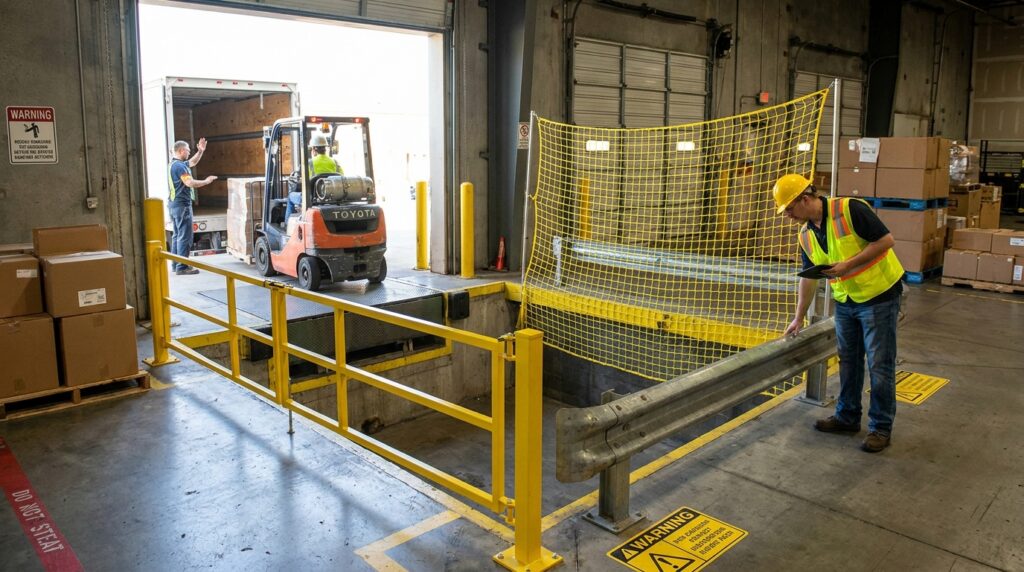
The Critical Importance of Loading Dock Fall Prevention
The loading dock is a nexus of activity in any industrial facility, a high-traffic area where goods enter and exit. While essential for operations, it’s also a prime location for serious accidents. Falls, particularly those occurring at the edge of a loading dock, represent a significant safety hazard, leading to severe injuries, lost productivity, and substantial costs. Implementing robust fall prevention strategies, encompassing physical barriers, protective guards, and comprehensive operational procedures, is not just a best practice; it’s a fundamental requirement for safeguarding personnel and ensuring operational continuity. This article will delve into the multifaceted approach to loading dock fall prevention, exploring the types of equipment available, best practices for their implementation, and the crucial role of procedures and training. For warehouse managers, facility managers, safety professionals, and purchasing decision-makers, understanding and acting upon these principles is paramount to creating a safer working environment.
In the context of enhancing safety measures in industrial environments, understanding the importance of loading dock fall prevention is crucial. This includes the implementation of barriers, guards, and effective procedures to mitigate risks. For further insights on optimizing safety and efficiency in your operations, you may find it beneficial to explore a related article on selecting appropriate material handling equipment for your business. You can read more about it here: How to Choose the Right Material Handling Equipment for Your Business.
Understanding the Risks: Common Loading Dock Fall Hazards
The dynamic nature of loading docks creates a confluence of potential fall hazards. Understanding these specific risks is the first step in developing effective prevention strategies. From the moment a truck approaches to the final departure of a forklift, numerous scenarios can lead to a fall.
Vehicle and Dock Interface Issues
The connection between a delivery vehicle and the loading dock itself is a critical point of vulnerability. Misalignment, gaps, and unexpected movements can create hazardous conditions.
- Dock Leveler Gaps: When a dock leveler is not properly deployed or maintained, significant gaps can exist between the leveler lip and the trailer floor. This is a common entrapment hazard for forklifts and a tripping hazard for personnel. The American National Standards Institute (ANSI) standards, specifically ANSI MH30.1, provide guidelines on dock leveler specifications and safe operation.
- Trailer Creep: Trucks can inadvertently move away from the dock during the loading or unloading process. This phenomenon, known as trailer creep, can widen the gap between the trailer and the dock, creating a dangerous drop-off. Factors contributing to trailer creep include inadequate vehicle restraints, trailer brakes not being properly set, and uneven ground conditions.
- Incompatible Trailer Heights: Differences in height between the trailer floor and the dock floor, even when a leveler is used, can create inclines or declines that, combined with other factors, increase the risk of slips and falls.
- Damaged or Uneven Dock Surfaces: Cracks, potholes, or debris on the dock surface can cause personnel to lose their footing, especially when carrying loads or operating equipment.
Pedestrian and Forklift Hazards
Beyond the vehicle interface, the movement of people and forklifts presents its own set of fall risks.
- Edge Falls: This is perhaps the most direct and severe fall hazard. Personnel working at the edge of the dock, especially when the dock door is open and there are no physical barriers, are at extreme risk of stepping or falling off.
- Forklift Tip-Overs: Improper maneuvering, uneven surfaces, or exceeding load capacities can lead to forklift tip-overs, which can directly cause personnel to fall from the forklift or be injured by the falling equipment.
- Trips and Slips: Wet floors from spills or weather, oil leaks from equipment, and general clutter can all contribute to slips and trips, leading to falls.
- Inadequate Lighting: Poor visibility at the loading dock can mask hazards, making it difficult for pedestrians and forklift operators to navigate safely, increasing the likelihood of missteps and falls.
Environmental and Operational Factors
External conditions and operational practices also play a significant role in loading dock safety.
- Weather Conditions: Rain, snow, and ice can create extremely slippery surfaces on the dock and in the surrounding areas, drastically increasing the risk of slips and falls.
- Distractions and Rushing: In a busy warehouse environment, distractions or pressure to speed up operations can lead to workers taking shortcuts or not paying adequate attention to their surroundings, increasing the likelihood of accidents.
- Lack of Clear Pathways: Obstructed aisles or improperly stored materials near the dock can force personnel to walk in hazardous areas, increasing their risk of falling.
Addressing these diverse hazards requires a multi-layered approach that combines physical safeguards with stringent operational protocols.
Protective Barriers: Creating Physical Safeguards at the Dock Edge
Physical barriers are the first line of defense against falls at the loading dock. They act as a visual and physical deterrent, preventing accidental falls and providing a secure environment for loading and unloading operations. The selection and implementation of appropriate barriers are critical.
Guardrails and Safety Gates
Guardrails provide a continuous physical barrier along the edge of the dock. Safety gates, often incorporated into guardrail systems, are designed to allow for passage when needed but remain closed to prevent falls at other times.
- Types of Guardrails: Guardrails can be permanent or temporary. Permanent guardrail systems are typically bolted to the dock floor and are designed for long-term use. Temporary guardrails, such as those made of modular components, offer flexibility and can be moved or reconfigured as needed. Materials commonly used include steel, aluminum, and durable plastics, chosen for their strength and resistance to corrosion.
- Safety Gate Mechanisms: Safety gates can operate in various ways, including swing gates, sliding gates, and vertical lift gates. Swing gates are common and operate like a standard door, swinging open to allow passage. Sliding gates move horizontally, and vertical lift gates move upwards. The mechanism should be robust and easy to operate for authorized personnel, but also designed to prevent accidental opening. Many systems are interlocked to ensure only one gate opens at a time, preventing openings in other parts of the safety system.
- Installation and Compliance: Proper installation is crucial for the effectiveness of guardrails and gates. They must meet relevant safety standards, such as those outlined by OSHA (Occupational Safety and Health Administration) in 29 CFR 1910.23 (Guarding floor and wall openings and holes). These standards typically specify height, strength, and spacing requirements. For example, OSHA requires guardrails to be at least 42 inches high, with a midrail and toeboard.
Dock Locks and Vehicle Restraints
While primarily designed to prevent trailer creep, vehicle restraints also play a crucial role in fall prevention by stabilizing the vehicle and preventing unexpected movement away from the dock.
- Wheel Chocks: These are wedges placed under the wheels of a trailer to prevent it from rolling. While a basic form of restraint, they can be dislodged and are less reliable than powered systems.
- Automatic Vehicle Restraints (AVRs): AVRs are sophisticated systems that physically engage the trailer’s rear wheels or chassis to prevent movement. They are often interlocked with the dock door and dock leveler, ensuring that the trailer is secured before loading/unloading can begin and that the dock door cannot be opened until the restraint is disengaged. This interlocking feature significantly enhances safety. Fredon Handling offers a range of robust vehicle restraint systems designed to meet stringent safety requirements. Explore our Loading Dock Equipment for advanced solutions.
- Interlocking Systems: The true power of fall prevention lies in integrating these physical barriers. Interlocking systems ensure that the dock door cannot be opened until a vehicle is properly secured by a restraint and the dock leveler is in place. Similarly, the vehicle restraint cannot be released until the dock door is closed and the area is clear.
Bollards and Impact Protection
Bollards are vertical posts installed to protect dock structures and personnel from impacts by vehicles or forklifts.
- Purpose: Bollards act as physical barriers to prevent forklifts or other vehicles from accidentally colliding with the dock edge, guardrails, or personnel. They create a protective buffer zone.
- Materials and Placement: Bollards are typically made of steel and can be anchored directly into the concrete. Strategic placement around dock doors and along the dock edge is essential to create effective protective zones.
The selection of appropriate barriers depends on the specific operational needs of the facility, the type of vehicles and equipment used, and the existing dock infrastructure. Investing in high-quality, compliant barriers is a critical step in creating a safer loading dock environment.
Safety Guards and Accessories: Enhancing Operational Security
Beyond primary barriers, various safety guards and accessories further enhance the security and safety of the loading dock area, minimizing risks associated with specific operations.
Dock Bumpers
Dock bumpers are designed to absorb impact from trailers, protecting the dock structure from damage. While their primary function is structural protection, their presence also contributes to safety by preventing excessive jarring and potential damage that could lead to hazardous conditions.
- Functionality: They cushion the impact of trailers backing into the dock, preventing damage to the dock face, seals, and levelers.
- Materials: Made from durable materials like rubber or heavy-duty composites, they are designed to withstand repeated impacts.
- Safety Implication: By absorbing shock, they reduce the likelihood of sudden shifts or movements of the trailer that could destabilize personnel or equipment.
Dock Seals and Shelters
Dock seals and shelters create a barrier between the trailer and the dock door, protecting against environmental elements and improving energy efficiency. Their safety benefits are also significant.
- Purpose: They seal the gap between the trailer and the dock, preventing the ingress of dust, debris, and extreme temperatures.
- Types:
- Dock Seals: These typically consist of compressible pads that surround the trailer opening, creating a tight seal when the trailer is in place.
- Dock Shelters: These are fabric structures that extend from the building to surround the trailer, offering a more comprehensive barrier. They can include features like pull-away curtains that protect the shelter from damage if a trailer is misaligned.
- Safety Benefits:
- Reduced Slips and Trips: By preventing rain, snow, and ice from entering the dock area, they significantly reduce the risk of slippery surfaces and the associated falls.
- Improved Visibility: They help maintain a more controlled environment inside the dock bay, reducing the impact of external weather conditions on visibility for forklift operators and pedestrians.
- Containment: In some instances, they can help contain minor spills within the dock bay, preventing them from spreading and creating wider slip hazards.
Forklift Safety Features
Specific accessories and features for forklifts operating at the dock can directly prevent falls.
- Forklift Operator Training and Certification: While not a physical accessory, this is paramount. Properly trained and certified operators are less likely to make errors leading to accidents. OSHA’s Powered Industrial Trucks standard (29 CFR 1910.178) mandates training for all powered industrial truck operators.
- Forklift Safety Lights: Warning lights, strobe lights, and flashing beacons on forklifts improve visibility for pedestrians and other operators, reducing the chance of collisions or unexpected movements that could lead to falls.
- Forklift Speed Governors: Limiting the maximum speed of forklifts in sensitive areas like loading docks can reduce the severity of accidents and prevent tip-overs caused by excessive speed.
- Back-up Alarms: Audible alarms alert personnel to the presence of a reversing forklift, providing an opportunity to move out of harm’s way.
Lighting Solutions
Adequate lighting is non-negotiable for loading dock safety. Poor lighting creates numerous fall hazards.
- Dock Lights: Adjustable dock lights, often mounted on goosenecks, are essential for illuminating the interior of trailers during loading and unloading. This allows operators to see clearly what they are doing and identify any potential hazards within the trailer.
- Area Lighting: General illumination of the dock area, including approaches, walkways, and the dock floor itself, is crucial for pedestrian safety and forklift navigation.
- Emergency Lighting: In the event of a power outage, emergency lighting ensures that the dock area remains illuminated, preventing immediate falls and allowing for safe evacuation if necessary.
Implementing a comprehensive suite of safety guards and accessories, tailored to the specific risks of your loading dock operations, is a proactive measure that significantly reduces the potential for falls and enhances overall workplace safety. Fredon Handling provides a wide array of loading dock equipment designed with safety and efficiency in mind.
In the realm of workplace safety, the importance of effective loading dock fall prevention cannot be overstated, as highlighted in a related article that discusses various strategies and best practices. For a deeper understanding of the measures that can be implemented, you can explore the insights provided in this article, which emphasizes the significance of barriers, guards, and proper procedures in minimizing risks associated with loading docks.
Essential Procedures and Training: The Human Element of Fall Prevention
While physical barriers and safety equipment are vital, they are only as effective as the procedures and training that govern their use. The human element—how people operate at the loading dock—is equally critical in preventing falls.
Standard Operating Procedures (SOPs) for Dock Operations
Clear, documented, and consistently enforced SOPs are the backbone of safe loading dock operations. These procedures should address every aspect of the process, from truck arrival to departure.
- Vehicle Arrival and Securing:
- Pre-Arrival Checks: Procedures for verifying truck dimensions, trailer condition, and driver credentials.
- Dock Assignment: Protocols for directing trucks to designated, safe dock bays.
- Wheel Chocking and Restraint Engagement: Mandating the use of wheel chocks or automatic vehicle restraints (AVRs) before any loading or unloading begins. Emphasis on verifying engagement.
- Communication: Protocols for clear communication between truck drivers and dock personnel.
- Loading and Unloading Procedures:
- Dock Leveler Deployment: Ensuring the leveler is correctly positioned and fully engaged before forklift entry. Regular inspection and maintenance schedules for dock levelers are essential.
- Gap Management: Establishing procedures for safely bridging any remaining gaps between the dock and the trailer floor.
- Traffic Management: Designating clear pathways for forklifts and pedestrians. Implementing one-way traffic flow where feasible.
- Load Stability Checks: Procedures for ensuring loads are stable and properly secured within trailers and on forklifts before movement.
- Prohibited Activities: Clearly defining activities that are not permitted at the dock edge, such as leaning over, or standing in open doorways without protection.
- Trailer Departure:
- Clearance Verification: Ensuring the dock area and trailer interior are completely clear before releasing the vehicle restraint.
- Restraint Disengagement: Protocols for safely disengaging AVRs only after all loading/unloading is complete and the area is clear.
- Driver Communication: Confirming with the driver that they are ready to depart.
Training and Education Programs
Effective training is not a one-time event but an ongoing process. It ensures that all personnel understand the risks, the procedures, and the equipment.
- Hazard Awareness Training: Educating all employees who work in or around the loading dock about the common hazards, including edge falls, trailer creep, slips, and trips.
- Equipment Operation Training: Comprehensive training on the safe operation of all loading dock equipment, including forklifts, dock levelers, and vehicle restraints. This includes understanding the interlocking mechanisms of AVRs and dock doors.
- SOP Compliance Training: Ensuring all employees understand and can implement the established SOPs. Regular refresher courses are crucial.
- Emergency Response Training: Training on how to respond in case of an accident or fall, including first aid and emergency contact procedures.
- New Employee Onboarding: Integrating thorough loading dock safety training into the onboarding process for all new hires.
Regular Inspections and Audits
A critical component of maintaining a safe environment is the systematic and regular inspection of all equipment and the loading dock area.
- Daily Pre-Shift Inspections: Forklift operators and dock personnel should conduct brief visual inspections of their immediate work area, including checking for debris, spills, and the proper functioning of key equipment like dock levelers and restraints.
- Weekly Equipment Checks: More thorough inspections of guardrails, safety gates, dock bumpers, seals, shelters, and lighting systems.
- Monthly Comprehensive Audits: Formal audits conducted by safety personnel or a designated team to assess overall compliance with SOPs, identify new hazards, and review accident/near-miss reports.
- Maintenance Records: Maintaining detailed records of all inspections, repairs, and preventative maintenance performed on loading dock equipment. This documentation is crucial for demonstrating compliance and identifying recurring issues.
Promoting a Safety Culture
Beyond formal procedures and training, fostering a strong safety culture is paramount. This means encouraging open communication about safety concerns, empowering employees to stop unsafe work, and recognizing safe behaviors.
- Near-Miss Reporting: Encouraging employees to report “near misses” (incidents that could have resulted in an accident but didn’t) provides valuable insights into potential hazards before they cause harm.
- Safety Committees: Establishing safety committees involving employees from different departments to discuss safety issues and propose solutions.
- Management Commitment: Visible commitment from management to safety is essential. This includes allocating resources for safety improvements, prioritizing safety in decision-making, and leading by example.
By integrating robust procedures, comprehensive training, and a proactive safety culture, organizations can significantly mitigate the risks associated with loading dock operations and prevent dangerous falls. Fredon Handling is committed to providing equipment that supports these initiatives, ensuring your operations are both efficient and safe.
Selecting the Right Fall Prevention Equipment for Your Facility
Choosing the most effective fall prevention equipment for your loading dock requires a thorough assessment of your specific operational needs, potential hazards, and regulatory requirements. There isn’t a one-size-fits-all solution.
Hazard Assessment and Risk Analysis
The first step is to conduct a detailed hazard assessment of your loading dock area. This involves:
- Identifying all potential fall hazards: As discussed in previous sections, this includes edge falls, trailer creep, vehicle misalignment, environmental conditions, and operational practices.
- Quantifying the risk: For each identified hazard, assess the likelihood of it occurring and the potential severity of the consequences (e.g., injury severity, downtime, cost). This risk matrix helps prioritize where investment is most needed.
- Reviewing historical accident data: Analyze any past incidents or near misses to understand common causes and areas for improvement.
Considering Your Operations and Equipment
The type of equipment used and the nature of your operations will dictate the most suitable fall prevention solutions.
- Types of Vehicles: Do you primarily deal with standard trailers, or do you frequently receive specialized vehicles with unique docking requirements?
- Loading/Unloading Methods: Are you using forklifts, pallet jacks, or hand-loading? The method of material movement influences the types of barriers and restraints needed.
- Frequency of Use: High-traffic docks will require more robust and durable equipment than docks with infrequent use.
- Building and Dock Infrastructure: The existing structure of your dock, including floor strength, wall construction, and available space, will influence installation options for guardrails, gates, and restraints.
Regulatory Compliance and Standards
Ensuring that any equipment you select meets relevant safety regulations is non-negotiable.
- OSHA Standards: Familiarize yourself with OSHA regulations pertaining to fall protection (29 CFR 1910 Subpart M) and guarding floor and wall openings (29 CFR 1910.23).
- ANSI Standards: Adhere to relevant American National Standards Institute (ANSI) standards, such as ANSI MH30.1 for dock levelers and ANSI standards related to guardrails and fall protection.
- Local Regulations: Be aware of any specific state or local regulations that may impose additional requirements.
Key Equipment Selection Criteria
When evaluating specific fall prevention equipment, consider the following:
- Durability and Material: Choose equipment made from high-quality, robust materials that can withstand the harsh industrial environment. Steel is common for its strength and longevity.
- Ease of Operation: Equipment should be intuitive and easy for authorized personnel to operate, but also designed to prevent accidental misuse.
- Integration Capabilities: Can the equipment be integrated with other dock systems (e.g., dock doors, vehicle restraints) to create an interlocking safety system? This is crucial for maximizing protection.
- Maintenance Requirements: Consider the ongoing maintenance needs. Some systems require more frequent checks and lubrication than others.
- Customization Options: Can the equipment be adapted to fit unique dock configurations or specific operational needs?
- Manufacturer Reputation and Support: Partner with reputable suppliers like Fredon Handling who offer reliable equipment, expert advice, and excellent after-sales support.
Common Equipment Options and Their Applications
- Guardrails and Safety Gates: Ideal for permanently defining safe zones around dock openings. Essential for docks where forklifts operate close to the edge or where personnel frequently walk.
- Automatic Vehicle Restraints (AVRs): Crucial for preventing trailer creep, a major cause of falls. These are particularly important for docks with high vehicle traffic or where trailer movement is a frequent concern. Fredon Handling offers a range of advanced loading dock equipment, including robust vehicle restraint systems.
- Dock Seals and Shelters: Excellent for controlling the environment at the dock interface, reducing slip hazards from weather and improving visibility.
- Dock Plates and Bridge Plates: While used for bridging gaps, their selection must consider the potential for creating trip hazards if not properly secured or if they create unintended slopes. Always ensure they are rated for the loads they will carry and are properly maintained.
By systematically assessing your needs and considering these selection criteria, you can make informed decisions about the fall prevention equipment that will best protect your workforce and your operations. Fredon Handling’s expertise in material handling solutions can assist you in finding the perfect fit for your facility.
Frequently Asked Questions About Loading Dock Fall Prevention
Here are answers to some common questions regarding loading dock fall prevention.
What are the most common causes of falls at loading docks?
The most common causes include stepping or falling off the edge of the dock when there are no barriers, trailer creep causing a widening gap, improper use or failure of dock levelers, slips and trips on wet or cluttered surfaces, and inadequate lighting that masks hazards.
How can I prevent trailer creep?
Trailer creep is prevented by using effective vehicle restraint systems. Automatic Vehicle Restraints (AVRs) are the most reliable method, as they physically engage the trailer to prevent movement. Wheel chocks can be used as a supplementary measure but are less secure on their own. Interlocking systems that prevent loading/unloading until the restraint is engaged are also crucial.
Are there specific OSHA regulations for loading dock fall prevention?
Yes, OSHA has regulations that apply to loading dock fall prevention, primarily found in 29 CFR 1910 Subpart M (Fall Protection) and 29 CFR 1910.23 (Guarding floor and wall openings and holes). These regulations outline requirements for guardrails, personal fall arrest systems, and the general guarding of open-sided floors, platforms, and runways, which can apply to dock areas. It’s always advisable to consult the latest OSHA standards for specific requirements.
How often should loading dock equipment be inspected?
Inspection frequency depends on the equipment and its usage. Daily pre-shift checks are recommended for immediate work areas and key operational equipment like dock levelers and restraints. Weekly inspections for safety features like guardrails and gates, and monthly comprehensive audits are good practice. Regular maintenance records should be meticulously kept.
What is the difference between a dock seal and a dock shelter?
A dock seal typically uses compressible pads that surround the trailer opening to create a seal when the trailer is backed in. A dock shelter, on the other hand, is a fabric structure that extends from the building to create a more encompassing barrier around the trailer, often with features like pull-away curtains. Both aim to improve environmental control and energy efficiency, but dock shelters generally provide a more comprehensive seal and protection.
Conclusion: Prioritizing Safety for a Productive Future
The loading dock is a critical artery of any industrial operation, but it also presents significant safety challenges, with falls being a leading cause of serious injuries. Implementing a comprehensive fall prevention strategy, encompassing robust physical barriers like guardrails and safety gates, reliable vehicle restraints, and appropriate dock seals and shelters, is essential. However, equipment alone is not enough. The human element—through meticulously developed Standard Operating Procedures, consistent and thorough training, and a deeply ingrained safety culture—is equally vital.
By understanding the inherent risks, investing in the right fall prevention equipment, and prioritizing procedural discipline and employee education, facilities can transform their loading docks into safer, more efficient environments. This not only protects your most valuable asset—your employees—but also contributes to reduced downtime, lower insurance costs, and sustained operational productivity.
Fredon Handling is your trusted partner in material handling solutions. We are committed to helping you create the safest possible working environment. Explore our extensive range of loading dock equipment and contact us today to request a quote and discuss how we can help you implement effective loading dock fall prevention strategies for your facility.