
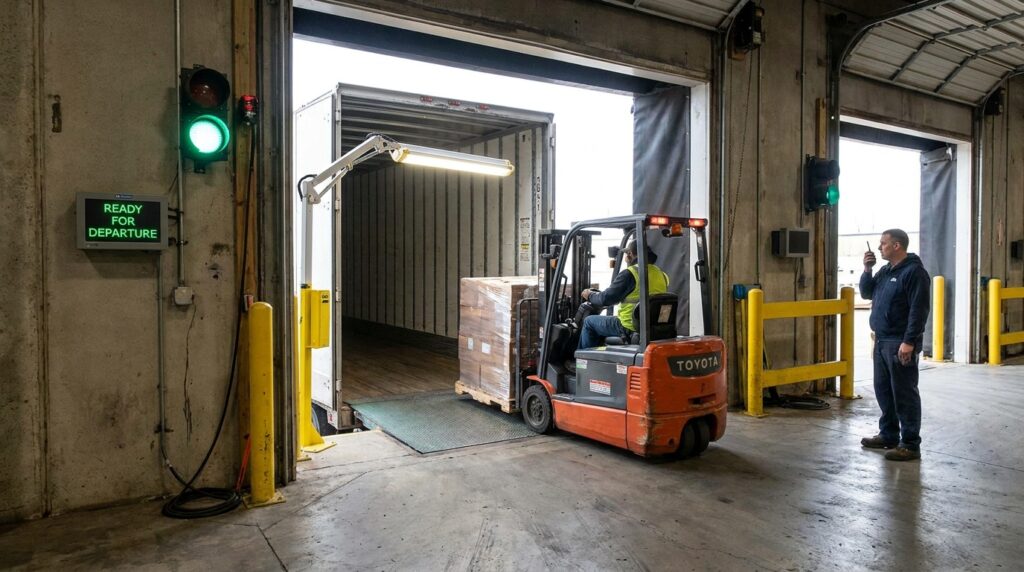
The modern warehouse is a complex ecosystem where efficiency, safety, and productivity are paramount. At the heart of many operations lies the loading dock, a critical juncture where goods enter and exit the facility. However, without proper illumination and clear communication, this vital area can become a bottleneck and a significant safety hazard. This article, brought to you by Fredon Handling, your trusted partner in industrial material handling solutions, delves into the world of loading dock lights and communication systems, explaining their importance, types, selection criteria, and how they contribute to a safer and more efficient warehouse environment.
The Crucial Role of Loading Dock Lighting
Loading dock lights are more than just a source of illumination; they are an essential component of a safe and productive material handling operation. The loading dock area is inherently dynamic, with forklifts, pallet jacks, personnel, and trailers constantly interacting. Inadequate lighting can lead to a cascade of problems, from slowed operations to serious accidents.
Enhancing Visibility and Safety
The primary function of loading dock lights is to provide clear visibility within the trailer and at the dock opening. This is crucial for several reasons:
- Trailer Entry and Exit: Drivers need to see the dock clearly to maneuver their trailers safely into position. Forklift operators and warehouse personnel need to see the trailer’s interior to ensure it’s properly positioned and to navigate the transition from the dock to the trailer floor without incident. Poor visibility increases the risk of collisions with the dock, the trailer, or other equipment.
- Load/Unload Accuracy: Whether loading or unloading, clear visibility ensures that personnel can accurately identify and handle goods. This minimizes errors, reduces the chance of damaging products, and speeds up the overall process. Without adequate light, distinguishing between items or identifying potential hazards within the trailer becomes a difficult and time-consuming task.
- Worker Safety: This is perhaps the most critical aspect. Insufficient lighting in a busy loading dock area significantly elevates the risk of slips, trips, and falls for personnel. It also makes it harder for operators to spot obstacles, other workers, or moving equipment, leading to potential injuries. OSHA (Occupational Safety and Health Administration) emphasizes the importance of adequate lighting in all work areas, and the loading dock is no exception. According to OSHA’s General Industry standards (29 CFR 1910.141), workplaces must be adequately illuminated for the tasks being performed.
Boosting Operational Efficiency
Beyond safety, effective lighting directly impacts the speed and efficiency of loading and unloading operations.
- Reduced Turnaround Times: When drivers can clearly see the dock and the trailer interior, they can dock more quickly and efficiently. Similarly, when warehouse staff have excellent visibility, they can load and unload goods faster, reducing the time a trailer spends at the dock. This leads to quicker turnaround times, allowing more trailers to be processed throughout the day.
- Minimized Errors and Damage: Clear visibility allows for more precise handling of goods. This reduces the likelihood of dropping products, misplacing them, or causing damage during transit within the trailer or during the transfer to and from the dock.
- Extended Operating Hours: In facilities that operate beyond daylight hours, robust lighting systems are essential for maintaining productivity. Without them, operations would be severely curtailed during darker periods.
Types of Loading Dock Lights
Fredon Handling offers a range of loading dock lighting solutions designed to meet the diverse needs of industrial facilities. The most common and effective types include:
High-Intensity Discharge (HID) Lights
These lights use an electric arc to generate light through a vaporized metal. They are known for their brightness and longevity.
- Pros: Very bright, energy-efficient for their light output, and have a long lifespan.
- Cons: Can have a warm-up period before reaching full brightness, and their color rendering can sometimes be less accurate than other options.
- Applications: Typically used for illuminating large outdoor areas or very high bay loading docks where intense illumination is required.
LED Lights
Light Emitting Diode (LED) technology has become the dominant choice for many industrial lighting applications due to its numerous advantages.
- Pros: Highly energy-efficient, extremely long lifespan, instant on/off without warm-up, durable, and offer excellent color rendering. They are also available in a wide range of color temperatures and brightness levels.
- Cons: Higher initial cost compared to some older technologies, though this is often offset by long-term energy savings and reduced maintenance.
- Applications: Versatile and suitable for almost all loading dock applications, from trailer interior illumination to dock area lighting. Fredon Handling recommends LED solutions for their superior performance and cost-effectiveness.
Fluorescent Lights
While less common in newer installations, fluorescent lights were a standard for many years.
- Pros: Relatively inexpensive to purchase initially.
- Cons: Shorter lifespan than LEDs, less energy-efficient, can flicker, and may contain hazardous materials.
- Applications: Historically used for general illumination but are largely being replaced by LED technology.
Key Features of Effective Loading Dock Lights
When selecting loading dock lights, consider these features:
- Adjustability: Lights should be easily adjustable to direct illumination precisely where needed, whether into the trailer or onto the dock floor. Articulating arms or adjustable heads are crucial.
- Durability and Robustness: Loading dock environments can be harsh, with potential for dust, moisture, and impact. Lights should be constructed from durable materials with appropriate IP (Ingress Protection) ratings to withstand these conditions.
- Brightness (Lumens): The amount of light output, measured in lumens, is critical. The required brightness will depend on the size of the dock, the height of the trailer openings, and the complexity of the tasks performed.
- Color Rendering Index (CRI): A higher CRI indicates that the light source renders colors more accurately, making it easier for workers to distinguish between different items and identify potential hazards.
- Energy Efficiency: Opting for energy-efficient lighting, such as LED, can lead to significant cost savings on electricity bills and contribute to sustainability goals.
For those interested in enhancing their understanding of loading dock operations, a related article that delves into the importance of safety and efficiency in warehouse environments can be found at Fredon Handling. This resource provides valuable insights into various equipment and systems that complement loading dock lights and communication systems, ensuring a streamlined workflow and improved safety measures in busy loading areas.
The Power of Communication: Loading Dock Communication Systems
While lights illuminate the path, effective communication systems ensure that everyone involved in the loading and unloading process is on the same page. In a bustling warehouse environment, clear and timely communication is vital to prevent confusion, errors, and accidents.
Bridging the Gap: Why Communication Systems are Essential
The loading dock is a zone of constant interaction between external parties (truck drivers) and internal personnel (warehouse staff). Without robust communication channels, misunderstandings are inevitable.
- Facilitating Driver Interaction: Truck drivers often have limited visibility of the dock operations from their cab. Communication systems allow them to receive instructions and provide updates, ensuring they remain in the correct position and are aware of any delays or specific requirements.
- Coordinating Internal Operations: Within the warehouse, forklift operators, dock workers, and supervisors need to be coordinated. Communication systems help relay information about trailer arrival times, loading/unloading progress, and any potential issues that arise.
- Enhancing Safety Protocols: Clear communication is a cornerstone of any safety protocol. It allows for the swift dissemination of warnings about hazards, the confirmation of safety checks, and the coordination of emergency responses.
Types of Loading Dock Communication Systems
Fredon Handling understands that effective communication can take various forms, depending on the facility’s needs and layout.
Visual Communication Systems
These systems rely on visual cues to convey information.
Traffic Light Systems
These are a classic and highly effective method for signaling to truck drivers.
- Description: Typically feature a red light (stop) and a green light (go). They are usually mounted at the dock opening or on a nearby post to be visible to the driver.
- Functionality: Warehouse personnel can control the lights to indicate when it is safe for the driver to approach or depart the dock. Some advanced systems can be integrated with other dock equipment.
- Benefits: Simple, universally understood, and provide a clear visual command to the driver.
LED Message Boards / Digital Displays
These offer more dynamic and detailed communication capabilities.
- Description: Digital screens that can display text messages, symbols, or even simple animations.
- Functionality: Can be programmed to display specific instructions, arrival times, trailer numbers, safety reminders, or status updates. They are highly visible and can convey more complex information than simple traffic lights.
- Benefits: Highly customizable, can display a wealth of information, and can be updated remotely.
Auditory Communication Systems
These systems use sound to convey information.
Intercom Systems
These allow for two-way voice communication.
- Description: Consist of speaker-microphones mounted at strategic locations, such as the dock door and a central control point or driver waiting area.
- Functionality: Enables direct voice communication between dock personnel and truck drivers, or between different teams within the warehouse. This is invaluable for clarifying instructions or resolving issues in real-time.
- Benefits: Real-time, direct communication, ideal for resolving complex issues or providing specific instructions.
Audible Alarms and Horns
These are used for signaling or alerting.
- Description: Can range from simple bells to more sophisticated horns or sirens.
- Functionality: Primarily used for signaling the start or end of shifts, alerting personnel to an emergency, or indicating when a driver should approach or depart.
- Benefits: Effective for general alerts and can be heard over the general noise of a busy warehouse.
Integrating Lights and Communication
The true power of optimizing the loading dock lies in the integration of lighting and communication systems.
- Synergistic Safety: Imagine a scenario where a loading dock light automatically turns green when the intercom system confirms that the trailer is properly secured and the dock is clear for unloading. This creates a seamless and inherently safer workflow.
- Enhanced Efficiency: A driver receiving a clear “approach now” message via an intercom system, coupled with the dock light illuminating the path, ensures a swift and precise docking maneuver.
- Operational Flow: Integrated systems can streamline operations by automating certain actions. For example, when a trailer is detected at the dock, the lights might automatically activate, and a pre-recorded message could be played to the driver.
Selecting the Right Loading Dock Lights and Communication Systems
Choosing the appropriate lighting and communication solutions for your loading dock requires careful consideration of several factors. Fredon Handling is committed to helping you make informed decisions that enhance your operations.
Assessing Your Specific Needs
Before exploring product options, conduct a thorough assessment of your loading dock operations:
- Volume of Traffic: How many trucks dock at your facility daily? A high volume may necessitate more robust and automated systems.
- Type of Goods Handled: Are you handling delicate electronics that require precise placement, or bulk goods that are loaded and unloaded quickly? This can influence the required illumination levels and accuracy.
- Operating Hours: Do you operate 24/7, or primarily during daylight hours? This will determine the necessity and sophistication of your lighting.
- Warehouse Layout and Environment: Consider the dimensions of your dock doors, the height of the trailers you typically handle, and any specific environmental conditions (e.g., dust, humidity, extreme temperatures).
- Existing Infrastructure: Evaluate your current electrical capacity and any existing communication networks that could be leveraged.
- Budget: While initial cost is a factor, always consider the long-term return on investment, including energy savings and reduced maintenance.
Key Selection Criteria for Loading Dock Lights
When evaluating lighting options, focus on:
- Illumination Levels (Foot-Candles or Lux): Consult industry standards or OSHA guidelines for recommended illumination levels for different tasks. For loading docks, ensuring adequate light within the trailer is paramount.
- Beam Angle and Distribution: The light’s beam should be focused to effectively illuminate the trailer’s interior without creating excessive glare. Adjustable arms are crucial for directing the light.
- Durability and IP Rating: Select fixtures with a high IP rating (e.g., IP65 or higher) to protect against dust and water ingress. Materials should be robust enough to withstand accidental impacts.
- Energy Efficiency (Wattage and Lumens per Watt): Prioritize LED technology for its superior energy efficiency and longevity.
- Mounting Options: Consider how the lights will be mounted – overhead, side-mounted, or on a telescoping arm. Ensure the mounting solution is secure and allows for easy adjustment.
- Maintenance Requirements: Opt for fixtures that are easy to clean and maintain. LED lights typically require minimal maintenance over their lifespan.
Key Selection Criteria for Loading Dock Communication Systems
When choosing communication systems, consider:
- Range and Coverage: Ensure the system can effectively communicate across the entire loading dock area and any relevant waiting zones.
- Ease of Use: Both internal staff and external drivers should find the system intuitive and simple to operate.
- Durability and Weather Resistance: Communication devices located outdoors or in harsh environments need to be robust and weather-resistant.
- Integration Capabilities: Can the system be integrated with other dock equipment or warehouse management systems for enhanced automation and efficiency?
- Scalability: Can the system be expanded or upgraded as your facility’s needs evolve?
- Reliability: Choose systems from reputable manufacturers known for their dependable performance.
Equipment Comparisons and Recommendations
Fredon Handling often recommends a layered approach, combining different types of lighting and communication solutions for optimal results.
- For Enhanced Trailer Visibility: A combination of high-output LED trailer lights (often called “trailer spotters” or “dock lights”) mounted on adjustable arms, paired with a visual traffic light system at the dock door, provides excellent visibility and clear signaling for drivers.
- For Two-Way Communication: An industrial-grade intercom system is invaluable for resolving complex loading/unloading scenarios or clarifying specific instructions between the driver and dock personnel. This can be complemented by LED message boards for general updates and reminders.
- For High-Traffic Docks: Consider automated systems where sensors detect approaching trailers, triggering specific light sequences and pre-recorded messages. This minimizes manual intervention and speeds up the docking process.
Fredon Handling provides expert guidance in selecting the most suitable combination of products from our comprehensive Loading Dock Equipment category. We work with you to understand your unique operational challenges and recommend solutions that deliver tangible improvements in safety and efficiency.
Safety and Maintenance Best Practices for Loading Dock Equipment
Implementing effective loading dock lights and communication systems is only part of the equation. Proper safety protocols and regular maintenance are crucial to ensure their continued effectiveness and the overall safety of your operations.
Ensuring Safe Operations with Lights and Communication
Beyond selecting the right equipment, establish clear procedures for their use:
- Training Personnel: All employees who interact with loading dock equipment must receive comprehensive training on the proper use of lights and communication systems. This includes understanding traffic light signals, operating intercoms, and interpreting digital messages.
- Establishing Protocols: Develop clear protocols for when to activate specific lights, how to use communication devices, and what actions to take based on the information received. For example, a protocol might dictate that a driver should only proceed into the dock when the green light is illuminated and they have verbally confirmed with the dock attendant via intercom.
- Regular Safety Audits: Conduct regular safety audits of the loading dock area to identify any potential hazards, including areas with inadequate lighting or communication breakdowns.
- Emergency Procedures: Ensure that emergency communication procedures are well-defined and practiced. This includes knowing how to use alarms or alert systems in case of accidents or emergencies.
Maintaining Your Loading Dock Lights and Communication Systems
Regular maintenance is essential to prevent failures and ensure optimal performance:
- Visual Inspections: Conduct daily or weekly visual inspections of lights and communication devices. Look for any signs of damage, loose connections, or wear and tear.
- Cleaning: Regularly clean light fixtures to remove dust, dirt, and debris that can reduce illumination output. Communication devices should also be kept clean for optimal functionality.
- Functional Testing: Periodically test all lights and communication systems to ensure they are working correctly. This includes checking the functionality of all buttons, speakers, microphones, and light indicators.
- Lamp Replacement (if applicable): For non-LED lighting, follow manufacturer recommendations for lamp replacement to maintain optimal brightness and performance. LEDs have a much longer lifespan, significantly reducing this need.
- Software Updates (for digital systems): If you have digital message boards or integrated communication systems, ensure that any necessary software updates are applied promptly.
- Professional Servicing: For complex integrated systems or if you encounter persistent issues, schedule professional servicing by qualified technicians. Fredon Handling can advise on maintenance schedules and connect you with service providers.
Compliance with Regulations
It’s crucial to be aware of and comply with relevant safety regulations, such as those set forth by OSHA. Adequate lighting is a fundamental requirement for safe workplaces. Ensuring your loading dock lights and communication systems meet these standards is not only a legal obligation but also a critical component of a safe work environment. Referencing OSHA’s General Industry standards (29 CFR 1910.141) for illumination requirements and other relevant sections for workplace safety can provide valuable guidance.
In exploring the importance of Loading Dock Lights and Communication Systems, it is also beneficial to consider how effective communication can enhance overall warehouse efficiency. A related article that delves deeper into this topic can be found at Fredon Handling, where you can learn more about optimizing your loading dock operations. Understanding these systems not only improves safety but also streamlines the loading and unloading process, ultimately contributing to better productivity in your facility.
Frequently Asked Questions About Loading Dock Lights and Communication Systems
Here are answers to some common questions about loading dock lighting and communication systems:
What are the minimum lighting requirements for a loading dock?
OSHA’s General Industry standards (29 CFR 1910.141) generally require that workplaces be adequately illuminated. While specific foot-candle requirements for loading docks aren’t always explicitly detailed for every scenario, the emphasis is on providing sufficient light for the tasks performed to prevent accidents. For loading docks, this typically means ensuring clear visibility within the trailer and at the dock opening, often exceeding standard ambient lighting levels. Fredon Handling can help you assess your specific needs to meet or exceed these requirements.
How can I choose between LED and HID loading dock lights?
LED lights are generally recommended for most modern loading dock applications due to their superior energy efficiency, longer lifespan, instant on/off capability, and durability. HID lights can still be viable for extremely high bay areas where maximum brightness is needed, but their warm-up time and shorter lifespan make them less cost-effective in the long run compared to LEDs.
How do I ensure my loading dock communication system is heard by truck drivers?
Positioning is key. Traffic lights and message boards should be mounted at a height and angle that are clearly visible to drivers in their cabs. For intercom systems, ensure speakers are powerful enough to be heard over ambient noise and are placed strategically. Regular testing in various weather conditions can help identify any coverage gaps.
Can loading dock lights and communication systems be integrated with other equipment?
Yes, absolutely. Many modern systems are designed for integration. For example, a dock leveler operation could trigger a specific light sequence or a “all clear” signal on a message board. Similarly, trailer restraints can communicate their status to the dock lighting and communication systems. This integration enhances automation and overall operational efficiency.
What is the lifespan of typical loading dock LED lights?
Loading dock LED lights, when properly installed and maintained, can have a lifespan of 50,000 to 100,000 hours or even more. This translates to many years of reliable service, significantly reducing replacement costs and downtime compared to older lighting technologies.
By investing in high-quality loading dock lights and effective communication systems from Fredon Handling, you are not just acquiring equipment; you are investing in the safety, efficiency, and overall productivity of your warehouse operations. Our team is ready to help you find the perfect solutions for your facility.
Contact Fredon Handling for a Quote
Optimizing your loading dock operations with the right lighting and communication solutions is a critical step towards a safer and more efficient warehouse. Explore our comprehensive range of loading dock equipment and let our experts guide you to the best choices for your facility. Contact Fredon Handling today for a personalized quote and to discuss your specific material handling needs.