
Optimizing Your Warehouse Operations: A Comprehensive Loading Dock Equipment Buying Guide
The loading dock is the pulsating heart of any warehouse or distribution center. It’s where goods enter and exit, where efficiency is won or lost, and where safety is paramount. For warehouse managers, facility managers, safety managers, and purchasing professionals, understanding and investing in the right loading dock equipment isn’t just about acquiring assets; it’s about optimizing operational flow, minimizing risks, and ultimately boosting profitability. This comprehensive guide will navigate you through the critical considerations for selecting and implementing loading dock equipment, ensuring your operations run smoother, safer, and more effectively.
For warehouse managers looking to optimize their operations, understanding the nuances of loading dock equipment is crucial. A valuable resource that complements the Loading Dock Equipment Buying Guide is the article on warehouse project management strategies, which can be found at this link. This article provides insights into effective planning and execution of warehouse projects, ensuring that the right equipment is integrated seamlessly into the workflow.
Understanding the Critical Role of Loading Dock Equipment
The loading dock area is a high-traffic zone, a crucial interface between your warehouse and the outside world. It’s where the magic (or the chaos) of inbound and outbound logistics truly happens. The equipment deployed here directly impacts every stage of the process, from the speed of unloading trucks to the security of stored goods.
Enhancing Throughput and Efficiency
Every minute saved at the loading dock translates into significant cost savings and improved customer satisfaction. Properly selected and maintained loading dock equipment can dramatically speed up loading and unloading times. This means fewer trucks waiting at the dock, more efficient use of labor, and a quicker turnaround for inventory. For example, the right dock leveler can bridge the gap between a truck bed and the warehouse floor seamlessly, eliminating manual labor and reducing the risk of product damage. Similarly, efficient dock seals and shelters create a controlled environment, preventing weather delays and improving worker comfort, which in turn can boost productivity.
Mitigating Safety Hazards
The loading dock is, unfortunately, one of the most dangerous areas in a warehouse. The combination of moving vehicles, heavy loads, varying heights, and environmental factors creates a recipe for accidents. This is precisely why investing in robust safety equipment is non-negotiable. Equipment like dock locks, vehicle restraints, and dock plates are designed to prevent dangerous situations such as trailer creep, dock drops, and falls. A commitment to safety through appropriate equipment not only protects your most valuable asset – your people – but also reduces costly downtime due to injuries and associated insurance claims.
Improving Environmental Control and Security
Beyond safety and efficiency, loading dock equipment plays a vital role in maintaining your warehouse’s internal environment and securing your goods. Dock seals and shelters create an effective barrier against the elements, preventing dust, debris, rain, and extreme temperatures from entering the warehouse. This is crucial for protecting sensitive products, maintaining energy efficiency by reducing HVAC load, and ensuring a comfortable working environment for your staff. Furthermore, proper dock equipment can enhance security by preventing unauthorized access during loading and unloading operations.
Key Loading Dock Equipment Categories and Their Applications
Navigating the diverse world of loading dock equipment can be daunting. Understanding the primary categories and their specific functions is the first step toward making informed purchasing decisions.
Dock Levelers: Bridging the Gap
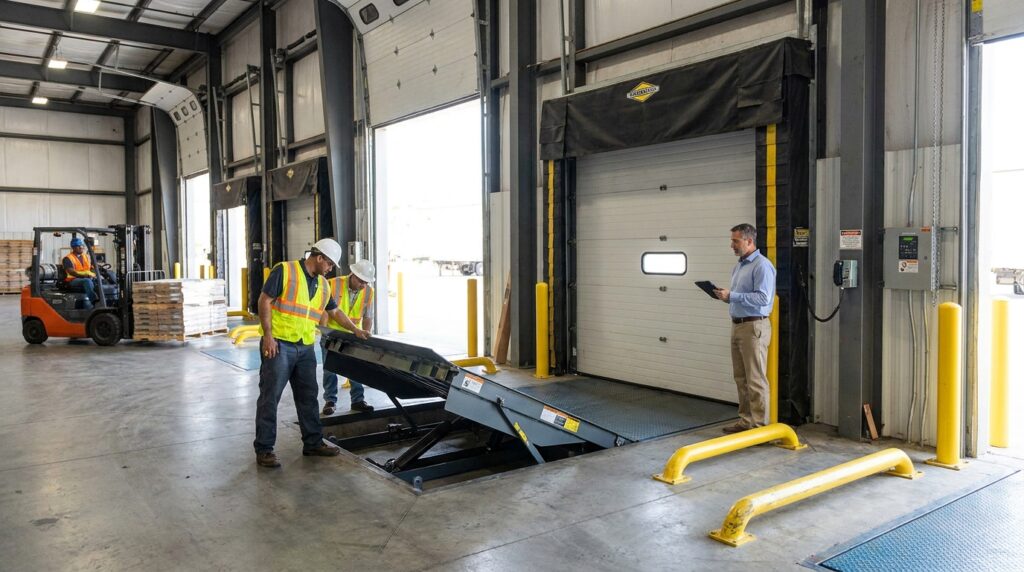
Dock levelers are perhaps the most ubiquitous piece of loading dock equipment. Their primary function is to create a smooth, continuous surface between the dock and the trailer or container bed, allowing forklifts and pallet jacks to transition safely.
Types of Dock Levelers
- Mechanical Dock Levelers: These are manually operated, relying on springs and counterweights for operation. They are a cost-effective option for lower-traffic areas and applications where uptime is not a critical concern. They are often more robust and require less maintenance than hydraulic models.
- Hydraulic Dock Levelers: Powered by a hydraulic pump and cylinder, these offer easier operation and faster deployment, making them ideal for high-volume docks. They provide greater control and can handle heavier loads. The smooth, powered operation reduces physical strain on operators.
- Air-Powered Dock Levelers: Utilizing an air bladder system, these offer a very smooth operation and excellent vertical travel. They are a good choice for applications where precise height adjustment is needed or where a very clean operating environment is desired.
Selection Criteria for Dock Levelers
When choosing a dock leveler, consider the:
- Weight capacity: This should match the heaviest loads your forklifts or pallet jacks will carry.
- Type of trailers: Different trailer bed heights and door openings will influence the required lip extension and width.
- Frequency of use: High-traffic docks benefit from the speed and ease of hydraulic or air-powered models.
- Budget: Mechanical levelers are typically the most affordable upfront.
- Power availability: Hydraulic and air-powered models require a power source.
You can explore various options within our Loading Dock Equipment category for suitable dock levelers.
Dock Seals and Shelters: Environmental Control and Protection
Dock seals and shelters are designed to create a tight seal between the loading dock door and the trailer, preventing the ingress of weather, dust, and pests, while also improving energy efficiency.
Dock Seals vs. Dock Shelters
- Dock Seals: These are typically made of compressible foam pads that surround the trailer opening. They are best suited for situations where trailers are consistently positioned to a standard depth and width, such as a captive fleet. They provide a superior seal against wind and rain.
- Dock Shelters: These feature flexible curtains that surround the trailer, creating a more adaptable opening. They are ideal for situations with varied trailer sizes and types, or where trailers may not always be perfectly docked. They offer excellent protection against weather and dust.
Benefits and Applications
Installing dock seals or shelters can lead to significant energy savings by reducing air infiltration. They also protect products from contamination and improve the working environment for dock personnel, leading to increased productivity and reduced risk of heatstroke or hypothermia. They are particularly beneficial in industries dealing with food, pharmaceuticals, or sensitive electronics.
Vehicle Restraints: Preventing Trailer Separation
Vehicle restraints, also known as dock locks, are crucial safety devices that physically secure a trailer to the dock. They prevent accidental trailer movement during loading and unloading, a phenomenon known as “trailer creep” or “trailer separation.”
Types of Vehicle Restraints
- Wheel Chocks: The simplest form of restraint, these are wedges placed behind the trailer wheels. While they are a basic safety measure, they are prone to being forgotten or misplaced, offering a lower level of security.
- Manual Vehicle Restraints: These require manual engagement by an operator but offer a more secure hold than chocks.
- Automatic Vehicle Restraints: These are the most advanced and secure option. They use a locking arm that engages with the trailer’s rear impact guard (RIG) or wheels. They can be powered by hydraulics, pneumatics, or electricity and often integrate with the dock leveler and door controls for a comprehensive safety system.
Importance of Correct Application
The effectiveness of vehicle restraints hinges on proper application. It’s essential to ensure the restraint is compatible with the types of trailers you regularly receive and that your dock personnel are thoroughly trained on their correct operation and the importance of verifying the lock status before commencing operations. OSHA regulations often mandate the use of effective restraint systems.
Other Essential Loading Dock Equipment
Beyond the core components, several other pieces of equipment contribute to a safe and efficient loading dock.
Loading Dock Plates and Ramps
For situations where a permanent dock leveler isn’t feasible or for temporary needs, loading dock plates and ramps offer portable solutions for bridging gaps.
- Dock Plates: Typically made of aluminum or steel, these are designed to be manually moved into position. They are ideal for lighter loads and less frequent use.
- Loading Ramps: These are more robust and often have a self-contained hydraulic system for positioning. They can be used to transition between ground level and a dock, or to create an elevated platform for loading.
When considering these options, think about the weight of your loads, the frequency of use, and the ease of repositioning.
Dock Bumpers and Guards
These are essential for protecting the building structure and trailers from impact damage.
- Dock Bumpers: Made of durable rubber or other resilient materials, they absorb the impact of trailers as they dock. This prevents damage to concrete structures, dock doors, and the trailers themselves.
- Rack Guards: While not strictly loading dock equipment, these are crucial for protecting the ends of storage racks in the immediate vicinity of the loading dock from forklift impacts.
High-Speed Doors
For facilities where maintaining temperature control is critical or where rapid opening and closing are required to maximize throughput, high-speed doors are an excellent investment. They minimize air infiltration, reduce energy loss, and speed up the loading and unloading cycle.
Making the Right Choice: Selection Criteria for Your Warehouse
Selecting the correct loading dock equipment involves a thorough assessment of your specific operational needs and constraints. A one-size-fits-all approach is rarely effective.
Assessing Your Operational Needs
Before even looking at product catalogs, conduct a detailed assessment of your current and future operational requirements.
Trailer Types and Dock Bay Configurations
- Trailer Variety: Do you primarily receive standard dry vans, refrigerated trailers, flatbeds, or specialized containers? The type of trailers will dictate the required functionality of your dock leveler (e.g., tilt, side-to-side) and the suitability of different dock seals or shelters.
- Dock Bay Dimensions: Measure your existing dock openings, the height of your dock, and the space available in front of and behind the dock. This information is crucial for determining the appropriate size and type of equipment.
- Loading/Unloading Volume: How many trailers do you typically handle per day, per shift? High-volume operations necessitate faster, more automated equipment.
Product Characteristics and Handling Requirements
- Product Type: Are you handling fragile goods that are susceptible to damage? Are you dealing with temperature-sensitive products? This will influence your choice of dock seals/shelters and the need for controlled environments.
- Material Handling Equipment: What type of forklifts, pallet jacks, or other equipment will be used at the dock? Their weight and load capacity must be considered when selecting dock levelers and plates.
- Flow Rate: How quickly do you need to move goods in and out? This will directly impact your need for speed and efficiency, favoring more advanced equipment.
Safety First: Prioritizing Protection
Safety must be the non-negotiable cornerstone of any loading dock equipment decision.
Regulatory Compliance
Familiarize yourself with relevant OSHA standards and any other local or industry-specific regulations pertaining to loading dock safety. OSHA’s General Industry standards (29 CFR 1910) provide guidance on material handling, powered industrial trucks, and dock safety. For example, 29 CFR 1910.176(a) addresses housekeeping and floor loading, which implicitly relates to the safe transition of loads.
Risk Assessment and Mitigation
Conduct a thorough risk assessment of your loading dock area. Identify potential hazards such as trailer creep, falls from the dock, impacts, and entrapment. The chosen equipment should directly address these identified risks.
Training and Best Practices
Even the most advanced equipment is ineffective if not used correctly. Ensure your staff receives comprehensive training on the proper operation, limitations, and safety protocols associated with all loading dock equipment. Regular safety audits and reinforcement of best practices are essential.
Budgetary Considerations and ROI
While safety and efficiency are paramount, the financial implications cannot be ignored.
Initial Investment vs. Long-Term Costs
Consider not only the upfront purchase price but also installation costs, ongoing maintenance, and potential energy savings. A higher initial investment in a more durable or energy-efficient system can yield significant long-term cost reductions.
Calculating Return on Investment (ROI)
Quantify the potential benefits of new equipment. This can include reduced product damage, lower insurance premiums due to fewer accidents, decreased energy consumption, and increased throughput leading to higher revenue. Use these metrics to build a strong business case for your investment.
For warehouse managers looking to enhance their operations, understanding the nuances of loading dock equipment is crucial. A comprehensive resource that complements the Loading Dock Equipment Buying Guide is the article available at Fredon Handling, which delves into the latest trends and technologies in warehouse management. This insightful piece provides valuable information that can help streamline processes and improve efficiency in your facility.
Maintaining Your Loading Dock Equipment for Longevity and Safety
Investing in quality loading dock equipment is only half the battle. Proper and consistent maintenance is crucial for ensuring its longevity, optimal performance, and most importantly, the safety of your operations.
Establishing a Preventive Maintenance Schedule
Preventive maintenance (PM) is far more cost-effective than reactive repairs. Develop a PM schedule tailored to the specific equipment and its usage intensity.
Routine Inspections
Regular visual inspections are the first line of defense. Look for:
- Wear and tear: Check for frayed cables, cracked seals, worn rollers, or damaged structural components.
- Lubrication: Ensure all moving parts are properly lubricated according to manufacturer recommendations.
- Cleanliness: Debris can interfere with the operation of mechanical parts. Keep the dock area and equipment clean.
- Operational checks: Test the functionality of controls, hydraulics, and safety features.
Manufacturer Recommendations and Service Intervals
Always adhere to the maintenance schedules and procedures outlined by the equipment manufacturer. These guidelines are based on extensive testing and are designed to maximize the lifespan and safety of the equipment. Consider engaging with service providers who specialize in loading dock equipment maintenance to ensure thoroughness and compliance.
Common Maintenance Issues and Troubleshooting
Addressing common issues proactively can prevent minor problems from escalating into major failures.
Dock Leveler Maintenance
- Slowing operation: This can indicate low hydraulic fluid, air leaks, or worn seals.
- Abnormal noises: May point to a need for lubrication or a worn component.
- Lip not extending fully: Could be an issue with the spring mechanism or hydraulic system.
Dock Seal and Shelter Maintenance
- Torn or worn fabric: Reduces sealing effectiveness and exposes the interior to the elements.
- Compromised padding: Affects the ability of the seal to conform to the trailer.
Vehicle Restraint Maintenance
- Difficulty engaging or disengaging: May require lubrication, adjustment, or inspection of the hydraulic or electrical components.
- Warning lights or alarms not functioning: Crucial for safety; requires immediate attention.
The Importance of Professional Servicing
While daily checks can be performed by your internal team, complex maintenance and repairs should ideally be handled by qualified technicians. They have the specialized tools, knowledge, and experience to diagnose and fix issues correctly, ensuring safety and preventing further damage.
For warehouse managers looking to optimize their operations, understanding the nuances of loading dock equipment is crucial. A comprehensive resource that complements the Loading Dock Equipment Buying Guide is the article found at this link, which delves into essential maintenance tips and best practices for ensuring the longevity and efficiency of your equipment. By integrating insights from both resources, managers can make informed decisions that enhance productivity and safety in their facilities.
Frequently Asked Questions about Loading Dock Equipment
Here are answers to some common questions that warehouse managers and purchasing professionals often have regarding loading dock equipment.
What is the most critical piece of loading dock safety equipment?
While multiple safety devices are vital, vehicle restraints (dock locks) are often considered the most critical. They directly prevent catastrophic accidents like trailer separation during operations, which can lead to severe injuries and fatalities.
How often should my loading dock equipment be inspected?
Daily visual inspections should be performed by operators. A more thorough inspection by a trained maintenance team should occur at least monthly, with more frequent checks recommended for high-usage areas or specific equipment types. Annual professional servicing is also highly advisable.
Can loading dock equipment improve energy efficiency?
Absolutely. Dock seals and shelters create a significant barrier against air infiltration, dramatically reducing heat loss in winter and heat gain in summer. This directly translates to lower energy consumption for HVAC systems and can lead to substantial cost savings.
What is the difference between a dock seal and a dock shelter?
A dock seal uses compressible foam pads to create a seal around the trailer opening, best for consistent trailer sizes. A dock shelter uses flexible curtains that surround the trailer, offering greater adaptability for varied trailer types and sizes.
What are the main considerations when purchasing a dock leveler?
Key considerations include the weight capacity required for your loads, the types of trailers you handle (including their height variations), the frequency of use at the dock, and your available budget. Also, consider whether you need mechanical, hydraulic, or air-powered operation for ease of use and speed.
Conclusion: Investing in a Smarter, Safer Loading Dock
The loading dock is far more than just a point of entry and exit; it’s a dynamic hub that directly influences your warehouse’s efficiency, safety, and profitability. By understanding the diverse range of loading dock equipment available, meticulously assessing your operational needs, prioritizing safety, and committing to regular maintenance, you can transform your loading dock into a streamlined, secure, and highly productive asset.
Fredon Handling is your trusted partner in achieving these goals. We offer a comprehensive selection of high-quality loading dock equipment designed to meet the rigorous demands of industrial environments. From robust dock levelers and protective dock seals to essential vehicle restraints and more, we have the solutions to optimize your operations.
Ready to enhance your warehouse’s performance and safety? Contact Fredon Handling today for a personalized quote and expert consultation on the best loading dock equipment for your facility. Our team is dedicated to helping you find the perfect solutions to keep your operations moving forward.