
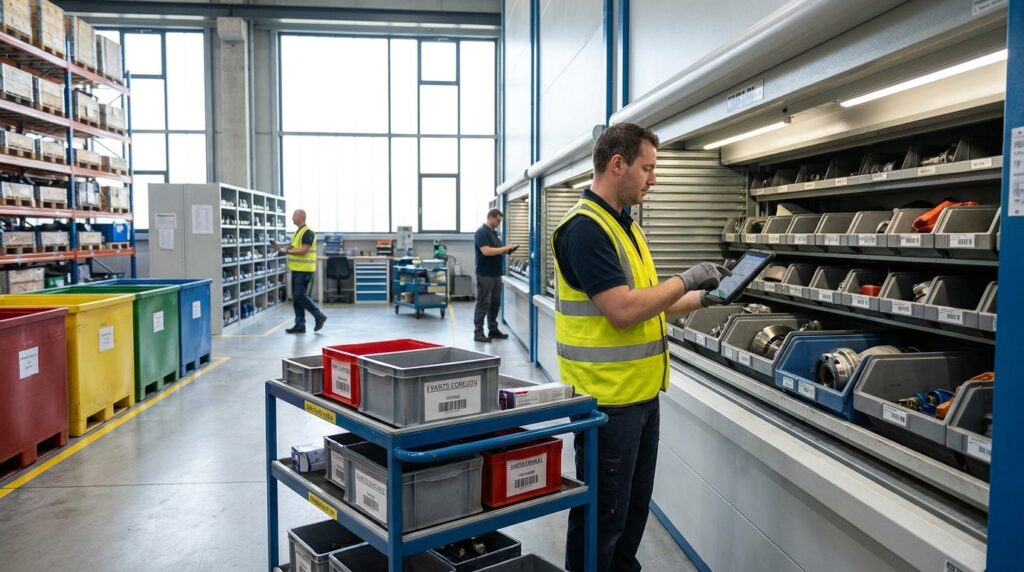
Setting Up Your Storage for Success
Think about a time you really needed something, anything, and you couldn’t find it. Frustrating, right? Now imagine that happening when a crucial piece of equipment has stopped working. That’s the exact scenario we’re trying to avoid with good maintenance parts storage. It’s not just about putting things on shelves; it’s about creating a system that makes your life easier and keeps your operations running smoothly. When parts are easy to find and in good condition, your team can fix things quickly, reducing those costly periods when machines are idle.
The Foundation: Why Smart Storage Matters
Let’s be blunt: downtime costs money. A lot of money. Every minute a machine isn’t working, you’re not producing, not serving customers, or not completing vital tasks. A significant chunk of this downtime can be traced back to issues with accessing the right spare parts. If your maintenance team spends hours hunting for a specific bolt, a worn-out bearing, or a specialized sensor, that’s time lost that could have been spent getting things back online. Beyond the direct financial hit, prolonged downtime can damage your reputation, lead to missed deadlines, and even impact employee morale.
Beyond just speed, proper storage directly impacts the lifespan and usability of your parts. Parts left lying around, exposed to dust, moisture, or physical damage, can degrade over time. A “spare” part that’s no longer functional because it wasn’t stored correctly is just wasted investment. Investing a little time and thought into your storage setup now can prevent a cascade of problems down the line. It’s about being proactive, not reactive, and building a resilient system that supports your operational goals.
Essential Elements of a Functional Storage Space
Creating an effective storage system isn’t rocket science, but it does require a structured approach. It begins with understanding what you’re storing and how it’s used. A basic inventory of your critical spare parts is the first step. What are the most frequently needed items? What parts are unique to specific machines? What items have long lead times for replacement? Answering these questions helps you prioritize.
Organization is key. This isn’t just about tidiness; it’s about logic. Think about how your maintenance team works. What do they grab most often? Those items should be the most accessible. Less frequently used, but still critical, parts can be stored further away. The goal is to minimize walking and searching time. This applies to both the physical layout and the labeling system you implement. Every bin, shelf, and drawer should be clearly marked, indicating its contents and perhaps even a location code.
Choosing the Right Tools for the Job
The right storage solutions make a world of difference. Think about the types of parts you have. Small screws and washers might need divided bins or drawers. Larger components might require heavy-duty shelving or specialized racks. For items that are sensitive to environmental conditions, like electronics or certain lubricants, climate-controlled cabinets might be necessary.
Don’t underestimate the power of good shelving systems. Adjustable shelving allows you to reconfigure your space as your needs change. Mobile shelving units can maximize floor space and make access easier. For high-value or critical parts, consider secure cabinets with locks to prevent unauthorized access or accidental misplacement. The upfront investment in quality storage equipment often pays for itself by preventing part damage, loss, and the time spent searching for them.
In the pursuit of optimizing maintenance parts storage, it’s essential to consider the broader context of warehouse efficiency. A related article that delves into this topic is titled “Top Material Handling Equipment for Efficient Warehouse Operations.” This resource provides insights into the various types of equipment that can enhance operational efficiency, ultimately contributing to reduced downtime and improved accessibility in maintenance parts storage. To explore this valuable information further, you can read the article here: Top Material Handling Equipment for Efficient Warehouse Operations.
Streamlining the Inventory Process
Managing your maintenance parts inventory effectively is like having a well-stocked pantry. You know what you have, where it is, and when you need to get more. This isn’t just about knowing what’s on the shelf; it’s about having a system that tracks everything from when a part is used to when it needs to be reordered. Without this oversight, you risk running out of crucial items or, conversely, having way too much money tied up in excess stock.
The Importance of Accurate Record-Keeping
The cornerstone of any good inventory system is accurate record-keeping. This means diligently logging every part that comes in and every part that goes out. When a new part arrives, it should be immediately recorded with details like the part number, description, quantity, vendor, and cost. When a part is used for a repair, it needs to be removed from inventory, noting which machine it was used on and by whom. This data is invaluable.
Modern inventory management software can automate much of this process, significantly reducing manual errors. These systems can track stock levels, alert you when items are running low, and even help forecast future needs based on historical usage patterns. Even a simple spreadsheet can be a vast improvement over no system at all, as long as it’s maintained diligently. The key is consistency. Every transaction, no matter how small, needs to be captured.
Implementing an Efficient Reordering Strategy
Running out of a part is a direct cause of unplanned downtime. Having a clear reordering strategy prevents this. This involves setting reorder points for each part. A reorder point is the minimum stock level that triggers a new order. This point should be based on several factors: the lead time for the part (how long it takes to get it once ordered), the average consumption rate of the part, and a buffer to account for unexpected demand spikes or delays in delivery.
It’s also wise to categorize your parts based on their criticality and cost. High-cost, critical parts might require a more conservative reorder point to ensure you always have them, even if they sit on the shelf for a while. Low-cost, high-volume items might be managed with a more streamlined “just-in-time” approach, where you reorder only when stock gets low to avoid tying up capital. Regularly reviewing and adjusting these reorder points is essential, as usage patterns and lead times can change over time.
Cycle Counting and Auditing for Accuracy
Even with the best intentions and systems, inventory can become inaccurate. This is where regular cycle counting and auditing come in. Cycle counting involves routinely counting a small subset of inventory items, rather than doing a full, disruptive annual count. This allows you to identify and correct discrepancies quickly and continuously. It’s a proactive way to ensure your records match what’s actually on the shelves.
Auditing your inventory goes a step further. It’s a more formal review of your inventory management processes and data. This might involve verifying that reorder points are set correctly, that parts are being stored and handled appropriately, and that the inventory software is functioning as intended. By regularly checking and verifying, you build trust in your inventory data, which is crucial for making informed decisions about purchasing and operational planning.
Designing Your Layout for Easy Access
The physical arrangement of your maintenance parts storage is as important as the inventory system itself. A well-designed layout minimizes wasted movement, reduces the risk of damage to parts, and makes it intuitive for your team to find what they need quickly. It’s about making the right part available at the right time, with the least amount of effort.
Strategic Placement of Frequently Used Items
Think of your storage area like a grocery store. The items people buy most often are usually placed at eye level and in easy-to-reach aisles. Your maintenance parts storage should follow a similar logic. The most commonly used spare parts – think common fasteners, filters, seals, and wear items for your primary equipment – should be stored in the most accessible locations. This means at comfortable heights, close to the main access points of the storage area, and in clearly labeled bins or on shelves that are easy to get to.
This reduces the time your technicians spend searching and retrieving. Every minute saved on retrieval is a minute that can be spent on productive work. It also minimizes the chances of them grabbing the wrong item when they’re in a hurry because the correct item is so readily available.
Optimizing Shelf and Bin Utilization
Maximizing the use of your shelf and bin space is crucial, especially if space is limited. This involves selecting storage solutions that are appropriate for the size and shape of your parts. For small, numerous items, divided bins, drawer units, or small parts cabinets are ideal. Larger components might need robust shelving units designed to handle their weight and dimensions.
Consider vertical space. Tall shelving units can significantly increase storage capacity, but it’s important to ensure that higher shelves are still accessible and safe to use, perhaps with step stools or small ladders. For very heavy items, consider floor-level storage or specialized lifting equipment. The goal is to make every cubic foot of your storage space work efficiently for you, ensuring parts are stored securely and without damage.
Clear and Consistent Labeling Systems
A brilliant storage layout is useless if no one can find anything. This is where a clear and consistent labeling system is non-negotiable. Every shelf, bin, drawer, and even individual item (if practical) should have a label. The label should be easy to read from a distance and contain essential information.
This typically includes the part number and a brief, clear description of the part. If you use a location coding system (e.g., A1-B3 for Aisle 1, Bay 3), that code should also be prominently displayed. Consider using different colors for different types of parts or for different areas of the warehouse to further aid visual identification. Labels should be durable and resistant to wear and tear, especially in a workshop environment. A consistent labeling scheme, applied across your entire storage area, is the bedrock of efficient retrieval.
Maintaining and Protecting Your Parts Investment
It’s not enough to just have parts and a place to store them; you need to actively maintain them and protect them from damage. Even the best parts can become useless if they’re not stored properly. This is about ensuring that when you pull a part from inventory, it’s in the same condition as when it was put away, ready to do its job.
Environmental Controls and Protection
Many maintenance parts are sensitive to their environment. Moisture can cause corrosion, dust can contaminate delicate components, and extreme temperatures can degrade materials like seals and lubricants. Depending on the types of parts you store, you might need to implement environmental controls. This could range from simple measures like ensuring your storage area is dry and well-ventilated, to more advanced solutions like climate-controlled cabinets for sensitive electronics or specialized lubricants.
Protecting parts from physical damage is also paramount. This means ensuring that parts are stored in appropriate containers, that heavy items are not stacked precariously on top of lighter ones, and that there are clear pathways to prevent accidental bumps and drops. For fragile items, consider using anti-static packaging or padded containers. The less a part is handled unnecessarily, and the better it’s protected, the longer it will remain in usable condition.
Regular Inspections and Housekeeping
A clean and organized storage area is a safe and efficient storage area. Regular inspections and good housekeeping are essential. This involves more than just sweeping the floor. It means periodically checking for signs of damage to storage units, ensuring labels are still legible, and making sure that parts are not accumulating dust or debris.
During these inspections, it’s also a good time to check the condition of the parts themselves. Are any lubricants showing signs of separation? Are seals cracking? Is there any rust or corrosion developing? Identifying these issues early allows you to address them before the part becomes completely unusable. A consistent schedule for these inspections and clean-ups ensures that your storage area remains a functional and reliable asset.
Disposal of Obsolete or Damaged Parts
Over time, equipment gets upgraded, and parts become obsolete. Likewise, some parts may become damaged during storage or handling. It’s important to have a clear process for identifying and disposing of these items. Holding onto obsolete parts is a waste of valuable space and can lead to confusion, where someone might mistakenly try to use an outdated component.
A regular review of your inventory for obsolete items, perhaps as part of your annual audit or a dedicated quarterly review, is necessary. Damaged parts should be clearly marked as “non-usable” and removed from active inventory immediately. The disposal process itself should be conducted in an environmentally responsible manner, especially for hazardous materials like old oils or batteries. A clean inventory is an efficient inventory.
In the quest to enhance operational efficiency, understanding the importance of effective maintenance parts storage is crucial. A related article that delves deeper into optimizing warehouse management and inventory control can provide valuable insights. For those interested in exploring more about this topic, you can check out this informative piece on warehouse solutions that can help reduce downtime and improve accessibility for maintenance parts. By implementing the strategies discussed, businesses can streamline their processes and ensure that essential components are readily available when needed.
Leveraging Technology for Enhanced Storage
While basic principles of good storage have remained constant, technology offers powerful new ways to enhance efficiency, accuracy, and accessibility. Embracing these tools can transform your maintenance parts storage from a passive necessity into an active contributor to your operational success.
Implementing Inventory Management Software (IMS)
As mentioned earlier, an Inventory Management System (IMS) is a game-changer for maintenance parts storage. Modern IMS solutions go far beyond simple stock counting. They can:
- Automate Reordering: Set up min/max levels and reorder points to trigger automatic purchase orders when stock runs low, preventing stockouts.
- Track Usage History: Understand which parts are used most frequently, on which machines, and by which technicians. This data is invaluable for forecasting and optimizing stock levels.
- Improve Accuracy: Reduce manual data entry errors, leading to more reliable inventory counts.
- Provide Real-time Visibility: Access current stock levels from any connected device, allowing for informed decisions even when away from the physical storage.
- Facilitate Auditing: Streamline cycle counting and full inventory audits by providing guided workflows and discrepancy reporting.
- Manage Costs: Track the cost of parts, enabling better budgeting and analysis of spare parts expenditure.
The initial investment in an IMS can seem significant, but the long-term savings from reduced downtime, optimized stock levels, and improved efficiency typically provide a strong return.
The Role of Barcoding and RFID
Barcoding and Radio-Frequency Identification (RFID) are technologies that significantly speed up and improve the accuracy of inventory tracking.
- Barcoding: Assigning a unique barcode to each part and using scanners to record additions, subtractions, and movements. This is a fundamental step for most IMS systems and drastically reduces the time and errors associated with manual data entry. Imagine a technician scanning a part as they take it for a repair, instantly updating inventory.
- RFID: This technology goes a step further by using radio waves to identify and track tags attached to objects. RFID tags don’t require direct line-of-sight to be scanned, meaning multiple items can be read simultaneously. This can revolutionize receiving and stock-taking processes, allowing for much faster and more comprehensive inventory checks. For high-value or frequently accessed items, RFID can provide near real-time location tracking.
Implementing these technologies requires a structured approach, including proper labeling of all items and the necessary scanning hardware. However, the payoff in terms of speed, accuracy, and labor savings can be substantial.
Integrating Storage with Maintenance Management Systems (CMMS)
For maximum impact, your maintenance parts storage should be integrated with your Computerized Maintenance Management System (CMMS). A CMMS is the central hub for managing all maintenance activities, including work orders, preventive maintenance schedules, and asset management.
By integrating your IMS with your CMMS:
- Automatic Part Allocation: When a work order is created in the CMMS, the system can automatically check for the required parts in inventory. If available, they can be reserved.
- Streamlined Parts Issuance: Technicians can easily access the parts needed for a specific work order, with the issuance automatically updating both the IMS and the CMMS record for that job.
- Improved Cost Tracking: The cost of parts used for a particular maintenance task or asset is automatically captured, providing a clearer picture of total maintenance expenses.
- Data-Driven Decision Making: The combined data from both systems provides a powerful platform for analyzing maintenance effectiveness, identifying recurring issues, and optimizing spare parts inventory strategies.
This integration creates a seamless workflow, ensuring that parts are available when needed for scheduled and unscheduled maintenance, directly contributing to reduced downtime and improved operational efficiency.