
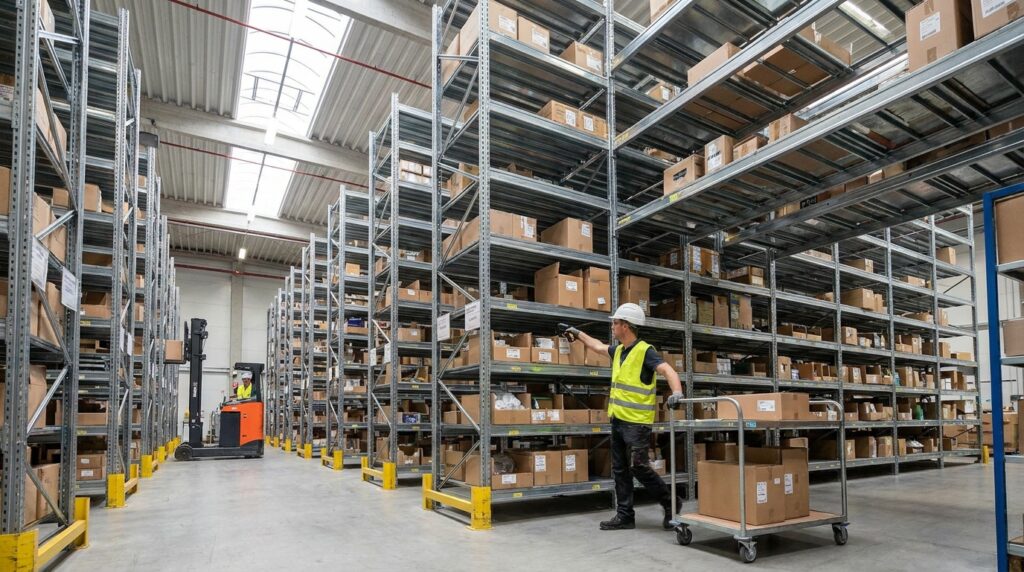
Understanding Your Space and Stock
Before you even think about buying shelves, you need to get a really good handle on what you’re working with and what you’re storing. This isn’t just about knowing how many boxes you have; it’s about understanding the flow, the weight, the size, and how often things are moved. This foundational step is crucial for designing a warehouse shelving layout that actually makes picking efficient. If you skip this, you’re building on shaky ground, and your efficiency gains will be minimal, if any.
Mapping Your Warehouse Footprint
The physical dimensions of your warehouse are the canvas for your shelving design. You need a clear, accurate floor plan. This plan should not just show the walls and doors, but also any permanent obstructions like pillars, electrical panels, or loading docks. Think about the entry and exit points for forklifts and other equipment. Where do deliveries come in? Where do outgoing shipments leave? Understanding these traffic flows is vital. Also, consider the ceiling height. This isn’t just about how tall your shelves can be, but also about the clearance needed for any overhead equipment, like cranes or specialized lifting devices, if you use them. Don’t forget about the floor itself. Is it level? Can it support the weight of heavy shelving systems loaded with inventory? Any inconsistencies here can impact the stability of your shelving and, therefore, safety. A detailed map helps you visualize potential constraints and opportunities.
Analyzing Inventory Characteristics
What you store dramatically influences shelving needs. Group your inventory by size, weight, and sales velocity. High-demand items, or “fast movers,” should be easily accessible, meaning they should be placed in prime picking locations. These are often at waist-to-shoulder height in the most trafficked aisles. Low-demand items, or “slow movers,” can be stored higher up or in less accessible areas. Consider the dimensions of your typical stock keeping units (SKUs). Are they uniform, or do you have a wide range of sizes? This will dictate the adjustability and type of shelving you need. Fragile items might require specialized storage with extra padding or dividers. Items that are often picked together should ideally be stored in proximity to reduce travel time for pickers. This analysis helps you determine the optimal location and type of storage for each category of your inventory.
Identifying Product Flow and Picking Patterns
How does your product move through the warehouse? Where are the most frequent picking destinations? Understanding these patterns is key to minimizing travel time. Are you primarily fulfilling individual customer orders, or are you sending out large bulk shipments to retailers? This difference will shape your picking strategy and, consequently, your shelving layout. If you have a high volume of small, single-item orders, a highly organized, slotting system based on pick frequency is essential. If you’re dealing with bulk orders, wider aisles and perhaps pallet racking might be more appropriate for larger quantities. Observe your pickers. Where do they spend most of their time? What are the common routes they take? This direct observation can reveal inefficiencies that might not be apparent on paper. Mapping these picking paths helps you place frequently picked items along these routes to cut down on unnecessary walking.
When considering the optimal warehouse shelving layout, it’s essential to understand the broader context of material handling equipment that can enhance operational efficiency. An insightful article that complements the discussion on design principles for efficient picking is available at Top Material Handling Equipment for Efficient Warehouse Operations. This resource delves into various equipment options that can work in tandem with effective shelving layouts to streamline processes and improve productivity in warehouse environments.
Optimizing Aisle Design and Accessibility
The aisles in your warehouse are the arteries of your operation. Their design directly impacts how easily and quickly your staff can access inventory. It’s not just about having enough space to walk; it’s about creating a system that facilitates smooth movement for both people and equipment. An inefficient aisle layout can lead to bottlenecks, increased travel times, and a higher risk of accidents. Thoughtful aisle design is a cornerstone of an efficient picking operation.
Determining Optimal Aisle Width
The width of your aisles is a critical decision influenced by several factors. If your pickers are primarily walking and using hand carts, narrower aisles might be feasible, but you still need enough room to pass another person or cart comfortably and safely. If you utilize forklifts, reach trucks, or order pickers, the aisle width must accommodate the turning radius and operational space required by these machines. Referencing the manufacturer’s specifications for your equipment is paramount. Too narrow, and you risk collisions and damage to both inventory and equipment. Too wide, and you’re sacrificing valuable storage space. A common practice is to create different aisle widths for different zones. Main thoroughfares used by larger equipment might be wider, while picking aisles in specific zones can be narrower if only hand carts are used. Safety regulations also play a role; ensure there’s adequate clearance for emergency egress.
Strategic Placement of Picking Zones
Your warehouse can be divided into distinct picking zones based on factors like inventory velocity, order type, and picking method. Placing high-velocity items in zones that are easily accessible from the packing and shipping areas is a no-brainer. Think of these as the “prime real estate” of your warehouse. These zones should ideally have wider and more accessible aisles. Consider a “zone picking” system where each picker is responsible for a specific area, reducing the need for them to travel long distances. Conversely, slower-moving items can be located in zones that require more travel time, often in less accessible areas or at higher shelf levels. The layout of these zones should flow logically with your order fulfillment process. If orders are batched, ensure zones are arranged to facilitate efficient batch picking. The goal is to minimize the travel time and effort required for your pickers to retrieve items.
Ensuring Clear Signage and Navigation
Even the most perfectly laid-out shelving system is useless if your pickers can’t find what they need. Clear and consistent signage is non-negotiable. This includes aisle markers, bay labels, and shelf indicators. These signs should be easy to read from a distance and from the perspective of a person pushing a cart or operating equipment. Consider using color-coding for different zones or types of inventory. Think about logical numbering or lettering systems for aisles, bays, and shelves that are intuitive and easy to remember. Regular maintenance of signage is also important; faded or damaged signs can cause confusion. The goal is to make navigation so straightforward that a new employee can pick an order with minimal assistance. Good signage reduces errors, speeds up picking, and boosts picker confidence.
Selecting the Right Shelving Systems
The type of shelving you choose is a direct reflection of your inventory and how you intend to pick it. There’s no one-size-fits-all solution. The materials, configuration, and specific features of your shelving will significantly impact its capacity, accessibility, and ultimately, your picking efficiency. Investing in the right systems means investing in better workflow.
Evaluating Different Shelving Technologies
There are numerous shelving technologies available, each with its own advantages. Standard selective pallet racks are common for bulk storage and can be picked from directly with forklifts. Drive-in or drive-through racks allow for high-density storage but require specialized equipment for picking. Cantilever racks are ideal for storing long or oversized items like pipes or lumber. Mezzanine systems can effectively double or triple your usable floor space without expanding your building footprint, creating additional levels for storage and picking. Push-back racks offer dense storage with a first-in, last-out (FILO) access, suitable for high-volume operations. The decision should be based on the size, weight, and quantity of the items you store, as well as your picking volume and equipment capabilities. Don’t just look at the upfront cost; consider the long-term operational benefits.
Considering Load Capacity and Durability
The weight of your inventory is a primary concern when selecting shelving. Each shelf and upright needs to be rated for the maximum load it will carry. Overloading shelves is a serious safety hazard and can lead to structural failure. Ensure your chosen shelving systems are made from robust materials that can withstand the demands of your warehouse environment. Consider factors like material strength, weld quality, and resistance to corrosion if your warehouse has a humid environment. Durability also extends to the ease of maintenance and repair. Can individual components be easily replaced if damaged? The ability to withstand regular use, potential impacts from equipment, and the weight of goods over time is crucial for long-term efficiency and safety.
Implementing Adjustable and Modular Designs
Flexibility is key in a dynamic warehouse environment. Inventory needs can change, and product dimensions might vary. Adjustable shelving allows you to reconfigure shelf heights and spacing as your needs evolve. This means you can adapt to different product sizes or optimize storage density without a complete overhaul. Modular shelving systems are also highly beneficial. They can be expanded, reconfigured, or relocated with relative ease. This modularity allows you to grow your storage capacity incrementally or adapt your layout for seasonal demands or new product lines. These systems reduce the cost and disruption associated with future changes, ensuring your shelving remains efficient over time.
Streamlining the Picking Process with Layout
The physical arrangement of your shelving directly influences the efficiency of your picking operations. A well-designed layout minimizes travel time, reduces congestion, and supports the specific picking methods you employ. It’s about creating an intuitive and functional flow that gets items from the shelves to the shipping dock as quickly and accurately as possible.
Designing for Specific Picking Methodologies
Your chosen picking strategy will heavily influence your shelving layout. For example, if you use “wave picking,” where orders are grouped into waves and released to pickers at specific times, your layout might prioritize grouping items for those waves. “Batch picking,” where a picker collects all items for multiple orders simultaneously, benefits from an organized layout that minimizes backtracking. “Zone picking,” as mentioned earlier, requires distinct zones with clear boundaries and efficient travel paths within each zone. If you use “order picking,” where one picker fulfills an entire order, the layout should aim to minimize the total distance the picker needs to travel. Understanding how your pickers actually move and interact with the shelving is crucial. Consider the use of picking carts, pallet jacks, and other equipment and ensure the layout accommodates their movement.
Optimizing Pick Path Efficiency
The concept of “pick path” refers to the route a picker takes to collect items for an order. A well-designed shelving layout aims to create the shortest and most logical pick paths. This can involve arranging high-velocity items closer to the start of a pick path or organizing shelves so that pickers move in a consistent, predictable pattern. S-shaped or serpentine pick paths can be effective in certain layouts to ensure all items in an aisle are covered without excessive backtracking. Consider implementing a “discrete order picking” system where each order is picked sequentially by one person, and the layout is optimized for that single order’s path. For “zone picking,” the layout should ensure efficient movement within each zone and minimize the hand-off time between zones. Analyzing common pick paths through observation or WMS data can reveal areas for improvement.
Integrating Technology for Enhanced Efficiency
Modern technology can dramatically enhance picking efficiency when integrated with your shelving layout. Warehouse Management Systems (WMS) can optimize pick paths, assign tasks, and manage inventory levels. Pick-to-light systems, where lights illuminate the location of the item to be picked and the quantity, can speed up picking and reduce errors, especially in high-volume areas. Voice-directed picking systems allow pickers to receive instructions and confirm picks using voice commands, freeing up their hands and eyes. Radio-Frequency Identification (RFID) technology can provide real-time inventory tracking and faster validation of picked items. The shelving layout should be designed to accommodate the deployment of these technologies. For example, ensure clear visibility for pick-to-light systems and easy access for scanners used in WMS or RFID implementations.
In the quest for optimizing warehouse operations, understanding the principles of warehouse shelving layout is crucial for efficient picking. A related article that delves deeper into this topic is available at Fredon Handling, where you can explore various strategies and best practices that can significantly enhance your warehouse efficiency. By implementing these design principles, businesses can streamline their picking processes and ultimately improve overall productivity.
Safety and Ergonomics in Shelving Design
While efficiency is paramount, it cannot come at the expense of safety or the well-being of your workforce. A shelving layout that is unsafe or ergonomically unsound will lead to accidents, injuries, and reduced productivity in the long run. Prioritizing these aspects creates a more sustainable and effective operation.
Implementing Safety Protocols and Standards
Safety is not an afterthought; it’s a fundamental part of any shelving design. Ensure your shelving systems meet all relevant industry safety standards and local regulations. This includes load capacity ratings, proper installation, and regular inspections. Clear safety guidelines for operating equipment in aisles, stacking procedures, and emergency evacuation routes must be established and communicated. Install guardrails on elevated platforms, protective barriers around racking, and appropriate signage warning of hazards. Regular safety training for all warehouse staff is essential. This training should cover safe lifting techniques, proper use of equipment, and understanding of hazard signs. A proactive approach to safety prevents accidents before they happen.
Designing for Ergonomic Picking Practices
Ergonomics focuses on designing the workplace to fit the worker. In a warehouse shelving context, this means minimizing strain on the body during picking activities. This includes placing frequently picked items at optimal heights, typically between waist and shoulder level, reducing the need for excessive bending, reaching, or stretching. Ensure adequate lighting in all picking areas to prevent eye strain and improve visibility. Provide comfortable and appropriately sized picking carts or equipment. Consider adjustable workstations for packing and sorting. The goal is to reduce the risk of musculoskeletal injuries and fatigue, which can lead to decreased accuracy and efficiency. An ergonomic design makes the picking process less physically demanding, leading to a healthier and more productive workforce.
Planning for Maintenance and Inspections
Shelving systems require ongoing maintenance to remain safe and efficient. Your layout should facilitate easy access for these maintenance activities. This includes ensuring that aisles are clear and that equipment used for maintenance, such as scissor lifts or aerial work platforms, can access all parts of the shelving. Regular visual inspections for any signs of damage, wear, or corrosion are crucial. This includes checking for bent beams, damaged uprights, or loose components. Load capacity labels should be clearly visible and accurate. Develop a schedule for these inspections and have a clear procedure for reporting and addressing any identified issues promptly. Proper maintenance prolongs the life of your shelving and prevents potential safety incidents.
When considering the optimal design for warehouse shelving layout, it is essential to understand the principles that contribute to efficient picking processes. A related article that delves deeper into this topic is available at Fredon Handling, which explores various strategies and best practices for enhancing material handling efficiency. By integrating insights from both resources, warehouse managers can create a more streamlined and productive environment that ultimately leads to improved operational performance.
Continuous Improvement and Future-Proofing
The warehouse environment is rarely static. Inventory changes, order volumes fluctuate, and technology advances. Therefore, your shelving layout design should not be a one-time effort but rather an ongoing process of refinement and adaptation. Building in flexibility from the start is key to long-term success.
Regularly Reviewing and Analyzing Performance Data
To ensure your shelving layout remains efficient, you need to collect and analyze data. Key performance indicators (KPIs) such as pick rate, order accuracy, travel time per pick, and inventory put-away time can provide valuable insights. Your Warehouse Management System (WMS) is a powerful tool for gathering this data. Regularly review reports to identify bottlenecks, areas of congestion, or inefficient pick paths. Are certain zones consistently showing lower pick rates? Is there excessive travel time between certain item locations? This data-driven approach allows you to make informed decisions about adjustments to your layout. It moves you from guesswork to intelligent optimization.
Adapting to Evolving Inventory and Demand
The nature of your inventory and the demands placed upon your warehouse will inevitably change. New products may be introduced, seasonal spikes in demand may occur, and customer order profiles can shift. Your shelving layout needs to be flexible enough to accommodate these changes. This is where the principles of modularity and adjustability come into play. If you experience a surge in demand for a particular product category, you might need to reconfigure a section of your shelving to accommodate more of that item. If new, larger products are introduced, you may need to adjust shelf heights or bay depths. Being able to adapt quickly prevents your layout from becoming an obstacle to operational agility.
Scalability for Future Growth
As your business grows, your warehouse operations will likely expand. Your shelving layout should be designed with scalability in mind. This means considering how you can add more shelving, expand aisles, or even add new zones without requiring a complete overhaul of your existing infrastructure. Modular systems are particularly valuable here, as they can be easily replicated or expanded upon. When initially designing your layout, consider potential future expansion points or areas where additional racking could be installed. Thinking about scalability upfront saves significant time, cost, and disruption down the line, ensuring your shelving can support your business well into the future.