
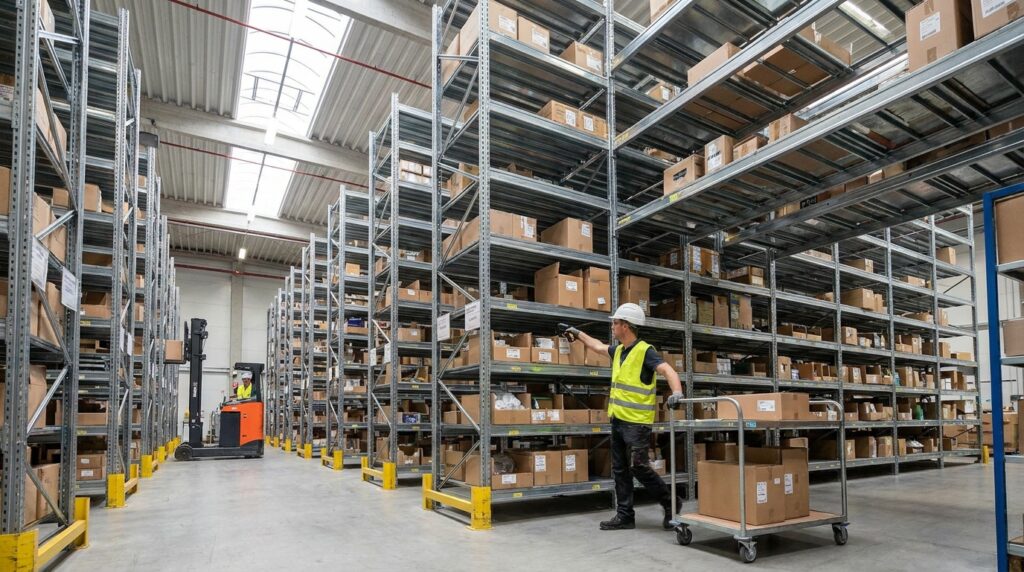
The Untapped Potential: Why Warehouse Height Matters
Warehouses are often evaluated based on their square footage, but the true measure of their capacity lies not just in their footprint, but in their vertical space. For many businesses, the ceiling of their warehouse represents a significant, often overlooked, resource. This unused height is a goldmine for increasing storage density, improving operational efficiency, and ultimately, reducing costs. Imagine a building where only the first floor is utilized for storing goods. The upper floors, just as vast, are gathering dust. This is a common scenario in many warehouses today, where traditional racking or floor storage methods fail to capitalize on the available vertical real estate. The benefits of reaching upwards are manifold, from accommodating more inventory without expanding the physical building to streamlining picking and packing processes. It’s about thinking smarter, not just bigger, when it comes to managing your stock. Embracing vertical storage isn’t just about adding more shelves; it’s a strategic shift in how you view and utilize your operational space.
In exploring the benefits of maximizing warehouse space, the article on Vertical Storage Solutions: Using Unused Warehouse Height Effectively highlights innovative strategies for optimizing storage capacity. For further insights into efficient warehouse management and the latest trends in material handling, you can read more in this related article at Fredon Handling. This resource provides valuable information on how to implement vertical storage systems and improve overall operational efficiency.
Maximizing Space: Different Approaches to Going Vertical
The concept of “going vertical” isn’t a one-size-fits-all solution. Several proven methods exist to leverage unused warehouse height effectively, each with its own advantages and suitability depending on the type of inventory, order volume, and existing infrastructure. Understanding these options is the first step towards unlocking your warehouse’s full potential. These aren’t just about stacking boxes higher; they involve sophisticated systems designed to optimize accessibility, safety, and throughput. The choice of system will significantly impact not only how much you can store but also how efficiently you can retrieve it. It’s a decision that requires careful consideration of your current needs and future growth projections.
Pallet Racking Systems: The Foundation of Vertical Storage
When we talk about vertical storage, pallet racking is often the first thing that comes to mind, and for good reason. These systems are designed to hold palletized goods, turning the floor space into a multi-level storage structure. They are robust, versatile, and can be configured in numerous ways to suit different warehouse layouts and product types.
Selective Racking: The Most Common and Accessible
Selective pallet racks are the workhorse of the warehousing industry. They offer direct access to every single pallet stored within the system, which is crucial for businesses that need to pick individual items or pallets frequently. This accessibility makes them ideal for a wide range of industries, from food and beverage to retail and manufacturing. The design is straightforward: upright frames support horizontal beams, creating shelves where pallets are placed. The spacing between beams can be adjusted to accommodate various pallet heights. This flexibility is a major advantage, allowing for efficient use of vertical space. While they are excellent for accessibility, they do have a lower storage density compared to some other racking types due to the aisle space required for forklifts. However, their ease of use and ability to handle diverse SKUs make them a staple for good reason.
Drive-In and Drive-Thru Racking: High Density, Less Access
For operations that deal with a large quantity of the same product (high volume, low SKU variety) and where first-in, first-out (FIFO) or last-in, first-out (LIFO) inventory management is acceptable, drive-in and drive-thru racking systems offer significant space savings. In drive-in racks, forklifts enter the rack structure from one side to store and retrieve pallets. This design minimizes aisle space, allowing for much higher storage density. Drive-thru racks are similar but allow access from both sides, facilitating a FIFO system. Pallets are loaded onto continuous rails, and the forklift drives in, lowering the pallet onto the rails behind previous pallets. This means that the last pallet loaded into a lane is the first one out for drive-in systems. While these systems are excellent for maximizing density, they limit access to only one or a few SKUs per rack system and require careful operational procedures to prevent damage.
Pallet Flow Racking: Gravity-Fed Efficiency
Pallet flow racks, also known as gravity-flow racks, utilize the power of gravity to move pallets. Pallets are loaded on an incline at one end and roll on wheels or rollers to the other end, where they are picked. This creates a dynamic storage system that inherently enforces a FIFO inventory rotation. This is particularly beneficial for perishable goods or products with a limited shelf life, ensuring that older stock is used before newer stock. The gravity mechanism also means less forklift movement is required for picking, as pallets naturally move to the pick face. This can lead to improved safety and efficiency. The upfront investment can be higher than basic selective racking, but the long-term benefits in terms of labor savings and reduced waste can be substantial.
Shelving and Bin Systems: For Smaller Items and Piece Picking
Not all inventory comes on pallets. Many warehouses handle a vast array of smaller items, individual units, or components that are better suited for shelving and bin systems. These systems also excel at maximizing vertical space, particularly for operations focused on piece picking rather than full pallet retrieval.
Static Shelving: Simple and Adaptable
Static shelving is a fundamental vertical storage solution. It consists of uprights and horizontal shelves that can be adjusted to accommodate various item sizes. This is a highly versatile system, suitable for everything from small parts to larger boxes. Different materials can be used for the shelves, including wire, wood, or metal, depending on the weight requirements and the environment. The simplicity of static shelving makes it cost-effective and easy to install and reconfigure as inventory needs change. It’s a good option for operations with a mixed bag of SKUs that don’t necessarily fit neatly into palletized systems. The key is to effectively utilize the vertical space between shelves, ensuring no wasted height.
Bin and Totes Systems: Organized Chaos
For businesses with a high volume of small, individually picked items, bin and tote systems are essential. These systems involve modular bins or totes that can be placed on shelves, in drawers, or in specialized racks. They provide excellent organization, making it easy to identify and retrieve specific items. The use of clear bins or labels is critical for quick identification, reducing picking errors and search times. These systems can be designed to fit within larger racking structures, effectively turning an entire racking bay into a series of organized compartments. They are particularly valuable in e-commerce fulfillment centers where individual item picking is the norm. The ability to create customized configurations to match SKU size and velocity is a major advantage.
Specialized Vertical Storage Machines: Automated Verticality
For businesses seeking the ultimate in space optimization and automation, vertical lift modules (VLMs) and vertical carousel modules (VCMs) are game-changers. These automated systems store items in vertically arranged trays or carriers. When an order is placed, the machine retrieves the requested item and delivers it to an ergonomic pick window at a convenient height.
Vertical Lift Modules (VLMs): The Automated Tower
VLMs are essentially automated vertical storage and retrieval systems. They consist of two columns of storage locations with an automated shuttle or elevator in between. Items are stored in trays, and when an item is requested, the VLM automatically positions the correct tray at the pick window. This dramatically reduces the footprint required for storing a large number of SKUs, as the system effectively utilizes height. VLMs are ideal for businesses with a high density of small to medium-sized items, offering excellent security, inventory accuracy, and ergonomics. They can significantly speed up picking operations and reduce labor costs associated with searching for items. The technology behind VLMs ensures that every inch of vertical space is accounted for, bringing items to the operator rather than the operator searching for items.
Vertical Carousels (VCMs): The Rotating Solution
Similar in principle to VLMs, vertical carousels use a rotating system to store and retrieve items. Trays or bins are mounted on a chain or belt loop that rotates to bring the requested item to a pick station. This system also maximizes vertical space by bringing inventory to a convenient height. VCMs are often used for storing tools, parts, or documents. They offer benefits like improved security and faster access times compared to manual systems. The rotating mechanism is efficient, and the systems can be integrated with warehouse management software (WMS) for automated inventory tracking and order fulfillment.
High-Bay Warehousing: Reaching for the Sky
As warehouses become taller, the very concept of high-bay warehousing emerges. This is not a specific type of racking but rather a classification of a warehouse designed to accommodate very tall storage structures. These facilities are built with significantly higher clear heights, often exceeding 40 feet, allowing for the use of very tall racking systems and specialized material handling equipment.
Narrow Aisle and Very Narrow Aisle (VNA) Systems: Efficiency in Tight Spaces
To effectively utilize the height in high-bay warehouses, narrow aisle and very narrow aisle (VNA) racking systems are employed. These systems reduce the width of the aisles between racking, allowing for more racking units to be installed in the same footprint. This significantly increases storage density. VNA forklifts, which can turn 90 degrees and operate in aisles as narrow as 5-6 feet, are typically required for these systems. These specialized trucks are essential for navigating the tight confines and retrieving pallets from the higher levels. The trade-off for increased density is the specialized equipment and the training required to operate it safely. However, for large-scale operations where every square foot counts, VNA systems are invaluable.
Automated Storage and Retrieval Systems (AS/RS): The Future of High-Bay Storage
Automated Storage and Retrieval Systems (AS/RS) represent the pinnacle of vertical storage in high-bay warehouses. These systems use automated machines, such as cranes or shuttles, to store and retrieve pallets or totes from very tall racking structures. AS/RS can operate in extremely narrow aisles, often as narrow as three feet, and can reach heights of over 100 feet. They offer unparalleled storage density, accuracy, and efficiency. The entire operation is automated and controlled by sophisticated software, minimizing human error and maximizing throughput. While the initial investment for AS/RS is substantial, the long-term benefits in terms of labor savings, increased throughput, and reduced operational costs can be significant, making them a strategic choice for large, forward-thinking distribution centers.
Optimizing Warehouse Operations with Vertical Storage
Implementing vertical storage solutions is more than just installing new equipment; it’s about transforming your entire warehouse operation. It requires a holistic approach that considers workflow, inventory management, safety, and technology integration.
Improving Inventory Management and Control
Vertical storage inherently leads to better organization and control over inventory. When items are stored in dedicated locations within a structured racking system, it becomes easier to track what you have, where it is, and how much you have. This improved visibility is fundamental to effective inventory management. Systems like VLMs and AS/RS, when integrated with a Warehouse Management System (WMS), can provide real-time inventory data, reducing discrepancies and the need for manual cycle counts. Knowing your exact inventory levels prevents stockouts and overstocking, leading to significant cost savings and improved customer satisfaction. The structured nature of vertical storage also makes it easier to implement inventory rotation strategies, such as FIFO, which is crucial for products with expiration dates.
Enhancing Pick and Pack Efficiency
The goal of vertical storage is not just to hold more, but to get items in and out faster and more accurately. By bringing items closer to the pickers, either through ergonomic pick windows in automated systems or by reducing travel distances in optimized racking layouts, pick times can be significantly reduced. In high-bay warehouses with VNA systems, for example, the layout is designed to minimize travel paths for forklifts. Automated systems like VLMs and carousels deliver items directly to the operator, eliminating the need for extensive walking or searching. This not only speeds up the picking process but also reduces picker fatigue and the risk of injuries. The organized nature of vertical storage also minimizes picking errors, as items are stored in clearly defined locations.
Safety Considerations in Vertical Operations
As you increase storage height, safety becomes an even more critical consideration. Improperly stored goods or inadequate material handling equipment can lead to serious accidents. It’s essential to adhere to all safety regulations and best practices when implementing any vertical storage solution. This includes regular inspections of racking systems for damage or signs of wear, ensuring that forklifts and other lifting equipment are properly maintained and operated by trained personnel, and providing adequate training to all warehouse staff on safe operating procedures. For very tall racking, specific protocols for loading and unloading, as well as emergency evacuation plans, need to be in place. Crowd control at pick faces, especially in automated systems, and ensuring clear visibility for operators are also vital.
Integrating Technology for Maximum Benefit
To truly harness the power of vertical storage, technology integration is key. A robust Warehouse Management System (WMS) is essential for managing inventory, directing putaway and picking operations, and optimizing the use of vertical space. For automated systems like VLMs and AS/RS, the WMS acts as the central brain, coordinating the movements of automated equipment and ensuring efficient order fulfillment. Integrating these systems with Enterprise Resource Planning (ERP) software provides a comprehensive view of the supply chain, from procurement to order fulfillment. Technologies like barcode scanning, RFID, and pick-to-light systems further enhance accuracy and efficiency within vertical storage environments. This interconnectedness of technology allows for greater control, visibility, and optimization of the entire warehouse operation.
Planning Your Vertical Storage Strategy
Deciding to go vertical is just the beginning. A well-thought-out strategy is crucial for ensuring that your chosen solutions align with your business needs, budget, and future growth plans. It involves a thorough assessment of your current operations and a clear understanding of your objectives.
In exploring innovative ways to maximize storage efficiency, the article on Vertical Storage Solutions: Using Unused Warehouse Height Effectively highlights the importance of utilizing vertical space in warehouses. For additional insights on optimizing storage capabilities, you may find the related article on various projects and solutions particularly useful. This resource provides practical examples and strategies that can help businesses enhance their storage systems. To learn more, visit this page for detailed information.
Assessing Your Inventory and Workflow
The first step in planning any vertical storage strategy is to understand what you’re storing and how you’re moving it. This means conducting a detailed inventory analysis. What types of products do you handle? What are their sizes, weights, and storage requirements? How frequently are different items picked? Understanding your SKU velocity (how fast items move) is critical. High-velocity items might benefit from being stored at more accessible heights or in closer proximity to the packing stations, even within a vertical system. Analyze your current workflow: where are the bottlenecks? How much time do your employees spend searching for items or traveling within the warehouse? This information will help you determine which type of vertical storage solution will provide the most significant improvements. For instance, a warehouse with a high volume of small, fast-moving items might find VLMs to be an excellent choice, while a facility dealing with bulk goods might opt for high-density pallet racking.
Evaluating Space and Infrastructure Constraints
Your warehouse’s physical characteristics play a significant role in determining what vertical storage solutions are feasible. Measure your clear height – the usable vertical space from the floor to the lowest obstruction (like ceiling beams or sprinkler systems). Also, consider floor load capacity, as tall racking systems and the weight of stored goods can put significant stress on the floor. The layout of your existing warehouse, including columns, dock doors, and sprinkler systems, will also influence how racking can be installed and what aisle configurations are possible. Some vertical storage solutions, like AS/RS, may require modifications to the building’s structure or specialized flooring. It’s also important to consider the available space for material handling equipment, such as forklifts or automated guided vehicles (AGVs), which will need to navigate the aisles.
Budgeting and Return on Investment (ROI)
Investing in vertical storage solutions can range from relatively modest upgrades to substantial capital expenditures, especially for automated systems. It’s essential to develop a realistic budget that accounts for not only the equipment itself but also installation, any necessary modifications to the warehouse, training, and ongoing maintenance. Calculating the potential Return on Investment (ROI) is crucial for justifying the expenditure. This involves quantifying the benefits: increased storage capacity (potentially avoiding the need for a new building or off-site storage), improved labor efficiency (reduced picking times, fewer staff needed for certain tasks), reduced inventory holding costs (due to better management), and decreased errors. A clear understanding of the ROI will help you prioritize solutions and demonstrate the value of the investment to stakeholders.
Phased Implementation and Scalability
For many businesses, a full-scale overhaul of their vertical storage might not be feasible or immediately necessary. A phased implementation approach can be highly effective. This involves starting with a pilot project or focusing on the areas of the warehouse that will yield the greatest immediate benefits. For example, you might begin by upgrading a section of selective racking to higher density options or implementing a VLM for a specific category of high-turnover SKUs. This allows you to gain experience, refine your processes, and demonstrate success before committing to a larger investment. It’s also important to choose solutions that are scalable. As your business grows and your inventory needs evolve, your vertical storage system should be able to adapt without requiring a complete replacement. Modular systems and the ability to easily add capacity are key considerations for long-term flexibility.
The Future of Warehouse Verticality
The trend towards taller warehouses and more sophisticated vertical storage solutions is not a fleeting fad; it’s a fundamental shift driven by economic pressures, land scarcity, and advancements in technology. As businesses continue to grapple with increasing inventory volumes and the demands of e-commerce, the intelligent use of vertical space will become even more critical.
The development of robotics and automation will continue to play a significant role. We are likely to see increasingly intelligent automated systems that can adapt to changing inventory profiles, optimize storage density in real-time, and work seamlessly alongside human operators. Drones are already being explored for inventory counting in high-bay warehouses, and their capabilities will undoubtedly expand. Furthermore, the integration of artificial intelligence (AI) and machine learning (ML) will enable systems to predict demand, optimize putaway strategies, and dynamically reconfigure storage layouts for maximum efficiency. The concept of the “smart warehouse,” where every aspect of operations is interconnected and optimized through data, will become increasingly prevalent, with vertical storage forming a core component of this intelligence. The focus will shift from simply storing goods to intelligently managing and moving them within a three-dimensional space.