
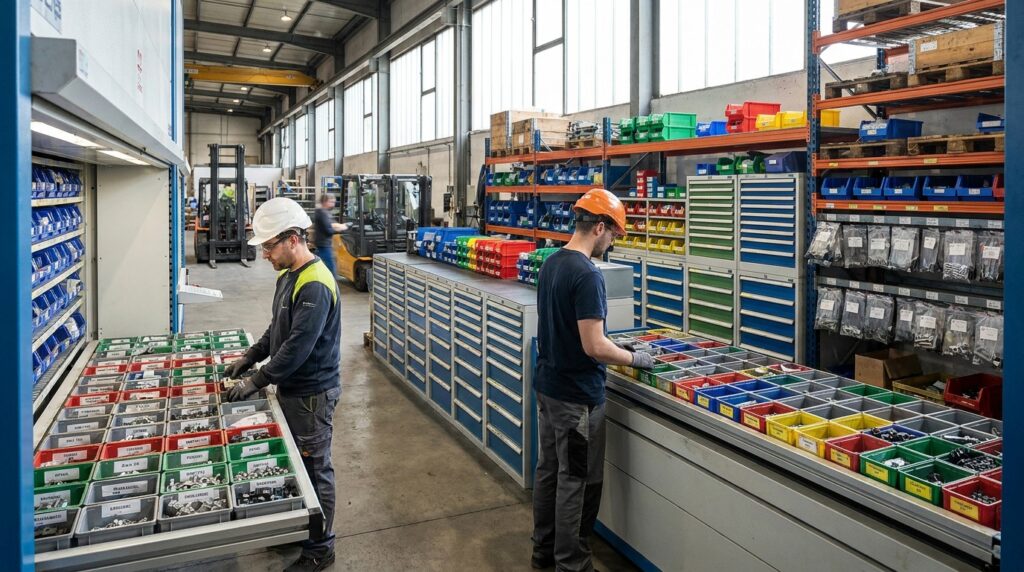
Small Parts Storage Solutions for Manufacturing and Warehouses: Optimizing Your Operations
In the dynamic world of manufacturing and warehousing, efficiency is paramount. The effective management of small parts can be a significant bottleneck, impacting productivity, accuracy, and overall operational costs. From intricate electronic components to fasteners and assembly hardware, the way these vital items are stored, organized, and accessed directly influences the smooth running of any facility. Fredon Handling, a leader in industrial material handling and storage solutions, understands the unique challenges associated with small parts storage solutions for manufacturing and warehouses. This comprehensive guide will delve into the strategies, equipment, and considerations necessary to optimize your small parts inventory, empowering warehouse managers, manufacturers, maintenance teams, and purchasing professionals alike.
For businesses looking to optimize their operations, understanding the importance of efficient small parts storage solutions in manufacturing and warehouses is crucial. A related article that delves deeper into this topic can be found at Fredon Handling, where experts discuss innovative strategies and products designed to enhance storage efficiency and improve workflow.
The Importance of Effective Small Parts Storage
The seemingly minor nature of small parts belies their critical role in production and maintenance. Misplaced, damaged, or inaccessible small parts can lead to:
- Production Delays: Technicians spending valuable time searching for components instead of assembling or repairing.
- Increased Errors: Using the wrong part due to poor organization, leading to rework and quality issues.
- Inventory Shrinkage: Parts going missing or becoming obsolete due to inadequate tracking and storage.
- Wasted Space: Inefficient storage leading to underutilization of valuable warehouse floor space.
- Safety Hazards: Cluttered workspaces with scattered small parts increasing the risk of slips, trips, and falls.
Investing in the right small parts storage solutions for manufacturing and warehouses is not just about tidiness; it’s a strategic imperative for enhancing operational efficiency, reducing costs, and maintaining a competitive edge.
Key Considerations for Selecting Small Parts Storage Solutions
Choosing the right storage system requires a thorough understanding of your specific needs. Several factors should guide your decision-making process:
Inventory Characteristics
- Part Size and Shape: Are your parts small and uniform, or do they vary significantly in size and form?
- Quantity: How many individual SKUs do you manage, and what are the typical volumes of each?
- Weight: While usually light, the cumulative weight of many small parts can still be a factor in shelving and rack capacity.
- Fragility: Do parts require protective storage to prevent damage?
- Frequency of Access: How often are specific parts accessed? High-turnover items require more accessible storage.
- Value: High-value components may necessitate more secure storage solutions.
Operational Requirements
- Workflow Integration: How will the storage system integrate with your picking, kitting, and assembly processes?
- Space Availability: What is the total usable storage space, and what are its dimensions?
- Ergonomics: How can the system support safe and efficient manual handling?
- Scalability: Can the system adapt to future growth and changes in inventory?
- Budget: What is the allocated budget for storage solutions?
Environmental Factors
- Cleanliness: Some industries require dust-free or sterile environments for small parts storage.
- Temperature and Humidity Control: Certain components may require specific environmental conditions.
- Security: The need for controlled access to specific parts.
By carefully evaluating these points, you can begin to narrow down the vast array of available small parts storage solutions for manufacturing and warehouses to find the most suitable options for your facility.
Common Types of Small Parts Storage Equipment
Fredon Handling offers a comprehensive range of solutions designed to address diverse small parts storage needs. Understanding the different equipment types is crucial for making informed choices.
Bins and Containers
These are the foundational elements of many small parts storage systems. They come in various materials, sizes, and configurations.
Plastic Bins
- Features: Durable, lightweight, resistant to moisture and chemicals, easy to clean, available in various colors for color-coding.
- Applications: Ideal for general-purpose storage of hardware, components, and assembly parts. Stacking bins can maximize vertical space. Open-front bins allow for easy access.
- Examples: Our Quantum Storage Bins provide excellent durability and a wide range of sizes to accommodate diverse small parts.
Cardboard Bins
- Features: Cost-effective, lightweight, easily disposable or recyclable.
- Applications: Suitable for lower-turnover items, temporary storage, or situations where extreme durability is not required.
- Limitations: Less durable than plastic, susceptible to moisture and damage.
Totes and Hoppers
- Features: Larger capacity than individual bins, often with open fronts for easy access or specialized features for gravity feed.
- Applications: Used for bulk storage of smaller items or for parts that need to be readily available for a specific workstation.
When it comes to optimizing efficiency in manufacturing and warehouse environments, effective small parts storage solutions are essential. These systems not only help in organizing inventory but also enhance accessibility and reduce time spent searching for components. For those looking to delve deeper into this topic, a related article can provide valuable insights on innovative storage techniques and best practices. You can explore more about these strategies by visiting this link. Implementing the right storage solutions can significantly impact productivity and streamline operations in any facility.
Shelving Systems
Shelving provides the framework for organizing bins and containers, offering flexibility and accessibility.
Industrial Shelving
- Features: Robust construction (steel, heavy-duty composite), adjustable shelf heights, various load capacities.
- Applications: The backbone of many warehouse storage areas. Can be configured with bins, dividers, or left open for larger small parts.
- Examples: Fredon’s range of Industrial Shelving offers versatile solutions that can be tailored to your specific layout and capacity needs.
Wire Shelving
- Features: Open design allows for air circulation, easy to assemble, and adjust.
- Applications: Good for parts that need ventilation or where visibility is important. Can be used in cleanroom environments.
Mobile Shelving
- Features: Units mounted on tracks, allowing them to be moved closer together to save space.
- Applications: Ideal for facilities with limited floor space where access is required to a large inventory of small parts, but not all at once.
Drawer Systems and Cabinets
For highly organized and secure storage of very small or valuable components.
Small Parts Cabinets
- Features: Multiple small drawers, often with dividers, offering high-density storage and protection.
- Applications: Excellent for storing electronic components, fasteners, O-rings, seals, and other high-value or easily misplaced items.
- Examples: Explore our selection of Small Parts Cabinets designed for maximum organization and accessibility.
Bin Cabinets
- Features: Similar to small parts cabinets but designed to hold removable bins within drawers or cubbies.
- Applications: Combines the benefits of bins for easy part identification and handling with the organized security of a cabinet.
Rotary Storage Systems (Carousels)
These systems utilize vertical space efficiently and bring items to the operator.
Vertical Carousels
- Features: A series of carriers that rotate vertically, driven by an electric motor.
- Applications: Best for high-volume, high-mix small parts storage where ergonomic access is crucial and floor space is limited. Items