
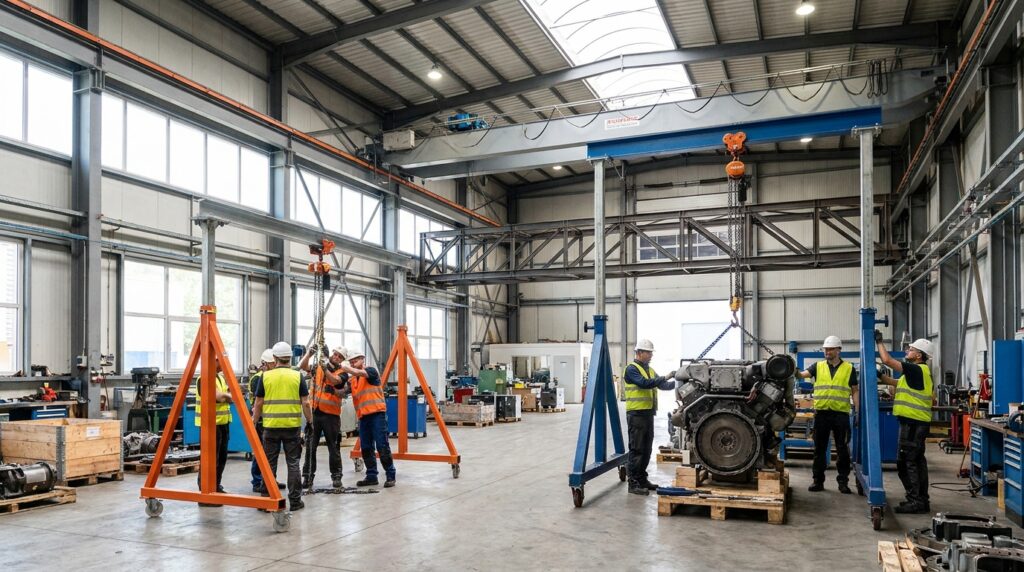
Gantry Crane Selection Guide: Portable, Adjustable & Fixed Systems
The modern manufacturing and warehousing landscape demands efficient, safe, and adaptable material handling solutions. Gantry cranes, with their versatile lifting capabilities and relative ease of deployment, have become indispensable tools across a wide spectrum of industrial operations. From heavy lifting in fabrication shops to precise placement in assembly lines, understanding the nuances of gantry crane selection is paramount to maximizing productivity, ensuring worker safety, and optimizing operational costs. This comprehensive guide will equip manufacturing managers, warehouse operators, engineers, maintenance teams, and industrial equipment buyers with the knowledge to identify the ideal gantry crane system for their unique needs.
The fundamental purpose of a gantry crane is to provide overhead lifting and movement of materials without requiring a permanent runway structure, unlike overhead bridge cranes. This makes them particularly valuable in facilities where space is at a premium, or where lifting requirements are intermittent or mobile. Their construction typically involves a bridge beam supported by legs, allowing for movement along the ground or on a track. The choice between portable, adjustable, and fixed gantry systems hinges on a careful assessment of operational demands, facility layout, and budgetary considerations.
Understanding Gantry Crane Types: Portable, Adjustable, and Fixed Systems
The diversity in gantry crane designs caters to a wide array of material handling challenges. Differentiating between portable, adjustable, and fixed systems is the first critical step in the selection process. Each type offers distinct advantages and is best suited for specific operational environments.
Portable Gantry Cranes: Mobility and Flexibility
Portable gantry cranes are designed for maximum mobility and flexibility, allowing them to be easily moved from one work area to another. These systems are ideal for operations where lifting needs are not confined to a single location or require frequent relocation. Their lightweight construction and often integrated casters or wheels enable swift repositioning.
- Key Features: Typically feature lighter-duty construction, manual or powered movement options (push/pull, electric), and a smaller overall footprint. They are often designed for assembly, disassembly, and transport.
- Applications: Frequently used in repair shops, small assembly lines, loading docks, and maintenance areas. They are excellent for tasks such as lifting engines, placing machinery components, or positioning materials in temporary workstations. For instance, a manufacturing manager might utilize a portable gantry crane to move a heavy piece of equipment from a receiving area to an assembly station, and then relocate it to a testing bay.
- Capacity Considerations: While offering great mobility, portable gantry cranes generally have lower lifting capacities compared to their fixed or larger adjustable counterparts, typically ranging from a few hundred pounds to several tons. It’s crucial to match the load weight with the crane’s rated capacity to avoid overloading and potential accidents. Fredon Handling offers a range of portable gantry cranes with varying capacities to suit diverse light-duty lifting needs.
Adjustable Gantry Cranes: Adaptability for Evolving Needs
Adjustable gantry cranes offer a compelling blend of mobility and customization. Their primary advantage lies in their ability to alter their span, height, or both, making them highly adaptable to changing operational requirements or different workstation setups. This adaptability makes them a smart investment for businesses anticipating future workflow modifications.
- Key Features: Feature adjustable leg heights, and often adjustable bridge lengths, allowing for easy reconfiguration. Many models also incorporate casters for mobility, offering a dual benefit of adjustability and portability.
- Applications: Suitable for a broad range of applications, including manufacturing lines with varying product sizes, assembly processes requiring different lifting heights, and warehousing operations that need to adapt to different pallet sizes or stacking configurations. An engineer might specify an adjustable gantry crane for a new product line where initial dimensions are not fully finalized, providing flexibility for future design changes.
- Capacity and Height Adjustments: Capacities can vary significantly, from light-duty to medium-duty, with height and span adjustments providing significant operational flexibility. The ease of adjustment is a critical factor; look for robust locking mechanisms and intuitive controls. Fredon Handling’s adjustable gantry crane solutions are designed for user-friendly height and span modifications.
Fixed Gantry Cranes: Stability and Heavy-Duty Performance
Fixed gantry cranes, as the name suggests, are designed for a permanent or semi-permanent installation. They offer the highest levels of stability, structural integrity, and often the greatest lifting capacities. These systems are ideal for applications demanding consistent, heavy-duty lifting in a dedicated area.
- Key Features: Built for robust performance, often with higher lifting capacities and greater spans. They can be floor-mounted or track-mounted for precise, linear movement. Their fixed nature ensures maximum rigidity and minimal sway during lifting operations.
- Applications: Commonly found in heavy fabrication shops, steel mills, shipyards, large assembly plants, and ports for lifting massive components, large structures, or containers. A maintenance team might rely on a fixed gantry crane for routine servicing of heavy machinery in a dedicated bay.
- Installation and Infrastructure: Require a stable foundation or track system. Installation can be more involved than for portable or adjustable systems, but once in place, they offer unparalleled reliability for repetitive, high-capacity lifting tasks. Fredon Handling can assist in specifying fixed gantry systems for demanding industrial environments.
When considering the best options for gantry crane systems, it is also beneficial to explore the broader context of material handling equipment. A related article that provides valuable insights into essential material handling equipment for efficient manufacturing processes can be found at this link. This resource complements the Gantry Crane Selection Guide by discussing various tools and systems that can enhance operational efficiency in manufacturing environments.
Critical Selection Criteria for Your Gantry Crane
Selecting the right gantry crane goes beyond simply choosing between portable, adjustable, or fixed. A thorough evaluation of several key criteria will ensure optimal performance, safety, and longevity.
Lifting Capacity and Load Requirements
This is arguably the most critical factor. Accurately determine the maximum weight of the materials you will be lifting, including the lifting device itself (e.g., hoist, spreader bar). It is always advisable to select a gantry crane with a capacity that exceeds your maximum anticipated load by a safe margin to prevent overload.
- Calculating Load: Consider the weight of the object being lifted, plus any rigging, the hoist, and any attachments. The crane’s rated capacity refers to the maximum load it can safely lift and move.
- Duty Cycle: Think about how often the crane will be used. A higher duty cycle (more frequent use) may necessitate a more robust construction and potentially higher-rated components to ensure durability.
- Fredon Handling’s Role: We provide detailed specifications for each gantry crane, allowing you to precisely match your lifting requirements with our product offerings. For example, if you are lifting large machined parts on a production line, a fixed gantry with a higher capacity might be necessary.
Span and Height Requirements
The span of a gantry crane is the distance between its legs, determining the width it can cover. The height refers to the vertical clearance under the bridge beam.
- Span: Ensure the span is sufficient to cover the entire work area, including the path of travel for the load. If the crane needs to move over obstacles or wider machinery, a longer span is required.
- Height: The overhead clearance must accommodate the tallest item you intend to lift, plus the lifting height required, and any headroom needed for the hoist and rigging. It’s also important to consider the overall height of the gantry crane itself relative to any overhead obstructions in your facility.
- Adjustability Benefits: Adjustable gantry cranes excel here, allowing for modifications to accommodate varying product dimensions or facility layouts.
Lifting Speed and Control
The speed at which the load is lifted and lowered, as well as the precision of control, can significantly impact workflow efficiency and safety.
- Manual vs. Powered Hoists: Manual hoists offer simplicity and lower initial cost but require physical effort and are slower. Powered hoists (electric or air) provide faster lifting speeds and require less effort, improving productivity, especially for frequent or heavy lifts.
- Variable Frequency Drives (VFDs): For applications requiring very precise control over movement and speed, VFDs can be integrated with powered hoists and crane travel mechanisms. This is particularly useful in assembly operations where delicate placement is crucial.
- Control Options: Options range from simple pendant controls to radio remote controls, offering flexibility in how the operator interacts with the crane.
Mobility and Movement Options
The intended use of the gantry crane dictates the required mobility.
- Wheeled vs. Tracked: Wheeled gantry cranes, particularly those with casters, offer the most freedom of movement within a defined area. Tracked gantry cranes, often associated with fixed systems, provide precise, repeatable linear movement along a designated path.
- Manual vs. Powered Travel: The bridge and trolley (the mechanism that moves the hoist along the bridge) can be manually pushed/pulled or electrically powered. Powered travel significantly reduces manual effort, especially for long spans or heavy loads, improving ergonomics and speed.
- Braking Systems: Reliable braking systems are essential for safety, preventing uncontrolled movement of the crane or load.
Facility Layout and Environmental Considerations
Your existing facility layout and any environmental factors must be taken into account.
- Floor Conditions: For wheeled gantry cranes, the floor surface must be smooth, level, and strong enough to support the crane and its maximum load. Uneven or soft floors can impede movement and pose a safety risk.
- Overhead Obstructions: Ensure sufficient clearance for the gantry crane’s maximum height, including any raised loads.
- Power Availability: Electric-powered cranes require access to suitable electrical outlets.
- Corrosive Environments: If the crane will be used in a corrosive environment (e.g., chemical plants, saltwater exposure), specify materials and coatings that offer adequate resistance.
Applications Across Industries: Where Gantry Cranes Shine
Gantry cranes are incredibly versatile and find applications in a vast array of industrial sectors, each leveraging their unique benefits to enhance productivity and safety.
Manufacturing and Fabrication
In manufacturing, gantry cranes are vital for moving raw materials, work-in-progress, and finished goods.
- Assembly Lines: Precise lifting and positioning of components are crucial. Adjustable gantry cranes can be reconfigured to suit different product sizes.
- Machine Shops: Lifting heavy castings, tooling, and finished parts to and from CNC machines, lathes, and milling equipment. Portable and adjustable models are common.
- Welding and Fabrication Shops: Moving large steel beams, plates, and fabricated structures. Fixed or heavy-duty adjustable gantry cranes are often employed for their robust lifting capabilities. For example, a fabrication manager might use a 5-ton adjustable gantry crane to lift and position a large steel frame for welding.
Warehousing and Logistics
Gantry cranes play a significant role in optimizing warehouse operations.
- Loading and Unloading: Efficiently moving goods between docks and storage areas, especially for irregularly shaped or exceptionally heavy items that forklifts may struggle with. Portable gantry cranes are often used for this purpose.
- Order Picking: Assisting in the placement and retrieval of heavy items within storage racks.
- Cross-Docking: Facilitating rapid transfer of goods from inbound to outbound transport.
Automotive and Aerospace
These industries rely on gantry cranes for handling large, complex components and for assembly processes.
- Engine and Transmission Handling: Precise lifting and installation of heavy automotive components.
- Aircraft Component Assembly: Moving large wing sections, fuselages, or other heavy parts during aircraft manufacturing. Fixed or highly specialized gantry systems are typically used.
Construction and Infrastructure
Gantry cranes are essential for lifting and positioning heavy building materials.
- Precast Concrete Element Placement: Lifting and positioning large precast concrete sections for bridges, buildings, and tunnels.
- Bridge Construction: Assembling bridge segments and lifting them into place.
Safety Considerations and Regulatory Compliance
Safety is paramount in any material handling operation. Gantry cranes, like all lifting equipment, must be operated and maintained in accordance with industry standards and regulations.
OSHA and ASME Standards
The Occupational Safety and Health Administration (OSHA) and the American Society of Mechanical Engineers (ASME) provide guidelines and regulations for overhead lifting equipment.
- OSHA 1910.179 (Overhead and Gantry Cranes): This standard outlines requirements for the design, installation, inspection, maintenance, and operation of overhead and gantry cranes. Key areas include load limits, operator qualifications, and safety devices.
- ASME B30.17 (Gantry and Overhead Cranes): This provides a comprehensive set of safety standards for the design, construction, installation, operation, inspection, testing, and maintenance of gantry and overhead cranes.
Essential Safety Features
When selecting and operating a gantry crane, prioritize these safety features:
- Load Limiting Devices: Prevent the crane from being overloaded by automatically stopping the lifting motion when the rated capacity is reached.
- Emergency Stop Buttons: Easily accessible buttons that immediately cut power to the crane in case of an emergency.
- Warning Lights and Alarms: Audible and visual signals to alert personnel when the crane is in operation or moving.
- Robust Braking Systems: For both the hoist and the crane’s travel mechanisms, ensuring secure stopping and holding of loads.
- Anti-Collision Devices: For cranes with powered travel, these can prevent collisions between the crane and other structures or equipment.
Operator Training and Inspection Protocols
Proper operator training and regular inspections are non-negotiable.
- Operator Certification: Ensure operators are adequately trained and certified to operate the specific type of gantry crane they will be using.
- Pre-Shift Inspections: A daily visual inspection by the operator before use is crucial to identify any obvious defects or hazards.
- Periodic Inspections: OSHA and ASME standards mandate periodic inspections by a qualified person, with frequency depending on usage and type of crane. This includes checking wire ropes, hooks, brakes, controls, and structural components. Fredon Handling can advise on recommended inspection schedules.
When considering the best options for gantry crane systems, it is essential to understand the broader context of material handling solutions. A related article that provides valuable insights into the fundamentals of material handling can be found here: what is material handling. This resource can help you grasp the various techniques and equipment available, ensuring that you make informed decisions when selecting between portable, adjustable, and fixed gantry cranes for your specific needs.
Maintenance and Longevity of Your Gantry Crane
Proactive maintenance is key to ensuring the reliable and safe operation of your gantry crane, extending its lifespan, and minimizing costly downtime.
Routine Maintenance Schedule
A well-defined maintenance schedule is essential. This typically includes:
- Daily Checks: Operator pre-shift inspection covering visual checks of the hook, wire rope, controls, and general condition.
- Weekly/Monthly Checks: Lubrication of moving parts, inspection of electrical connections, testing of brakes and limit switches, and checking for any signs of wear or damage.
- Annual Inspections: Comprehensive inspections by a qualified service technician, often including load testing and detailed structural integrity checks.
Lubrication and Component Wear
Proper lubrication of all moving parts—such as wheels, bearings, gears, and hoist mechanisms—reduces friction, prevents premature wear, and ensures smooth operation. Regularly inspect components like wire ropes, hooks, and chains for signs of fraying, stretching, or deformation.
Electrical and Mechanical System Checks
Regularly inspect electrical components, including wiring, controls, and limit switches, for damage or wear. Mechanical systems, such as brakes, gears, and structural connections, should be checked for tightness and proper functioning.
Documentation and Record-Keeping
Maintain detailed records of all inspections, maintenance activities, and repairs. This documentation is vital for tracking the crane’s history, scheduling future maintenance, and ensuring compliance with safety regulations. Fredon Handling can provide support with maintenance documentation for our equipment.
When considering the best options for material handling in your warehouse, it’s essential to explore various equipment types that can enhance efficiency. A related article on top material handling equipment can provide valuable insights into optimizing your operations. For more information, you can read about these efficient solutions in the article here. This resource complements the Gantry Crane Selection Guide by highlighting additional systems that can work alongside portable, adjustable, and fixed gantry cranes to streamline your workflow.
Making the Right Purchase Decision: What to Look For
When investing in a gantry crane, consider the following to ensure a wise and cost-effective purchase.
Supplier Reputation and Support
Choose a reputable supplier with a proven track record in the material handling industry.
- Experience and Expertise: Look for a supplier that demonstrates deep understanding of gantry crane applications and can offer expert advice. Fredon Handling has extensive experience in providing tailored lifting solutions.
- After-Sales Support: Excellent after-sales support, including readily available spare parts, technical assistance, and potentially maintenance services, is crucial for long-term satisfaction.
- Warranty: Understand the warranty offered on the gantry crane and its components.
Total Cost of Ownership
Consider not just the initial purchase price but the total cost of ownership over the crane’s lifespan.
- Initial Investment: The purchase price of the gantry crane itself.
- Installation Costs: If professional installation is required.
- Maintenance and Repair Costs: Ongoing expenses for lubrication, parts, and servicing.
- Energy Consumption: For electric-powered cranes.
- Downtime Costs: The financial impact of equipment failure or planned maintenance.
Customization and Scalability
Does the supplier offer customization options? Can the gantry crane be modified or upgraded in the future if your needs change? Adjustable gantry cranes from Fredon Handling offer inherent scalability and adaptability.
Requesting Quotes and Demonstrations
- Detailed Specifications: Provide potential suppliers with clear and detailed requirements, including load capacity, span, height, environment, and any specific features needed.
- Comparative Analysis: Obtain quotes from multiple suppliers and compare not only the price but also the specifications, warranty, delivery times, and the level of support offered.
- Site Visits and Demonstrations: If possible, visit the supplier’s facility or request a demonstration of the gantry crane to assess its build quality and ease of operation.
Frequently Asked Questions About Gantry Crane Selection
Here are answers to some common questions faced by buyers and operators:
Q1: How do I determine the correct lifting capacity for my gantry crane?
A1: Accurately calculate the maximum weight of the item you will lift, including any rigging, hoist, and attachments. Always add a safety margin to the calculated weight to ensure you do not overload the crane. Consult OSHA and ASME guidelines for specific load calculation recommendations.
Q2: What is the difference between a manual and an electric hoist on a gantry crane?
A2: A manual hoist requires physical effort to lift and lower loads, making it suitable for lighter loads or infrequent use. An electric hoist uses a motor for lifting and lowering, offering faster speeds, reduced physical strain, and improved efficiency for heavier or more frequent lifting tasks.
Q3: How often do gantry cranes require inspection?
A3: OSHA and ASME standards mandate regular inspections. Operators should perform daily visual pre-shift inspections. Periodic inspections by a qualified person are required at intervals determined by the crane’s usage and type, typically ranging from monthly to annually.
Q4: Can I move a fixed gantry crane?
A4: Generally, fixed gantry cranes are designed for stationary use due to their robust construction and sometimes their mounting on tracks or foundations. While some heavy-duty fixed cranes might be designed for relocation, it is a significant undertaking and not a routine operation. Portable and adjustable gantry cranes are specifically designed for mobility.
Conclusion: Partnering with Fredon Handling for Your Gantry Crane Needs
Choosing the right gantry crane system is a strategic decision that directly impacts your operational efficiency, safety, and bottom line. Whether your operations demand the flexibility of portable systems, the adaptability of adjustable models, or the robust stability of fixed gantry cranes, Fredon Handling offers a comprehensive range of solutions to meet your specific requirements. Our commitment to quality, safety, and customer support ensures that you receive not just a piece of equipment, but a reliable partner in optimizing your material handling processes.
Don’t let inefficient lifting hinder your productivity. Contact Fredon Handling today to discuss your gantry crane needs with our expert team. We can help you select, configure, and implement the ideal solution for your facility, ensuring safety, efficiency, and long-term value.
SEO Title: Gantry Crane Selection Guide: Portable, Adjustable & Fixed Systems for Industry
Meta Description: Comprehensive guide to selecting the right gantry crane: portable, adjustable, and fixed systems. Learn about capacities, applications, safety, maintenance, and purchasing advice from Fredon Handling.
Suggested URL Slug: gantry-crane-selection-guide-portable-adjustable-fixed