
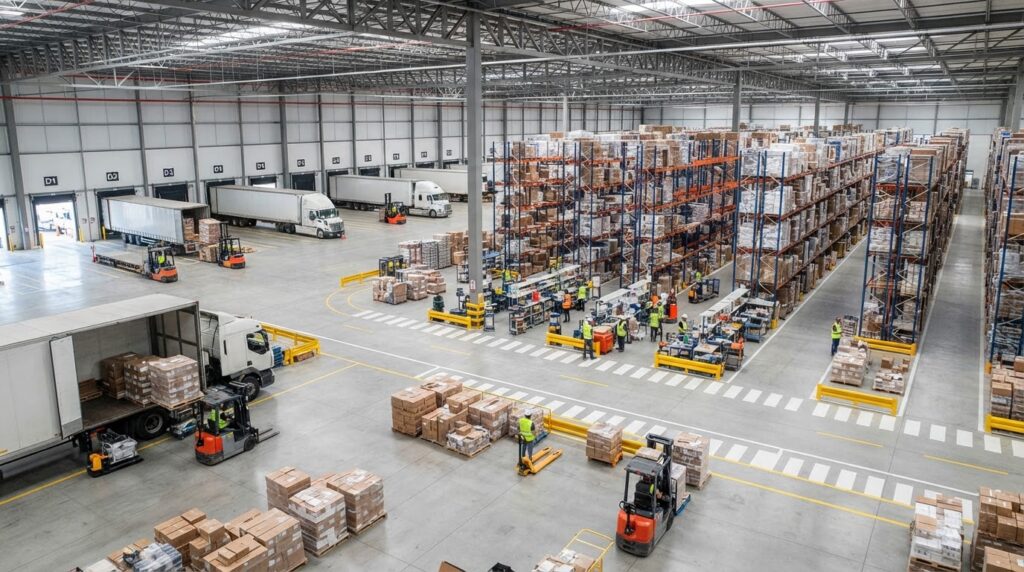
Warehouse material flow is the sequence of movements that takes inventory from inbound receiving to its final outgoing shipment. Good flow keeps materials moving to the next useful step with minimal waiting, handling and unnecessary travel. Poor flow creates congested aisles, double-handling, delayed picks and unpredictable dock operations.
This guide focuses on the warehouse process itself, complementing Fredon’s broader material flow in manufacturing and warehousing article. It provides practical steps for locating bottlenecks and evaluating equipment changes.
Start With a Receiving-to-Shipping Process Map
Walk the path of a representative pallet or carton through unloading, identification, putaway, reserve storage, forward picking, packing, staging and dispatch. Note each touch, distance, queue and exception. Repeat the exercise for high-volume items and awkward or oversized loads.
The actual workflow may differ from the intended layout. Temporary staging zones, cross-traffic and repeated trips often reveal where the process breaks down. Observe regular and peak operating conditions before drawing conclusions.
Improve Receiving and Putaway
Receiving is where inbound freight becomes warehouse inventory. If pallets sit in dock lanes because locations are unclear or equipment is unavailable, the delay can affect every downstream step. Define inspection and identification procedures and a prompt route to storage.
Check whether loading dock equipment, staging layouts or transfer methods fit arriving vehicles and unit loads. Maintain safe traffic routes and avoid using emergency access or active aisles for overflow stock.
Slot Inventory Around Picking Frequency
Storing products only where space is available can create unnecessary travel. Use observed picking frequency, product dimensions and handling method to place frequently needed inventory in locations with practical access. Reserve storage and forward picking may have different layout priorities.
Consider how replenishment will reach the pick face. Very dense storage can reduce available space while increasing retrieval difficulty, so balance access, inventory rotation and usable capacity. Fredon’s pallet racking and shelving categories help address different inventory types.
Separate Picking From Replenishment Flow
Pickers and replenishment vehicles often compete for the same aisles. If possible, schedule, route or zone replenishment to reduce conflict. Define forward-stock thresholds so pick faces are refilled before operations stall, while avoiding unnecessary surplus at individual locations.
Measure stockouts, replenishment response time and picking interruptions. A storage improvement that creates longer replenishment travel may not benefit the entire operation.
Reduce Rehandling and Extra Transfers
Count how often a product is moved between temporary locations without making progress toward an order. A pallet that is repeatedly moved to free floor space consumes capacity and increases the risk of damage. Redesign staging or route planning to reduce those unnecessary touches.
Carts, lift tables and positioning devices can sometimes simplify transfers between levels or work areas, but the right equipment depends on the actual load. Review material positioning and warehouse storage solutions based on the process.
Design Clear Travel and Staging Areas
Congestion can erase the benefits of otherwise capable material handling equipment. Define pedestrian routes, lift-truck aisles, turning spaces, receiving and shipping lanes, and storage locations. Avoid crossing high-volume routes unnecessarily and consider visibility at intersections.
Any layout change should preserve required access and follow manufacturer capacities, local building and fire requirements, and site-specific safety procedures. Increase density only when traffic and retrieval still work safely.
Improve Packing and Outbound Material Flow
Finished orders need a predictable route through quality checks, packing, consolidation and shipment staging. Packing stations should have supplies within practical reach and enough space for the load types handled. Establish designated outgoing lanes that correspond to dispatch methods or schedules.
If shipping waits for pallets to be moved from across the building, examine the location of packing, staging and dock access. A faster pick rate is not a complete improvement if outbound activities cannot absorb it.
Select Equipment to Solve the Bottleneck
A recurring constraint may be addressed by re-slotting, different shelving, mobile carts, improved transfer heights or additional loading dock functionality. Do not assume a forklift, conveyor or rack expansion is the solution before measuring the underlying problem.
Compare the likely effect on the entire process using handling time, touch count, travel distance, queue time, damage and throughput. Fredon’s material handling audit and calculators can support the evaluation.
Measure Results and Adjust
Use consistent definitions before and after changes. Record time from receiving to putaway, picks per labor hour where appropriate, replenishment delays, order processing time, travel, handling damage and dock dwell time. Interpret results alongside changes in volume, labor and SKU mix.
The bottleneck may move after an improvement. Continue monitoring and adjust staging, inventory locations or equipment rather than treating the first redesign as a permanent end state.
For a wider look at storage, transport, lifting and positioning, see our complete guide to material handling equipment.
Next Steps
Fredon Handling provides storage, lifting, positioning and dock equipment relevant to warehouse flow. Schedule a consultation with a warehouse layout or workflow sketch and information about the specific bottleneck you want to solve.