
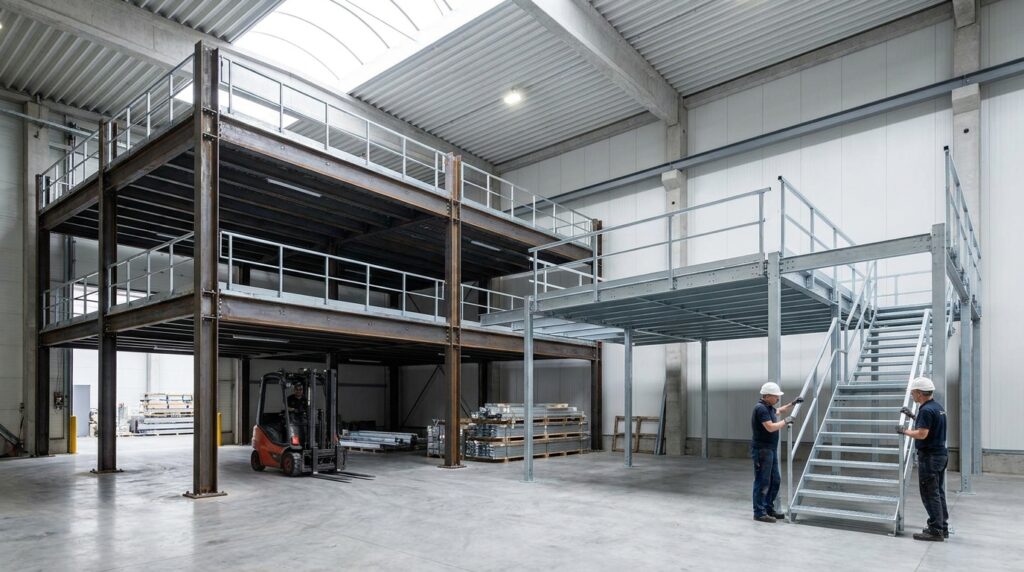
Understanding the Nuances of Industrial Mezzanines
For businesses grappling with limited facility footprints, the strategic implementation of industrial mezzanines is a cornerstone of effective warehouse space optimization. These elevated structures, essentially platforms supported by structural steel, unlock vertical space that would otherwise remain underutilized. This article delves into the critical distinctions between two primary approaches to mezzanine construction: structural steel and modular, empowering facility managers, engineers, warehouse operators, and purchasing professionals to make informed decisions.
When considering the differences between structural steel and modular mezzanines, it’s also important to understand how these systems fit into your overall material handling strategy. For more insights on selecting the appropriate equipment for your business needs, you can refer to the article on choosing the right material handling equipment, which provides valuable guidance on optimizing your workspace. Check it out here: How to Choose the Right Material Handling Equipment for Your Business.
Structural Steel Mezzanines: Customization and Robustness
Structural steel mezzanines represent a highly customizable and robust solution for expanding operational capacity. These are custom-engineered platforms built on-site using a framework of beams, columns, and decking, all fabricated from structural steel. The design process begins with a thorough analysis of the existing facility, including load requirements, bay sizes, and integration with existing infrastructure.
Design and Fabrication Process
The creation of a structural steel mezzanine is a bespoke undertaking. Engineers at Fredon Handling, in collaboration with your team, will assess the specific needs of your operation. This includes determining the intended use of the mezzanine – whether it’s for additional storage, office space, equipment platforms, or production areas. Detailed architectural and engineering drawings are then developed, specifying beam sizes, column placements, connection details, and material specifications.
Once designs are finalized and approved, the structural steel components are fabricated off-site in a controlled environment. This precision fabrication ensures that all elements meet stringent quality standards and are ready for assembly. The fabrication process typically involves cutting, welding, and drilling of steel members according to the engineered plans.
On-Site Installation and Advantages
The installation of a structural steel mezzanine involves erecting the fabricated steel framework on-site, followed by the addition of decking and any necessary ancillary components like stairs, railings, and gates. This method allows for a high degree of adaptability. If your facility has unusual dimensions, high ceilings, or specific load-bearing requirements, a structural steel mezzanine can be precisely tailored to meet those needs.
The primary advantages of structural steel mezzanines lie in their inherent strength and versatility. They can be designed to support very heavy loads, making them suitable for housing heavy machinery, dense pallet storage, or even specialized production equipment. Their customizability extends to layout, allowing for complex configurations that integrate seamlessly with existing workflows and material flow. For operations requiring significant vertical expansion and a robust, long-term solution, structural steel offers unparalleled adaptability.
Applications in Industrial Settings
Structural steel mezzanines find application across a wide spectrum of industrial environments.
- High-Density Storage: For warehouses storing a large volume of SKUs, structural steel mezzanines can create multi-level storage systems, dramatically increasing the usable square footage for pallet racks, shelving units, or specialized storage solutions.
- Equipment Platforms: When new machinery needs to be integrated but floor space is limited, a structural steel platform can elevate the equipment, freeing up valuable ground-level space for operations or movement.
- Workstations and Assembly Lines: Creating dedicated, elevated workstations or extending assembly lines on a structural steel platform can improve workflow efficiency and reduce congestion on the main warehouse floor.
- Mezzanine Offices and Break Rooms: Providing dedicated administrative or break areas above the operational floor can improve employee comfort and separate these spaces from the hustle and bustle of warehouse activities.
- Catwalks and Access Ways: Structural steel is ideal for constructing durable catwalks and access bridges between different areas of a facility, facilitating safe pedestrian movement across operational zones or over machinery.
Limitations to Consider
While offering significant advantages, structural steel mezzanines also have limitations. The custom design and fabrication process can be more time-consuming compared to modular systems. On-site construction can also lead to more disruption to ongoing operations, although careful planning by experienced installers can mitigate this. Furthermore, due to the bespoke nature and the extensive engineering involved, the upfront cost can be higher than simpler modular solutions. Alterations or relocation of a structural steel mezzanine can also be more complex and costly.
Modular Mezzanines: Efficiency and Flexibility
Modular mezzanines, also known as prefabricated or bolt-together mezzanines, offer a compelling alternative. These systems are designed and manufactured in standardized components that are then assembled on-site. This approach prioritizes speed of installation, flexibility, and often, cost-effectiveness.
Pre-Engineered Components and Rapid Assembly
The defining characteristic of modular mezzanines is their pre-engineered design. Components like beams, columns, and decking are manufactured to strict specifications in a factory setting. This controlled environment ensures high consistency and quality. Upon delivery to your facility, these components are designed for straightforward assembly, typically using bolts and standard connectors.
This pre-fabrication and standardized assembly process significantly reduces on-site construction time. Instead of a lengthy build process, the focus shifts to efficient assembly, minimizing disruption to your warehouse operations. This is a key consideration for businesses with tight deadlines or operations that cannot afford prolonged downtime.
Key Advantages and Benefits
The benefits of modular mezzanines are numerous, particularly for businesses seeking agility and cost-efficiency.
- Speed of Installation: This is arguably the most significant advantage. Modular systems can often be installed in days rather than weeks, allowing for quicker realization of expanded space.
- Flexibility and Adaptability: While not as infinitely customizable as structural steel, modular mezzanines can still be configured in various layouts to suit different needs. Many systems are designed to be expandable or reconfigurable, making them ideal for businesses with evolving requirements.
- Cost-Effectiveness: The standardized manufacturing process and faster installation typically translate to a lower overall cost for modular mezzanines compared to fully custom structural steel solutions.
- Minimal Disruption: Due to the rapid assembly process and pre-fabricated components, on-site disruption is generally less significant, allowing operations to continue with minimal interruption.
- Relocatability: Many modular mezzanine systems are designed with disassembly and relocation in mind, offering an advantage for businesses that anticipate future moves or facility changes.
Applications Tailored for Efficiency
Modular mezzanines are well-suited for a range of common industrial applications where speed and flexibility are paramount.
- Storage Expansion: Adding extra levels for shelving or light-duty pallet storage is a popular use for modular systems, quickly increasing capacity without major construction.
- Order Picking and Fulfillment Areas: Creating elevated picking stations or dedicated fulfillment zones can improve ergonomics and efficiency.
- Light-Duty Equipment Platforms: Supporting smaller machinery or process equipment that doesn’t require extremely high load capacities.
- Mezzanine Offices and Support Areas: Providing efficient and quickly deployable office spaces, break rooms, or control rooms above the main floor.
- Temporary or Semi-Permanent Structures: Ideal for seasonal businesses or those undergoing short-term expansion projects.
Potential Drawbacks to Evaluate
Despite their many benefits, modular mezzanines do have limitations. Their standardized nature means they may not be the optimal solution for facilities with highly irregular dimensions or extreme load requirements that fall outside the standard design parameters. While robust, they might not possess the same inherent weight-bearing capacity as a heavily engineered structural steel system designed for very specific, high-stress applications. Furthermore, while reconfigurable, significant modifications to an existing modular mezzanine can sometimes be more challenging than minor adjustments to a structural steel build.
Key Differences and Selection Criteria
The choice between structural steel and modular mezzanines hinges on a careful evaluation of specific operational needs, budget, timeline, and long-term strategic goals. Understanding the core distinctions is crucial for making the right investment.
Load Capacity and Structural Integrity
Structural Steel: Offers superior load-bearing capabilities. When engineered for specific applications, these mezzanines can support exceptionally heavy loads, making them suitable for dense pallet storage of heavy goods, housing large machinery, or supporting active production lines with significant dynamic loads. The custom engineering process allows for precise calculation and reinforcement to meet any conceivable load requirement.
Modular: Designed for moderate to heavy loads within standardized parameters. While many modular systems can handle significant weight, their load capacities are typically specified within a range based on pre-engineered designs. For applications requiring extreme or highly specialized load capacities, a structural steel solution is generally more appropriate.
Customization vs. Standardization
Structural Steel: Offers virtually unlimited customization. From unique shapes and dimensions to integration with existing building elements and complex access requirements, structural steel can be fabricated to precisely match any requirement. This makes it ideal for specialized applications or facilities with challenging architectural constraints.
Modular: Relies on standardization. While configurations can be adapted, the core components and system designs are pre-determined. This standardization streamlines manufacturing and installation but offers less flexibility for highly unique or complex spatial challenges.
Installation Timeline and Disruption
Structural Steel: Installation can be more time-consuming due to the custom fabrication process and on-site erection. However, with experienced installers, the disruption can be managed effectively through phased installation and careful scheduling.
Modular: Installation is significantly faster due to pre-fabricated components and bolt-together assembly. This minimizes on-site work and disruption, making it an excellent choice for businesses that need to expand capacity quickly with minimal impact on ongoing operations.
Cost Considerations
Structural Steel: Generally involves a higher upfront investment due to the extensive engineering, custom fabrication, and on-site erection involved. However, for very large or complex projects, the long-term value and tailored solution can justify the initial cost.
Modular: Typically more cost-effective for standard applications. The efficiencies of mass production and faster installation contribute to a lower overall price point. This makes it an attractive option for businesses seeking to maximize their budget without compromising on functionality.
Relocatability and Future Modifications
Structural Steel: While possible, relocating a structural steel mezzanine can be complex and costly, often requiring significant disassembly and re-fabrication. Modifications can also be more involved.
Modular: Many modular systems are designed for disassembly and relocation. This offers significant flexibility for businesses that anticipate future moves or need to reconfigure their layout as their needs evolve.
When considering the best options for enhancing your facility’s space, understanding the differences between structural steel and modular mezzanines is crucial. For those looking to delve deeper into the broader topic of material handling and its implications for efficiency and productivity, a related article can provide valuable insights. You can explore this further in the article on material handling, which discusses various strategies and solutions that can complement your choice of mezzanine systems.
Integrating Mezzanines with Other Material Handling Solutions
Mezzanines are rarely standalone solutions. Their effectiveness is amplified when integrated with other material handling equipment and systems. Fredon Handling specializes in providing comprehensive solutions that ensure seamless operation and maximum efficiency.
Optimizing Vertical Storage with Mezzanines and Shelving
When expanding vertical space with a mezzanine, the choice of storage equipment is critical.
- Shelving Systems: For smaller items, bins, and frequently accessed inventory, multi-level shelving installed on a mezzanine dramatically increases storage density. This creates highly efficient pick-and-pack operations.
- Pallet Racking: For bulk storage of palletized goods, installing pallet racks on a mezzanine can double or triple your storage capacity within the same footprint. This is where the load-bearing capabilities of structural steel become particularly relevant for very heavy loads.
- Specialty Storage: Mezzanines can also accommodate specialized storage solutions like flow racks, cantilever racks, or carton flow systems, tailored to specific product types and material handling needs.
Equipment Platforms and Vertical Workflow
Equipment platforms, whether constructed from structural steel or modular components, are vital for optimizing workflow and safety.
- Machinery Integration: Elevating equipment like forklifts charging stations, packaging machines, or automated systems frees up floor space and creates organized work zones.
- Ergonomic Workstations: Mezzanines can house dedicated workstations at optimal heights, improving ergonomics for employees involved in assembly, kitting, or quality control.
- Process Flow: Strategically placed equipment platforms can facilitate a smoother, more linear workflow, reducing travel time and improving overall operational efficiency.
Catwalks, Stairs, and Safe Access
Safe and efficient movement across elevated spaces is paramount.
- Catwalks: Structural steel catwalks provide safe access for personnel to traverse elevated areas, inspect equipment, or reach storage levels without relying on forklifts for simple movement.
- Stairs and Ladders: Appropriately designed staircases with handrails and safety gates are essential for personnel access to mezzanine levels. The choice between a standard staircase, ship’s ladder, or even a spiral staircase depends on space constraints and frequency of use.
- Fall Protection: Integrated safety features like guardrails and toe boards are non-negotiable for any elevated platform to prevent accidents and ensure a safe working environment.
When exploring the differences between structural steel and modular mezzanines, it’s also beneficial to consider how these systems can impact warehouse efficiency and layout. For a deeper understanding of the various solutions available for optimizing your space, you might find this article on warehouse design strategies particularly insightful. It provides valuable insights that can help you make informed decisions about the best options for your specific needs.
Safety, Design Considerations, and Code Compliance
The safe and compliant design and installation of any mezzanine is paramount. This requires a deep understanding of engineering principles, material properties, and local building codes.
Load Ratings and Engineering Integrity
Every mezzanine must be engineered to safely support the intended loads. This involves calculating:
- Dead Load: The weight of the mezzanine structure itself.
- Live Load: The variable weight of the items being stored or the people using the space.
- Uniformly Distributed Load (UDL): The weight spread evenly across the entire surface.
- Concentrated Load: The weight of a single heavy item or piece of equipment placed on a specific point.
Fredon Handling works closely with qualified engineers to ensure all designs meet or exceed necessary load ratings. It is crucial to accurately assess the maximum anticipated loads your mezzanine will encounter.
Building Codes and Permitting
Industrial mezzanines are subject to local building codes, fire codes, and occupational safety regulations. These codes dictate requirements for:
- Structural integrity and load capacities.
- Means of egress (stairs, exits).
- Fire suppression and sprinkler systems.
- Guardrails, railings, and fall protection.
- Building materials and connections.
Engaging with your local building department for necessary permits and inspections is a critical step in the project lifecycle. A qualified engineer will ensure the design adheres to all applicable codes.
Design Considerations for Optimal Functionality
Beyond safety and compliance, thoughtful design maximizes the mezzanine’s utility:
- Clearances: Adequate headroom and aisle space are essential for efficient movement of people and materials. Consider the type of material handling equipment that will be used on and below the mezzanine.
- Integration with Existing Infrastructure: How will the mezzanine connect to existing power, lighting, and sprinkler systems? How will it impact existing workflows and traffic patterns?
- Ventilation and Lighting: Ensure sufficient lighting and ventilation for the intended use of the space, whether it’s for storage, work areas, or offices.
- Accessibility: Design for easy and safe access for all users, including considerations for emergency egress.
By prioritizing these aspects, businesses can ensure their investment in a mezzanine not only expands space but also enhances operational efficiency and safety.
Frequently Asked Questions About Industrial Mezzanines
Q1: What is the primary difference between a structural steel and a modular mezzanine?
A1: Structural steel mezzanines are custom-engineered and built on-site using individual steel components, offering maximum customization and load capacity. Modular mezzanines are pre-fabricated in standardized sections and assembled on-site, prioritizing speed, flexibility, and often, cost-effectiveness for more common applications.
Q2: How do I determine the right type of mezzanine for my facility?
A2: The selection depends on your specific needs, including load requirements, budget, timeline, facility layout, and future flexibility. A structural steel mezzanine is often preferred for very heavy loads or complex configurations, while a modular system is ideal for faster deployment and standard storage needs. Fredon Handling can assist in this evaluation.
Q3: What are the typical applications for industrial mezzanines?
A3: Mezzanines are used to create additional storage space, equipment platforms, elevated workstations, order picking areas, offices, break rooms, and catwalks, effectively utilizing vertical space for warehouse space optimization.
Q4: What is the typical lifespan of an industrial mezzanine?
A4: When properly designed, manufactured, installed, and maintained, both structural steel and modular mezzanines can have a very long lifespan, often exceeding 25-30 years. Regular inspections and maintenance are crucial.
Q5: Do I need a permit to install a mezzanine?
A5: In most jurisdictions, installing an industrial mezzanine requires building permits and inspections. It is essential to consult with your local building department and work with qualified engineers to ensure compliance with all applicable codes.
Q6: Can a mezzanine be relocated if my business moves?
A6: Modular mezzanines are often designed with disassembly and relocation in mind, offering greater flexibility. Relocating a structural steel mezzanine is possible but typically more complex and costly.
Q7: How does a mezzanine affect my existing fire suppression system?
A7: Adding a mezzanine may require modifications or extensions to your existing fire suppression and sprinkler systems. Fire codes dictate specific requirements for elevated spaces, and a qualified engineer will ensure these are met.
Q8: What kind of flooring can be used on a mezzanine?
A8: Common decking materials include steel diamond plate, open-grid steel grating, wood or composite materials, and concrete toppings. The choice depends on load requirements, safety considerations (e.g., slip resistance), and the intended use of the mezzanine.
Q9: How do I ensure the safety of a mezzanine?
A9: Safety is paramount and achieved through proper engineering, adherence to building codes, robust structural integrity, appropriate load ratings, and the installation of guardrails, handrails, and secure access points. Regular inspections are also vital.
Partner with Fredon Handling for Your Space Optimization Needs
Navigating the complexities of industrial mezzanines and material handling solutions requires expertise. At Fredon Handling, we are dedicated to providing tailored solutions that enhance efficiency, safety, and productivity for your operation. Whether you’re considering a custom structural steel platform or a flexible modular system, our team of experts can guide you through every step, from initial assessment and design to installation and integration with your existing material handling infrastructure.
Ready to unlock the full potential of your facility? Explore our comprehensive range of industrial mezzanines and space optimization solutions, or contact us today for a personalized consultation.